Knife Cuts — Regional & Global
Mushroom Planks
Also: mushroom steaks, portobello steaks, king oyster planks, mushroom slabs
Thick vertical slabs cut from large portobello or king oyster mushrooms, designed to withstand direct grilling or searing as a plant-based centerpiece.
A mushroom plank is a broad, flat slab — typically 1–1.5 cm thick — cut vertically through the full cap or stem of a large mushroom, yielding a piece with maximum surface area on two flat faces and a cross-section that exposes the dense interior flesh. The geometry mimics a thin steak or fish fillet, making it suitable for the same direct-heat cooking methods. The plank cut is distinct from a bias or diagonal cut in that it is made perpendicular to the cap's dome or parallel to the stem's length, resulting in uniform thickness and a broad, flat profile.
In photos
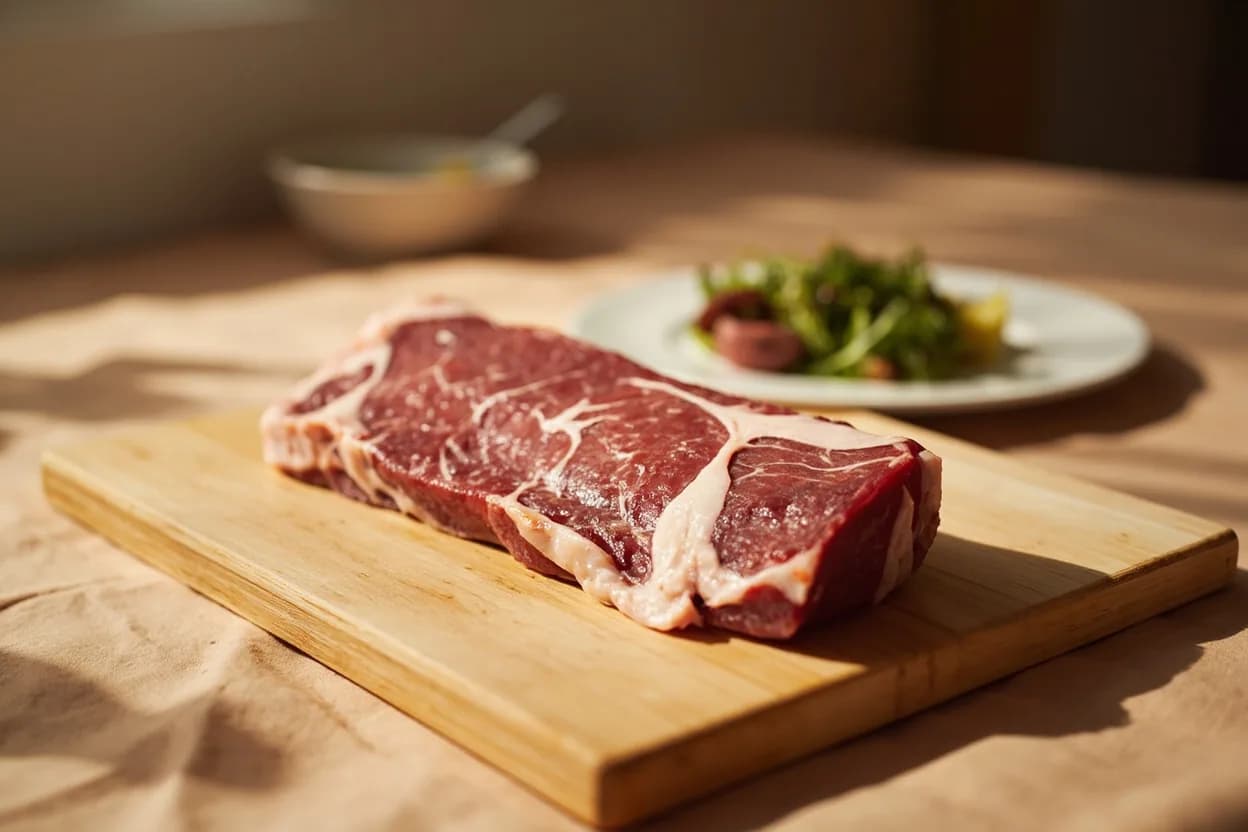
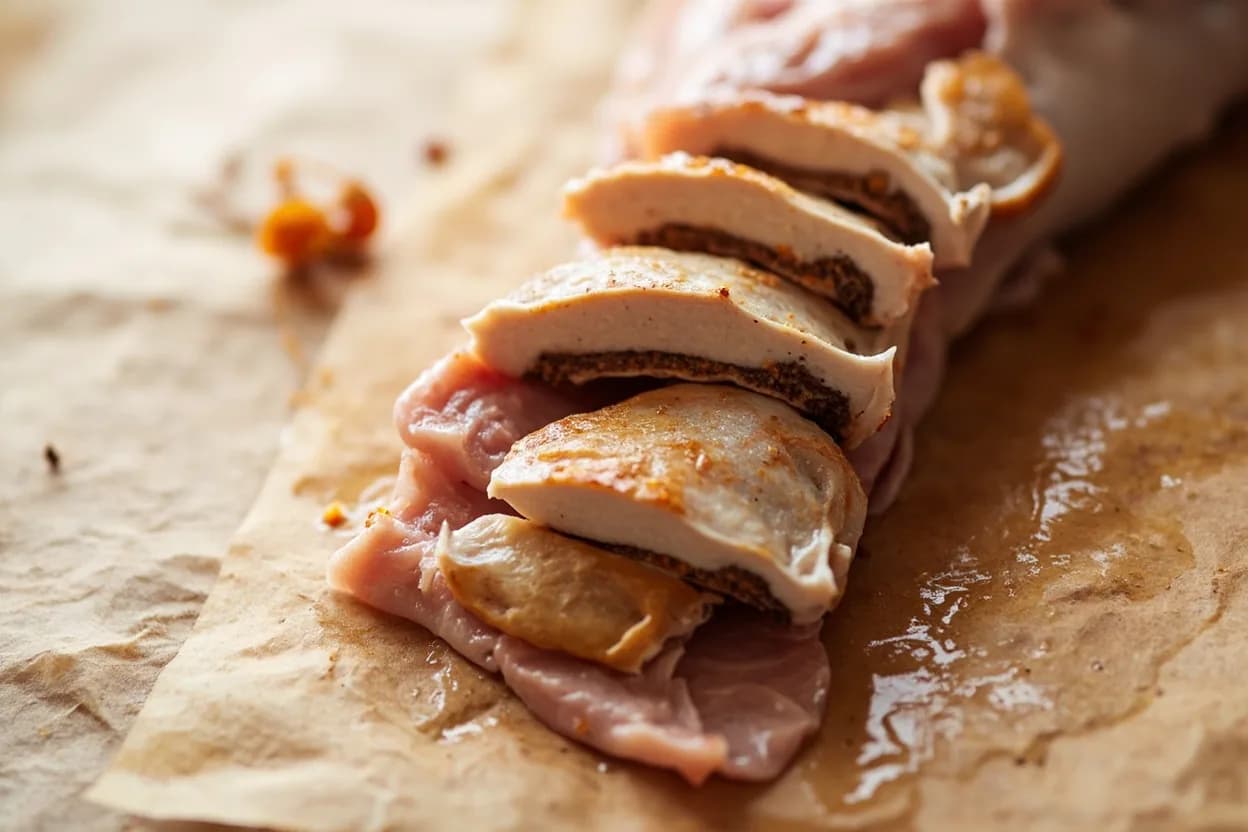
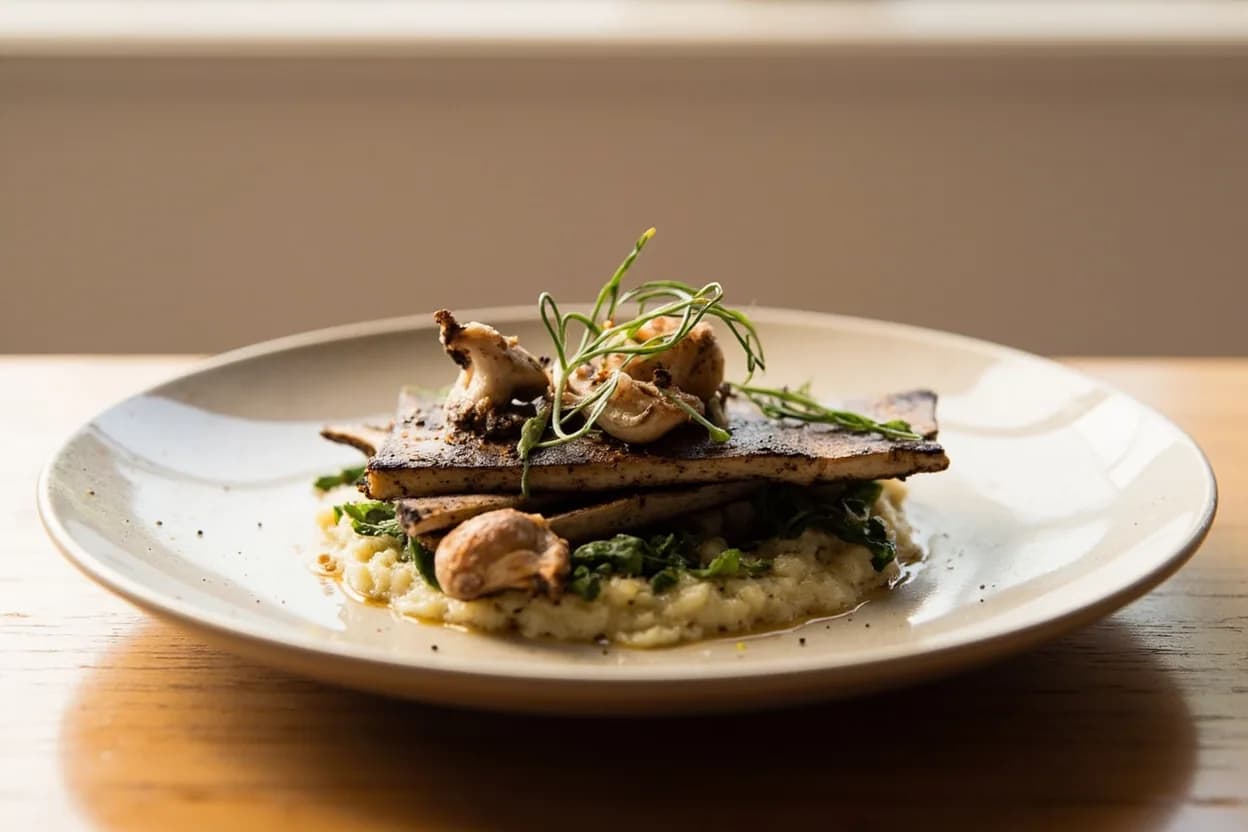
Where it comes from
Most commonly applied to: (1) Portobello mushrooms (Agaricus bisporus, mature) — caps stem-removed and sliced downward through the crown; (2) King oyster mushrooms (Pleurotus eryngii) — thick, dense stems sliced vertically into planks while caps may be reserved separately; (3) Lion's mane (Hericium erinaceus) — torn into large slabs that self-plank when pressed flat on a hot surface.
Best for
How to cook it
- 1For portobello: remove stem flush with the cap (reserve stem for stock), wipe cap clean, and slice vertically downward through the crown into 1–1.5 cm slabs. Each large cap yields 2–3 planks.
- 2For king oyster: trim the base, stand the mushroom upright, and cut vertically through the stem into 1–1.5 cm planks. Smaller king oysters yield one full plank; large ones give two.
- 3Marinate planks 20–30 minutes in oil, soy sauce, balsamic, garlic, and herbs. The broad flat faces allow even coating. Do not marinate longer than 1 hour — acids degrade the texture.
- 4Pat planks dry before cooking; surface moisture prevents browning and causes steaming.
- 5Grill or sear over high heat (230°C+), pressing planks flat with a spatula for the first 60 seconds to maximize contact. Cook 3–4 minutes per side until deep golden with grill marks.
- 6Baste with butter, thyme, and garlic in the final minute if pan-cooking. Rest 2 minutes before plating.
Prep & butchery
- Cold mushrooms firm up and slice more cleanly; refrigerate 30 minutes before cutting if slipping on the board.
- A long, thin-bladed slicer or chef's knife minimizes tearing through the cap tissue.
- For portobello, trim dark, slimy gill edges on the underside with a spoon before slicing if presentation is critical — gills bleed dark liquid onto the plate.
- Score a shallow crosshatch (2–3 mm deep) on each flat face after slicing to help marinade penetrate and prevent curling during high-heat cooking.
Substitutes
- Eggplant rounds (1.5 cm)
Similar shape and grilling behavior; less meaty but absorbs smoke and oil comparably
- Cauliflower steaks
Thicker and denser; requires longer cooking but comparable plant-based centerpiece role
- Whole portobello cap (unsliced)
Classic burger substitute; less 'steak-like' but simpler to prepare and more familiar
Related cuts
Opposite philosophy: exploits rough, irregular grain surfaces for sauce absorption rather than smooth browning faces
- Cauliflower steak
The same slab-from-vegetable concept applied to brassicas; analogous cooking methods
- Tomato concassé planks
Thin tomato slabs used for carpaccio-style plating — same flat-face geometry, different purpose
Appears in
References
- 1.The Vegetarian Butcher — Joep Zander & Niko Koffeman
- 2.Plenty More — Yotam Ottolenghi
- 3.The Wicked Healthy Cookbook — Chad Sarno & Derek Sarno
- 4.On Vegetables — Jeremy Fox
Confidence: high
Notes
King oyster vs. portobello: structural differences
King oyster stems are dense with tightly packed, longitudinally oriented hyphae — cutting parallel to these fibers produces a plank that holds together under heat and can even be pulled apart in strands post-cooking, mimicking a scallop or pulled pork texture. Portobello caps are radially structured around gills; cutting through the crown produces a plank with visible gill patterning underneath and a softer, more yielding texture than the king oyster — closer to a thick filet of white fish.
The smash technique
A trick borrowed from smash-burger cooking: place the plank on a ripping-hot dry skillet and immediately press with a heavy flat weight (cast-iron press, brick wrapped in foil) for 60–90 seconds. The pressure collapses air pockets and drives the surface into the pan, dramatically accelerating browning. Repeat on the second side. The crust formed this way is more complete and faster than conventional flipping without pressing.