Fish — Fabrication & Breakdown
Monkfish Skinning & Loin Portioning
Also: rape portioning, lotte preparation, coda di rospo breakdown, anglerfish loin
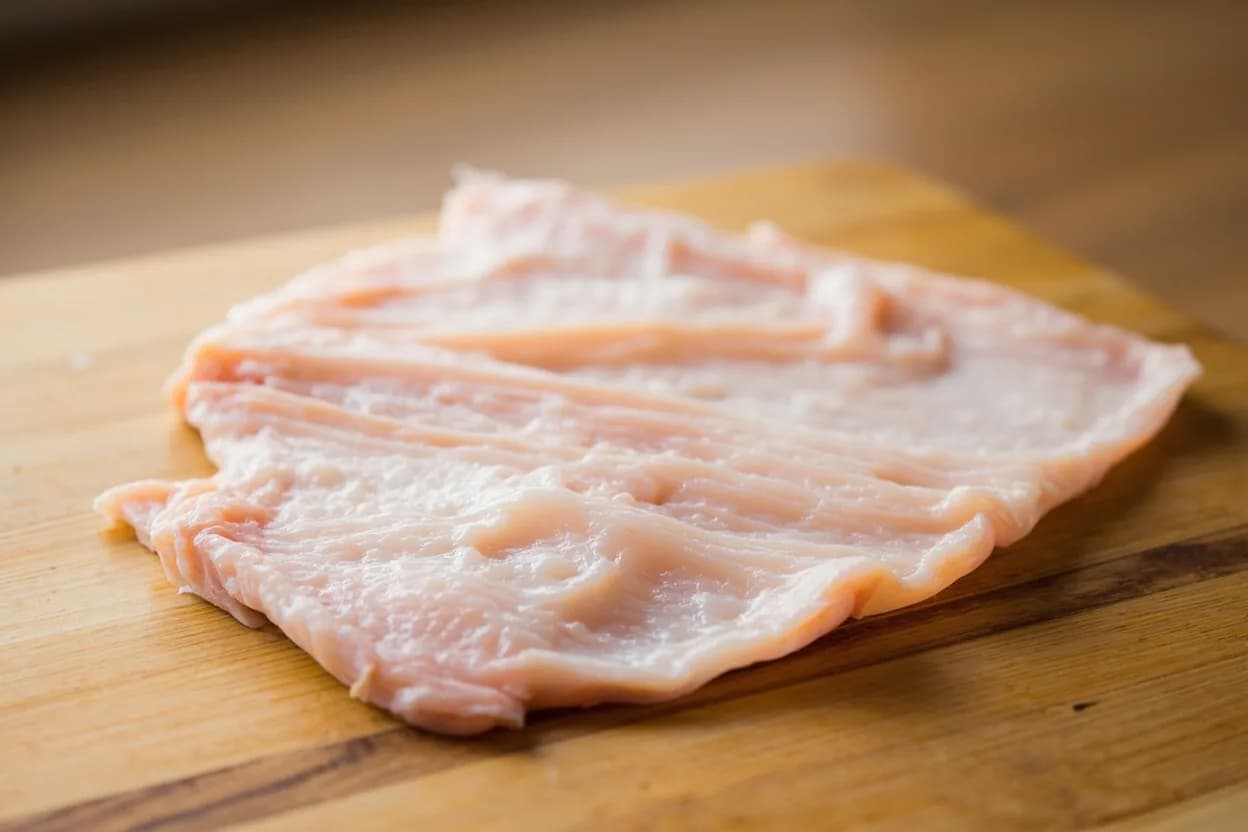
Stripping monkfish's multiple skin and membrane layers to reveal two firm, meaty loins that cook like a lean tenderloin.
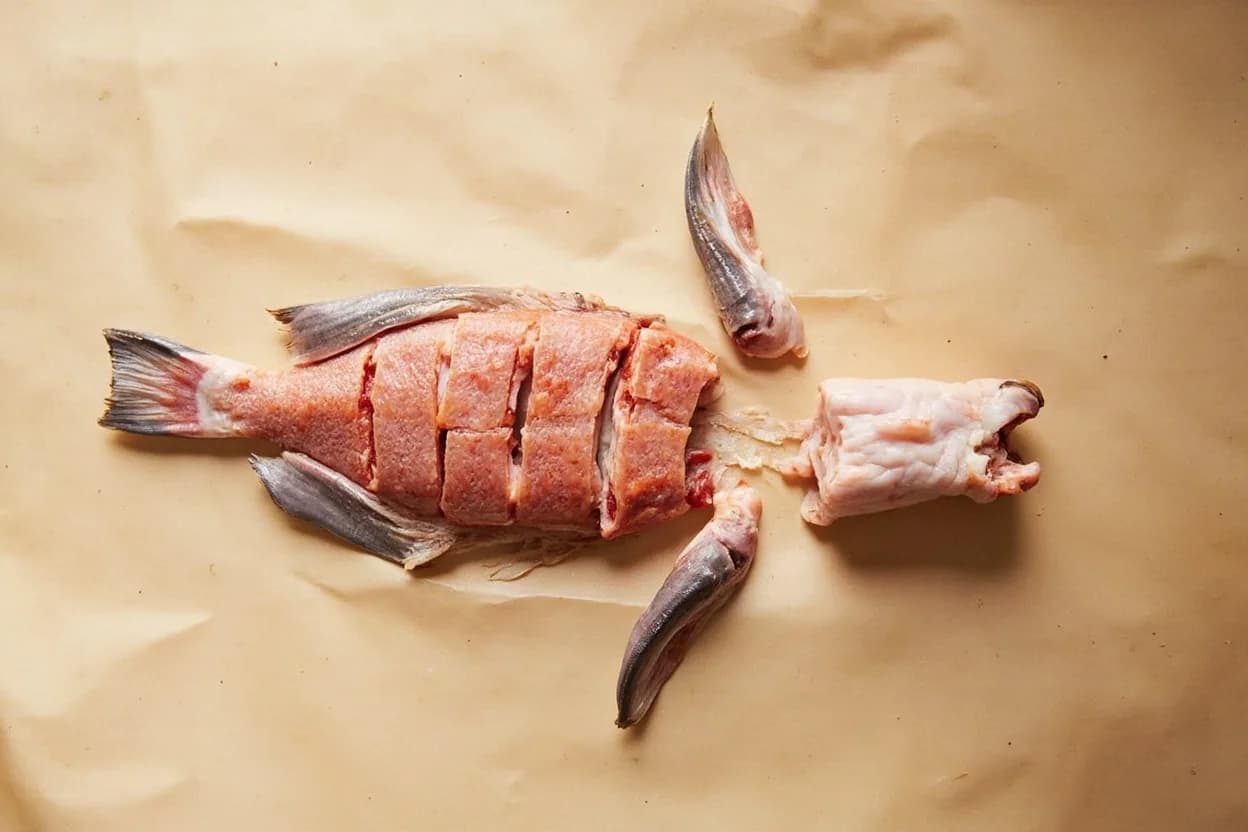
Monkfish (Lophius piscatorius) is sold almost exclusively as the tail section — the head, which accounts for half the fish's body mass, is discarded at sea. The tail yields two parallel loins running either side of the central spine, each encased in not one but three layers that must all be removed: an outer mottled brown skin, a thin secondary skin, and a tough purplish-gray inner membrane. Failure to remove all three layers causes the membrane to contract violently during heat, squeezing the flesh into a rubbery knot. Once properly skinned, the loins are a pearlescent ivory and firm enough to roast, grill, braise, or cut into medallions — the texture earns monkfish the nickname 'poor man's lobster' in the UK and 'poor man's scampi' in Spain.
In photos
Where it comes from
The tail of Lophius piscatorius (European) or L. americanus (American goosefish). The two loins lie on either side of a central cartilaginous spine. Each loin on a 1.5 kg tail weighs approximately 250–350 g and runs 20–25 cm in length, tapering toward the fin end.
Best for
How to cook it
- 1Lay the tail flat, spine down. Using kitchen shears or a boning knife, trim away all fins and the tail flap.
- 2Grip the outer mottled skin at the thick end and pull firmly toward the tail tip; it will peel away in one piece on each side. Use the knife tip to start the tear if needed.
- 3Identify the thin secondary skin — a translucent membrane just beneath the outer skin. Peel or scrape it away with the knife edge.
- 4Find the inner purple-gray membrane: insert the knife tip just beneath it at the thick end and run the blade along the length, staying as close to the flesh as possible. Repeat on the other side. This membrane is the most critical to remove — it contracts to half its length when heated.
- 5To remove the loins from the spine: stand the tail on the thick cut end. Run the knife along one side of the central bone from head end to tail, staying against the cartilage. Repeat on the other side. Lift each loin free.
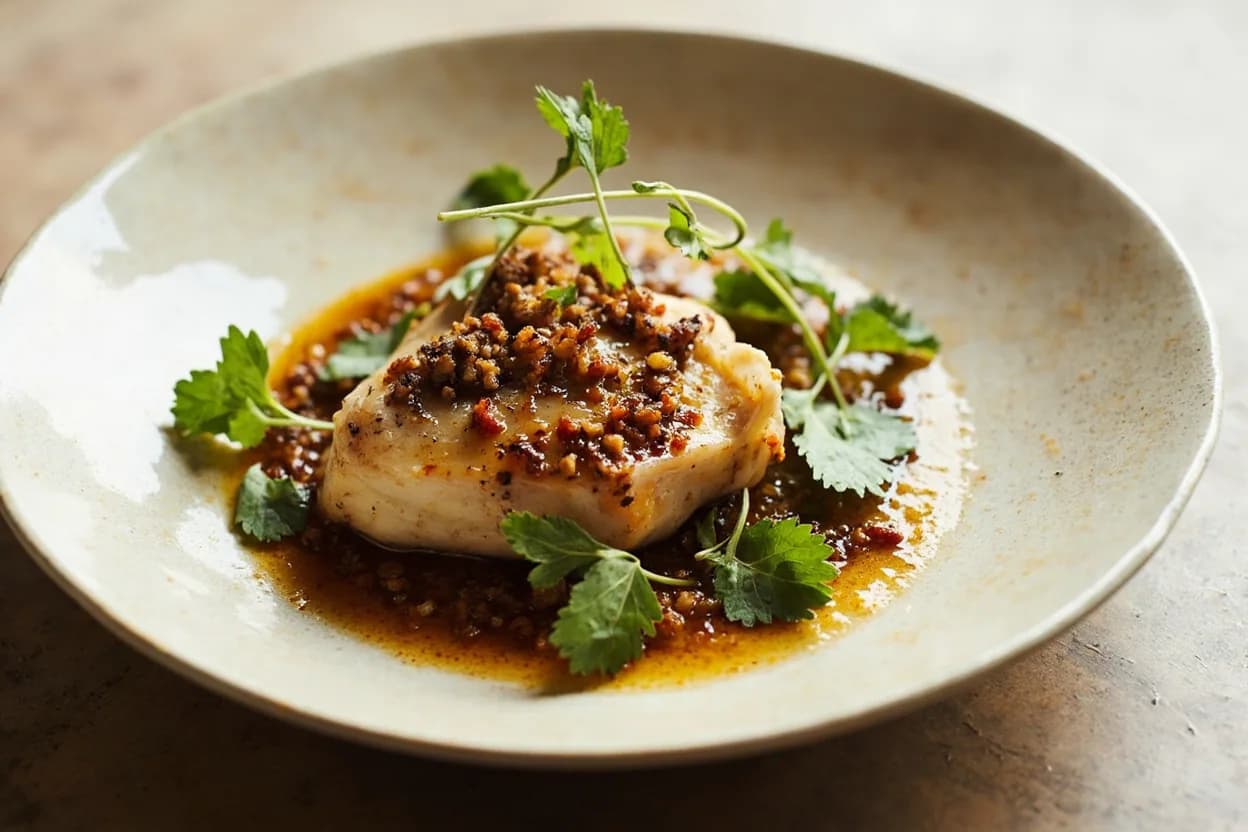
- 6For medallions (Spanish 'rape medallones'): cut across the grain into rounds 3–4 cm thick. Season and sear in very hot oil, 2 min per side, finishing in the oven at 180 °C for 4–5 min.
- 7For whole roast loin: tie with kitchen twine at 4 cm intervals to maintain shape. Season aggressively, sear on all sides, roast at 200 °C until internal temperature reaches 55–58 °C (about 12–15 min for a 300 g loin).
- 8Rest 5 min before slicing; the dense texture benefits from resting more than delicate fish does.
Prep & butchery
- Buy monkfish tails only if the inner membrane has NOT been removed and then re-wrapped — check that the flesh is firm and uniform, not wrapped in cling film over a wrinkled surface.
- The inner purple membrane is the single biggest pitfall in monkfish cookery; even a small strip left behind will cause unsightly contraction and toughening.
- If roasting whole, tie the loin into an even cylinder so it cooks uniformly end-to-end.
- Monkfish releases substantial water during cooking — thoroughly pat dry before searing or the exterior will steam rather than color.
- In Spanish preparations, a light flour dusting (enharinar) before frying helps the exterior brown without overcooking the inside.
Substitutes
- Large sea scallops
Not a fillet substitute, but matches monkfish's sweet, firm bite in braises and sautés; reduce cooking time significantly.
- Swordfish steak
Similar density and robustness; holds up to grilling and high heat with the same meaty character.
- Halibut loin
Flakier and more delicate but the closest white-fish analog for texture; watch for overcooking.
- Lobster tail
The flavor model monkfish strives toward — not a budget substitute but useful for understanding the target texture and sweetness.
Related cuts
- Monkfish cheeks
Small, pearl-shaped muscles extracted from the head section; more delicate than the loin, excellent in quick pan preparations.
- Monkfish liver (ankimo)
The large liver, especially prized in Japanese cuisine as 'foie gras of the sea'; poached in sake and soy.
- Cod loin
Flakier and more delicate than monkfish but similar cylindrical loin shape and white-fish flavor direction.
Appears in
References
- 1.The River Cottage Fish Book, Hugh Fearnley-Whittingstall & Nick Fisher, Bloomsbury
- 2.Cocina Catalana, Jaume Fàbrega, La Magrana
- 3.Fish & Shellfish, Rick Stein, BBC Books
- 4.La Cucina del Mare, Allan Bay, Giunti Editore
Confidence: high
Notes
The triple-skin rule
Monkfish is the only common food fish with three distinct concentric layers to remove before cooking. Professional fishmongers count them: outer skin (rough, mottled), secondary skin (translucent), inner membrane (purple-gray). Home cooks who skip the innermost layer discover it the hard way — the medallion curls into a dome within 60 seconds of hitting a hot pan.
Spanish rape (rah-peh)
In Catalan and Spanish Mediterranean cooking, rape is a cornerstone species. The medallion cut — ruedas de rape — is standard, and the head and spine are never discarded: they go into the fish stock (fumet) that forms the base of suquet, fideuà, and rice dishes. Spanish fishmongers typically leave the backbone in and let the cook remove the loins at home.