Knife Cuts — Regional & Global
Napa Cabbage Cross-Cut for Kimchi
Also: baechu kimchi cut, Chinese cabbage kimchi prep, kimchi cabbage sectioning
Halving, quartering, and optionally cross-cutting napa cabbage maximizes brine penetration, salting efficiency, and paste adhesion for baechu kimchi.
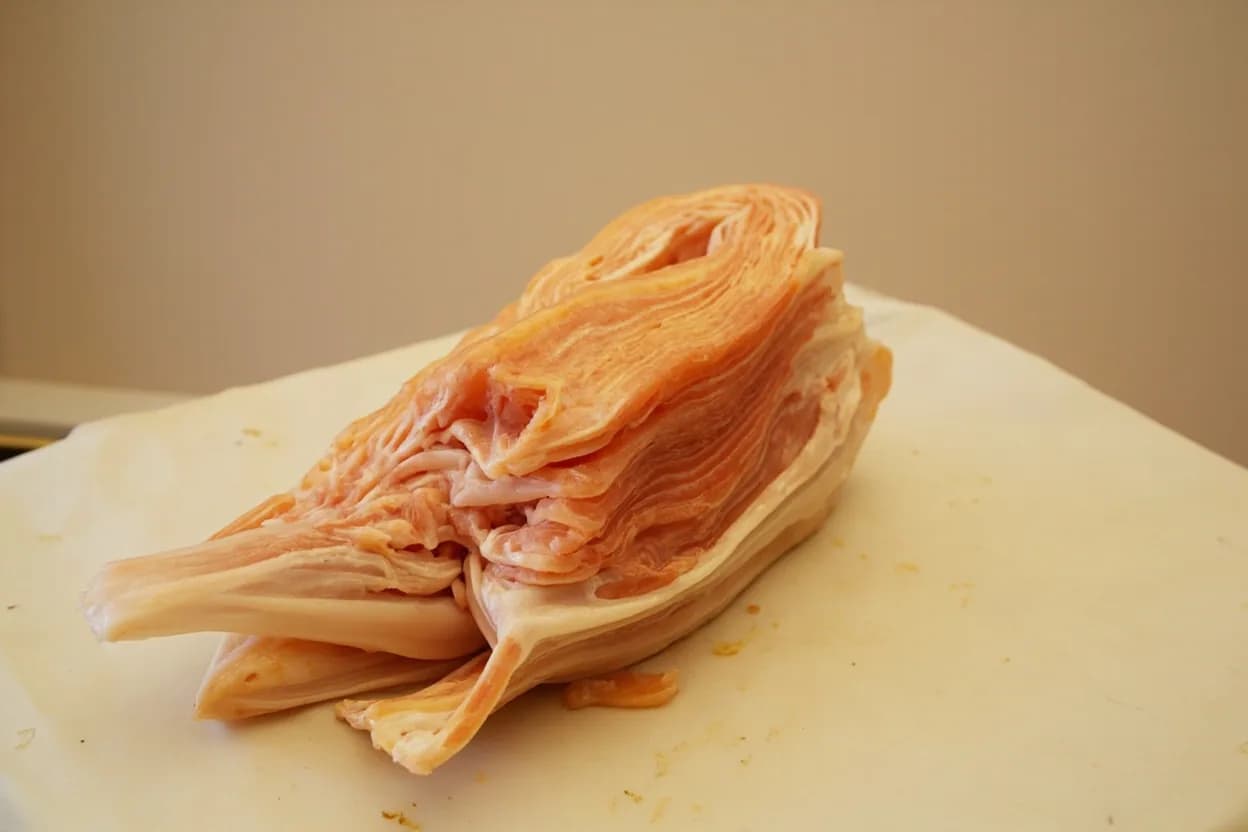
The standard cutting protocol for preparing napa cabbage (Brassica rapa subsp. pekinensis) for baechu kimchi — Korea's quintessential whole-leaf kimchi. The sequence: first a partial longitudinal cut from the stem end (not all the way through), then tearing the cabbage apart by hand to produce two halves with intact, unshredded leaves. Each half is cut or torn into quarters. The cuts preserve the leaf structure so that kimchi paste (gochugaru, garlic, ginger, jeotgal — fermented seafood) can be packed between individual leaves rather than being smeared on pre-shredded pieces. An optional cross-cut (transverse cuts at 5–7 cm intervals) applies when making mak kimchi (quick kimchi) rather than traditional whole-leaf kimchi, trading presentation for faster fermentation and easier eating.
In photos

Where it comes from
Napa cabbage: a large, oblong-headed Brassica with tightly packed pale green to white leaves, mild sweetness, and high water content (approximately 95%). The core is firm and dense; outer leaves are more porous and absorb brine faster than inner leaves.
Best for
How to cook it
- 1Cut from the stem end: make a 6–8 cm longitudinal incision into the core of the whole head, then use both hands to pull the halves apart — the tear runs naturally along leaf joins and preserves more intact surface.
- 2Repeat to quarter: make another short cut at the top of each half and tear again, yielding four sections still attached at the base.
- 3Salt generously between every few leaves (coarse sea salt or kosher salt, never iodized — iodine inhibits fermentation). Use approximately 1 cup coarse salt per 2 kg cabbage.
- 4Rest salted quarters cut-side up in a large bowl, turning every 30 minutes. After 1–2 hours the cabbage should be limp enough to bend a rib without snapping. Rinse 3 times in cold water and drain thoroughly — residual salt concentration matters enormously for fermentation rate.
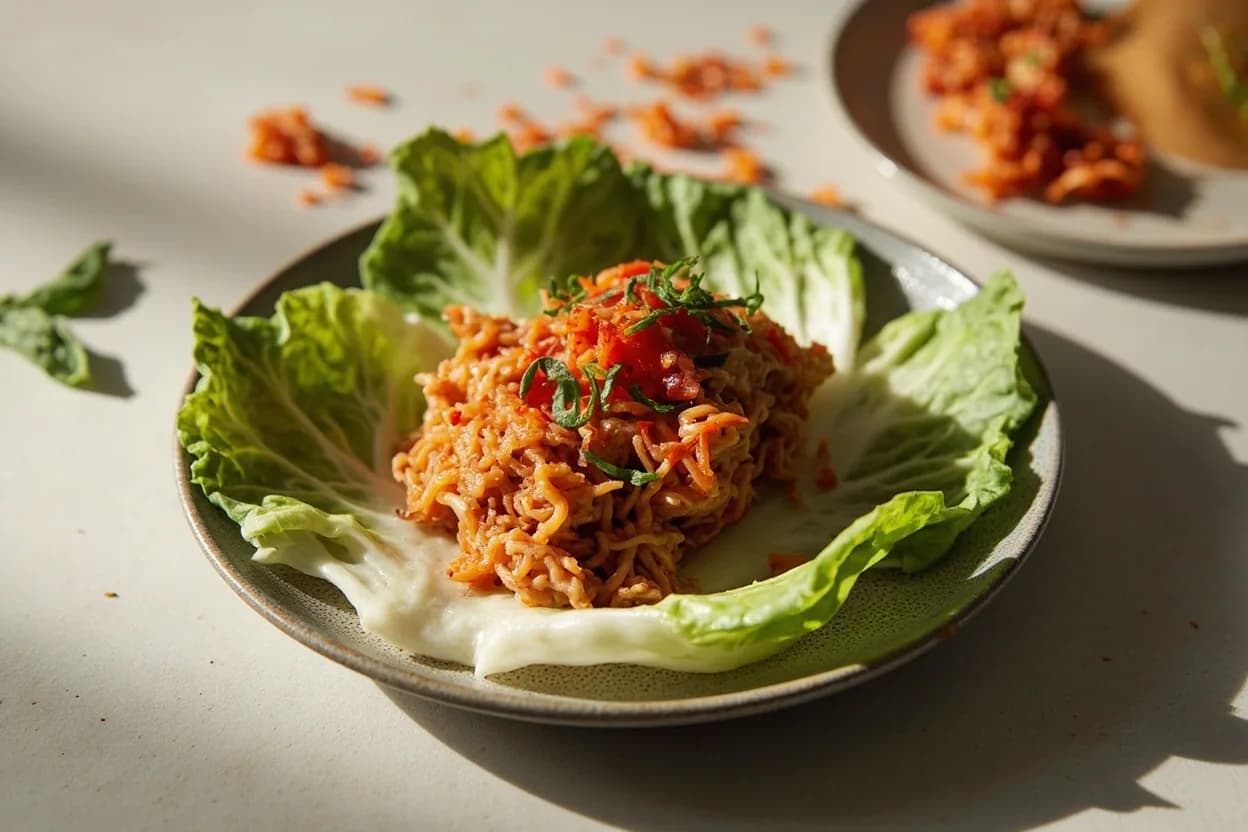
- 5For mak kimchi: after salting and rinsing, cross-cut the drained quarters at 5–7 cm intervals with a single chef's knife stroke. Toss with paste rather than packing leaf by leaf.
- 6For tongbaechu kimchi: fan open each leaf of a drained quarter and apply a thin, even coat of kimchi paste to every leaf surface using a gloved hand, working from inner leaves outward. Fold the outermost leaf around the packed section to seal.
Prep & butchery
- Remove any damaged or yellowed outer leaves before cutting.
- Use gloves when applying gochugaru paste — the red pepper stains skin for hours.
- Pack kimchi tightly into sterilized jars or crocks to minimize air pockets, which promote undesirable yeast growth over clean lactic acid fermentation.
- Label with the date — kimchi flavor is best at 3–5 days fermented at room temperature for eating fresh, and improves further over weeks to months refrigerated for cooking.
Substitutes
- Savoy cabbage
Crinkled leaves hold paste differently and ferment faster due to higher porosity; acceptable in diaspora settings, different texture result.
- Green cabbage
Denser, less yielding; requires longer salting; produces a crunchier, less nuanced kimchi.
Related cuts
The companion Korean kimchi prep: cubed radish fermented separately using similar salting logic.
- Julienne (for oi sobagi)
Cucumber kimchi requires a different cross-cut — quartered lengthwise from the center outward, leaving one end attached.
Appears in
References
- 1.The Art of Fermentation — Sandor Ellix Katz
- 2.Koreatown: A Cookbook — Deuki Hong and Matt Rodbard
- 3.My Korea — Hooni Kim
- 4.Korean Home Cooking — Sohui Kim
- 5.Fermented Vegetables — Kirsten and Christopher Shockey (salting and fermentation science)
Confidence: high
Notes
Why tear, not cut?
Running a knife cleanly through the cabbage severs cell walls uniformly, producing a cut edge that is smooth and slightly watery. Tearing along natural leaf boundaries breaks fewer cells, leaving more intact surface structure. The slightly ragged tear interface holds paste better than a polished knife cut — the same logic behind tearing bread for panzanella rather than cutting it.
The salting window
Under-salted cabbage (less than 2% final brine concentration by weight of the vegetables) ferments too quickly and produces a sour, soft kimchi with off-flavors. Over-salted cabbage suppresses all fermentation and results in a persistently salty product. The rinse step after salting is where you calibrate: tasting a rinsed leaf should give you something that tastes pleasantly seasoned — like well-salted pasta water — not ocean-briny. The residual salt is the only salt in the finished kimchi.