Knife Cuts — Japanese
Nuki-giri (Tube / Hollow Cut)
Also: nuki giri, nukigiri, tube cut, cylinder cut, hollow cut
A Japanese decorative technique using round or shaped metal cutters to punch clean cylinders or hollow forms from root vegetables for kaiseki presentations.
Nuki-giri (抜き切り) is a Japanese culinary technique in which a metal tube cutter — cylindrical, floral, or otherwise shaped — is pressed or driven through a block of vegetable to produce a hollow form or a solid cylinder punched from the flesh. Nuki means 'to punch through' or 'to extract,' and giri means 'cut.' The method is distinct from ordinary knife work in that the shape is determined by the cutter's cross-section, not the blade's path. It is primarily a technique of kaiseki ryori and osechi, where each element must carry visual meaning and seasonal symbolism.
In photos
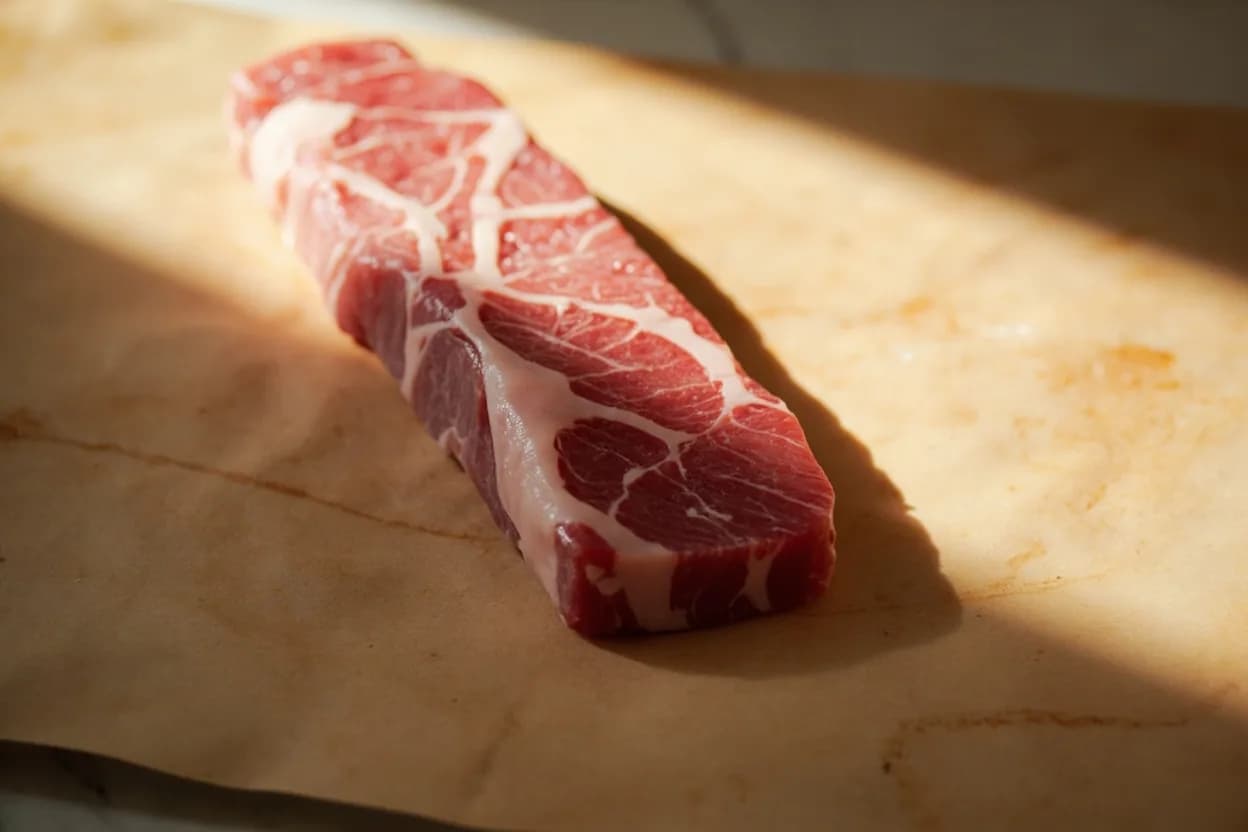
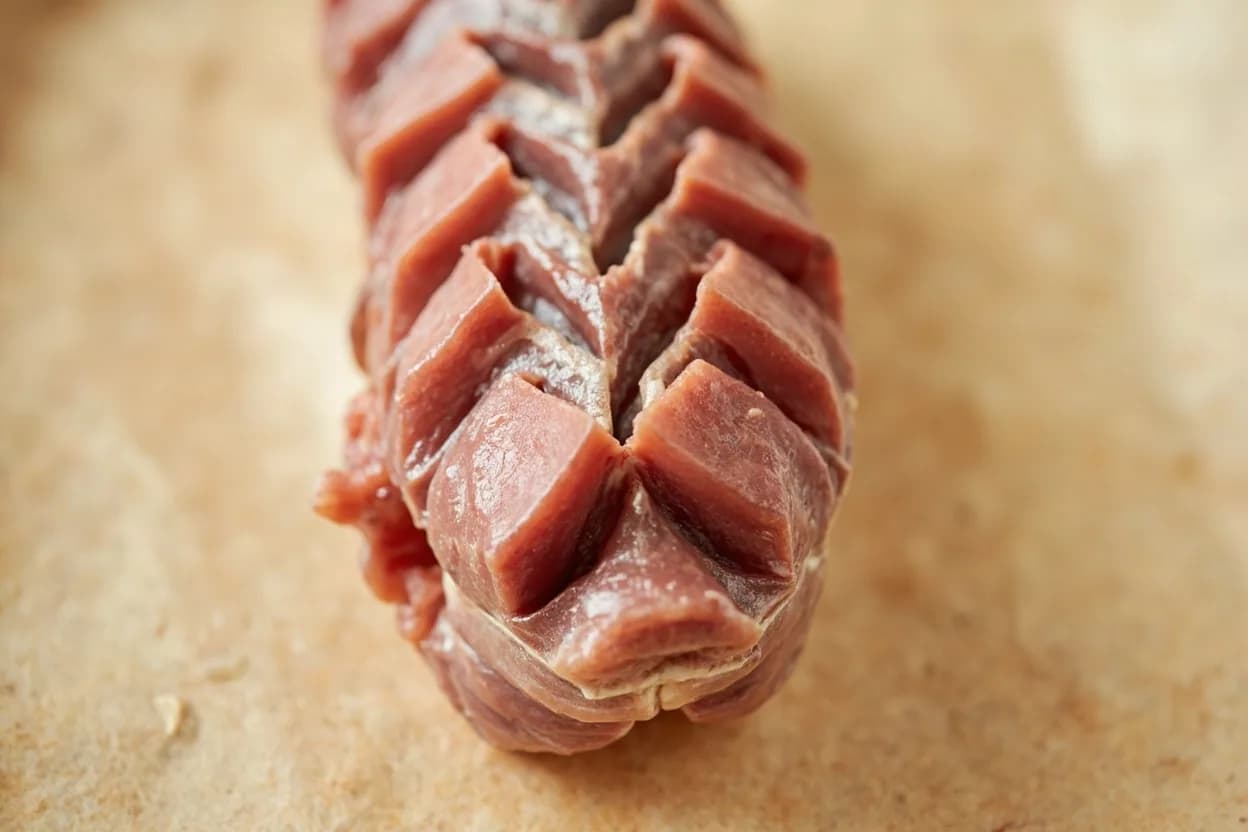
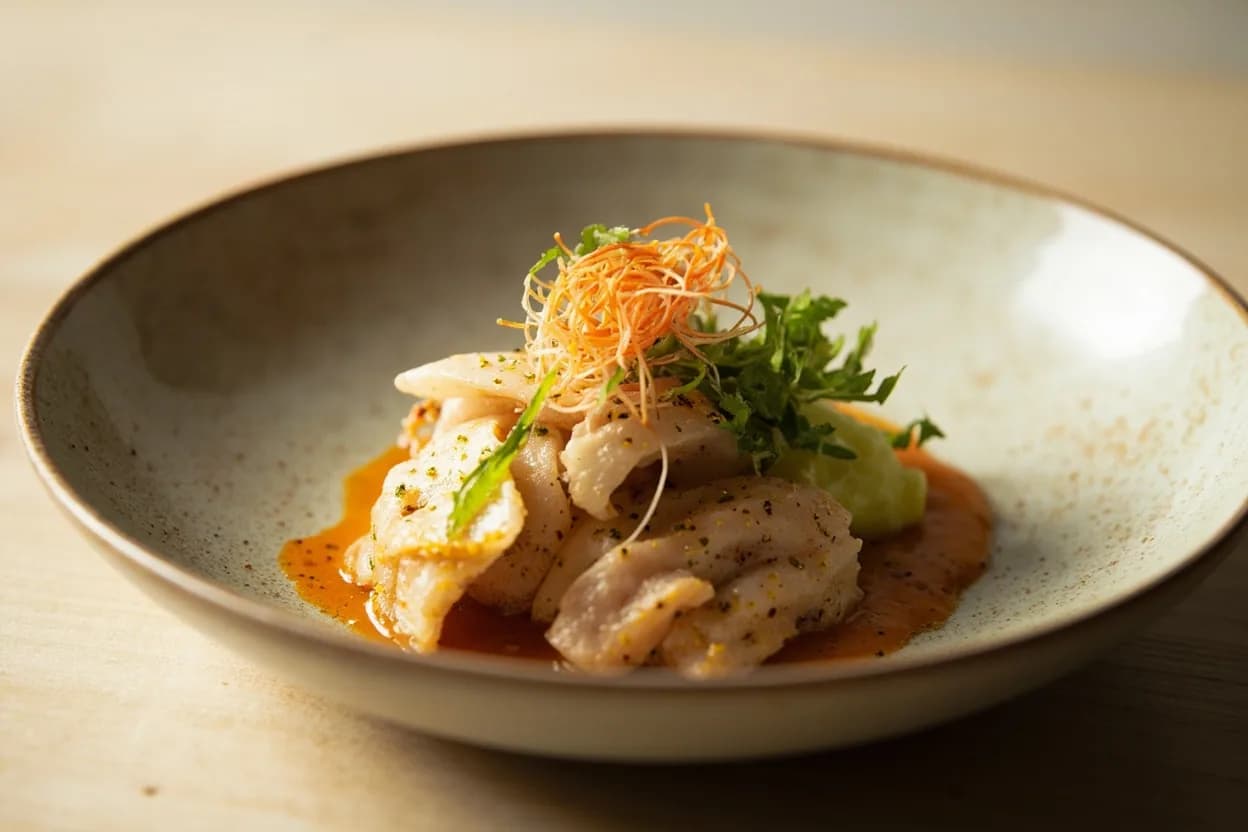
Where it comes from
Applied to dense, workable root vegetables and tubers: daikon, carrot, satoimo (taro), renkon (lotus root), kabocha, and occasionally firm-fleshed cucumber. No animal anatomy involved.
Best for
How to cook it
- 1Select a dense, crack-free vegetable and slice it into rounds or blocks of the appropriate thickness (typically 2–3 cm for simmered preparations).
- 2Press the nuki-giri cutter firmly and perpendicularly into the vegetable surface with steady downward pressure — a twisting motion while pressing helps through denser flesh.
- 3Extract the punched cylinder cleanly; if it sticks, use a skewer or thin rod pushed through the cutter to release it.
- 4For decorative flower forms, use a five-petal ume (plum) cutter and then carve curved V-grooves between petals with a paring knife to add dimensionality.
- 5Par-cook in dashi with a pinch of salt to set shape before finishing in seasoned simmering stock.
- 6Serve in clear or light-coloured broths where the decorative form is visible.
Prep & butchery
- Chill the vegetable thoroughly before cutting — cold flesh is firmer and the cutter passes through with less cracking or splitting.
- For daikon, cut cylindrical pieces perpendicular to the root's axis; for round satoimo, work from the flat top.
- After punching, score or chamfer (mentori) any sharp edges on the cylinder with a paring knife to prevent the corners from breaking off during simmering.
- The trimmings and negative rings from nuki-giri are not wasted in professional kitchens — they are reserved for rough-cut soups or staff meals.
Substitutes
- Hanagata-giri (flower knife cuts)
Achieved freehand with a paring knife rather than a cutter; produces organic, slightly irregular shapes with more artisanal character.
- Round cookie cutters
An acceptable substitute for basic cylinders in non-professional settings; less precise than Japanese nuki-giri cutters.
Related cuts
- Hanagata-giri (flower cuts)
Decorative freehand-knife floral shapes, often used alongside or in lieu of nuki-giri in kaiseki plating.
- Mentori (edge chamfering)
The practice of bevelling the sharp corners of cut vegetable cylinders is nearly always applied after nuki-giri to prevent crumbling.
- Ichi-moji-giri (coin rounds)
Simple transverse rounds from which nuki-giri cylinders may be punched before decorative carving.
Appears in
References
- 1.Japanese Cooking: A Simple Art — Shizuo Tsuji
- 2.Kaiseki: The Exquisite Cuisine of Kyoto's Kikunoi Restaurant — Murata Yoshihiro
- 3.The Japanese Kitchen — Hiroko Shimbo
Confidence: high
Notes
Symbolism in shape
In kaiseki and osechi, every decorative vegetable form carries seasonal or auspicious meaning. The ume (plum blossom) cutter signals early spring; the matsu (pine needle) represents longevity; the kame (tortoise) pattern conveys long life. A chef selecting nuki-giri shapes is communicating the season and occasion as much as building flavour, which is why the technique is inseparable from the broader aesthetic grammar of Japanese formal cooking.
The hollow form as vessel
When a daikon or thick cucumber cylinder is punched and the inner core is partially hollowed rather than fully removed, the resulting tube becomes an edible vessel — filled with crab, miso, or roe and served as a composed hors d'oeuvre. This is distinct from the decorative form usage and requires a slightly different cutter — one designed to core rather than punch all the way through.