Knife Cuts — Regional & Global
Kkakdugi Cube (Radish Donut Cut)
Also: kkakdugi cut, Korean radish cube, mu donut cut, daikon kimchi cube
A precise ~2 cm cube cut from Korean radish (mu) that provides uniform surface area for even salt penetration and consistent lactic acid fermentation throughout the batch.
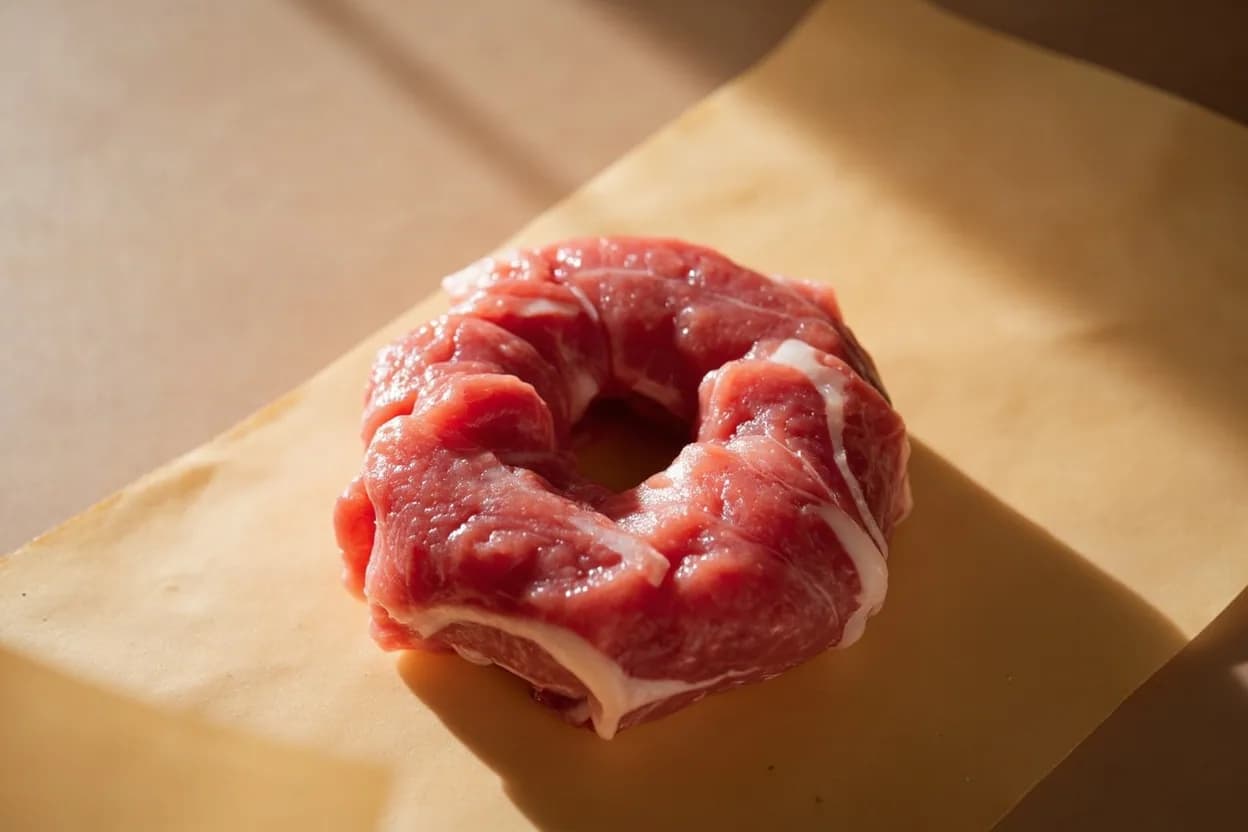
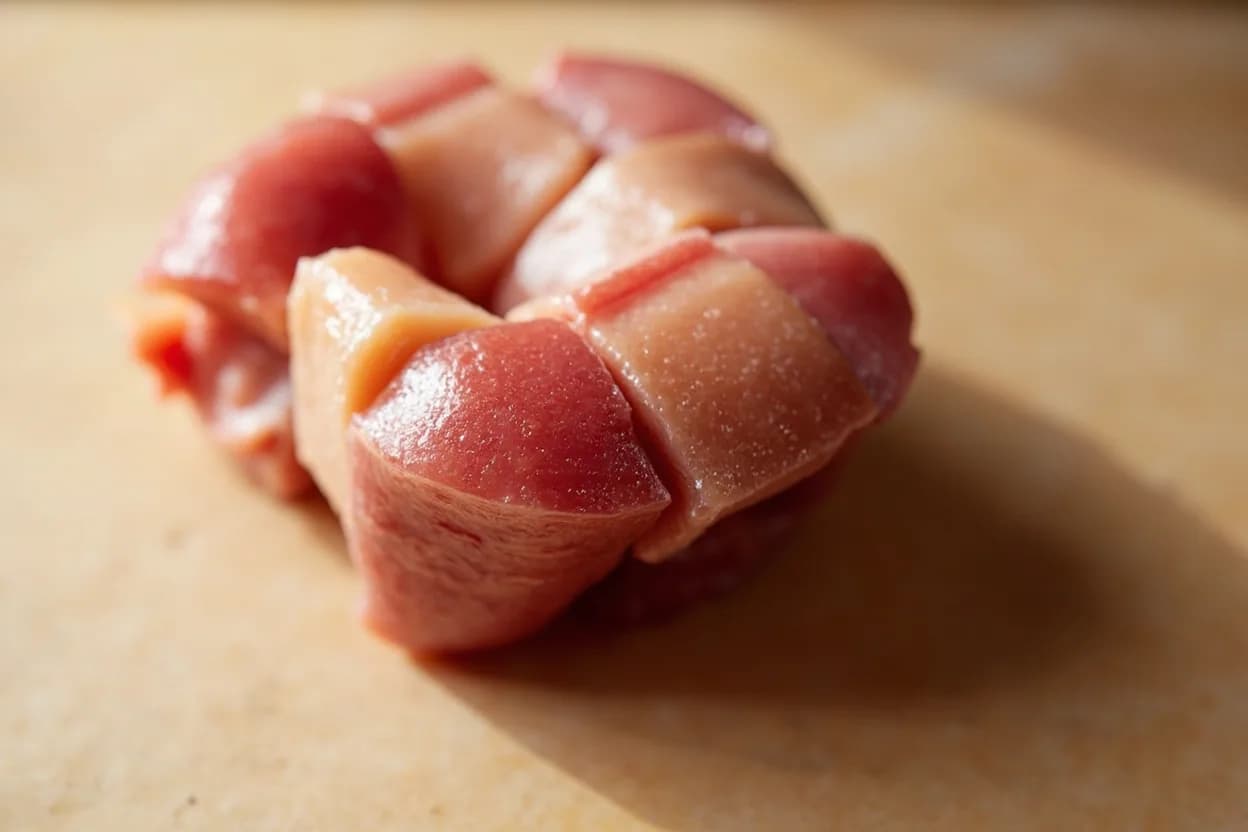
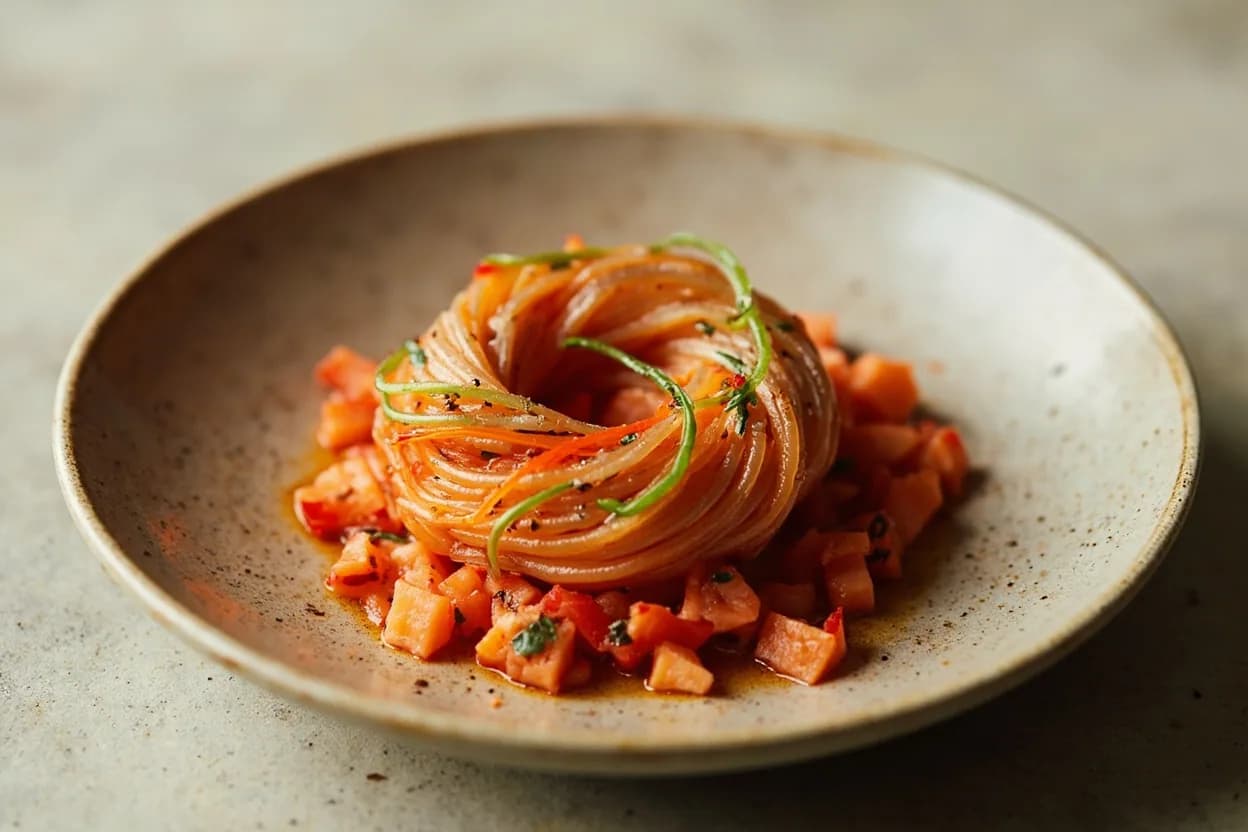
The canonical cutting technique for kkakdugi, one of Korea's most beloved kimchi styles. Korean radish (mu, Raphanus sativus var. longipinnatus in its Korean cultivar — rounder and denser than Japanese daikon) is peeled and cut into cubes of approximately 2 cm per side, sometimes described as a 'bite-sized donut' because the resulting pieces are compact, with a slight give when bitten. The sizing is deliberate: too large and the interior remains under-fermented while the exterior turns sour; too small and the radish breaks down entirely within days, producing mush rather than the desired toothsome crunch. The cube's six flat faces provide maximum, equal surface contact with the salt and gochugaru paste.
In photos
Where it comes from
Korean radish (mu): a cultivar of the same species as daikon but shorter, rounder, and with a higher water content and sweeter, more peppery flavor. Flesh is white throughout with a green shoulder near the top. Available year-round but best in autumn and winter when starches convert to sugars.
Best for
How to cook it
- 1Peel the mu using a vegetable peeler or paring knife, removing the thin skin and any green or fibrous outer layer.
- 2Trim both ends. Quarter the radish lengthwise, then cut each quarter into lengthwise strips of ~2 cm width. Finally, cut across the strips at ~2 cm intervals to produce consistent cubes.
- 3Toss cubes with coarse sea salt (approximately 1 tablespoon per 500 g radish) and a small amount of sugar (1 teaspoon). Let sit 30–60 minutes in a colander over a bowl — do not press or squeeze. The radish will release significant liquid.
- 4Do not rinse the salted radish for kkakdugi (unlike baechu kimchi preparation). The released liquid stays in the batch and becomes part of the brine. Drain briefly, then toss directly with the kimchi paste.
- 5Paste components: gochugaru (Korean red pepper flakes), minced garlic, grated ginger, jeotgal (salted fermented seafood — conventionally saeujeot, salted shrimp, or myeolchi-aekjeot, anchovy sauce), and sliced green onion. Toss until every cube face is evenly coated.
- 6Pack into glass jars, leaving 2–3 cm headspace for gas expansion. Ferment at room temperature 24–48 hours, pressing down the cubes once daily, then refrigerate.
Prep & butchery
- Select firm, heavy mu with no soft spots or hollow sound when tapped — hollow radishes have a dry, pithy interior that does not ferment well.
- The green shoulder of Korean radish is slightly sweeter than the lower portion; including it in the same batch is fine but be aware that it may ferment at a fractionally different rate.
- A sharp knife is essential — a dull knife crushes the radish cells and produces weeping, waterlogged cubes that ferment unevenly.
- Work in batches if cutting more than 2 kg; the cubes brown slightly on cut faces when exposed to air for more than 10 minutes (enzymatic browning), though this does not affect flavor or fermentation.
Substitutes
- Japanese daikon — cubed
Longer, milder, higher water content; will ferment slightly faster and produce a less sweet, more watery result. Increase salt by ~10%.
- Turnip — cubed
Acceptable substitute with a more assertive sulfurous flavor; common in Central Asian and Middle Eastern pickled vegetable preparations using the same cube logic.
- Watermelon radish — cubed
Striking magenta interior; flavor is milder than mu; works for fast kkakdugi (under 24 hours) but color bleeds into brine.
Related cuts
The companion kimchi prep cut; baechu kimchi and kkakdugi are often made together from the same paste batch.
- Daikon — batonnet
Japanese preparation producing 4–5 cm sticks for tsukemono (pickles) and oden; shares the uniform-sizing logic for even pickle penetration.
- Brunoise (fine dice)
Western analog for precision cubing; kkakdugi cube is a 2 cm large dice by French brigade terminology.
Appears in
References
- 1.Koreatown: A Cookbook — Deuki Hong and Matt Rodbard
- 2.My Korea — Hooni Kim
- 3.Korean Home Cooking — Sohui Kim
- 4.The Kimchi Cookbook — Lauryn Chun
- 5.The Art of Fermentation — Sandor Ellix Katz (lacto-fermentation science and salt concentration)
Confidence: high
Notes
Why not rinse?
The no-rinse protocol for kkakdugi contrasts with baechu kimchi (where the salted cabbage is rinsed thoroughly). The difference: cabbage releases so much water during salting that it must be rinsed to prevent the final kimchi from being cloyingly salty. Radish releases liquid more slowly and in smaller quantity; that liquid, carrying dissolved sugars and radish flavor compounds, is an asset in the kkakdugi brine. Rinsing would dilute the flavor and the natural sugars that feed fermentation.
The 'donut' nomenclature
The 'donut cut' (도넛 모양) is informal Korean home-cook vocabulary referring to the compact, dense cubic shape that bounces slightly when dropped into a bowl — like a crouton or a small solid cube rather than a hollow ring. The nickname emphasizes the desired firmness and consistent geometry, not any resemblance to a torus.