Offal & Variety Meats
Kitfo Fine Mince (Ethiopian Raw Beef Tartare)
Also: kitfo, kifto, Ethiopian steak tartare, lebleb kitfo (warmed), tere kitfo (raw)
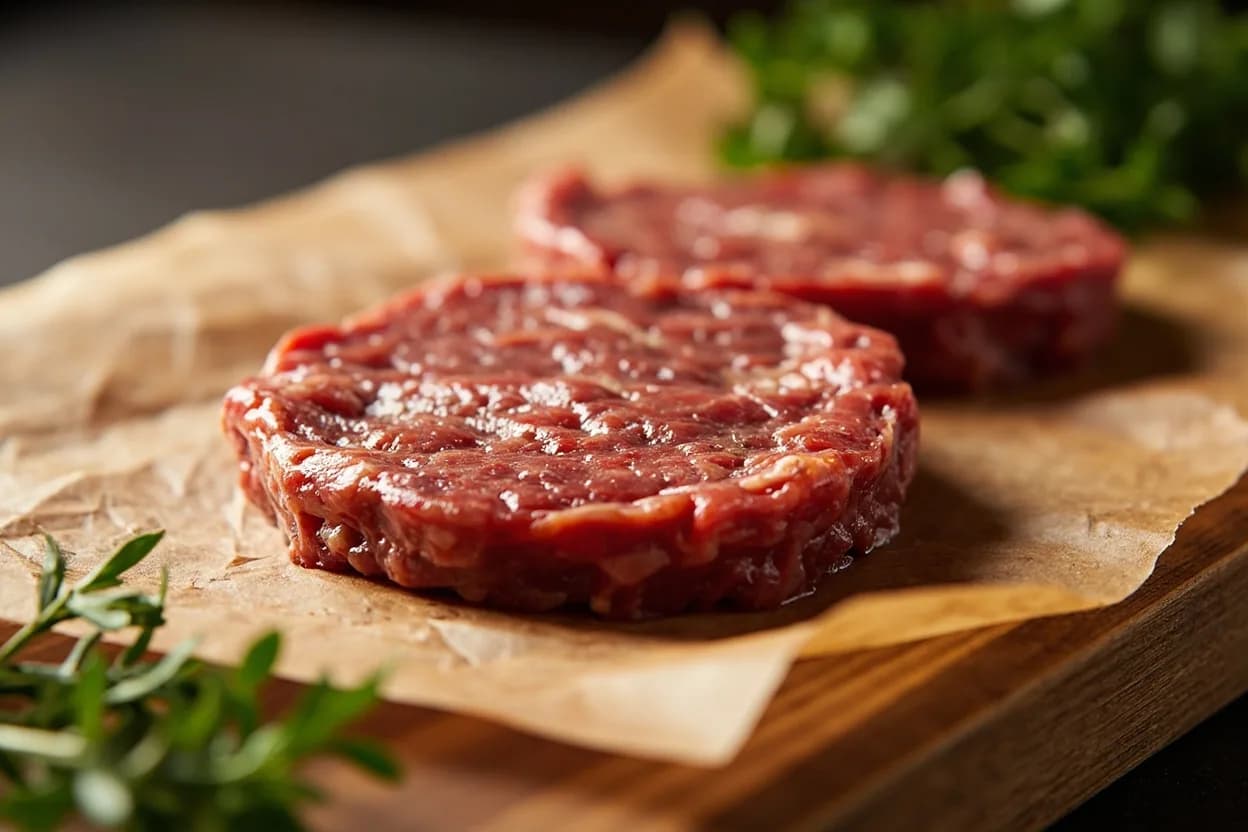
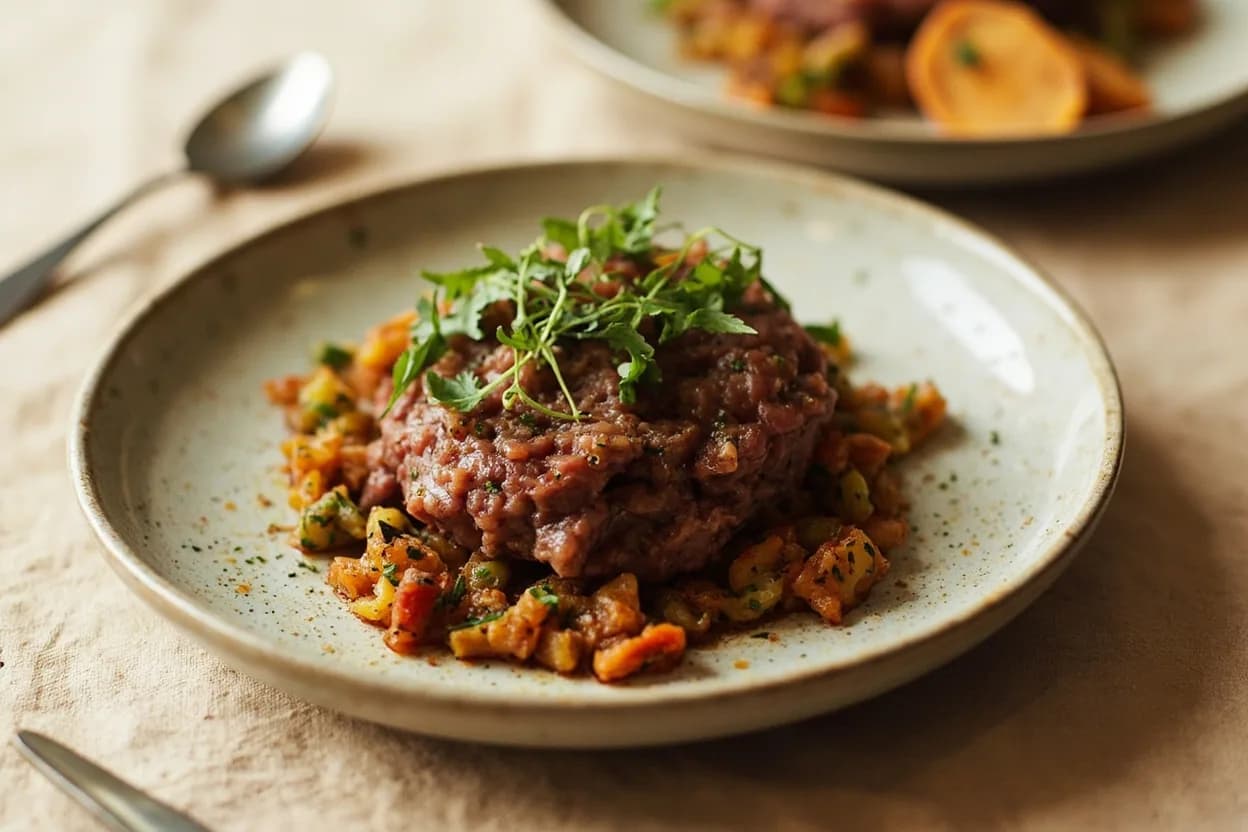
Hand-chopped lean beef mince for Ethiopian kitfo — cut cold and fine to a uniform, barely-cohesive texture that melts against spiced clarified butter.
Kitfo is Ethiopia's exalted raw (or lightly warmed) beef preparation — equivalent in cultural prestige to steak tartare or carpaccio. The defining element is the cut: lean beef, ideally tenderloin or top sirloin, is hand-chopped with a curved mezzaluna-style chopper or heavy knife to a very fine, uniform mince. Machine grinding is considered a degradation. The cut must be fine enough to absorb mitmita and niter kibbeh immediately but coarse enough to retain distinct texture — not a paste.
In photos

Where it comes from
Tenderloin (fillet) is the premium choice: zero connective tissue, no sinew, and fine grain that chops to an even mince without becoming elastic. Top sirloin (top round in some regions) is the traditional everyday cut: leaner, slightly more fibrous, but yielding an acceptably fine mince. Any visible fat, silverskin, or sinew must be completely removed before chopping.
Best for
How to cook it
- 1Select the cut: tenderloin for maximum luxury; top sirloin (trimmed entirely of fat) for the traditional version.
- 2Chill the meat to just above freezing (1–2°C) — cold meat holds its shape under the knife and chops clean rather than smearing.
- 3Remove all fat, silverskin, and connective tissue meticulously; any sinew will resist the knife and create stringy clumps.
- 4Place on a cold, heavy chopping board (marble or thick hardwood chilled briefly in the freezer).
- 5Chop with a heavy, sharp knife using a rocking motion, working the meat in perpendicular passes until the mince is uniformly fine — approximately 3–5 mm pieces. Rotate 90° periodically to ensure even texture throughout.
- 6Transfer immediately to a pre-chilled bowl. Work quickly — prolonged contact with the board warms the meat.
- 7Dress with warmed niter kibbeh (just enough to coat), mitmita, and kosher salt immediately before serving. For lebleb (lightly warmed) kitfo, stir briefly in a warm pan — 30 seconds maximum, just until the exterior loses its raw sheen.
Prep & butchery
- Freshness is non-negotiable for raw preparation: the beef should be from a trusted butcher and ideally purchased the same day.
- Never use pre-ground beef for kitfo — the grinding process smears the fat and proteins together, creating an entirely different texture and flavour profile.
- Knife sharpness matters more here than in almost any other preparation: a dull knife tears and smears rather than cutting clean.
- The board and knife should both be cold at the start; some cooks run the blade under cold water between passes.
- Silverskin removal: slide a boning knife under the membrane at a low angle, pulling the silverskin taut while running the knife beneath it — this is the same technique used for pork tenderloin.
Substitutes
- Top round (eye of round, trimmed)
Very lean, chops fine; flavour slightly less complex than sirloin but traditional in home preparations.
- Ribeye (trimmed of all external and internal fat)
Technically possible but the marbling fights the fine chop — not recommended.
- Lamb (leg, trimmed)
Used in some regional Ethiopian preparations; stronger flavour that responds well to extra mitmita.
Related cuts
- Beef Tartare — Classic French Style
Cultural parallel — both are raw hand-chopped beef preparations; French tartare uses a slightly coarser chop and different condiments.
- Tere Siga
Raw beef served in larger slices rather than minced — the other major Ethiopian raw beef preparation.
- Tenderloin (Beef Fillet)
The premium source cut for kitfo, chosen for its complete absence of connective tissue.
Appears in
References
- 1.Taste of Ethiopia — Tigist Ketema
- 2.The Ethiopia Cookbook — Dorinda Hafner
- 3.Feast: Food of the Islamic World — Anissa Helou (East Africa section)
- 4.On Food and Cooking: The Science and Lore of the Kitchen — Harold McGee (on raw meat textures)
Confidence: high
Notes
Tere vs. lebleb
Kitfo is served in two states: tere (completely raw, preferred at formal celebrations and by connoisseurs) and lebleb (lightly heated — usually stirred in the warm niter kibbeh until just barely turning from red to pink on the exterior). Lebleb is safer for guests unfamiliar with raw beef but sacrifices the silkiest texture. The preparation and mince size are identical; the difference is purely thermal.
The role of niter kibbeh
The spiced butter is the vehicle that unifies the mince. It must be warm enough to flow through the mince and coat every particle (around 40°C) but not so hot it begins to cook the surface. The correct ratio is roughly 1.5–2 tablespoons of niter kibbeh per 200 g of mince — enough to make the mince glisten and just begin to clump, not enough to make it greasy.
Food safety
Raw beef carries inherent microbiological risk. Kitfo has been consumed safely for centuries in Ethiopia where supply chains are short and butchery is same-day. In diaspora or restaurant contexts, sourcing whole-muscle cuts (not pre-ground) from inspected facilities and maintaining cold chain throughout preparation are the primary mitigations.