Lamb & Goat — Primal & Subprimal
Kofta & Kibbeh Grind Selection
Also: kefta grind, kibbeh meat blend, lamb mince for kofta
Fat-to-lean calibration and grind texture are everything — the wrong blend turns kofta crumbly and kibbeh shell pasty.
A technique-driven approach to selecting and grinding lamb (or a lamb-goat blend) for two distinct preparations: kofta, which demands a medium-coarse mince enriched with high-fat shoulder meat and optionally tail fat; and kibbeh, which calls for a fine-ground lean paste (outer shell) alongside a coarser, spiced filling.
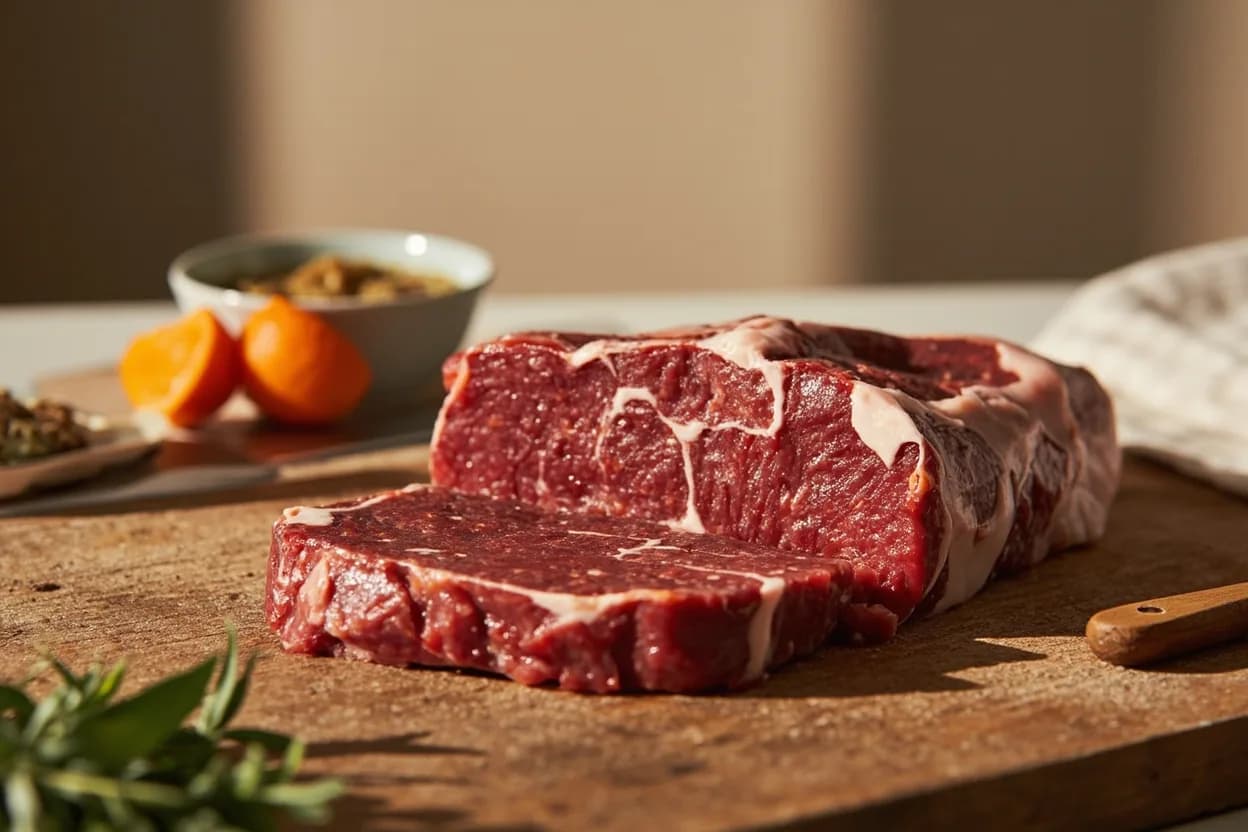
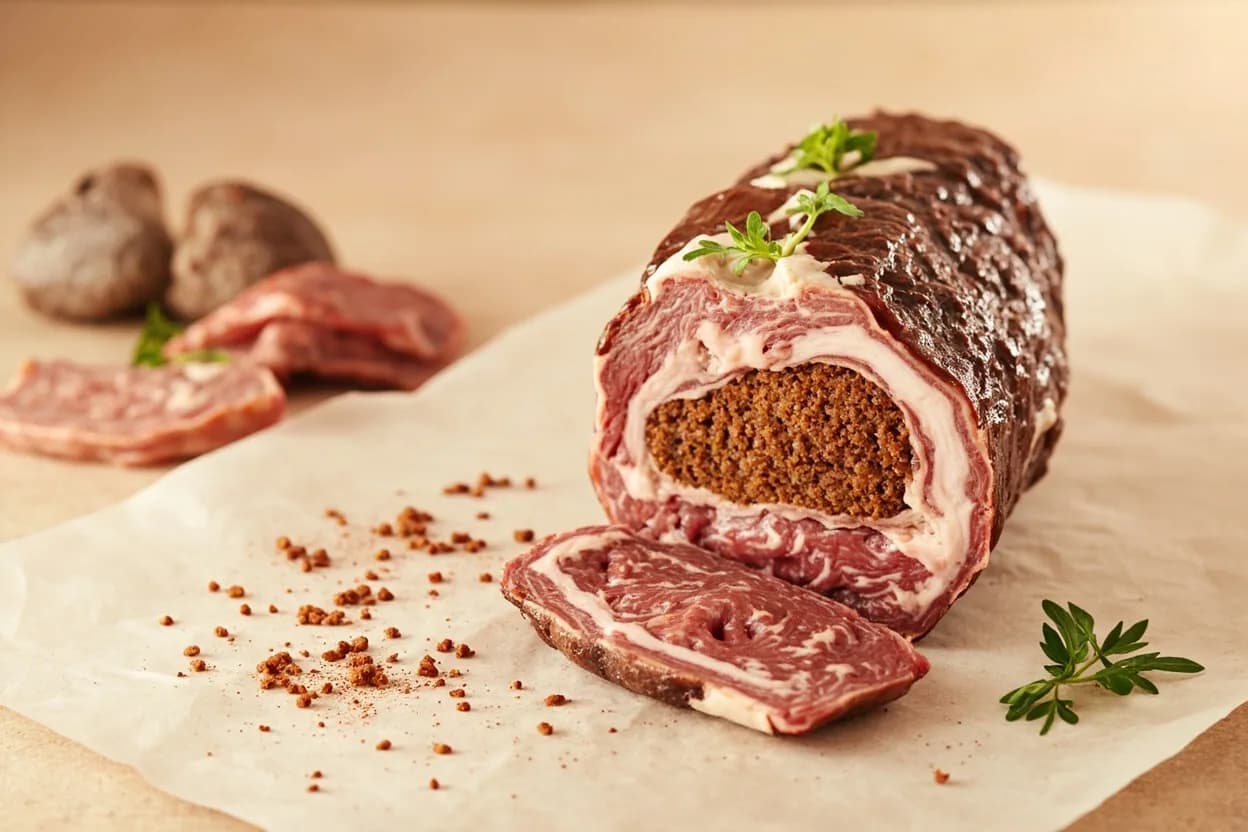
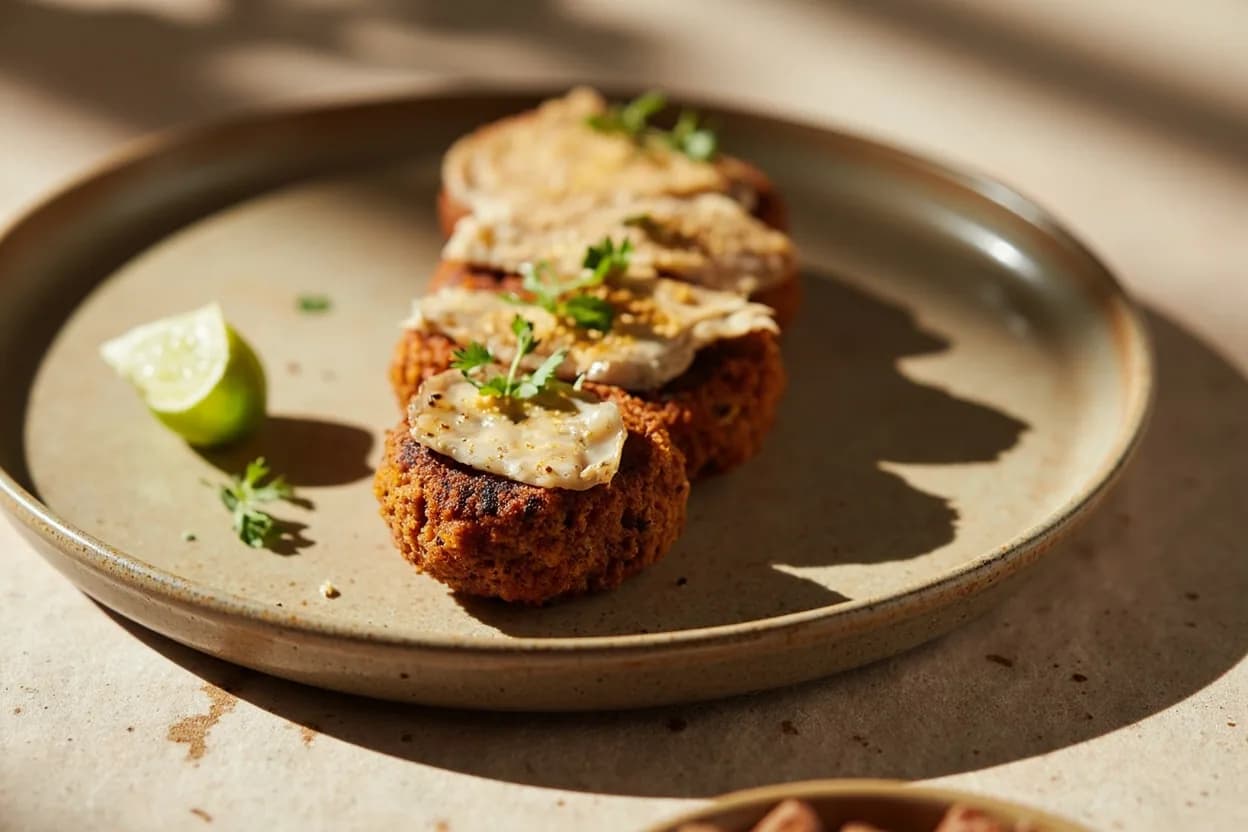
In photos
Where it comes from
Primary cuts: bone-in or boneless lamb shoulder (neck end preferred for fat marbling); secondary: leg trim for leaner addition. Tail fat (alya) from fat-tailed sheep breeds adds an unctuously rich note specific to Levantine and Central Asian kofta traditions. For kibbeh, lean leg or loin trim is the preferred base for the finely-pounded outer shell.
Best for
How to cook it
- 1For kofta: dice shoulder meat cold, keep at 2–4°C, grind once through a 6 mm plate. Fold in fat trim, spices (cumin, allspice, cinnamon, chili), and aromatics; mix by hand until the paste is sticky and slightly glossy.
- 2For kibbeh shell: use chilled lean leg or loin trim. Grind twice through the finest plate (2–3 mm). Combine with fine bulgur (No. 1 grade, soaked and squeezed), salt, and allspice; pound in a food processor until a smooth, pliable paste forms.
- 3For kibbeh filling: grind shoulder meat once on a coarser plate (6 mm), sauté with onion, pine nuts, allspice, and cinnamon.
- 4Keep all meat refrigerator-cold throughout — warm fat smears and causes greasiness and poor texture.
- 5Form kofta immediately after mixing; refrigerate formed kibbeh before frying or baking to firm the shell.
Prep & butchery
- Chill grinder parts (plate, auger, die) in the freezer for 20 minutes before grinding
- Cut meat into 2 cm cubes and spread on a sheet tray to firm up at 2°C before feeding into the grinder
- Grind fat and lean portions separately first, then combine and run through together for even distribution
- For kibbeh, soak fine bulgur (No. 1) in cold water for 10 minutes, then squeeze dry in a towel before incorporating
Substitutes
- 80/20 beef-lamb blend
Common shortcut; loses the lamb-specific sweetness but behaves similarly for kofta
- Ground goat shoulder
Leaner than lamb shoulder; acceptable substitute in North African traditions
- Beef suet (for tail fat)
Far less authentic; adds richness but not the characteristic alya sweetness
Related cuts
- Lamb Shoulder
Primary cut for both preparations; provides fat and flavor
- Lamb Leg
Lean trim used for kibbeh outer shell
Exceptionally rich in collagen and fat; excellent addition to kofta blends
Appears in
References
- 1.Anissa Helou — Feast: Food of the Islamic World
- 2.Claudia Roden — A New Book of Middle Eastern Food
- 3.Paula Wolfert — The Cooking of the Eastern Mediterranean
- 4.Fouad Kassab — The Lebanese Kitchen
Confidence: high
Notes
Tail fat (alya)
Alya is the rendered fat from the broad, fleshy tail of Awassi, Karakul, and other fat-tailed sheep breeds native to the Levant, Central Asia, and North Africa. It is prized for its mild, sweet flavor and high smoke point. When unavailable, some cooks use lamb kidney suet, though the flavor profile shifts noticeably. Do not substitute with standard Western lamb back fat, which tends to be leaner and more neutral.
Bulgur grade in kibbeh
No. 1 (extra-fine) bulgur is non-negotiable for kibbeh outer shell — coarser grades result in a grainy, cracked exterior. In Lebanon and Syria, the finest ground bulgur is labeled 'burghul aswad' (dark) for the shell and 'burghul abyad' (white, parboiled fine) for raw kibbeh nayeh.