Regional Meat Cuts
Gopchang (Small Intestine)
Also: 곱창, beef small intestine, small gut, Korean tripe (colloquial)
Beef small intestine, rigorously cleaned by inverting, salt-rubbing, and multi-rinse, then grilled whole or sliced into rings for Korean BBQ—prized for its rich, creamy inner fat layer and snappy exterior.
Gopchang (곱창) refers specifically to the small intestine of beef (and occasionally pork, in which case it is usually called dwaeji gopchang 돼지곱창). In Korean culinary tradition, it occupies the same beloved, somewhat daring cultural territory as tripe or sweetbreads in European cooking. The intestine is a long, tubular organ; the outer muscle wall is firm and chewy, while the inner lumen is coated with a rich, creamy layer of fat and mucosal tissue. The goal of preparation is to neutralize the strong barnyard odor through a multi-step cleaning process while preserving the inner fat, which is the culinary prize.
In photos
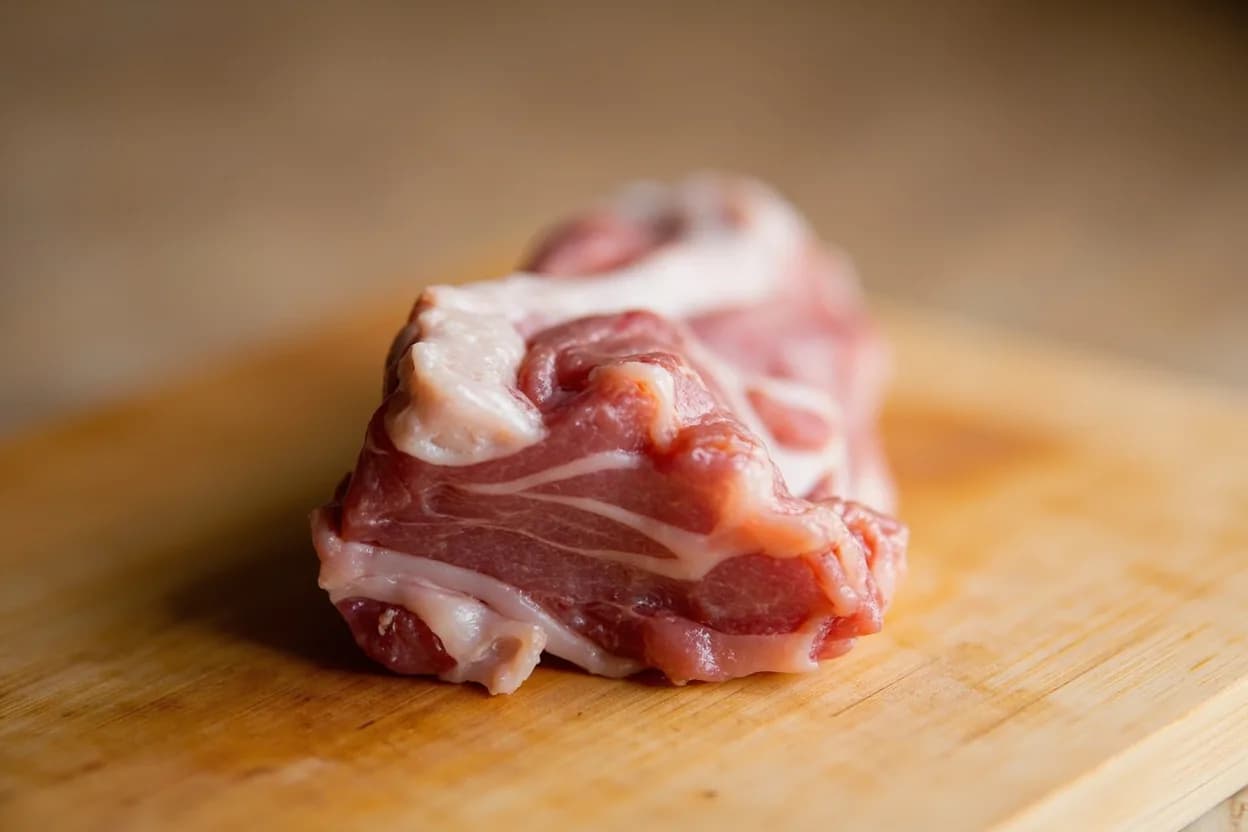
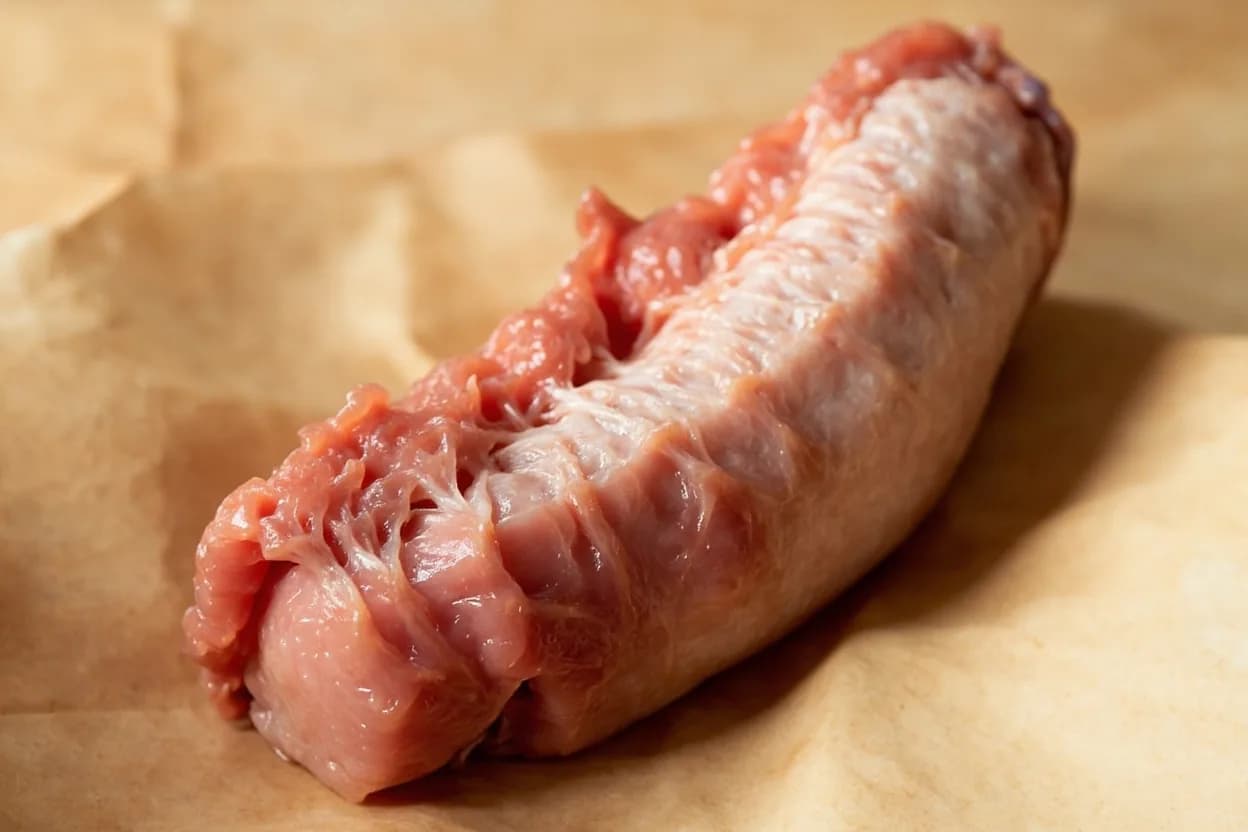
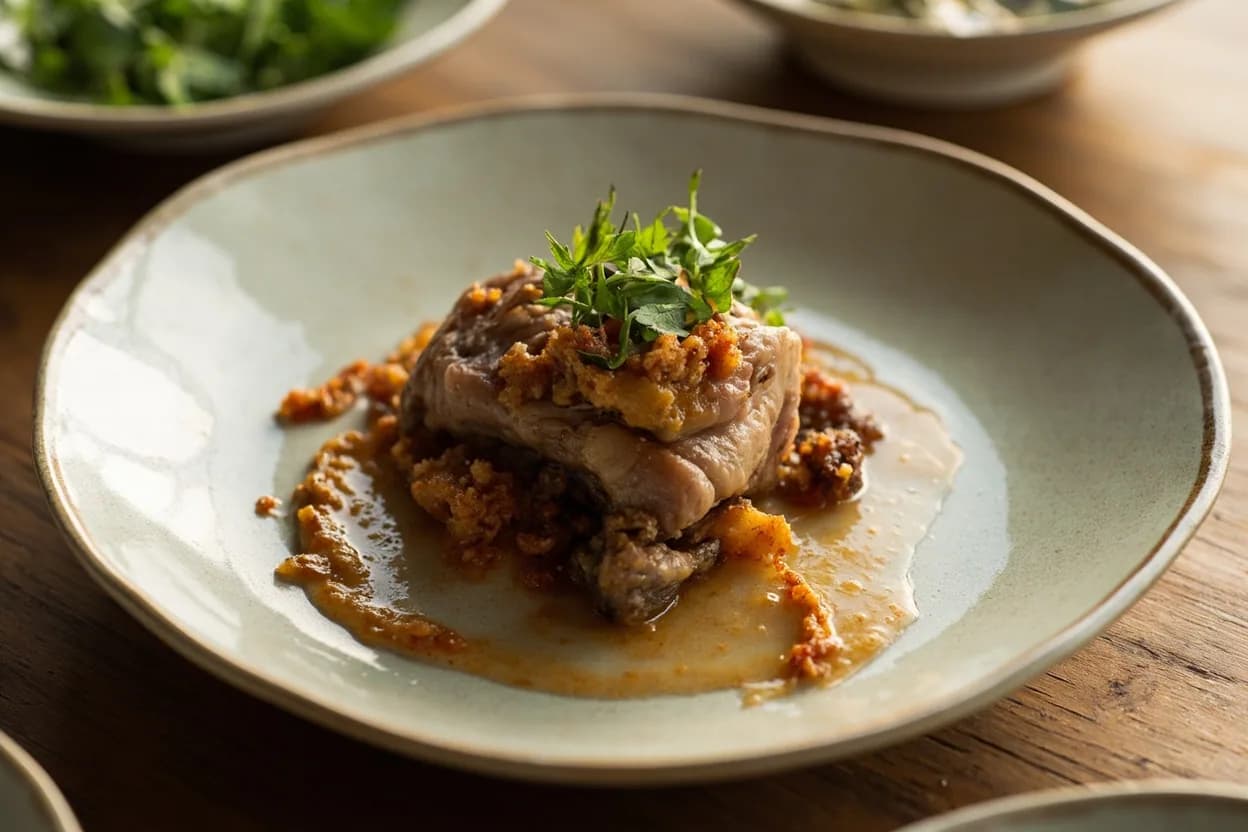
Where it comes from
Beef small intestine (duodenum, jejunum, and ileum), typically from the first 2–3 meters of the small intestine where the wall is thickest and the inner fat most abundant. Butchers source it as a whole organ, cleaned to varying degrees; restaurant-grade gopchang arrives pre-cleaned to a minimal level and is refined further in-kitchen.
Best for
How to cook it
- 1After cleaning (see Prep), cut into 3–4 cm sections or leave in longer pieces to be cut at the table.
- 2Grill on a cast-iron or wire charcoal grill over high heat; no oil needed—the inner fat renders immediately.
- 3Turn every 30–45 seconds; the exterior should become golden-brown and slightly blistered, the inner fat partially melted but still present.
- 4Total grill time: 2–4 minutes. The outer wall should snap when bitten, not squeak or feel rubbery.
- 5Serve immediately with doenjang paste, raw garlic, perilla leaves, and kkakdugi (cubed radish kimchi) to cut the richness.
- 6For jjigae (hot-pot): add cleaned, raw sections to a boiling doenjang or gochujang broth and simmer 15–20 minutes until tender.
Prep & butchery
- STEP 1 — Turn inside-out: Invert the intestine over a narrow pipe or a finger, pulling the lumen to the outside so the inner mucosal fat layer is exposed.
- STEP 2 — Remove excess mucosa: Gently scrape or rinse away any thick, slimy mucosa while preserving the creamy fat layer beneath; use a spoon or the back of a knife.
- STEP 3 — Salt-rub: Coat the inside (now exposed) heavily with coarse salt. Massage firmly for 2–3 minutes; the salt acts as an abrasive and osmotically draws out blood and odorous compounds.
- STEP 4 — Rinse: Rinse under cold running water until water runs clear; at least 3 full rinses are needed.
- STEP 5 — Optional second treatment: Some chefs repeat the salt-rub with fresh salt, or rub with a mixture of doenjang (fermented soybean paste) and salt for additional odor neutralization.
- STEP 6 — Turn right-side-out: Return the intestine to its original orientation; the cleaned fat layer is now on the inside where it will render during cooking.
- STEP 7 — Final rinse in cold water, then blot dry. Cut to serving lengths immediately or refrigerate loosely covered for up to 24 hours.
Substitutes
- Pork small intestine (dwaeji gopchang)
Thinner wall, less inner fat; similar cleaning process; flavor is milder and the wall is more delicate.
- Beef large intestine (daechang)
Thicker, more robust outer wall with more pronounced chew; richer but coarser than small intestine.
- Lamb small intestine
Used in Central Asian and Mongolian cooking; similar textural profile but more pronounced gamey flavor.
Related cuts
- Daechang (Beef Large Intestine)
The large intestine; thicker, more muscular wall, prepared and eaten in the same Korean BBQ context.
- Makchang (Beef Abomasum / Fourth Stomach)
Often served alongside gopchang at Korean offal BBQ restaurants; chewier and more uniform in texture.
- Dwaeji Gopchang (Pork Small Intestine)
The pork counterpart; thinner walls, milder flavor, popular in street-food form.
Appears in
References
- 1.The Korean Kitchen — Copeland Marks, Chronicle Books
- 2.Korean Food Culture — Chung Jae Lee, Seoul National University Press
- 3.Charcuterie and French Pork Cookery — Jane Grigson (cleaning techniques applicable to intestines cross-culturally)
Confidence: high
Notes
The inside-out cleaning technique
The defining skill in gopchang preparation is the inversion step. The intestine is anatomically structured with the mucosal surface (villi-covered, fat-lined) facing inward. To clean it, the cook must evert the tube—turning it inside-out so the mucosal surface is exposed for scrubbing—then return it to the original orientation. In restaurant kitchens this is done over a tap or a pipe; at home, a chopstick or thin dowel helps initiate the eversion. The technique is remarkably similar to sausage-casing preparation in French and German charcuterie, though the goal here is to preserve (not remove) the inner fat.
Daegu as the gopchang capital
The city of Daegu in southeastern Korea is renowned as the capital of gopchang culture. Daegu's traditional Yangnimsi market and the gopchang restaurant district near Dongseongno are destinations for offal enthusiasts. Local preparation styles in Daegu tend toward simpler seasoning (salt, perilla) to showcase the ingredient, while Seoul-style gopchang restaurants often use a gochujang marinade before grilling.