Fish — Fabrication & Breakdown
Goujons (Finger-Cut Fish Strips)
Also: fish goujons, fish fingers (restaurant), goujonettes, fish strips
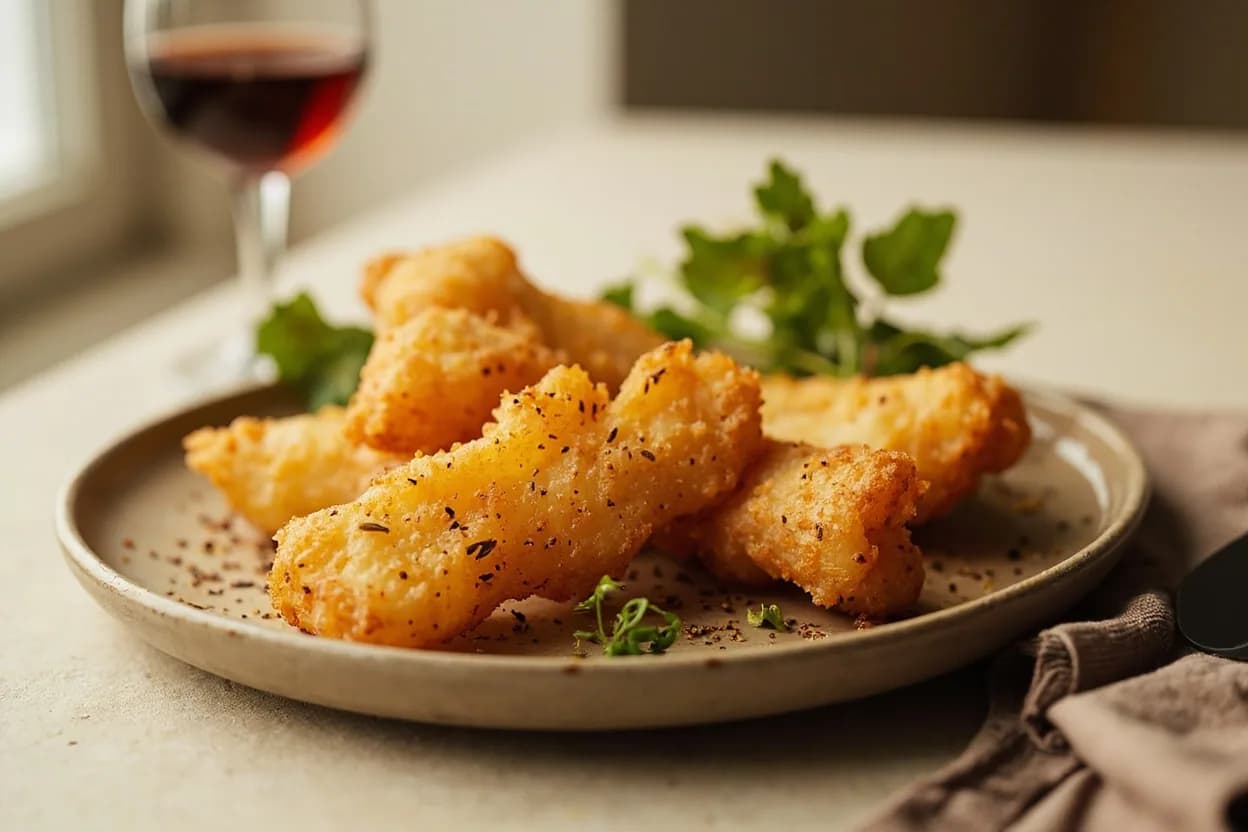
Diagonal finger-width strips cut from flat-fish fillets, breaded and deep-fried to a crisp golden shell around tender, moist flesh.
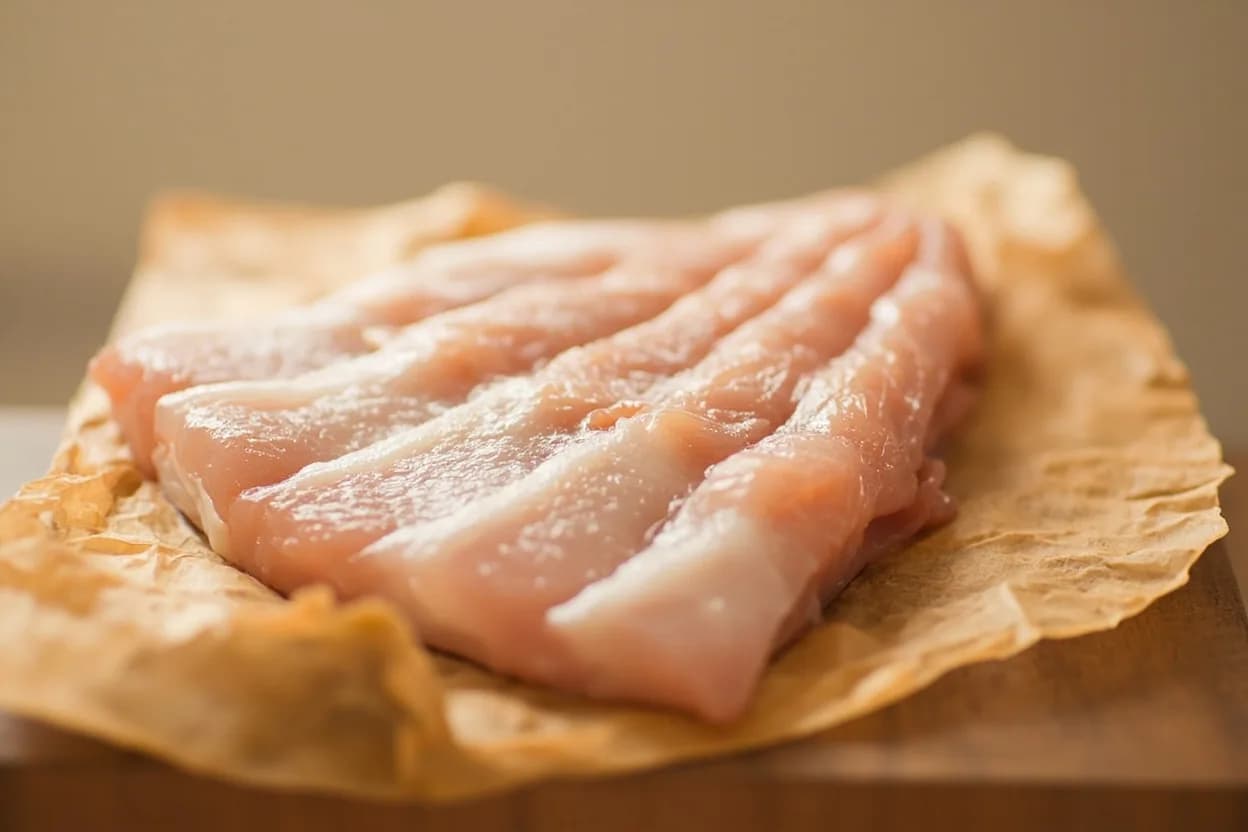
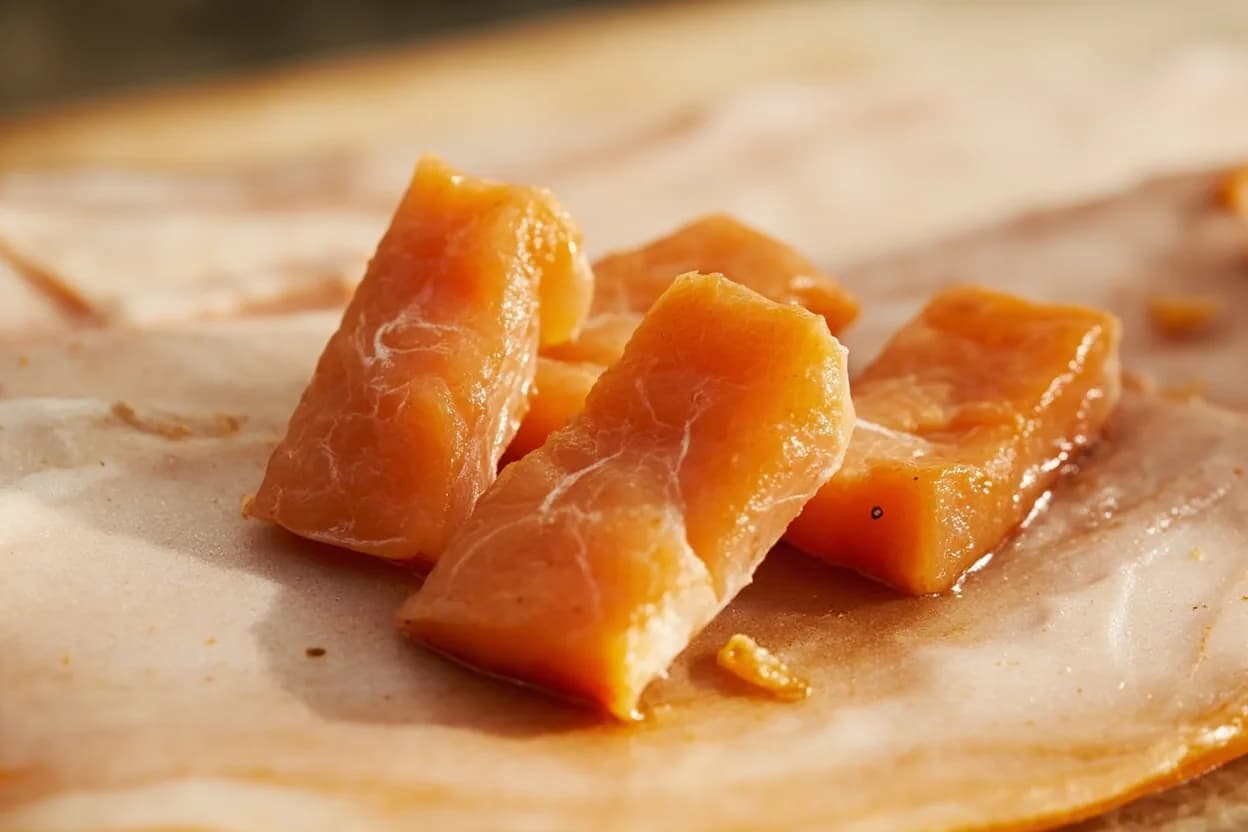
Goujons are strips of skinless, boneless flat-fish fillet cut on the diagonal to approximately 1 cm wide and 6–8 cm long — roughly the size of a gudgeon (goujon in French, the small river fish they replicate). The diagonal cut maximises the apparent length of each strip and exposes more surface area for breading. They are the restaurant-kitchen answer to the British fish finger: refined in proportion and crumb but equally satisfying. Goujonettes are a finer version cut to 0.5 cm width.
In photos
Where it comes from
Fabricated from the skinless fillets of flat fish — Dover sole, lemon sole, plaice, or turbot. The fillet is laid skin-side down on the board and sliced at a 45-degree angle across the grain of the muscle fibres, working from thick end to thin.
Best for
How to cook it
- 1Skin and pin-bone the fillet; pat very dry with paper towel — surface moisture is the enemy of crumb adhesion.
- 2Place the fillet at a 45-degree angle and slice strips of exactly 1 cm width, working from head end to tail; shorter strips from the tail section can be paired or reserved for stock.
- 3Season each strip with fine salt and white pepper before breading.
- 4Bread using the standard pané anglaise: flour (shake off excess) → egg wash (egg, whole milk, pinch salt) → fine dried breadcrumbs. For extra crunch, use panko or a 50/50 blend of panko and fine crumbs.
- 5Lay breaded goujons on a rack; refrigerate uncovered for 15–30 minutes to set the crumb — this prevents blow-outs during frying.
- 6Fry in small batches at 180–185 °C for 2–3 minutes until deeply golden; oil temperature must recover between batches.
- 7Drain on absorbent paper; season immediately with fine salt. Serve within 3 minutes of frying.
Prep & butchery
- Always cut on the diagonal, not straight across — the angled cut produces a longer strip and a less abrupt chew.
- Consistent width is the primary quality control step: use a ruler or depth guide until the cut is instinctive.
- Refrigerate breaded goujons on a rack (never stacked) before frying to prevent the crumb sliding off.
- Do not salt the fish until immediately before breading — salt draws moisture that loosens the coating.
- Tail-end offcuts can be balled, breaded, and served as small goujonnettes or used in fish cakes.
Substitutes
- Haddock strips
Slightly thicker flesh; cut narrower (0.8 cm) to maintain frying time parity
- Cod loin strips
Robust, widely available; holds up well but flakes coarser than sole
- Monkfish strips
Firm, meaty — longer frying time (3–4 min); excellent textural contrast to the crumb
Related cuts
- Suprême (fish)
The whole fillet portion from which goujons are fabricated
Another fabrication from the same fillet — rolled rather than strip-cut
- Fish darne
Bone-in round-fish steak — contrasting technique, different fish type
Appears in
References
- 1.The Professional Chef, 9th ed. — The Culinary Institute of America (2011)
- 2.Larousse Gastronomique (2009 English ed.)
- 3.The River Cottage Fish Book — Hugh Fearnley-Whittingstall & Nick Fisher (2012)
- 4.Jacques Pépin: New Complete Techniques (2012)
Confidence: high
Notes
Crumb options
Fine white breadcrumbs (from stale pain de mie) produce the classic smooth, pale-gold crust. Panko gives a craggier, more open texture that holds crunch longer — better for à la carte where goujons may sit briefly. A thin beer batter (100 g flour, 100 ml cold lager, pinch baking powder) is an alternative to crumbing for a lighter, lacier shell.
Frying temperature discipline
At 180 °C, a goujon sets its crust in about 90 seconds per side. Below 170 °C the coating absorbs oil before it seals; above 190 °C the crumb browns before the flesh is hot. A clip-on thermometer or a dedicated deep-fryer is non-negotiable for consistent results.