Knife Cuts — Regional & Global
Green Chili — Split vs. Slit
Also: green chilli split, hari mirch slit, tadka chili cut
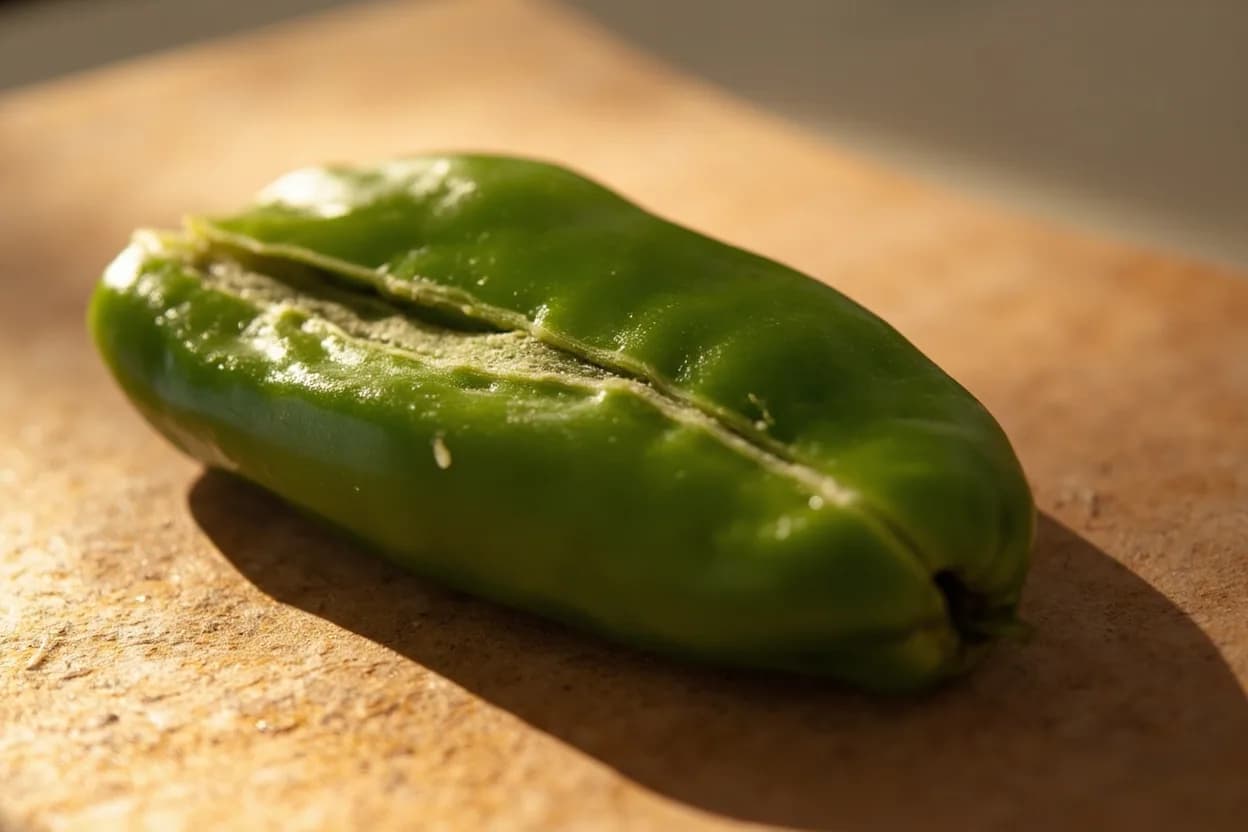
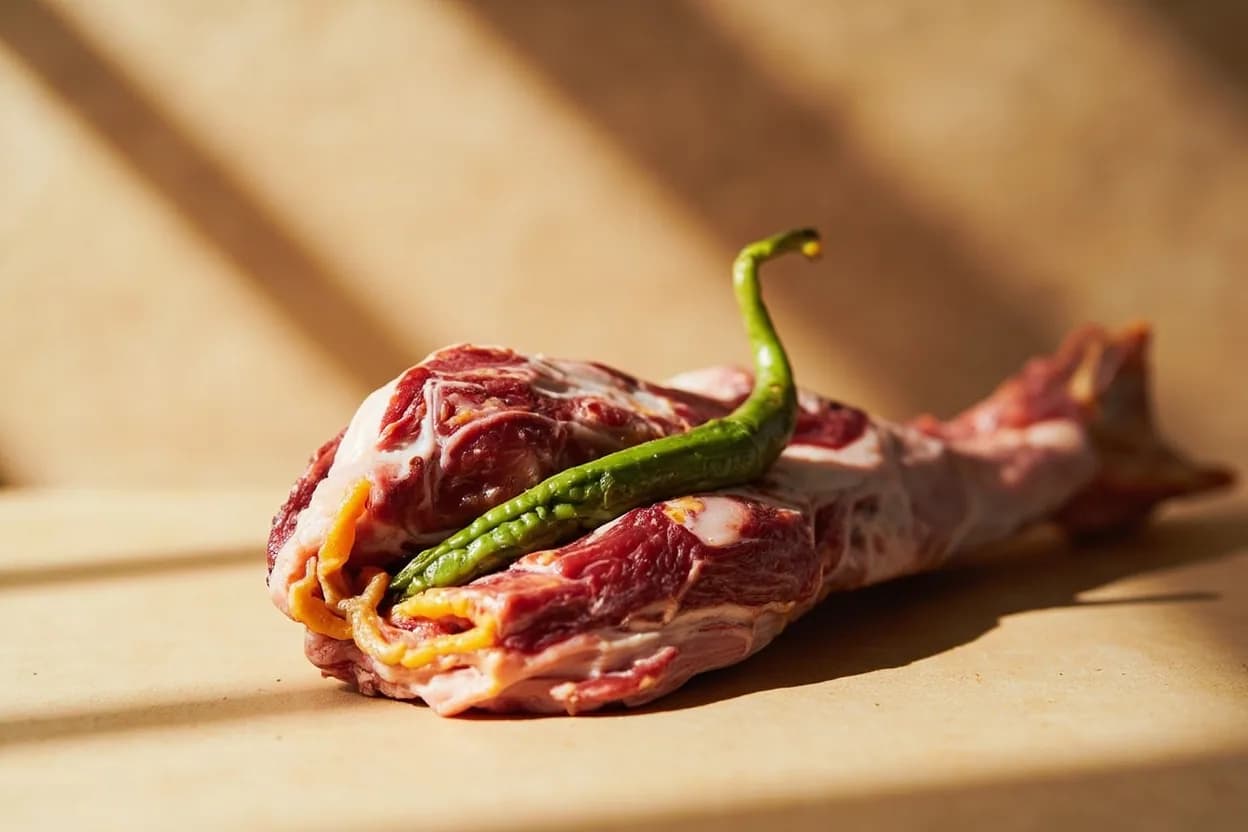
A full longitudinal split exposes and removes seeds for milder, even heat; a shallow slit keeps the chili intact for infusing flavored oil with restrained, aromatic warmth.
Two knife techniques applied to fresh green chilies (commonly Byadgi, Guntur, Thai, or serrano varieties in South Indian cooking) that determine how capsaicin is released and at what intensity. A full split means cutting the chili in half from stem to tip with a chef's knife or paring knife, then scraping away seeds and pith — the primary capsaicin reservoirs — before the chili enters the pan. A slit is a single shallow longitudinal incision that barely penetrates the flesh, leaving the seed cavity sealed; the chili enters oil whole, releasing flavor and moderate heat through the cut opening without disgorging seeds into the dish.
In photos
Where it comes from
Fresh green chilies: the unripe fruit of Capsicum annuum or Capsicum frutescens. The placental tissue and seeds embedded in it contain the highest capsaicin concentration; the flesh wall contains intermediate levels; the skin contains the least.
Best for
How to cook it
- 1For a slit: hold the green chili flat on the cutting board. Make one shallow cut from just below the stem to within 5 mm of the tip, cutting through the skin but not splitting the chili open. The chili should still hold together.
- 2For a full split: cut the chili in half lengthwise, then use the tip of a paring knife or a small spoon to scrape out seeds and white pith. Rinse briefly to remove stray seeds if desired.
- 3In tadka: add slit or split chilies to hot oil after mustard seeds have popped and before curry leaves, so they sizzle for 10–15 seconds and blister without burning.
- 4Monitor closely — green chilies brown and turn bitter quickly in oil above 200 °C. Medium-high heat is sufficient.
- 5For raw applications (chutneys ground in a wet grinder), split and deseed first; the raw heat of the seeds can overwhelm the coconut or coriander base.
Prep & butchery
- Choose firm, unblemished green chilies; soft spots indicate age and diminished flavor.
- Wear gloves when deseeding high-heat varieties like Thai bird's eye or Guntur.
- Stem can be left on for visual effect in tadka; remove for dishes where the chili will be eaten.
- Cut chilies oxidize quickly; prepare immediately before use or store in cold water for up to 30 minutes.
Substitutes
- Dried red chili — whole with slit
Different flavor profile (dried, smoky) but the same slit technique applies in Tamil Nadu and Andhra tadka.
- Jalapeño — slit
Lower heat, thicker flesh; acceptable substitute in diaspora cooking when South Indian green chilies unavailable.
Related cuts
Parallel South Indian tadka technique decision governing aromatic intensity and presentation.
- Dried chili — whole vs. broken
Same heat-delivery logic: intact for diffuse infusion, broken to release seeds and maximize heat.
Appears in
References
- 1.Dakshin — Chandra Padmanabhan
- 2.The Vegetarian Table: India — Yamuna Devi
- 3.On Food and Cooking — Harold McGee (capsaicin distribution in Capsicum)
- 4.660 Curries — Raghavan Iyer
Confidence: high
Notes
The seed-heat relationship
Capsaicin is not evenly distributed in a chili. The placental tissue (the white membrane to which seeds attach) holds roughly 90% of the heat; the seeds themselves contain relatively little capsaicin but absorb it from the surrounding placenta. Removing both placenta and seeds via a full split eliminates the majority of fire while preserving the herbaceous, vegetal flavor of the chili flesh.
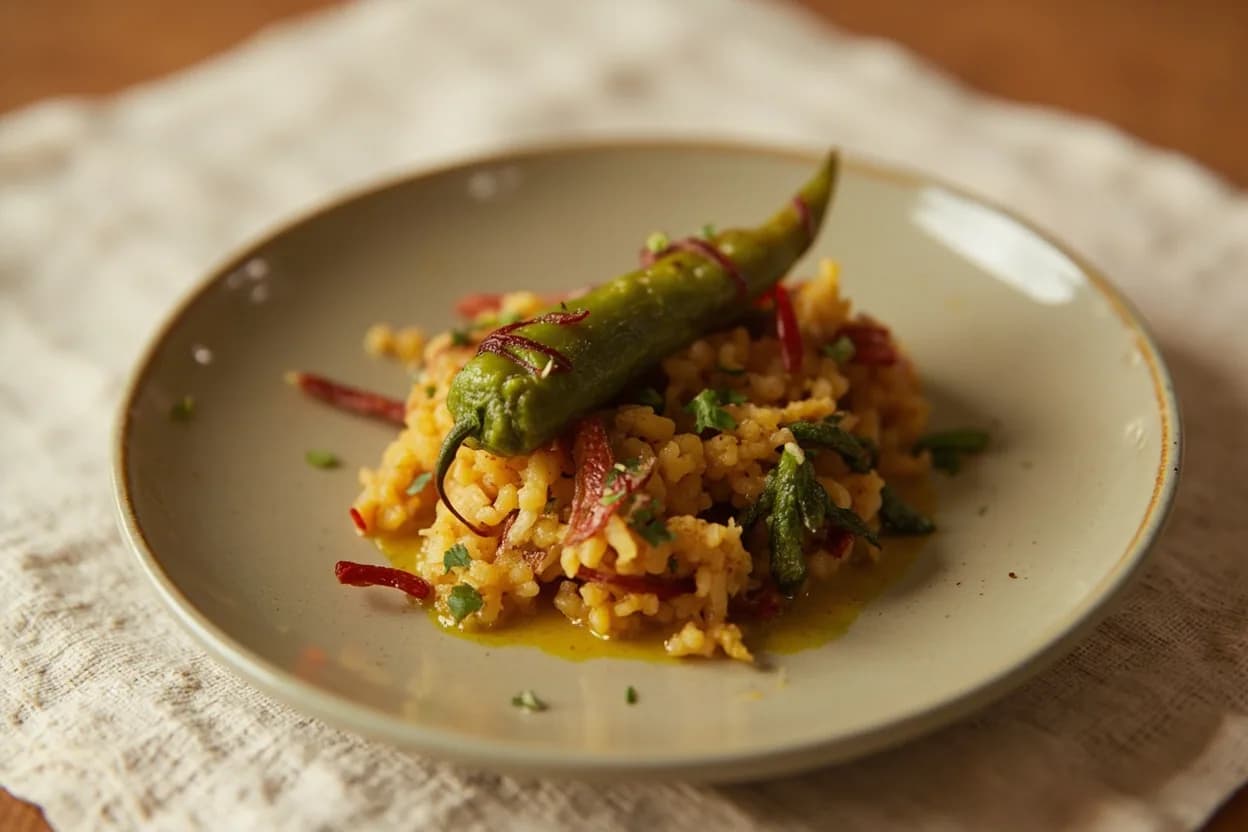
Visual grammar in South Indian cooking
In Tamil Nadu and Karnataka home cooking, the presence of a whole slit green chili resting on top of a finished dish or floating in a sambar signals that the cook intends it as a flavoring, not a component to be eaten. A chili that has been split and mixed in signals the opposite.