Knife Cuts — Regional & Global
Green Papaya Julienne (Som Tum)
Also: som tum shred, papaya shreds, laap bak boon, green papaya grate
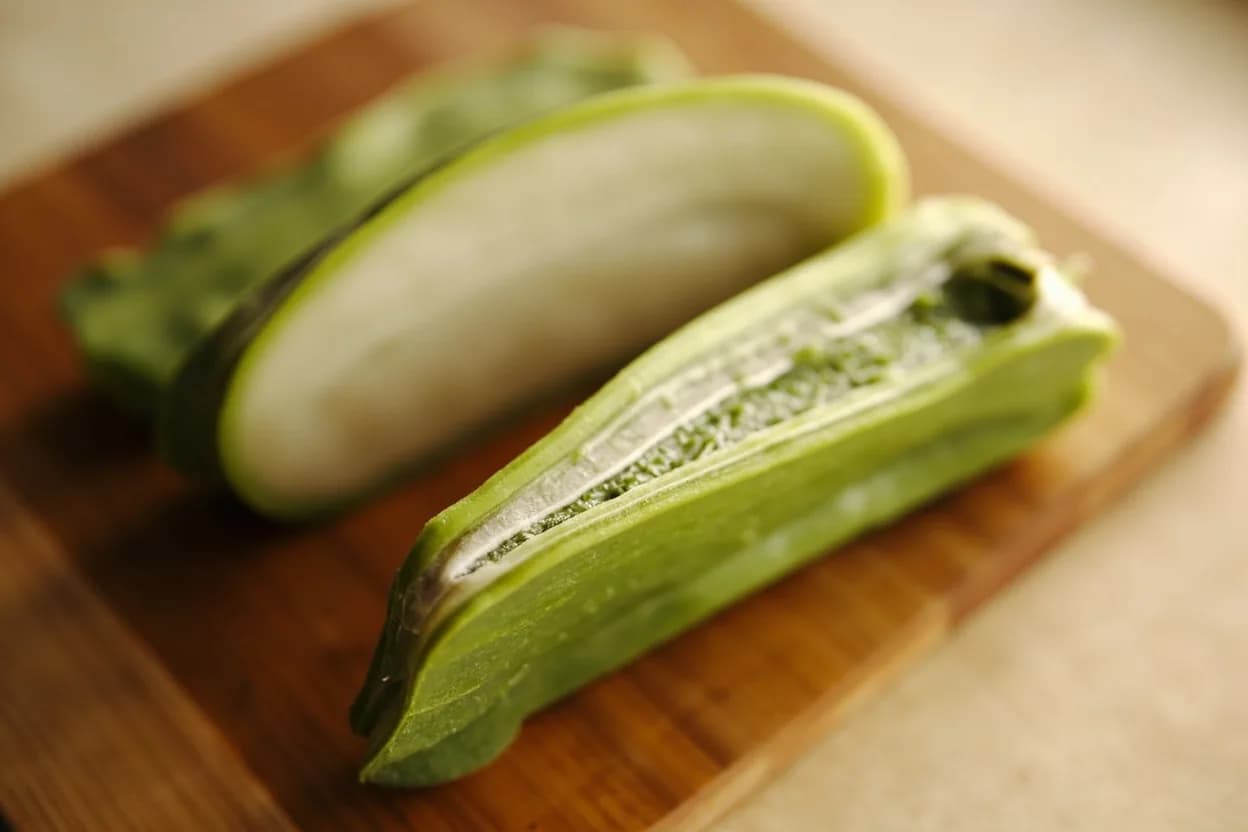
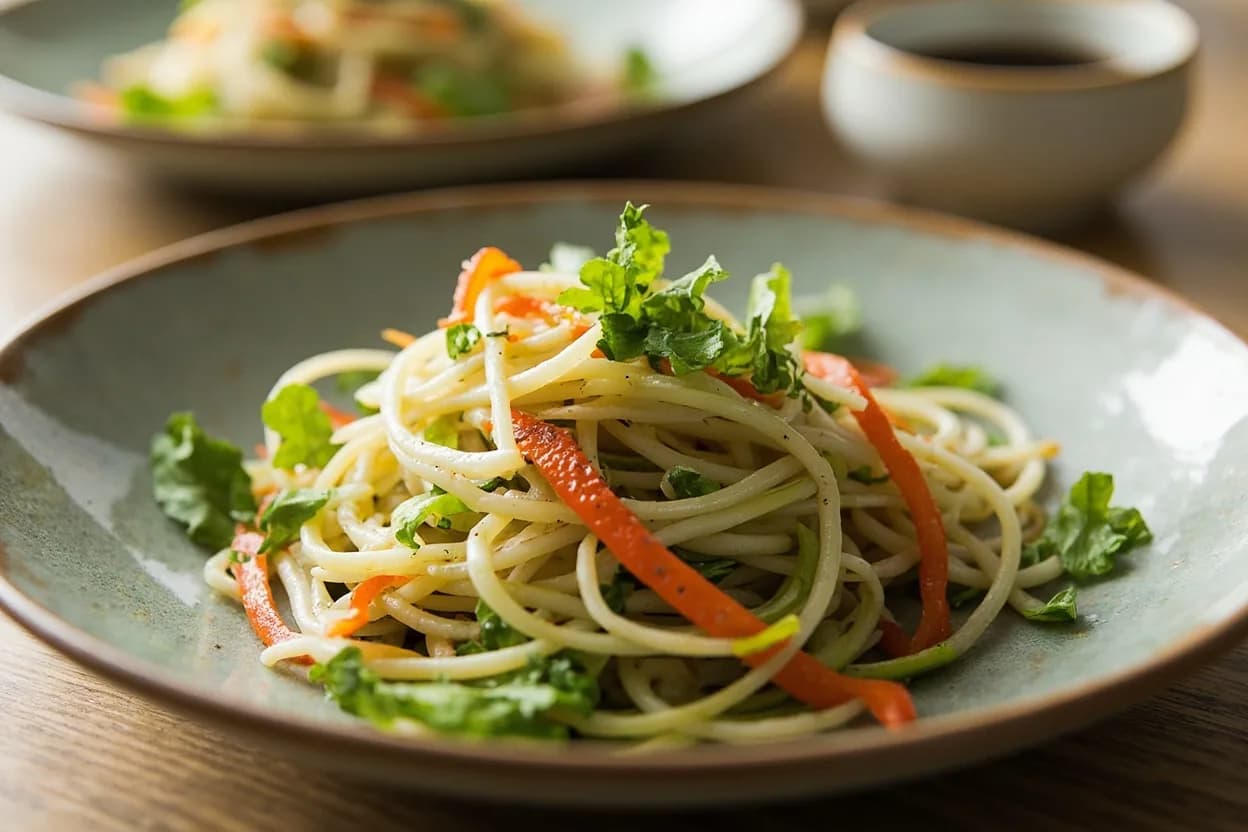
The coarse, irregular julienne of unripe green papaya produced by scoring and raking a cleaver across the peeled flesh — the defining technique behind Thailand's som tum salad.
The green papaya julienne used in som tum is not a precision French julienne but a deliberately rustic, long-fibre shred produced by a two-step technique: the cook scores the peeled papaya half lengthwise with rapid, shallow knife strokes (creating a comb of fine parallel cuts across the surface), then slices off a thin layer with one horizontal stroke, releasing a cascade of long, semi-irregular strands. The result is typically 5–8 cm in length and 1–3 mm wide — coarser and more varied than a mandoline julienne — with a slight fringe that grips the dressing and traps seeds.
In photos
Where it comes from
Carica papaya harvested unripe; the dense, ivory-white to pale green flesh of the immature fruit before carotenoid development. The flesh is firm, starchy, and almost flavourless raw — the antithesis of ripe papaya's sweetness.
Best for
How to cook it
- 1Select a fully green, rock-hard papaya. Peel completely with a Y-peeler or knife, removing all green skin to expose the white flesh.
- 2Halve the papaya lengthwise and scoop out the seed cavity with a spoon. Leave the remaining thick flesh intact.
- 3Hold one half cut-side down or brace it vertically against a cutting board. Using a large cleaver or heavy chef's knife, make rapid shallow parallel cuts across the top face of the papaya — about 2–3 mm apart and 5–8 mm deep — running lengthwise. Do not cut through the flesh; you are creating a comb pattern.
- 4After every 5–6 strokes of scoring, make one thin horizontal slice (about 3 mm deep) across the scored section to shave off a layer of strands. The scored cuts release as julienne.
- 5Repeat the score-then-slice cycle along the length of the papaya half. Rotate the papaya as needed to reach a flat face.
- 6Alternatively, use a som tum grater (a mandoline-style tool with coarse tines sold at Asian grocery stores) for faster, more uniform strands.
- 7Soak cut strands briefly in cold water to remove any milky latex, then drain well before using in salad.
Prep & butchery
- The milky latex in green papaya can irritate skin — wear gloves or wash hands immediately after handling.
- A dedicated som tum grater speeds the process enormously; the cleaver method is traditional in Isaan street stalls but skill-dependent.
- The papaya must be completely unripe (latex-white flesh); even slightly ripened papaya is too sweet and soft.
- Cut no more than 20–30 minutes before serving; papaya softens in acidic dressing quickly.
- Reserve the seed cavity for plating garnish: papaya seeds are edible and have a mild pepperiness.
Substitutes
- Green mango julienne
Similar firm, sour flesh; used in some Thai provinces interchangeably with green papaya — sours the dressing naturally, reducing lime juice needed.
- Kohlrabi julienne
Western substitute with comparable crunch and neutrality; lacks the slight starchy chew of papaya.
- Jicama julienne
Good textural match, very mild flavour; works in som tum-style salads outside Thailand when papaya is unavailable.
- Cucumber (seeded, julienned)
Much softer and more watery; only viable for a quick approximation — drain well and salt first to reduce moisture.
Related cuts
- French julienne
Precision knife cut producing uniform 3 mm × 3 mm × 6 cm matchsticks; som tum shreds are intentionally coarser and more variable.
- Green mango julienne
Parallel technique in Vietnamese and Thai cuisines; same scoring method applied to firm unripe mango.
- Coarse grate
Box grater alternative that produces short, stubby shreds; acceptable but lacks the length that makes som tum strands entangle in the mortar.
Appears in
References
- 1.True Thai — Victor Sodsook
- 2.Simple Thai Food — Leela Punyaratabandhu
- 3.Thai Food — David Thompson
- 4.Night + Market — Kris Yenbamroong
Confidence: high
Notes
Mortar vs. bowl
Authentic som tum is made in a large clay mortar (khrok din). The papaya strands go in after the aromatics (garlic, chiles, palm sugar, fish sauce, lime) have been roughly pounded. A pestle bruises the strands rather than crushing them — a technique called 'dtam' (pound-toss). This light bruising is inseparable from the texture: the strands absorb dressing at the bruise points but retain structure elsewhere. Bowl-dressed versions taste flat by comparison.
Regional variation
Isaan (northeastern Thai) som tum uses fermented fish sauce (pla ra) and raw salted crab (poo dong); central Bangkok-style uses standard fish sauce and dried shrimp. The cut specifications are the same; only the dressing components change.