Beef — Primal & Subprimal
Halal Beef Primal Breakdown
Also: Zabiha beef, Islamic butchery, halal primal, forequarter beef
The forequarter-dominant division of a zabiha-slaughtered carcass, shaped by Islamic dietary law and the anatomical realities of blood-draining.
Halal beef refers to cattle slaughtered according to zabiha (Islamic method): a swift cut severing the jugular veins, carotid arteries, and trachea while the animal faces the qibla and a blessing is recited. The resulting carcass is meticulously bled, which affects post-slaughter handling. In practice, many halal butchers in North America and the UK emphasize the forequarter — chuck, rib, brisket, and plate — both because hindquarter sciatic nerve removal (required to avoid the nishya/gid hanasheh sinew in some interpretations shared with kosher) is labor-intensive, and because forequarter cuts have historically dominated halal trade. The primal map broadly mirrors Western divisions but religious supervision and community tradition introduce meaningful variation in how subprimals are seamed and named.
In photos
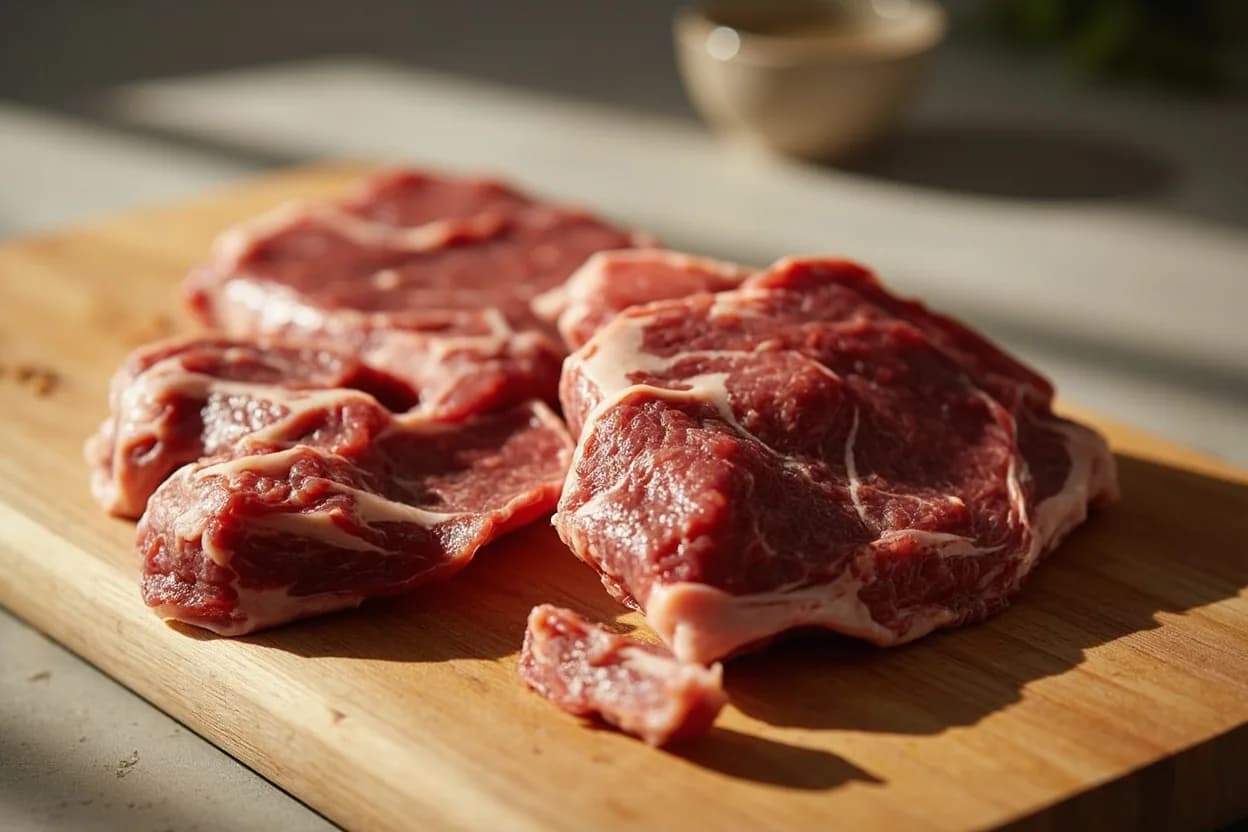
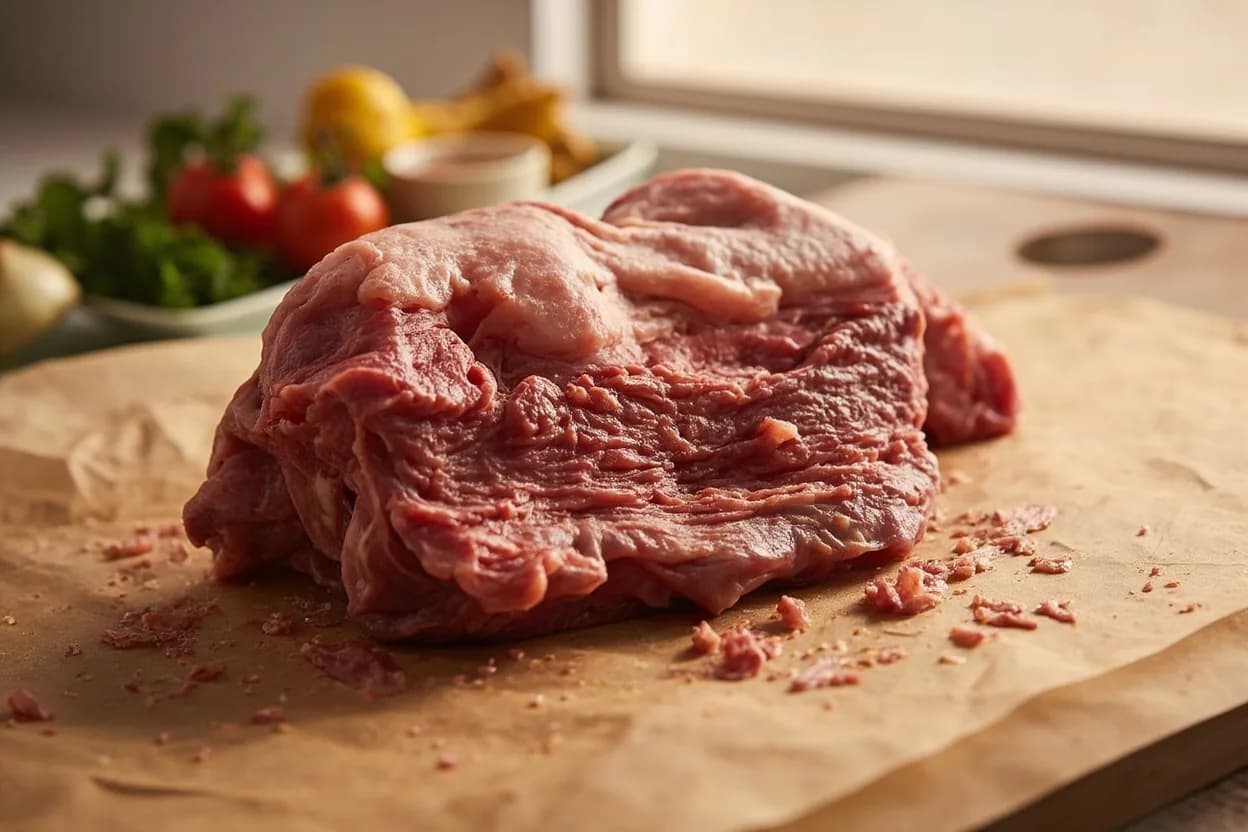
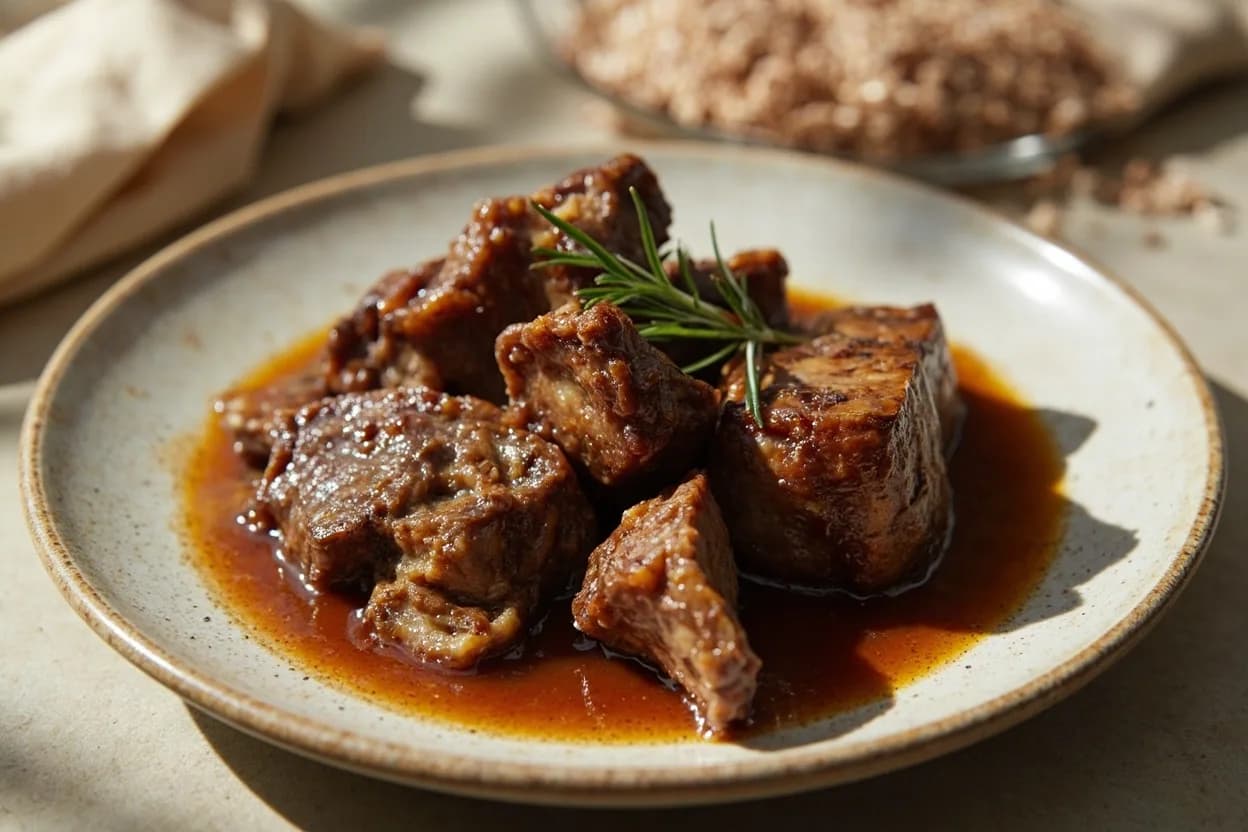
Where it comes from
Whole beef carcass, divided post-zabiha slaughter; forequarter (chuck, rib, brisket, shank, plate) is the primary commercial emphasis in most halal retail markets; hindquarter (loin, sirloin, round, flank) is fully permissible but requires additional sinew removal in stricter interpretations.
Best for
How to cook it
- 1For forequarter cuts (chuck, brisket), plan for low-and-slow: 225–275 °F / 107–135 °C over several hours to dissolve collagen into gelatin.
- 2The thorough blood-drain can make halal beef surface slightly drier; pat dry before searing and rest in a light olive oil marinade if needed.
- 3Bone-in rib roast: season generously, roast at 450 °F for a 15-minute sear, reduce to 325 °F / 163 °C until internal temp hits 130 °F / 54 °C for medium-rare.
- 4Chuck for curry: cube to 3–4 cm, brown hard in batches to develop fond, then braise in spiced liquid 90–120 minutes until fork-tender.
- 5If using hindquarter cuts from a butcher who has removed the gid hanasheh, slice round cuts thinly against the grain for stir-fry or shawarma applications.
Prep & butchery
- Confirm certification mark from a recognized halal authority before purchase.
- Forequarter primals often arrive with thick fat caps intact — trim to 6 mm for roasting, remove entirely for stewing.
- If sourcing a whole or half forequarter, seam out the chuck eye roll, flat iron, and chuck tender individually for best cooking outcomes.
- For ground beef, a 80/20 chuck blend delivers the fat ratio most recipes assume.
Substitutes
- Kosher beef
Similar forequarter emphasis and ritual slaughter; sciatic nerve removal shared in some standards, making the two broadly interchangeable in many recipes.
- Conventional (non-halal) beef primal
Identical anatomy; substitute freely for cooking purposes if religious observance is not required.
Related cuts
- Beef Chuck
Primary commercial halal cut; makes up the bulk of forequarter retail
- Brisket
Key halal BBQ and braising cut; frequently stocked in dedicated halal butcher shops
- Eye of Round
Hindquarter cut requiring sinew removal in some traditions; used for shawarma when available
Appears in
References
- 1.The Oxford Encyclopedia of Food and Drink in America — halal entries
- 2.Islamically Slaughtered Animals — IFANCA Technical Bulletin
- 3.Meat Science and Applications — Y. H. Hui (ed.), CRC Press
- 4.The Halal Food Authority (HFA) Certification Standards, UK
Confidence: high
Notes
Hindquarter availability
In North America and much of Europe, smaller halal butchers stock predominantly forequarter cuts because the sciatic nerve (gid hanasheh) requirement — shared between some halal and all kosher standards — makes hindquarter processing labor-intensive and expensive. Larger certified operations do remove the nerve and stock full hindquarter primals, so availability is improving in metropolitan markets.
Stunning controversy
Some halal certification bodies permit pre-slaughter stunning (common in industrial settings); others prohibit it. Consumers seeking non-stunned zabiha should confirm with their certifying authority. This distinction affects supply chains but not the post-slaughter primal divisions.