Lamb & Goat — Primal & Subprimal
Halal Lamb & Goat Primal Breakdown
Also: desi cut, qurbani breakdown, halal butchery, Muslim cut
The complete system of primal and sub-primal divisions applied to halal-slaughtered lamb and goat, shaped by South Asian, Levantine, and West African butchery traditions.
Halal lamb and goat primal breakdown refers to the systematic division of a carcass slaughtered according to Islamic rites (zabiha halal — swift severance of the jugular, carotid, and trachea with a sharp blade while reciting the basmala) into primals and sub-primals. The breakdown differs meaningfully from Western commercial lamb cutting in bone-in preference, smaller portioning, and the preservation of offal as first-class product. Goat (bakri, eid al-adha kid) and lamb (어린 양) are broken down differently from each other due to carcass size and fat distribution.
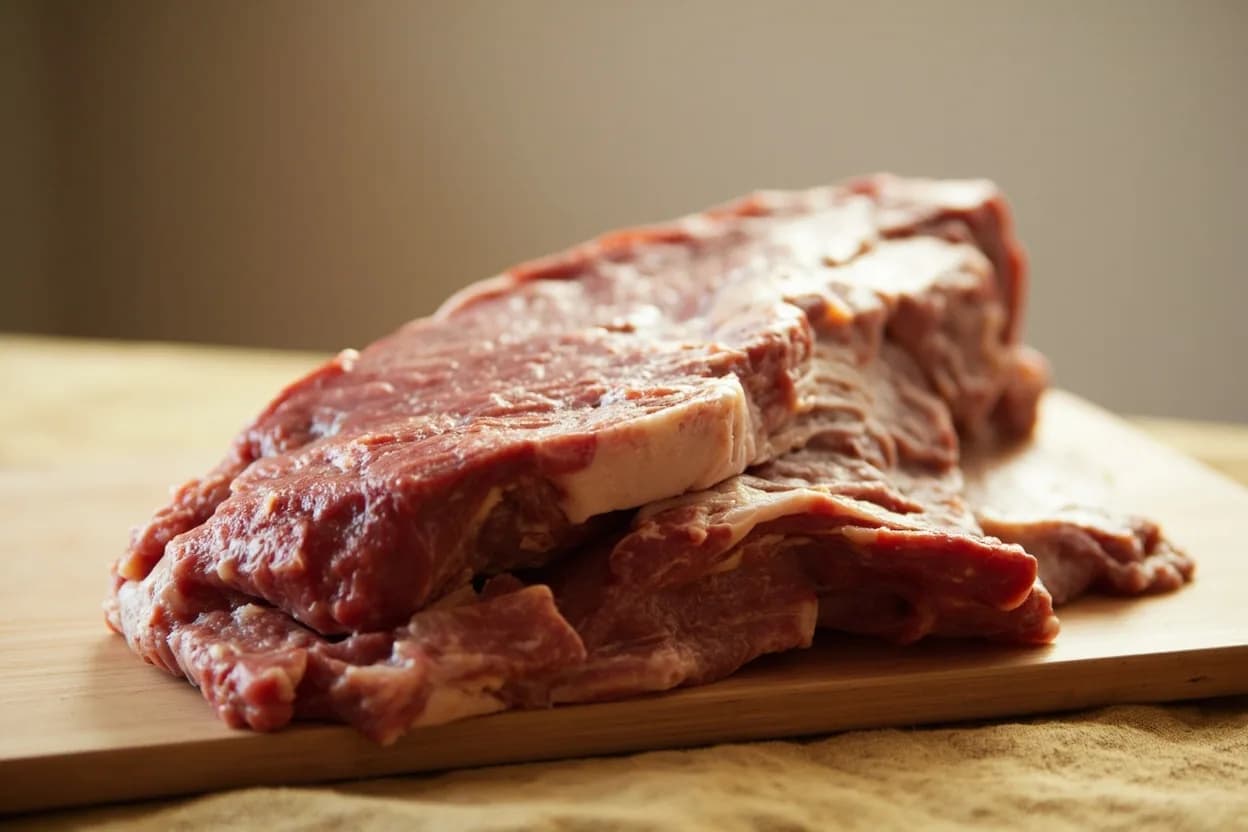
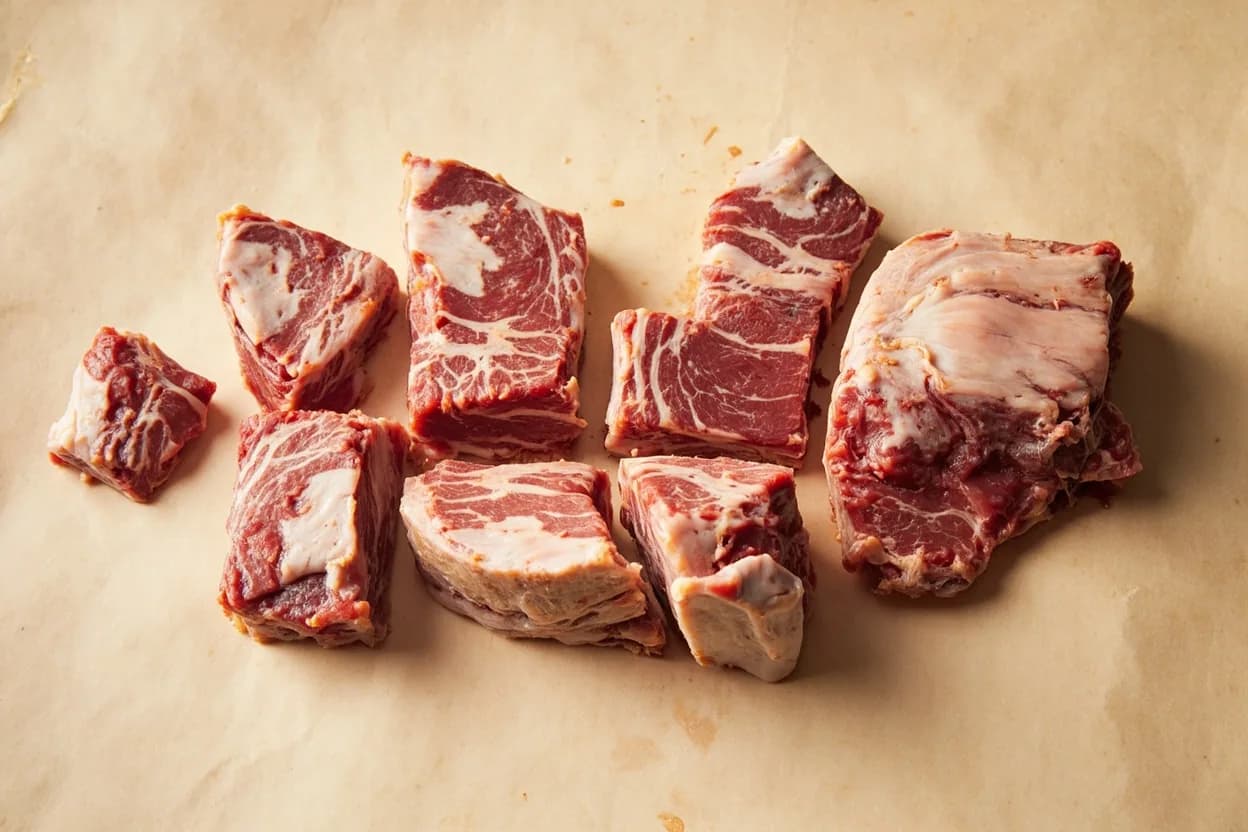
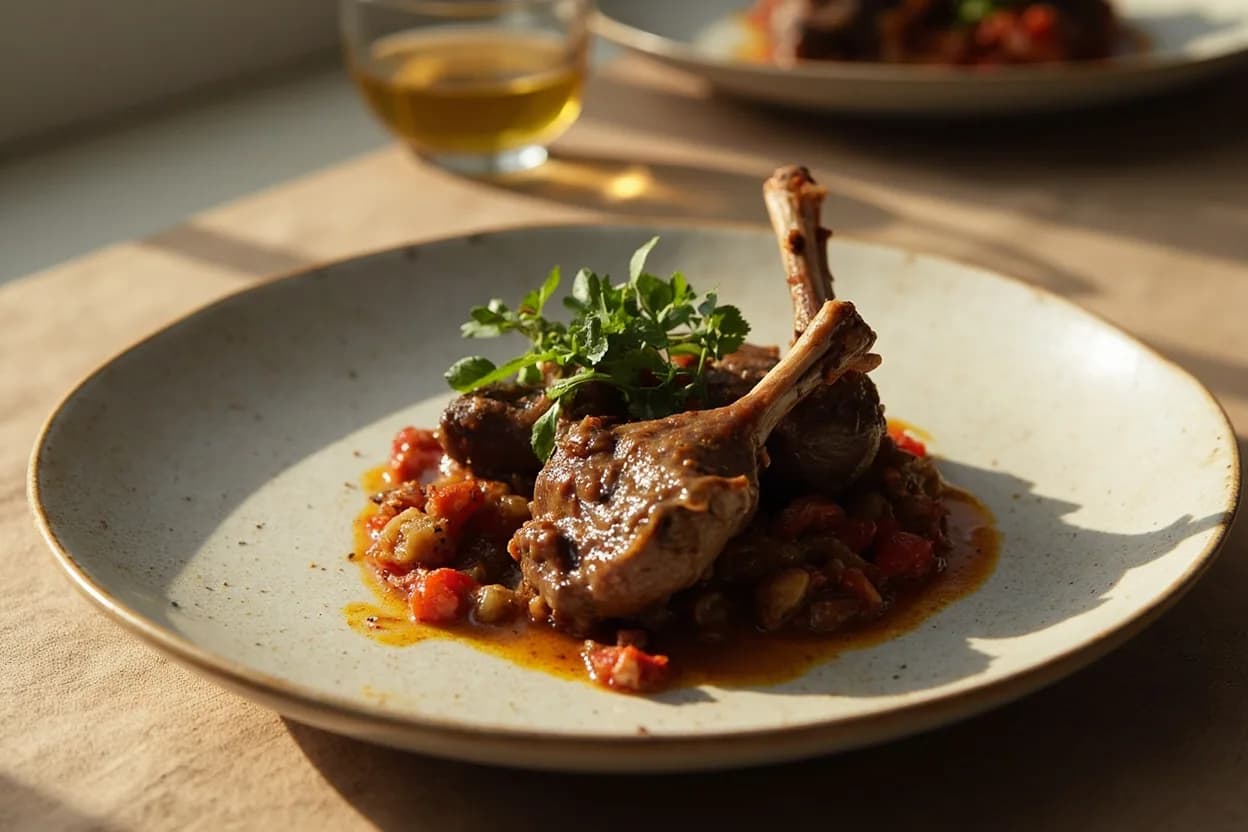
In photos
Where it comes from
The whole carcass after slaughter, skinning, and evisceration. Halal slaughter maximises blood drainage (essential for lawful consumption under Surah Al-Baqarah 2:173), which affects the colour and shelf life of the meat — well-bled halal lamb is visually paler at the cut surface than conventionally stunned equivalents. The carcass is split along the vertebral column into two sides, then divided into six primary sections: leg, loin, rack/rib, shoulder, breast/flap, and shank.
Best for
How to cook it
- 1For the leg: roast whole bone-in at 160 °C low-and-slow for 3–4 hours, or break into sub-primals (knuckle, topside, silverside) for separate treatments.
- 2For the shoulder: always braise or slow-roast — the connective tissue requires sustained heat above 80 °C to convert collagen to gelatin and produce tender, pullable meat.
- 3For rack/rib: high heat only — tandoor, charcoal grill, or cast-iron sear. Aim for 63 °C internal for medium-rare.
- 4For curry-cut pieces: brown in batches in hot ghee to develop Maillard crust, then braise in spiced gravy for 45–90 minutes.
- 5For the shank (nalli): submerge in richly spiced, slow-simmered stock (nihari, paya) for 6–8 hours until the marrow flows freely and the meat falls from the bone.
- 6For goat specifically: add 10–15% more cooking time versus lamb at equivalent cuts, and use acidic marinades (yogurt, tamarind, raw papaya) to offset the leaner, tighter muscle fibre.
Prep & butchery
- South Asian breakdown: after splitting the carcass, the butcher divides each side into leg, loin saddle, rack, shoulder, breast, and shank with a cleaver. The leg is often further cross-cut into rounds (curry-cut) or sold whole.
- Levantine breakdown: the whole leg is commonly butterflied by tunnelling the femur bone out and opening the muscle groups flat — suited for marinating and spit-roasting.
- West African breakdown: the whole goat is often cleaved into rustic bone-in sections (head, neck, ribs, legs) for pot cooking; finesse of sub-primal separation is secondary to bone-in yield.
- Kidney fat (suet) should be removed from the loin before cooking curry cuts — it has a strong flavour and high melting point that can leave a waxy mouthfeel if not rendered properly.
- For goat, remove the silverskin from exposed muscles before marinating — it does not break down during cooking and creates a chewy barrier.
Substitutes
- Conventionally slaughtered lamb (Western)
Functionally identical in cooking; differs in religious permissibility and potentially in blood drainage level.
- Kid goat
Smaller, milder, and more tender than mature goat; closer to lamb in fat content.
- Mutton
Older animal (over 2 years); stronger flavour, more collagen, requires longer cooking — not a direct substitute in quick preparations.
Related cuts
Individual rib cutlets from the rack primal — the most prized halal retail cut.
Cross-cut shank sections exposing marrow, a distinct sub-primal product in South Asian halal butchery.
- Curry cut
Small bone-in pieces sawn from across multiple primals for stewing.
- Boti
Boneless cubed shoulder or leg meat for kebab skewering.
- Paya (trotters)
Feet removed at the cannon joint — a separate offal product in halal butchery.
Appears in
References
- 1.Meat Science — R.A. Lawrie & D.A. Ledward
- 2.The Oxford Companion to Food — Alan Davidson
- 3.Halal Food Production — Mian N. Riaz & Muhammad M. Chaudry
- 4.Prashad: Cooking with Indian Masters — J. Inder Singh Kalra
- 5.Zaitoun: Recipes from the Palestinian Kitchen — Yasmin Khan
Confidence: high
Notes
Goat vs lamb: the structural difference
Goat and lamb share the same primal map but differ in two critical ways that affect cooking. First, goat muscle fibres are shorter and more tightly bundled, producing a denser texture that requires longer braising to tenderise. Second, goat fat is distributed primarily externally and in discrete inter-muscular seams rather than as marbling — it renders less evenly and can produce a slightly gamey aroma if overcooked at high heat. The practical rule: treat goat as 20% tougher than equivalent-grade lamb, and use acidic marinades to pre-tenderise the proteins.
Regional cutting traditions
South Asian halal shops (predominantly Pakistani and Bangladeshi in the UK diaspora) default to cross-cut bone-in chops from every primal, priced by the kilo with bone weight included. Levantine shops (Lebanese, Syrian, Palestinian) are more likely to offer butterflied and deboned legs, bone-in shoulder 'for the oven,' and ground lamb alongside whole cuts. West African shops (Ghanaian, Nigerian, Somali) cut much more coarsely — large bone-in sections intended for long-cooked soups and stews where the bone enriches the broth. Understanding which tradition the butcher trained in tells you what to expect on the counter.