Pasta & Dough Cuts
Hand-Torn Pasta (Strappare)
Also: strappare, stracci, maltagliati strappati, pappardelle strappate, lacciu, torn pasta
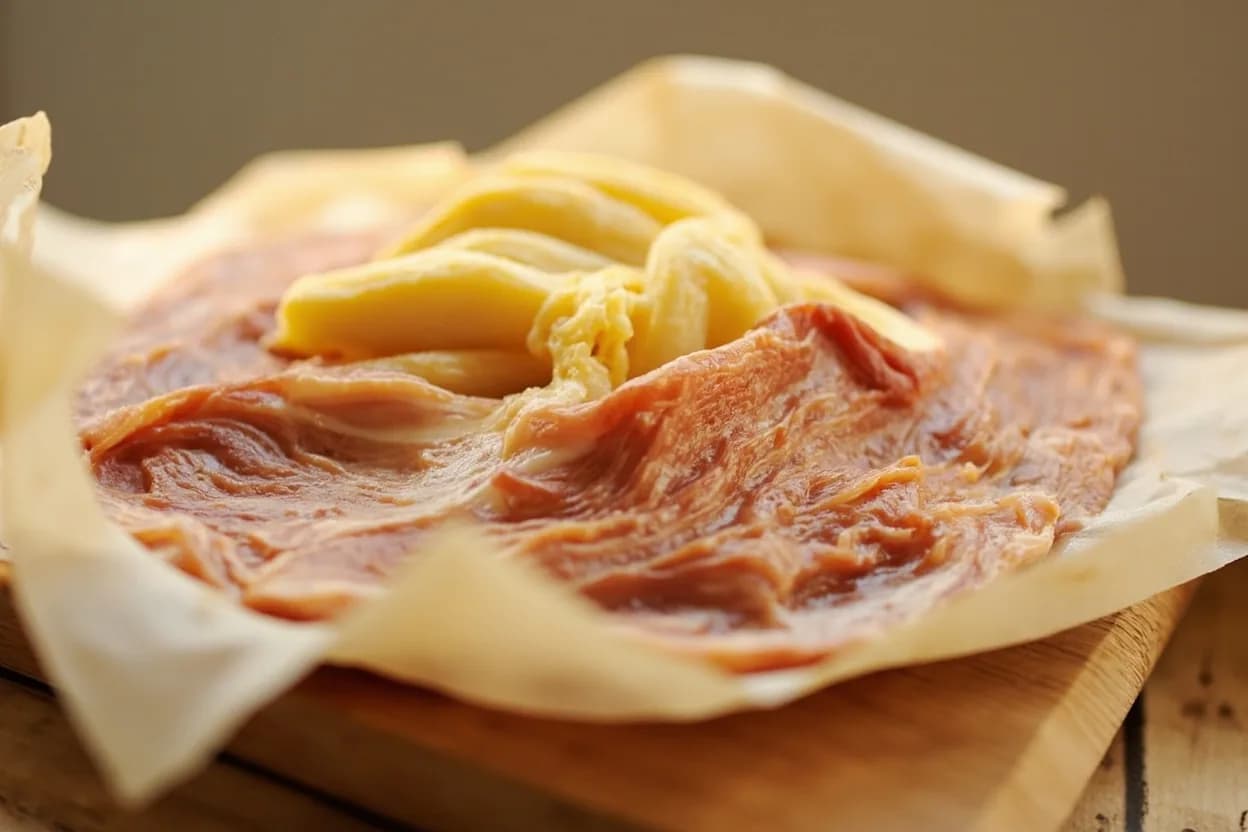
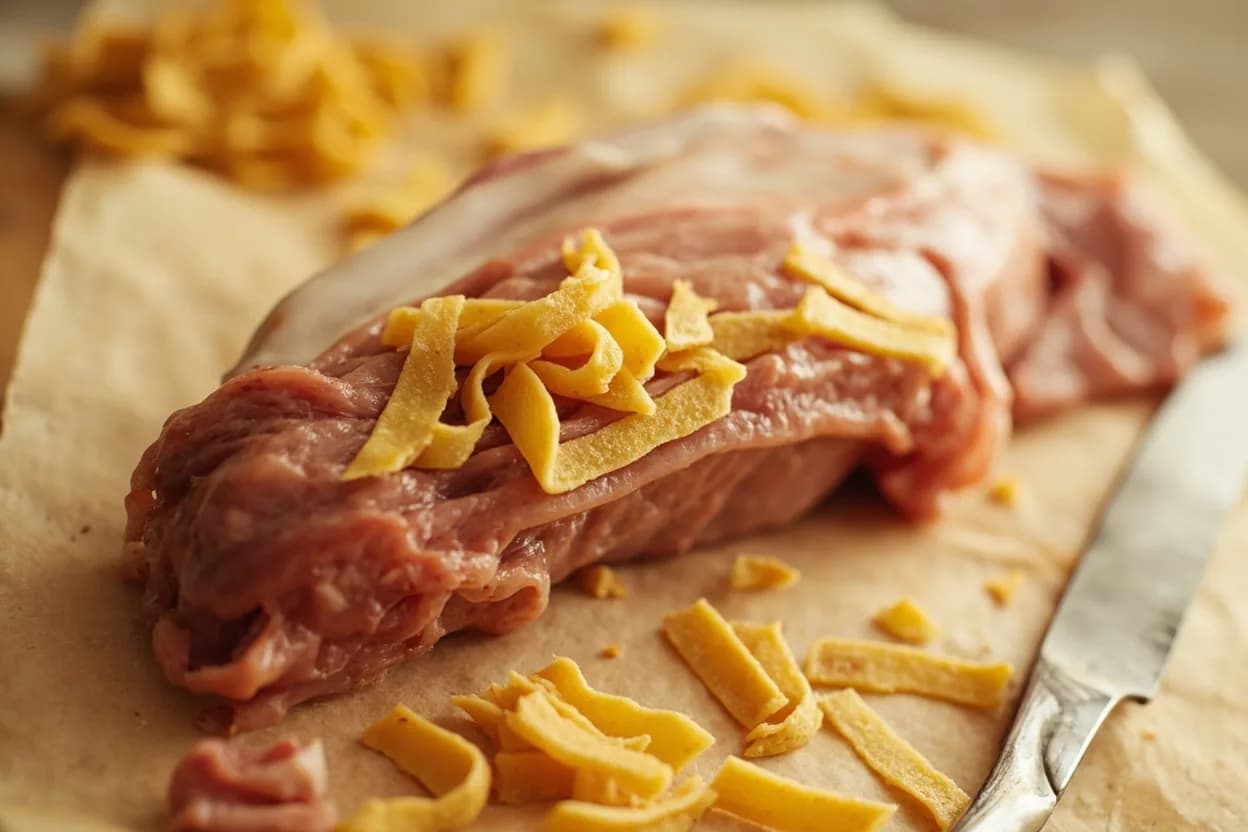
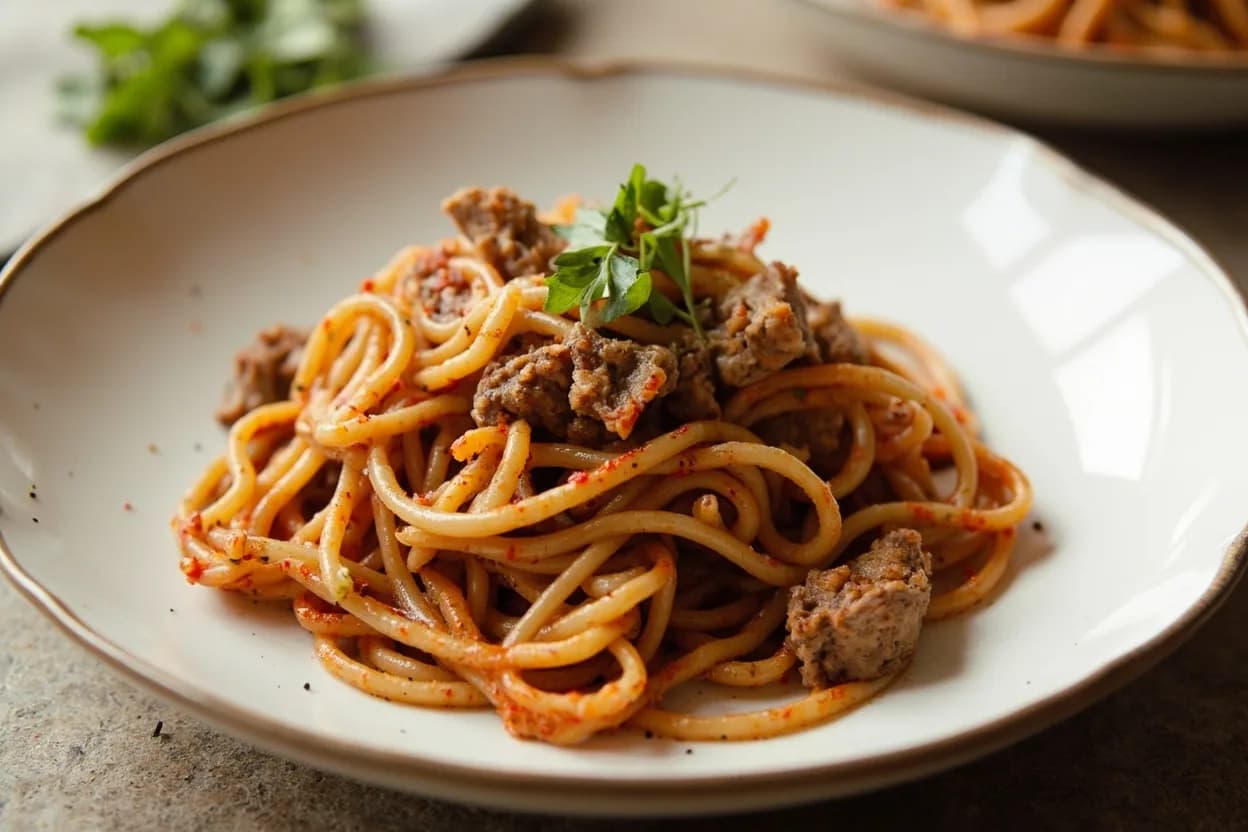
Fresh pasta torn by hand rather than cut with a knife or machine, producing ragged, irregular-edged pieces whose roughness is the point — capturing sauce in every crevice.
Strappare (Italian: 'to tear') is the technique of pulling fresh egg-pasta sheets apart with the fingers rather than cutting them with a blade. The resulting pieces — known as stracci ('rags'), maltagliati strappati, or pappardelle strappate depending on size and region — have irregular, feathery edges and uneven thickness at the torn borders. This roughness is not a defect but a deliberate textural strategy: torn edges dry microscopically more than cut edges, produce micro-blisters when hitting boiling water, and create a porous, sauce-adhesive surface that a clean knife cut cannot replicate.
In photos
Where it comes from
Applied to a rolled sfoglia (fresh egg-pasta sheet) typically 1.5–2.5 mm thick, often from scraps left after cutting ribbons or stuffed-pasta shapes. The cook tears pieces roughly 6–10 cm across for stracci, or into elongated shreds 3–4 cm wide and 10–15 cm long for pappardelle strappate.
Best for
How to cook it
- 1Roll the sfoglia to the desired thickness on a pasta machine (typically setting 4–6, approx. 1–2 mm) or with a mattarello.
- 2Dust the sheet with semolina to prevent sticking; allow to rest 5 minutes so the surface is slightly dry and tears cleanly rather than stretching.
- 3Hold the sheet with both hands, fingers spread. Begin tearing: for stracci, pull the sheet apart in rough quadrilateral pieces 6–10 cm across; for pappardelle strappate, tear elongated strips 3–4 cm wide along the sheet's length.
- 4Do not overthink the shape — uneven tearing is correct. Avoid using scissors or a wheel, which defeats the purpose.
- 5Pile the torn pieces loosely on a semolina-dusted tray; do not stack them tightly or they will stick.
- 6Cook in generously salted boiling water (4–5 L per 200g pasta, slightly more than for ribbons to give pieces room). Stir immediately on entry to separate pieces. Cook 2–3 minutes from fresh.
- 7Finish the torn pasta in the sauce in the pan; the rough edges continue absorbing as they toss, which is why the technique excels in wet or creamy sauces.
Prep & butchery
- The dough should rest at room temperature 30–45 minutes after kneading; tearing an under-rested dough stretches it into streaks rather than producing clean-edged pieces.
- A 65% hydration dough tears most cleanly — drier doughs crack unevenly, wetter doughs stretch and thin unpredictably.
- For pappardelle strappate, orient the tear along the natural grain of the rolled sheet (parallel to the rolling direction) to get elongated, ribbon-like pieces.
- Pieces can be refrigerated on semolina-dusted trays, single layer, for up to 4 hours; beyond that, the torn edges dry to brittleness.
Substitutes
- Maltagliati (knife-cut)
Irregular triangular knife cuts from the same sfoglia produce a related rustic look but with cleaner edges and less sauce adhesion than truly torn pieces.
- Orecchiette
A different shaping logic but shares the same sauce-trapping design intent; substitute in thick braises if torn pasta is not available.
- Broken dried lasagna sheets
Emergency substitute — break uncooked lasagna sheets into rough pieces; the edges are cleaner but the format is recognizable and acceptable in soups and baked formats.
- Purchased mafaldine or reginette
The ruffled edges of mafaldine partially replicate the sauce-adhesion benefit of torn pasta in a machine-made format.
Related cuts
- Maltagliati
The knife-cut counterpart — irregular triangles cut from sfoglia scraps; related irregular aesthetic, different surface texture.
Pappardelle strappate is a torn variant of the same sheet used for cut pappardelle; width is similar but edges are ragged.
Strappare is applied to a sheet already rolled to the target thickness on the machine; the tearing is the final step, not a substitute for rolling.
- Straccetti
Smaller torn pieces (4–5 cm) in the Roman tradition, often tossed with arugula and shaved Parmigiano.
Appears in
References
- 1.Hazan, Marcella — Essentials of Classic Italian Cooking (Knopf, 1992)
- 2.Pasta Grannies, Vicky Bennison — Pasta Grannies: The Official Cookbook (Hardie Grant, 2019)
- 3.Bugialli, Giuliano — The Fine Art of Italian Cooking (Times Books, 1977)
- 4.Del Conte, Anna — Gastronomy of Italy (Pavilion, 2004)
- 5.Rodgers, Judy — The Zuni Café Cookbook (Norton, 2002)
Confidence: high
Notes
Why tearing beats cutting
The argument for strappare over knife-cutting rests on surface physics. A blade severs gluten strands cleanly; tearing ruptures them in micro-irregular patterns, leaving rough peaks and valleys at the torn edge. These micro-features expand during cooking and create a greater effective surface area for sauce adhesion. Many Italian cooks describe torn pasta as 'alive' in the pan for this reason — it continues to drink the sauce after plating in a way that smooth-cut ribbons do not.
Regional names
The same torn-pasta tradition appears under different names across Italy: stracci in Tuscany and Umbria (rags), straccetti in Rome (small rags), maltagliati strappati in Emilia when torn from offcuts, lacciu in some southern dialects. The unifying term strappare covers all of them by technique. In American restaurant kitchens the format was popularized in the early 2010s under the name 'torn pasta' or 'rags,' appearing on menus at influential Italian-American restaurants as a deliberate rejection of the uniformity of machine pasta.