Pasta & Dough Cuts
Tagliatelle & Pappardelle Width Standards
Also: tagliatelle bolognese standard, pappardelle width, sfoglia ribbon cuts, fettuccine width
The traditional width specifications for Italy's two canonical broad egg-pasta ribbons — tagliatelle at ~8 mm and pappardelle at 20–30 mm — determined by sauce weight and regional convention.
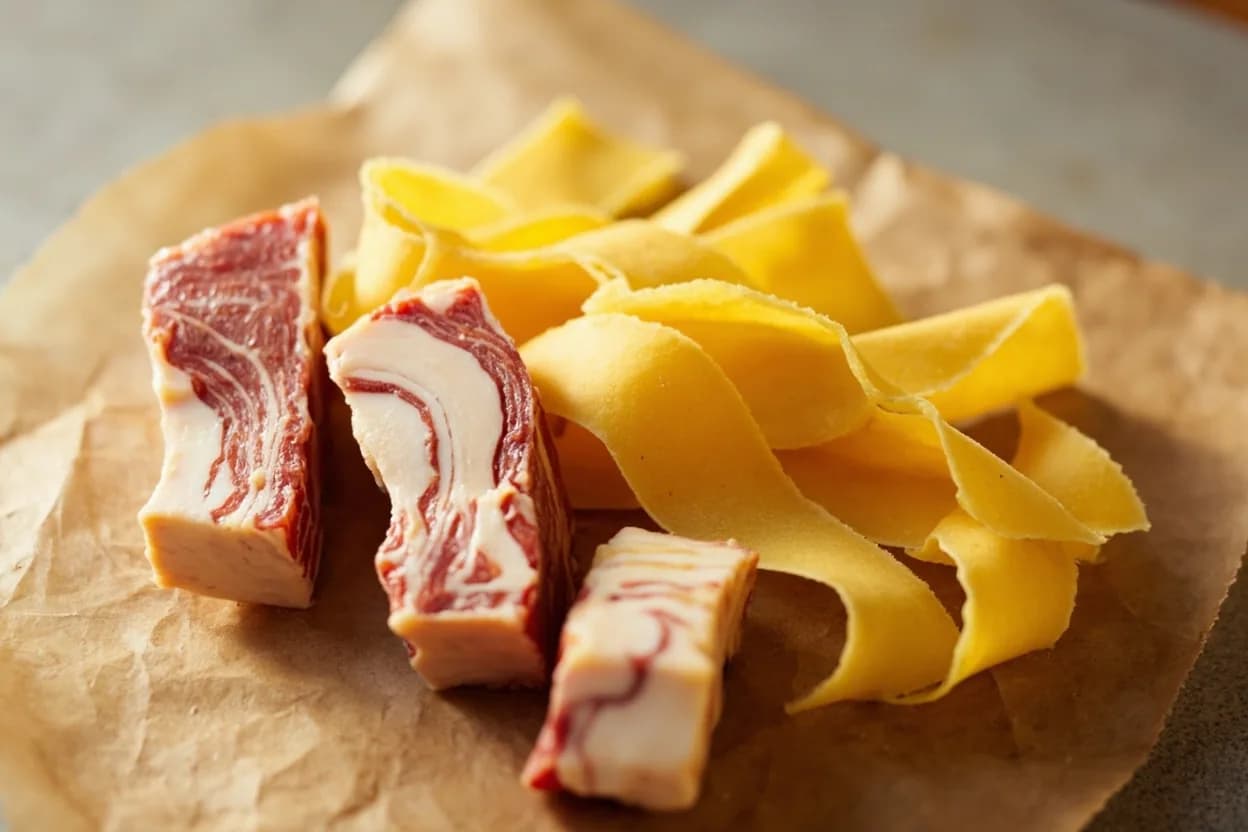
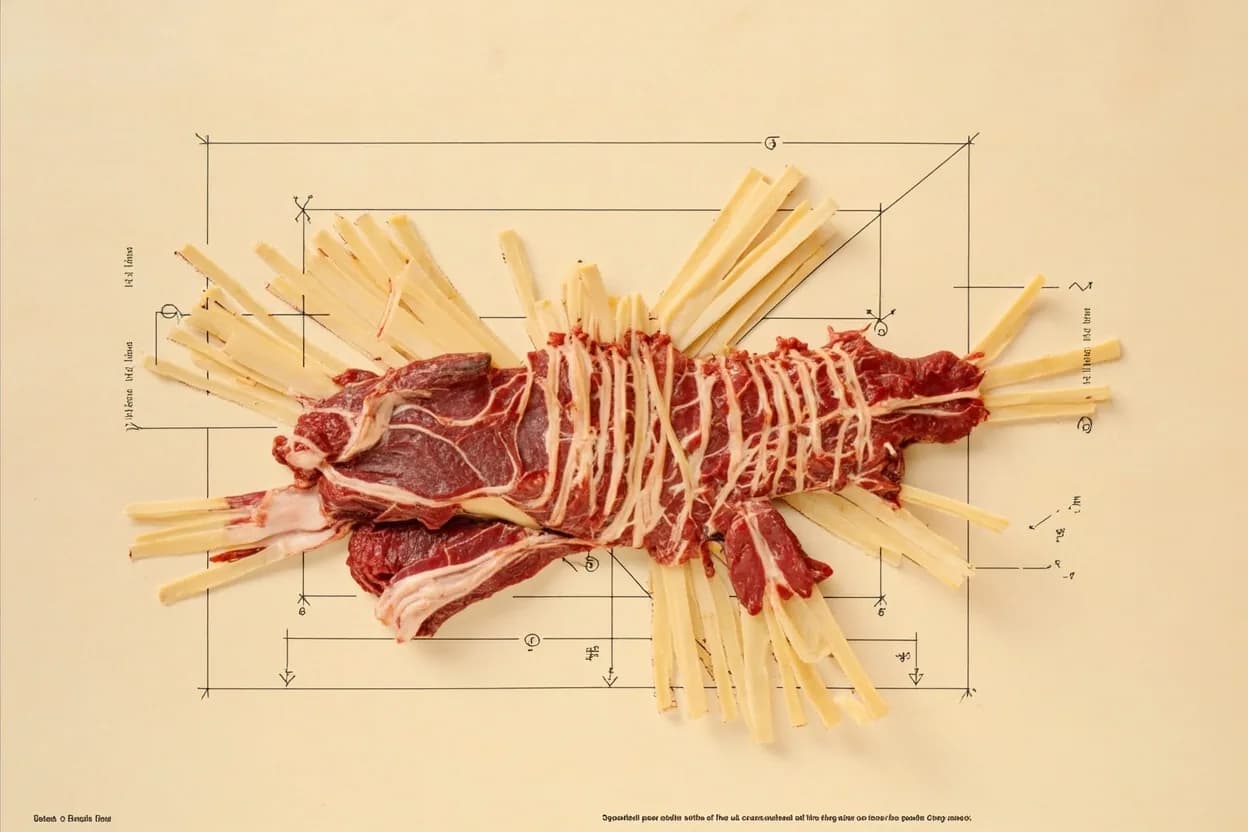
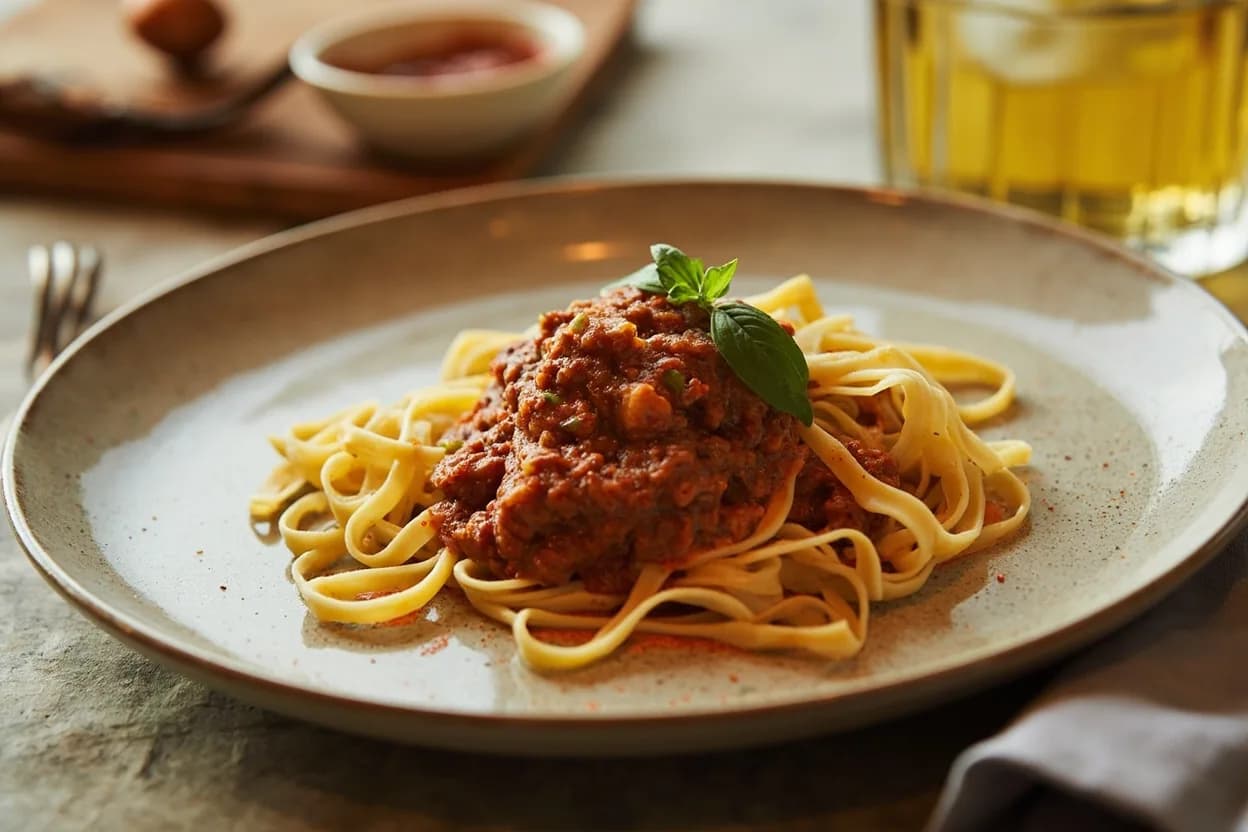
Tagliatelle and pappardelle are long ribbon pastas cut from a rolled egg-dough sheet (sfoglia), distinguished primarily by width. Tagliatelle is the narrower ribbon, codified by the Bolognese tradition at exactly 8 mm wide when uncooked (widening to roughly 1 cm after cooking), representing 1/12,270 of the height of the Asinelli Tower in Bologna per a 1972 decree by the Bologna Chamber of Commerce. Pappardelle is the wide ribbon, ranging 20–30 mm across, cut with or without a fluted edge, and associated with Tuscany and the broader central-Italian tradition of pairing pasta with rich, chunky braises.
In photos
Where it comes from
Cut from a rolled sfoglia (egg-pasta sheet) approximately 1.5–2 mm thick for tagliatelle and 1.5–2.5 mm thick for pappardelle. The sheet is dusted with semolina, loosely rolled into a cylinder, and cross-cut with a chef's knife at the target width; alternatively cut on a machine with appropriate attachment.
Best for
How to cook it
- 1Roll the sfoglia to the correct thickness: setting 4–5 (approx. 1.5 mm) on a standard Imperia machine for both formats.
- 2Dust the sheet generously with semolina flour to prevent sticking during the roll-and-cut.
- 3Loosely roll the sheet into a flat cylinder approximately 10 cm wide; do not press hard or the layers will stick.
- 4Using a sharp, long chef's knife and a single downward motion (not a sawing motion), cut the cylinder crosswise: every 8 mm for tagliatelle, every 20–30 mm for pappardelle.
- 5Immediately unfurl each cut section and drape the ribbons over a pasta rack or bunch them loosely into nests on a semolina-dusted tray.
- 6Cook in heavily salted boiling water for 2–3 minutes from fresh; 4–5 minutes from dried or rested. The pasta is done when it loses its floury center but still has a slight firmness at the core.
- 7Finish in the sauce with a splash of pasta water; the wide surface area of pappardelle requires a more robust final toss than tagliatelle.
Prep & butchery
- For hand-rolling on a mattarello, the sheet should be rolled thin enough to be nearly translucent — the flour-dusted surface is what prevents sticking, not a thick layer of dough.
- The fluted pasta wheel (rotella dentata) is used to give pappardelle a decorative crimped border; a straight pizza cutter or knife produces a plain edge.
- Nests should be loosely formed and left to dry 15–30 minutes at room temperature before cooking or storage; tight nests lead to clumping in the water.
- To cut machine-style: the tagliatelle attachment on most Italian machines cuts at ~6.5 mm; for strict Bologna 8 mm, hand-cutting is more accurate.
Substitutes
- Fettuccine
Effectively the Roman name for tagliatelle; traditionally 6–7 mm wide rather than 8 mm, and cut from a slightly thicker sheet. The two are interchangeable in most sauces.
- Mafaldine (mafalde corte)
Wide wavy-edged pasta that approximates pappardelle's width but has a ruffled border all along both edges; machine-made.
- Dried egg pappardelle
Acceptable substitute for pappardelle; thicker than fresh and needs 8–10 minutes to cook; avoid for delicate sauces.
- Fresh lasagna sheet torn into strips
Emergency substitute for pappardelle; irregular edges approximate hand-torn stracci.
Related cuts
The sfoglia must be rolled to the correct machine setting before ribbon widths can be cut.
Strappare tears the same sfoglia into irregular pieces rather than cutting precise ribbons; related technique, opposite aesthetic.
- Tagliolini
The thin sibling of tagliatelle, cut at 2–3 mm from a thinner sheet (setting 6–7); used in broth or with delicate butter sauces.
- Maltagliati
Irregular triangular pieces cut from the same sfoglia scraps; the predecessor to both tagliatelle and pappardelle in rustic practice.
Appears in
References
- 1.Camera di Commercio di Bologna — Certificato del tagliatelle originale (1972), archived standard
- 2.Hazan, Marcella — Essentials of Classic Italian Cooking (Knopf, 1992)
- 3.Pasta Grannies, Vicky Bennison — Pasta Grannies: The Official Cookbook (Hardie Grant, 2019)
- 4.Del Conte, Anna — Gastronomy of Italy (Pavilion, 2004)
- 5.Bugialli, Giuliano — The Fine Art of Italian Cooking (Times Books, 1977)
Confidence: high
Notes
The Bologna Chamber of Commerce decree
In 1972, the Accademia Italiana della Cucina deposited a golden tagliatelle measuring exactly 8 mm wide at the Chamber of Commerce in Bologna. The accompanying certificate specifies that this width equals 1/12,270 of the height of the Asinelli Tower (97.2 m). While this is more a civic gesture than an enforceable standard, it has shaped Italian culinary education and the expectations of what separates true tagliatelle from fettuccine (typically 6–7 mm) or lasagnette (narrower, 4–5 mm).
Sauce logic behind width
The width hierarchy in ribbon pastas is sauce-driven: wider ribbons are paired with heavier, chunkier sauces (wild boar, short rib) because the pasta's broader surface acts as a platform for solid bits of meat. Narrow ribbons like tagliolini or spaghetti are paired with smooth, emulsified sauces that coat the strand uniformly. Tagliatelle sits at the inflection point — wide enough for a meaty ragù, slender enough that the sauce coats each ribbon individually rather than sitting on top.