Beef — Primal & Subprimal
Suya Thin-Slice (Against-Grain Beef Skewer Cut)
Also: suya cut, kyinkyinga slice, tsire slice
Ultra-thin cross-grain beef slices cut for maximum surface exposure and spice penetration on the West African suya skewer.
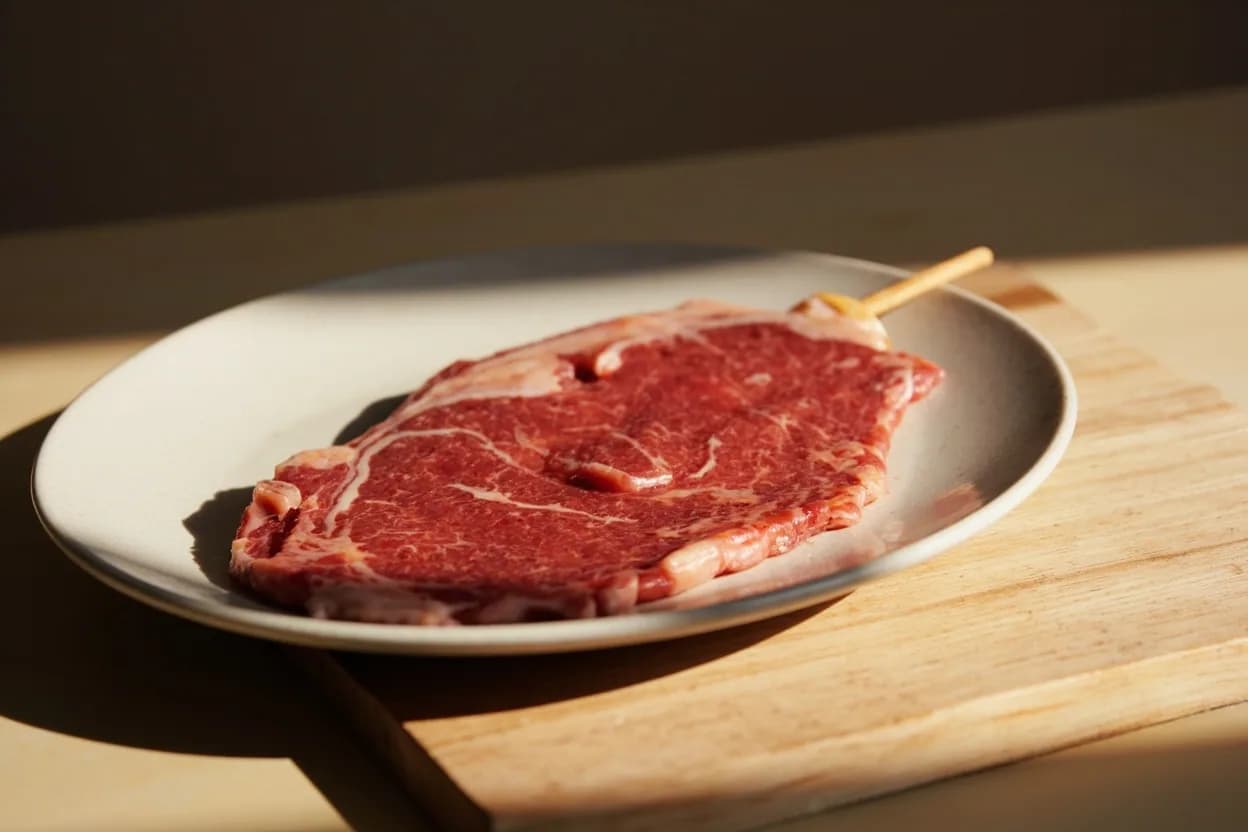
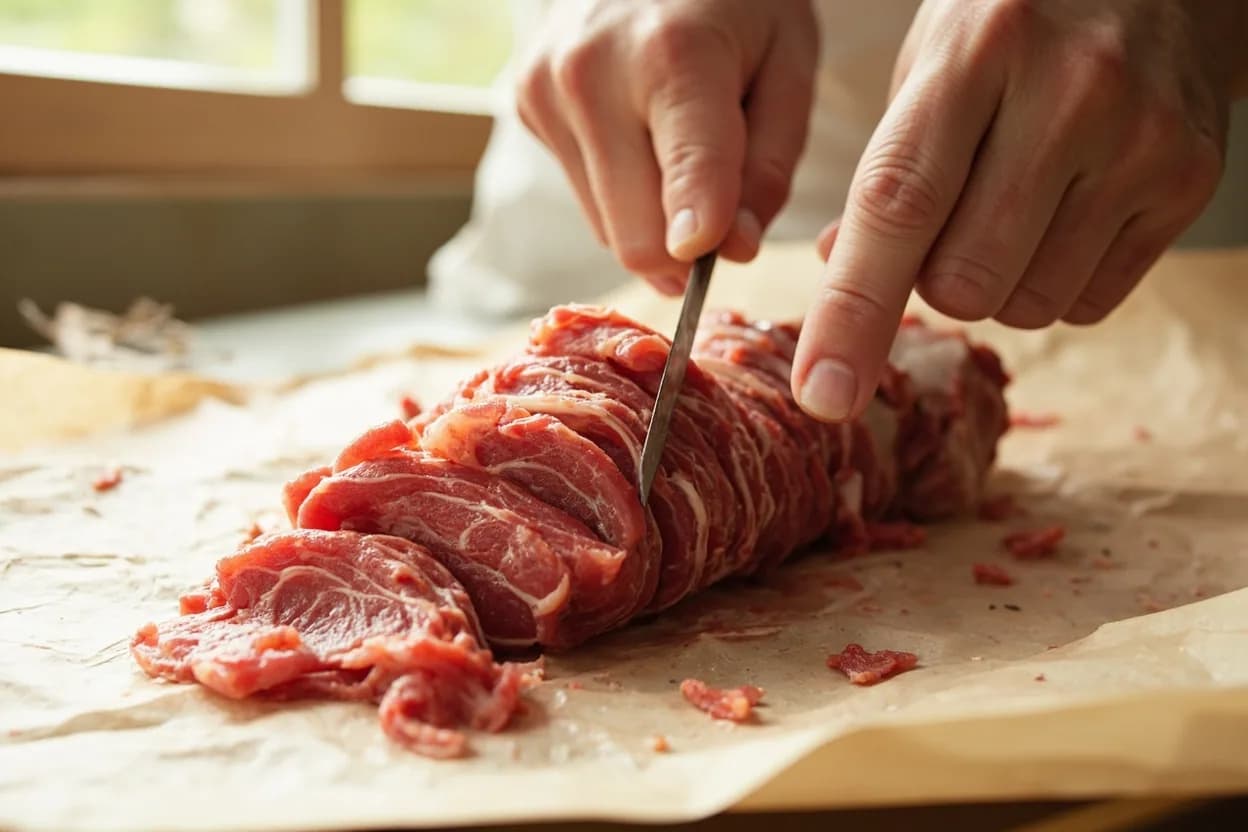
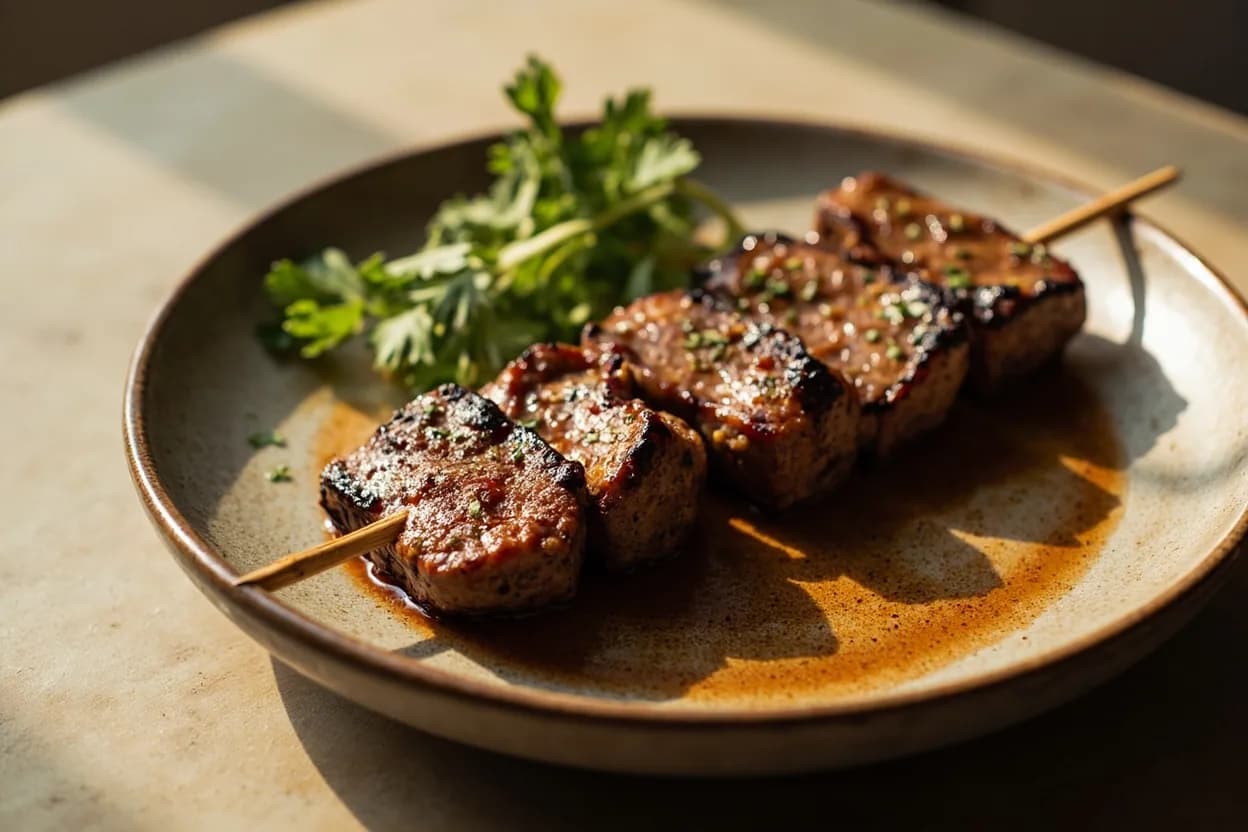
The suya cut is not a primal or anatomical designation but a butchery technique specific to West African street grilling: lean beef (typically sirloin, rump, or topside) is sliced 3–5 mm thick perpendicular to the muscle fibre direction, then threaded onto flat iron or bamboo skewers so the broad faces lie parallel to the heat source. The thinness and cross-grain orientation are both essential — thinness ensures the meat cooks through rapidly over scorching charcoal without drying, while cutting against the grain pre-shortens the muscle fibres so that even well-done slices remain tender enough to tear with the teeth.
In photos
Where it comes from
Preferred source cuts are lean hindquarter muscles with long, parallel fibres that are easy to read and cut against: rump (biceps femoris), topside (semimembranosus), or sirloin cap/picanha. Heavily marbled or irregular-grained cuts are avoided — they do not slice cleanly and the fat can flare on open charcoal, burning the spice crust.
Best for
How to cook it
- 1Chill or semi-freeze the beef 45–60 minutes before slicing — firm (not frozen) meat slices cleanly and uniformly at 3–5 mm.
- 2Identify the grain direction by looking at the muscle fibres; slice strictly perpendicular to create short cross-sections of fibre.
- 3Coat slices generously in yaji (ground peanut, ginger, paprika, garlic, and cloves spice blend) mixed with oil; press to adhere.
- 4Thread onto flat metal skewers folding each slice once at the midpoint so it forms a loose 'accordion'; this keeps slices open for heat penetration.
- 5Grill over very hot hardwood charcoal, 8–12 cm from embers, turning every 90 seconds for 3–5 minutes total — internal temp 70–75 °C.
- 6Rest 2 minutes before serving; the thin slices continue cooking off heat. Serve with sliced onion, fresh tomato, and extra yaji powder for dipping.
Prep & butchery
- Semi-freeze for 45 min to firm up before slicing — essential for consistent 3–5 mm cuts
- Use a long, sharp slicing knife (not a serrated blade) and let the knife do the work with minimal sawing pressure
- Remove all silverskin and connective tissue — they shrink violently under heat and curl the slices off the skewer
- After slicing, pound slices lightly between plastic wrap to even thickness if needed
Substitutes
- Chicken breast (thin-sliced)
Widely used for suya chicken; slice the same way, reduce grill time to 2–3 min per side
- Liver or kidney (thin-sliced)
Organ-meat suya is popular in markets; slice 4–5 mm, marinate shorter (15 min)
- Lean lamb leg (thin-sliced)
Common in northern Nigeria and Niger; flavour is richer, grill time similar
Related cuts
- Rump cap / Picanha
Favoured source cut in Nigerian suya — long fibres, easy to read grain
- Topside (top round)
Lean, consistent grain, economical suya source cut
- Sirloin tip (knuckle)
Slightly less uniform grain but still acceptable; more available in diaspora butchers
Appears in
References
- 1.The Zoe's Ghana Kitchen Cookbook — Zoe Adjonyoh (Mitchell Beazley, 2017)
- 2.Zoe's Ghana Kitchen (field knowledge, suya technique chapter)
- 3.The Food Lab — J. Kenji López-Alt (Norton, 2015) — cross-grain slicing principles
- 4.Yolélé: Recipes from the Heart of Senegal — Pierre Thiam (Lake Isle Press, 2008)
Confidence: high
Notes
Why lean is non-negotiable
Suya masters reject marbled beef not for cost reasons but for technical ones. Fat between fibres will liquefy and drip before the spice crust sets, causing flare-ups that char the yaji and produce acrid smoke. The flavour architecture of suya is deliberately additive — spice on top of clean beef — not integrated as in a wagyu preparation.
The yaji spice paste as functional tenderiser
Ground peanuts in yaji act as a mechanical crust that insulates the thin slices during the first minute of high-heat cooking, slowing moisture loss. This is one reason suya can be cooked well-done and still remain acceptably juicy — the peanut coat creates a buffer zone.