Regional Meat Cuts
Suya Thin-Slice Against Grain
Also: suya beef, tsire meat, suya stick beef
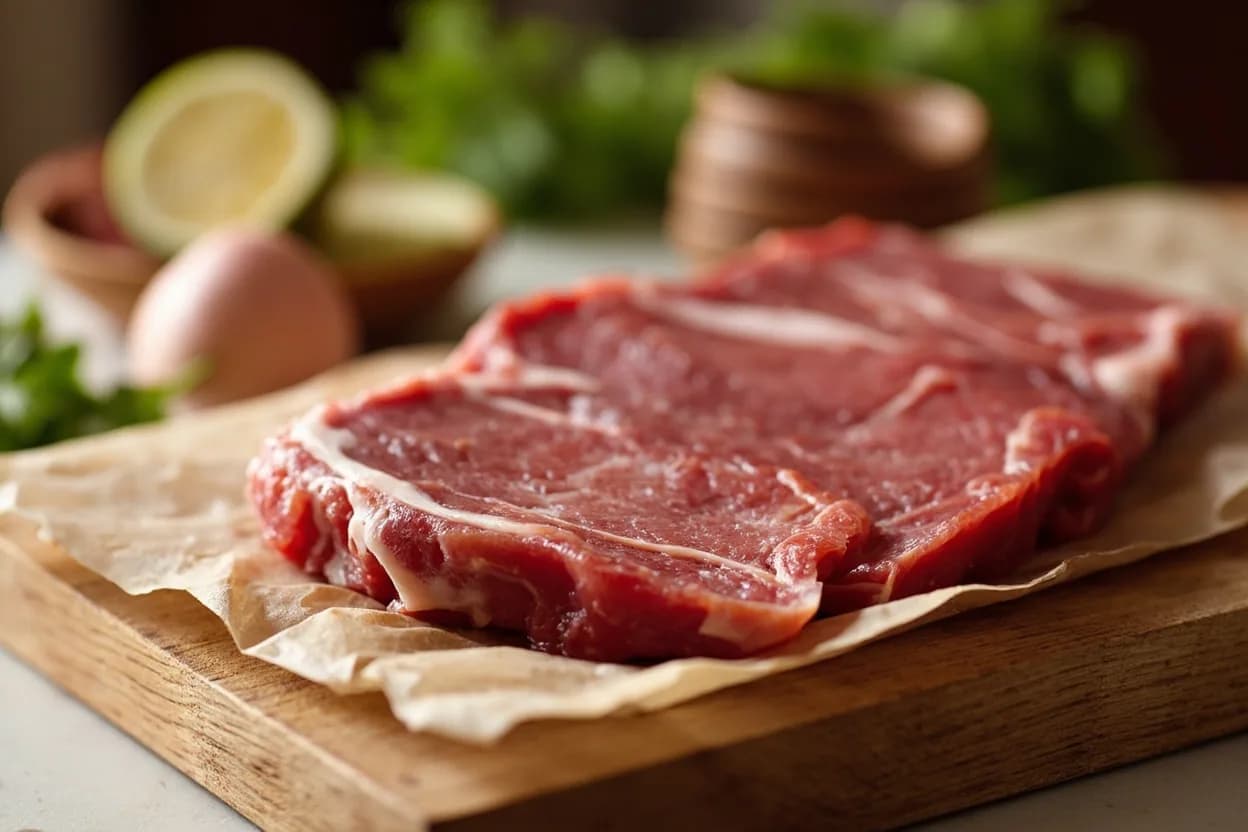
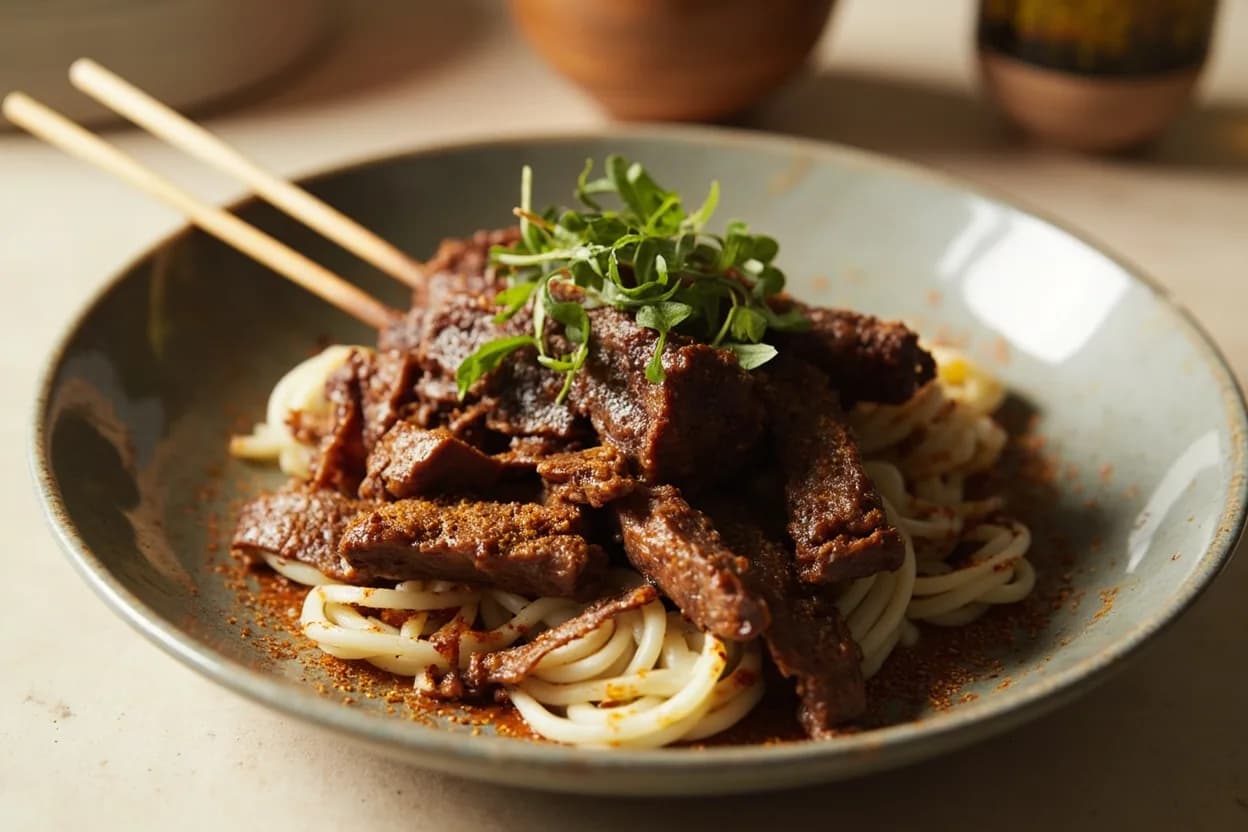
Paper-thin 3–4 mm cross-grain slices of lean beef sirloin or rump, skewered and rubbed with spiced groundnut paste for West African suya.
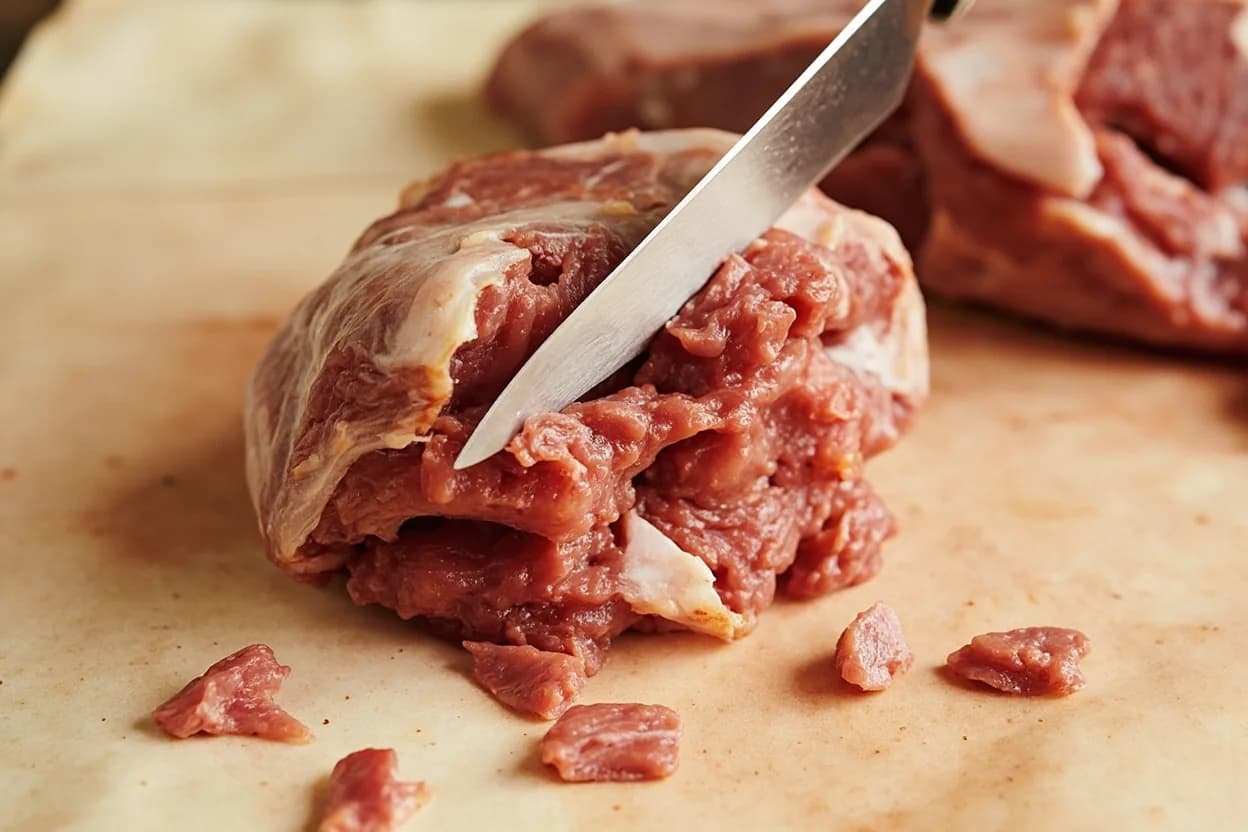
Suya thin-slicing is a precise butchery technique in which lean beef — typically top sirloin, eye of round, or rump cap — is sliced 3–4 mm thick perpendicular to the muscle fibers. The against-grain orientation shortens the long collagen bundles so that each thin strip stays tender despite direct high-heat grilling. The resulting pieces are flat, broad, and uniform enough to thread lengthwise onto flat metal or bamboo skewers without folding or slipping.
In photos
Where it comes from
Lean muscles from the hindquarter: top sirloin (the preferred Hausa cut), eye of round, or rump cap. Fatty, connective-tissue-heavy cuts like chuck are avoided because suya is cooked very quickly over intense charcoal heat with no time for collagen breakdown.
Best for
How to cook it
- 1Chill the beef partially in the freezer (30–45 minutes) to firm it up and make clean 3–4 mm slices easier to achieve with a sharp slicing knife.
- 2Identify the grain direction — the long parallel lines running through the muscle — and slice straight across them, not with them.
- 3Lay slices flat and coat both sides generously with yaji (ground roasted peanuts, ginger, paprika, onion powder, garlic, and ground grains of selim).
- 4Thread each slice lengthwise onto a flat metal skewer so it lies flat and does not sag.
- 5Grill over intense charcoal or a very hot gas grill for 2–3 minutes per side, turning once; the interior should be just cooked through with charred edges.
- 6Rest 1 minute, then serve with raw onion rings, sliced tomato, and extra yaji for dipping.
Prep & butchery
- Trim all silverskin and hard fat before slicing — it prevents the meat from lying flat on the grill
- Freeze-firm the block before slicing for consistent 3–4 mm thickness without a deli slicer
- A long, thin-bladed slicing or boning knife works better than a chef's knife for this cut
- Do not pound or tenderise — the against-grain slice is sufficient and pounding breaks the flat profile needed for skewering
Substitutes
- Eye of round thin-sliced
Even leaner; slightly less flavourful but holds the flat shape well
- Flank steak thin-sliced
More widely available outside West Africa; slightly fattier and more tender — adjust grill time down
- Chicken breast thin-sliced
Common suya variant (suya adiẹ); apply the same against-grain cross-cut at 5 mm to prevent dryness
Related cuts
- Top Sirloin Steak
The parent primal; suya slices are taken from the same lean mass
- Rump Cap (Picanha)
Often used when top sirloin is unavailable; fat cap is removed before slicing for suya
- Eye of Round
Leanest alternative with a similar tight grain ideal for against-grain thin slicing
Appears in
References
- 1.The Complete African Cookbook — van Wyk (2021)
- 2.Zoe's Ghana Kitchen — Adjonyoh (2017)
- 3.The Africa Cookbook — Harris (1998)
- 4.Hausa Culinary Traditions — University of Bayero Kano Food Studies archive
Confidence: high
Notes
The Fulani origin of suya technique
Suya is attributed to the Hausa-Fulani cattle herders of Northern Nigeria, where lean beef was a seasonal preservation strategy — thin slices dried partially over coals keeping longer than thick cuts. The yaji rub served both as flavour and a light antimicrobial coating. Today suya kiosks operate across all of sub-Saharan Africa and the diaspora, and the against-grain thin-slice remains the non-negotiable technical constant even when the spice ratios vary by region.
Why against-grain matters here
With a lean, exercise-dense muscle like top sirloin, cutting with the grain produces long intact fibers that snap against the teeth. Cutting against the grain at 3–4 mm produces cross-sections only millimetres long — the muscle fiber is already 'pre-cut' before chewing begins. On a 2-minute grill, there is no residual heat to soften collagen, so grain orientation is the only available tenderising mechanism.