Knife Cuts — Classical French
Suprême (Citrus Segment)
Also: supreme, suprême, citrus supremes, membrane-free segment, fillet of citrus
A membrane-free citrus segment cut by removing the peel, pith, and surrounding membranes to expose only pure, jewel-bright fruit flesh.
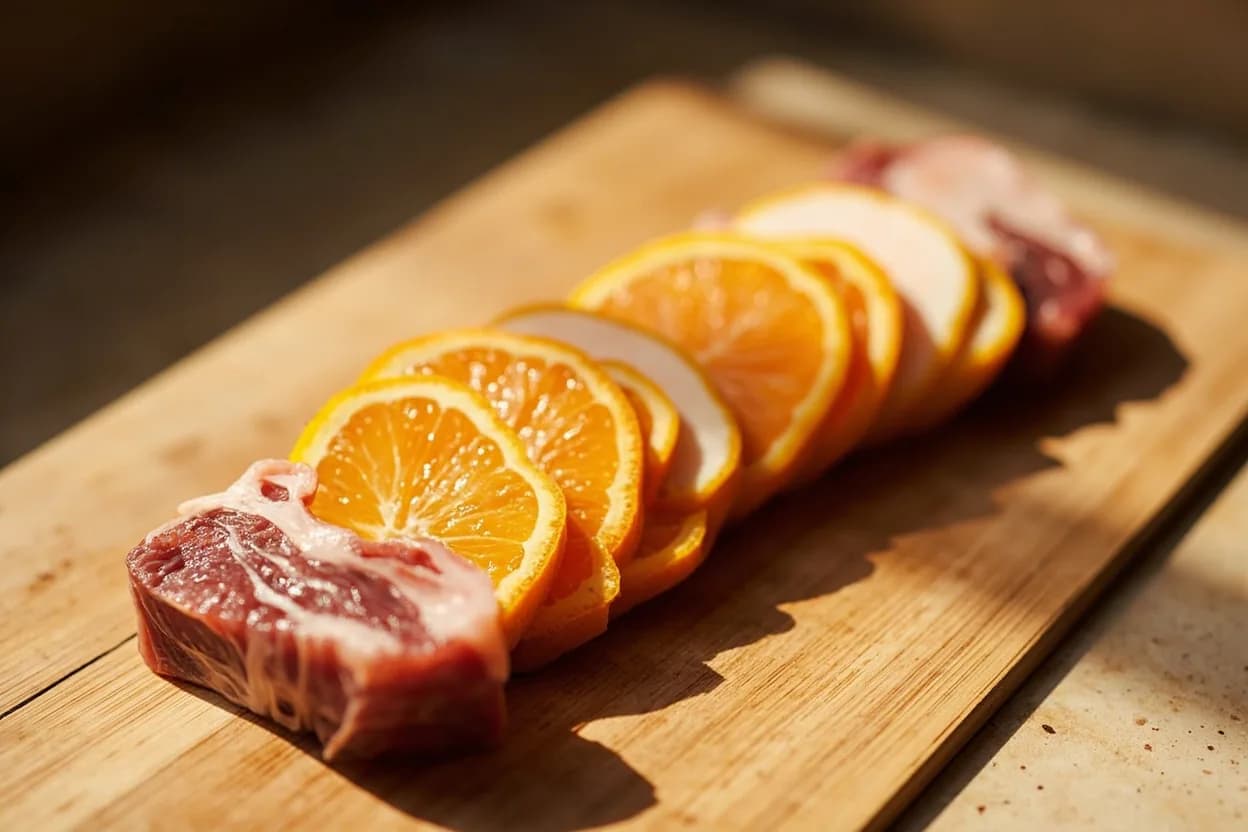
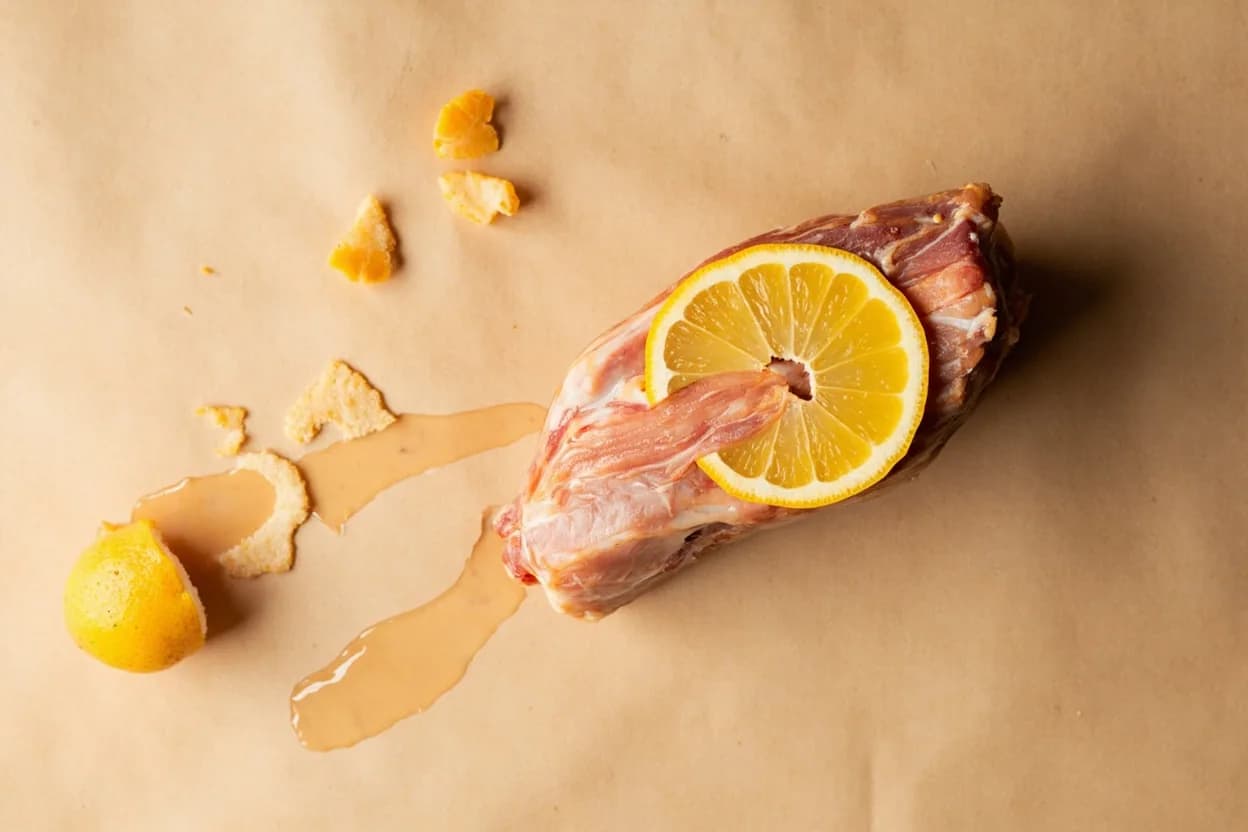
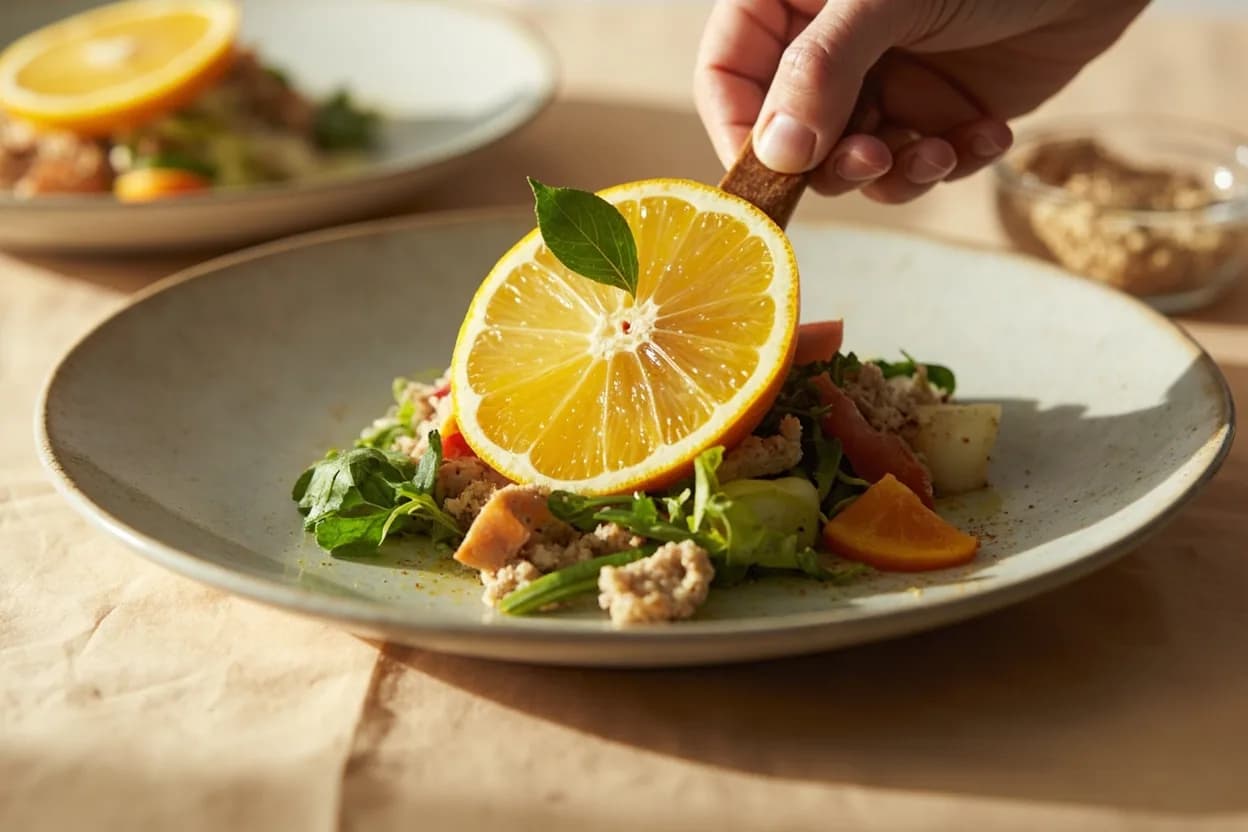
A suprême is a citrus segment from which all peel, pith, and inter-segment membranes have been removed, leaving only the juice-filled flesh sacs of a single segment. The technique requires a sharp paring or boning knife: top and bottom of the fruit are sliced off to expose the flesh, the peel and pith are removed in downward strokes following the fruit's curve, and individual segments are then freed by a V-shaped cut that slides the knife blade down each side of the dividing membrane. The result is a clean, glistening segment with no bitter membrane and no connective tissue — the most refined expression of fresh citrus.
In photos
Where it comes from
Individual segments of any citrus fruit — orange, grapefruit, blood orange, clementine, pomelo, mandarin, yuzu (where segment size permits) — freed from all surrounding peel and membrane.
Best for
How to cook it
- 1Zest the fruit first if zest is needed — the round fruit is far easier to hold during zesting than the trimmed, peeled ball.
- 2Slice off the top and bottom of the fruit to expose the flesh on both poles, creating stable flat platforms.
- 3Stand the fruit on one flat end. Following the curve of the fruit, cut downward in smooth strokes to remove the peel and all white pith, working around the fruit in 8–10 passes. Aim to remove pith with each stroke, but leave as much flesh as possible.
- 4Hold the peeled fruit over a bowl (to catch juice). Identify the thin white membranes dividing each segment — you can see them clearly now.
- 5Slide the blade of a sharp paring knife down one side of a segment, running directly along the membrane. Stop at the centre. Angle the blade back up along the other membrane and the segment drops free. Repeat for each segment.
- 6Squeeze the spent membrane 'skeleton' firmly over the bowl to extract every drop of juice — this is valuable and flavourful.
- 7Use suprêmes immediately or store in their juice under refrigeration for up to 4 hours.
Prep & butchery
- A sharp paring knife (9–10 cm blade, stiff spine) is the correct tool — a flexible boning knife can work but requires more control. A dull knife tears the flesh.
- Cold, firm fruit produces cleaner cuts than room-temperature fruit whose cells have softened.
- Work over a bowl, not a flat board — the juice accumulates and can be incorporated into the dish rather than lost.
- For very large citrus (pomelo, large grapefruit), the membrane removal step may require two passes per segment — a shallow cut down one membrane, then a second cut to angle the blade back up the other.
Substitutes
- Peeled whole segments (hand-torn)
Faster and acceptable in casual preparations but retains membrane and lacks the precision required for refined plating
- High-quality jarred citrus segments
Convenient but soft, syrup-sweet, and without the aromatics of fresh — never suitable for plated restaurant courses
Related cuts
Always taken before suprêmes; the zest step leaves the fruit intact for the subsequent peeling and segmenting
Fine-ribbon cut; occasionally used to prepare julienned zest as a companion garnish to suprêmes in plated desserts
- Peeler ribbon (citrus)
Broad peel strip for confit — a separate use of the peel removed during the suprême process
Appears in
References
- 1.Jacques Pépin, La Technique (1976)
- 2.The Culinary Institute of America, The Professional Chef, 9th ed. (2011)
- 3.Thomas Keller, The French Laundry Cookbook (1999)
Confidence: high
Notes
Etymology and usage
The word suprême in French culinary vocabulary carries a specific dual meaning: the boneless breast of a chicken (poitrine désossée) and a membrane-free citrus segment. Both usages share the same idea — the finest, most refined portion of the ingredient, freed of anything structural or inedible. The term entered English professional kitchens in the early 20th century through Escoffier's codification of French classical technique.
Managing yield
Suprêmes are inherently wasteful by volume — a large navel orange yields only 8–10 usable segments, and the peeling removes a substantial proportion of the fruit. Squeeze every drop from the membrane skeleton into the preparation's dressing or sauce. In high-volume kitchens, a dedicated mise en place session yields suprêmes into their own juice in a hotel pan; this juice is then used in vinaigrettes, reductions, or cocktail batchers.