Seafood & Shellfish Breakdown
Squid — Tube, Tentacle, Ink Sac Breakdown
Also: calamari breakdown, squid cleaning, mantle preparation, calamar limpieza
Complete squid fabrication: separating the mantle from the head-tentacle cluster, removing the gladius quill and skin, extracting the ink sac intact, and scoring the tube for even cooking.
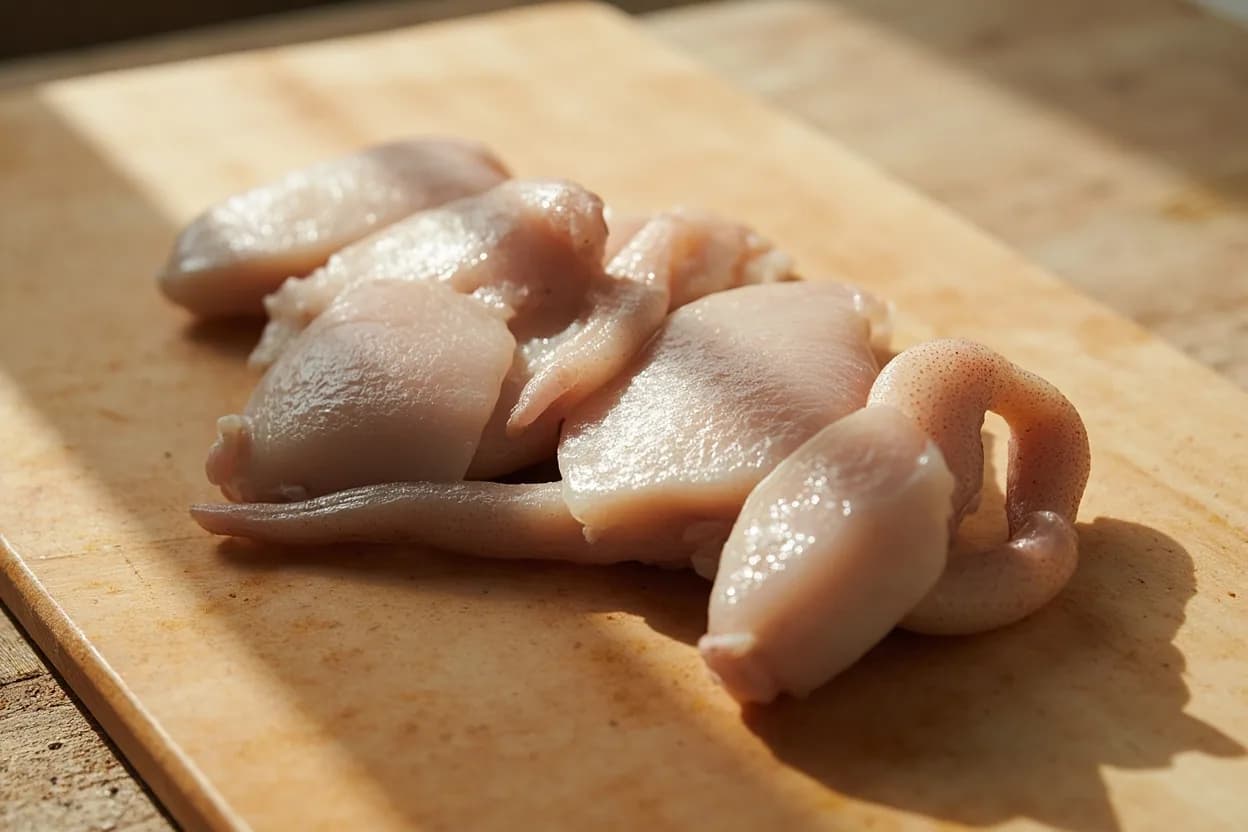
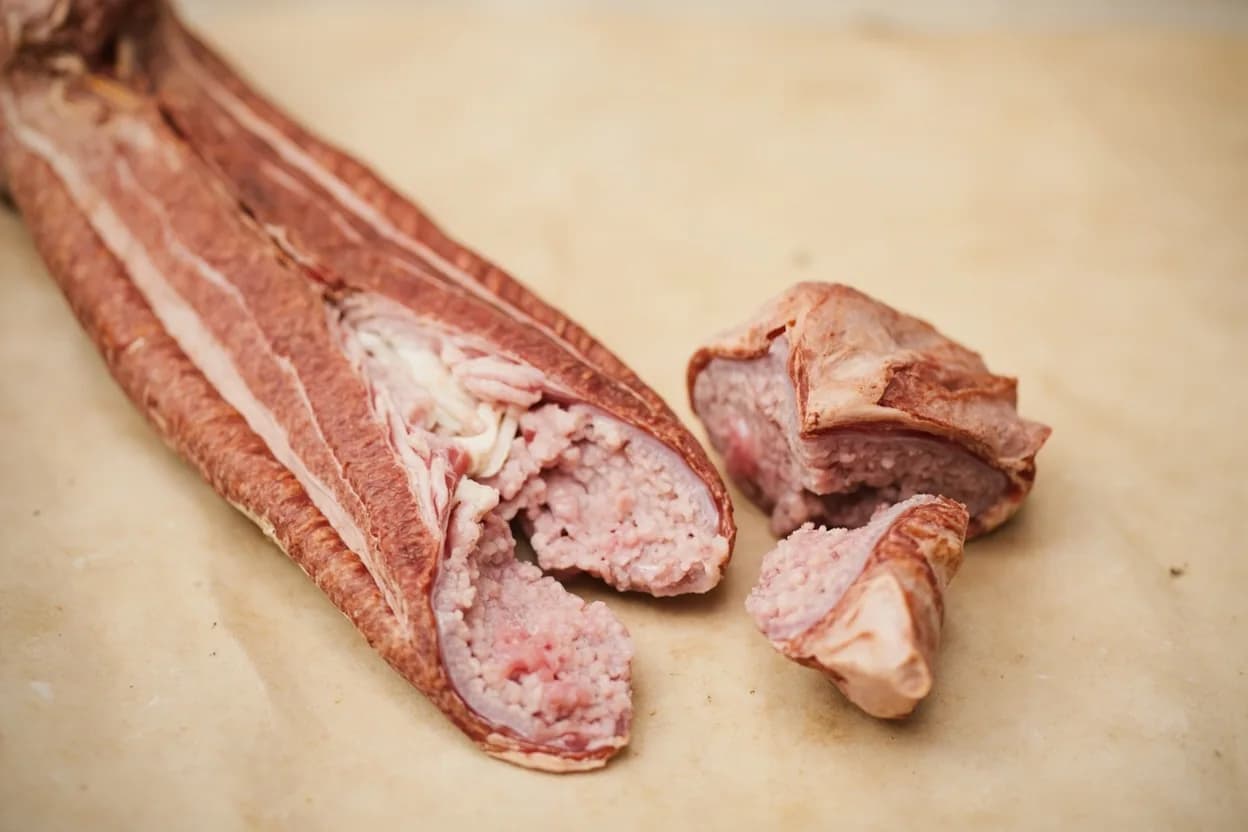
Squid butchery begins with understanding the basic anatomy: a muscular mantle (the tube or body), a head bearing eight arms and two longer tentacles, a rigid internal shell called the gladius (or quill), paired fins along the mantle, and a silvery ink sac embedded in the mantle near the digestive gland. The breakdown yields four usable elements — tube (for stuffing, rings, or scored stir-fry sheets), tentacle cluster (for grilling and frying), fins (often included with the tube), and ink (for rice, pasta, and sauces). Cleaning technique determines which of these are intact and usable.
In photos
Where it comes from
Squid (Loligo vulgaris, Doryteuthis opalescens, Illex argentinus, and related species). All squid are cephalopod molluscs; the tube is the muscular mantle that surrounds the internal organs. The gladius is the vestigial internal shell made of chitin. The ink sac is a small silvery-black pouch adjacent to the digestive gland.
Best for
How to cook it
- 1Grip the head just behind the eyes and gently pull it away from the mantle with a firm, steady tug — the internal organs will follow. Do not jerk or the ink sac may burst inside the mantle.
- 2Reach into the mantle cavity and pull out the gladius (a clear plastic-like quill, firm and ridged). Discard it.
- 3Locate the ink sac: it is a small silvery-black pouch attached to the digestive mass pulled out with the head. Snip it free with scissors, squeeze ink into a small bowl, and reserve if needed. Discard the rest of the digestive mass.
- 4Cut the tentacle cluster just in front of the eyes to yield the usable portion. Squeeze the base of the tentacles to pop out the hard beak; discard the beak. Retain the tentacle cluster whole or separate into individual arms.
- 5Remove the fins by peeling them from the mantle sides — they peel cleanly if you grip at the pointed tip.
- 6To remove the skin: peel the purple outer membrane from the mantle by rubbing under running water. It slips off in sheets, or use a paper towel for grip. (Skip for braised preparations where the skin softens acceptably.)
- 7Rinse the mantle interior under cold running water to flush any remaining viscera or ink.
- 8For rings: cut the tube crosswise at 8–10 mm intervals. For stir-fry sheets: slit the tube open along one side, score the interior surface in a crosshatch at 45° with cuts spaced 5 mm apart, then cut into 4×5 cm rectangles — the scored pieces curl and fan in the wok.
Prep & butchery
- Work over a bowl or sheet pan lined with dark paper — a burst ink sac on a white cutting board results in 20 minutes of cleanup.
- Fresh squid has nearly no smell; strong fishy odour indicates age and warrants rejection.
- Frozen-and-thawed squid (widely available and acceptable) is often pre-cleaned; verify the gladius has been removed.
- For ink extraction from pre-cleaned squid: slit the mantle open and look for any ink residue in the cavity lining — small amounts can be scraped out.
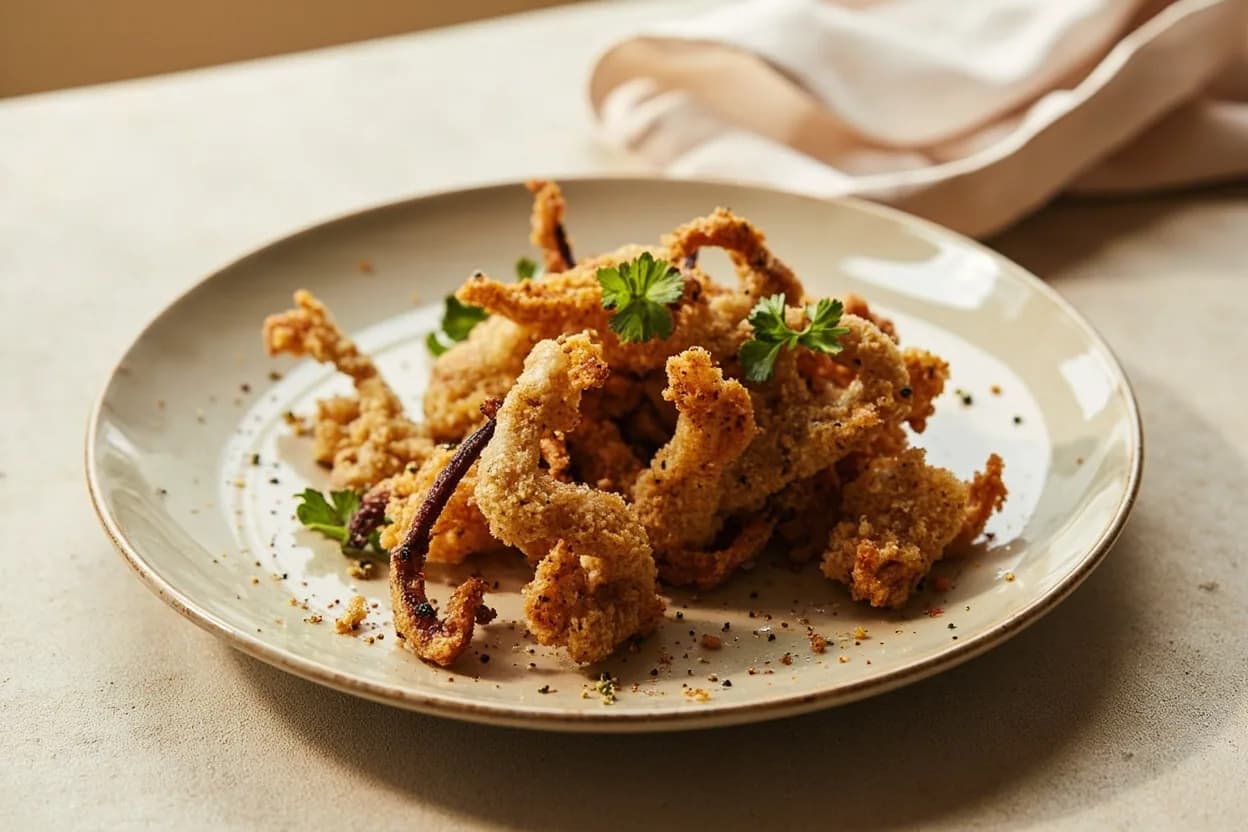
- Pat the tube and tentacles completely dry before frying — surface moisture causes violent oil spatter and steams rather than fries the squid.
Substitutes
- Cuttlefish
Closest substitute: similar breakdown, larger ink sac, thicker mantle — requires longer cooking in braises; produces superior ink.
- Baby octopus (whole)
No tube form; requires different cooking approach; tentacles only. Not interchangeable for stuffed preparations.
- Large sea scallop (sliced)
Shares the lean, quick-cook profile; no ink; used as a non-cephalopod substitute in stir-fry applications.
Related cuts
- Cuttlefish breakdown
Parallel technique; cuttlefish has a calcified cuttlebone replacing the gladius and a proportionally larger ink sac.
- Octopus preparation
Related cephalopod breakdown; no mantle tube, ink sac location differs, requires tenderising step before cooking.
- Squid score cut
The crosshatch scoring of the opened flat mantle — a sub-technique within the full breakdown that produces the flowering stir-fry effect.
Appears in
References
- 1.Fish & Shellfish — James Peterson
- 2.The Complete Cooking for Two Cookbook — America's Test Kitchen
- 3.Complete Techniques — Jacques Pépin
- 4.Nose to Tail Eating — Fergus Henderson (shellfish chapter context)
- 5.Cocina Mediterránea — Ferran Adrià and Albert Adrià
Confidence: high
Notes
The 2-minute / 30-minute rule
Squid muscle fibres contract violently at about 60°C and will remain rubbery until collagen breaks down after prolonged heat — typically 30–45 minutes in a braise. For any cooking method shorter than 30 minutes (frying, wok, grill, ceviche), the target is 1–2 minutes maximum, then off the heat. Every second beyond that and before the 30-minute mark produces progressively worse texture. Scoring the stir-fry sheet reduces this window further to 45–60 seconds.
Ink: sac vs pouch
The ink (sepia) is a melanin-based suspension of glycoproteins and polysaccharides. It has genuine umami depth and a faint iron-mineral flavour beyond its dramatic black colour. The sac yields 1–3 ml per squid. For pasta nero or arroz negro at scale, fishmongers sell squid ink in small sachets (often from cuttlefish, which have more ink). Fresh sac ink has a purer flavour than packaged, but either is valid.
Scoring for stir-fry
The crosshatch score on the interior face of the opened mantle is not decorative — the cuts sever the muscle fibres that run in opposing diagonal directions within the tube wall. When the scored sheet hits a wok at 250°C+, each cut opens, the piece curls and fans into a flower or pinecone shape within 20 seconds, and the dramatically increased surface area browns rapidly. Unscored squid sheets simply contract into a tight cylinder and overcook before colour develops.