Seafood & Shellfish Breakdown
Squid Score & Ring Cut
Also: calamari rings, scored squid, crosshatch squid, calamari fritti cut
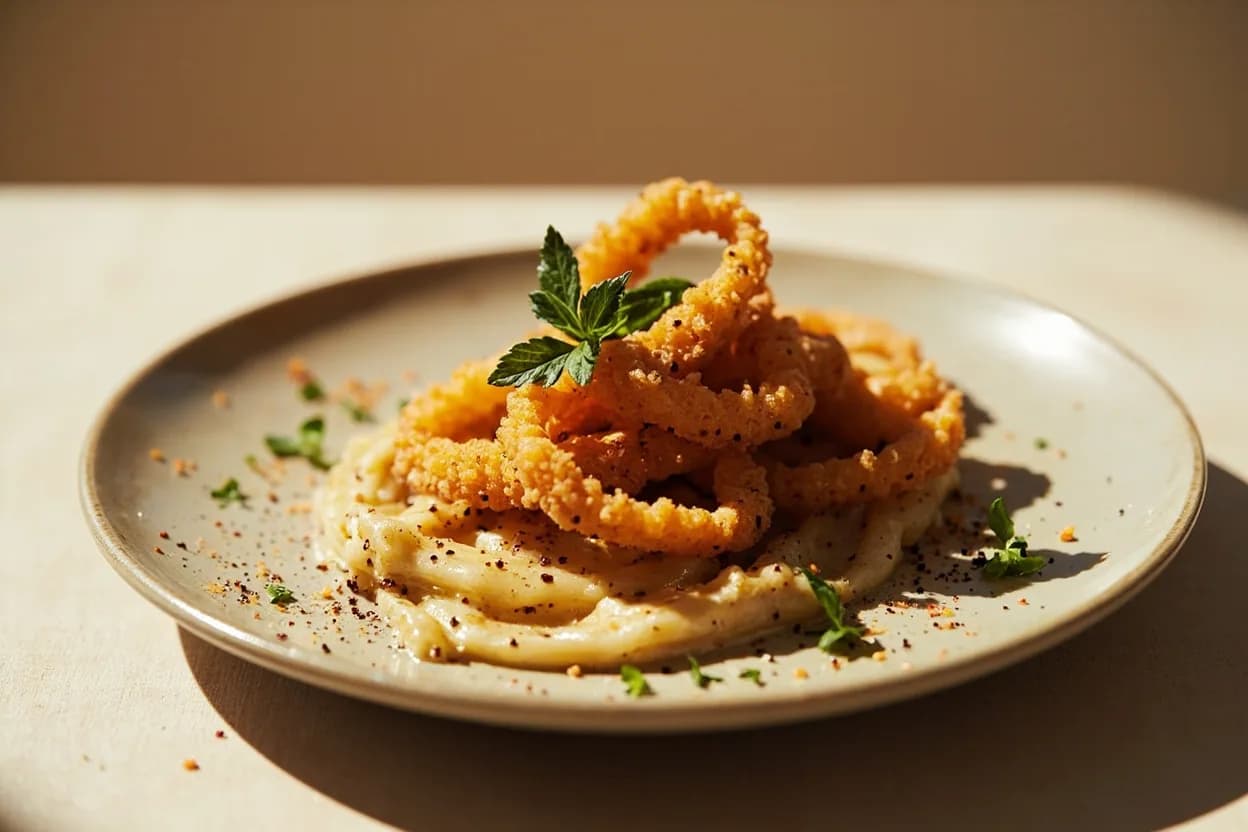
Crosshatch scoring on the inner face of cleaned squid tubes so they curl and bloom during cooking, or straight crosswise ring cuts for calamari fry.
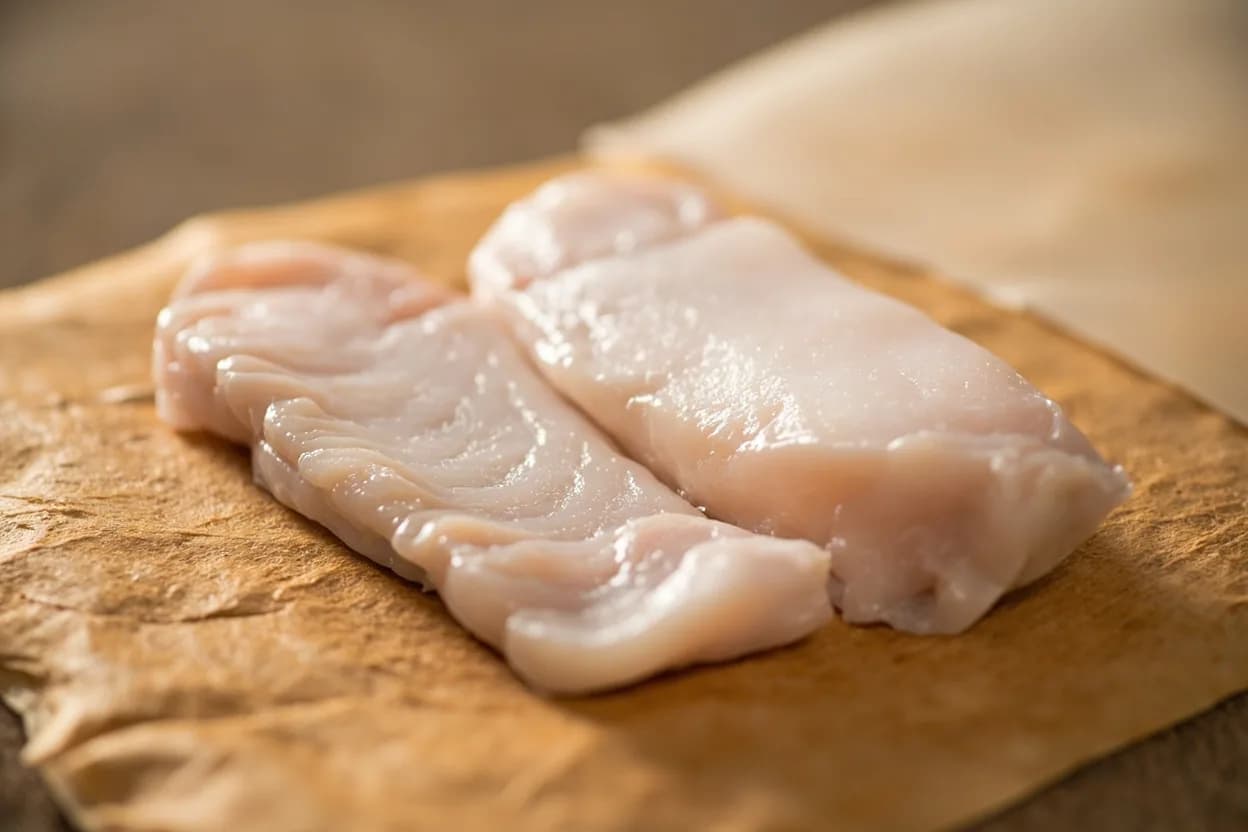
Squid cutting encompasses two distinct techniques applied to the tube (mantle) after cleaning: (1) crosshatch scoring — shallow diagonal cuts on the inner or outer surface at regular intervals that cause the tube to curl and flower when exposed to high heat, creating visual drama and better sauce adhesion; and (2) ring cutting — straight transverse cuts across the tube at 8–12 mm intervals to produce calamari rings for frying or stewing.
In photos
Where it comes from
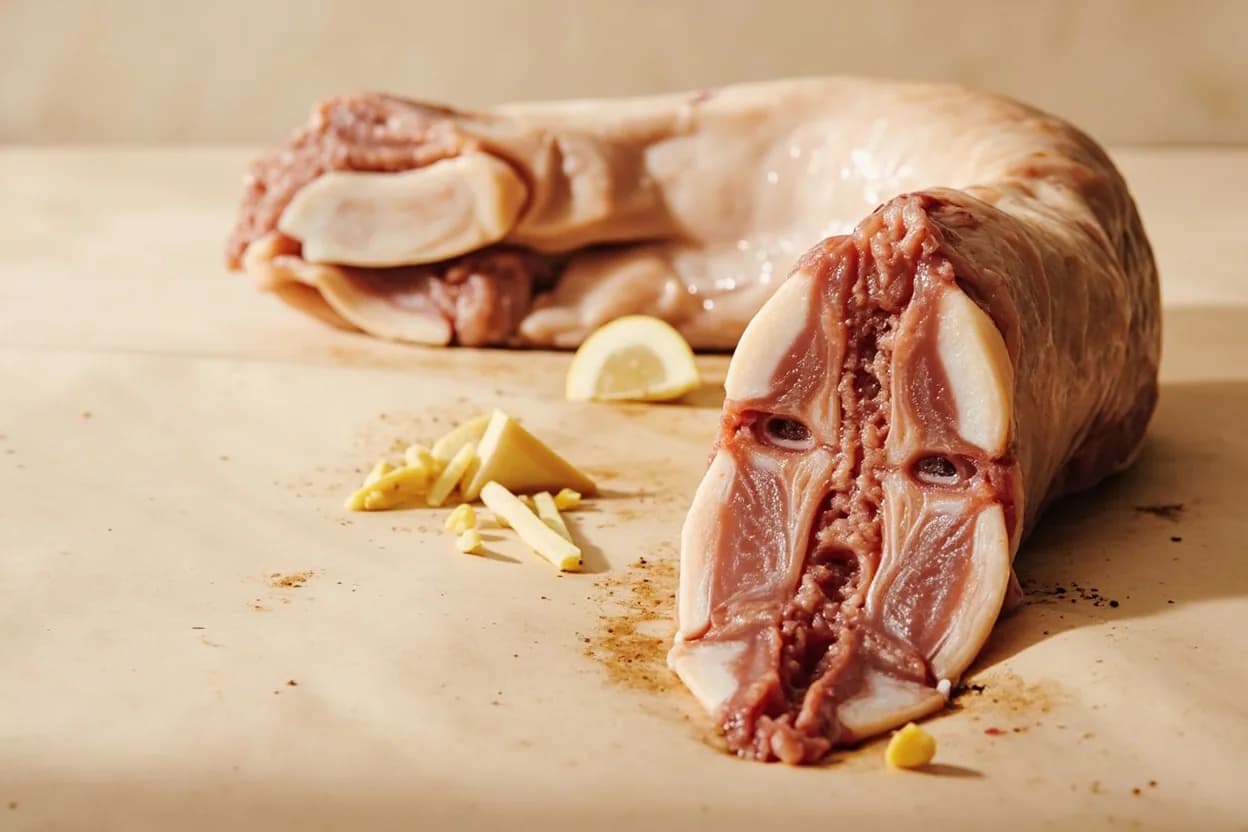
The squid tube (mantle) is the cylindrical body of the cephalopod after the head, tentacles, beak, pen (gladius), and internal organs are removed. Species used: Loligo vulgaris (European squid, Mediterranean), Loligo forbesi (Atlantic squid), Dosidicus gigas (jumbo squid, Humboldt), and Todarodes pacificus (Japanese flying squid). Larger tubes are ideal for scoring; smaller tubes are best for rings.
Best for
How to cook it
- 1To clean the tube: pull the head and tentacles from the mantle with a firm tug. Remove the transparent pen (gladius) from inside the tube by feeling for it and pulling it out. Rinse the interior of the tube under cold water, rubbing out any remaining organs.
- 2Peel the purple-pink outer membrane from the tube by rubbing under running water or gripping an edge and peeling it off — this is optional but produces a cleaner white appearance.
- 3For ring cuts: lay the tube flat on a cutting board and slice crosswise at 8–12 mm intervals with a sharp chef's knife. Consistent width ensures even frying. Tentacle clusters can be halved or left whole.
- 4For scoring: open the tube with a single cut along one side so it lies flat, inner (smoother) side up. Using a sharp paring knife or chef's knife, make shallow diagonal cuts at 3–4 mm spacing across the surface — angle at 45 degrees. Rotate and make a second set of diagonal cuts at 90 degrees to the first to create a diamond crosshatch pattern.
- 5Scoring depth: cut to about half the thickness of the mantle wall — approximately 2–3 mm deep. Too shallow and the tube will not curl; too deep and it falls apart.
- 6For stir-fry scoring: cut the scored piece into rough rectangles approximately 5 × 7 cm — small enough to bloom in a wok in seconds.
- 7Cook scored squid in an extremely hot wok or on a screaming-hot grill for no more than 60–90 seconds. The pieces will curl and the crosshatch will open into a pine-cone pattern almost immediately.
- 8For fried rings: coat in seasoned flour or a light batter and fry in oil at 180–190°C for 2 minutes maximum. Drain immediately on paper.
Prep & butchery
- Freshness test: fresh squid eyes are bright and clear, flesh is firm and white, smell is clean ocean brine. Ammonia odor or pink-tinged flesh indicates deterioration.
- Scoring must be done on a completely dry, patted tube — moisture prevents browning and causes dangerous oil splatter when frying.
- For uniform calamari rings, refrigerate cleaned tubes briefly to firm them before slicing — makes consistent rings much easier.
- Tentacles are equally delicious: score the thicker parts or leave whole and fry or grill. They brown faster than tubes.
- Frozen squid tubes are perfectly acceptable for frying and scoring — defrost slowly in the refrigerator and pat dry thoroughly.
Substitutes
- Cuttlefish (sepia) tubes
Same technique applies; cuttlefish has a slightly thicker mantle and more pronounced flavor, especially when scored.
- Large octopus tentacles (thinly scored)
Requires pre-tenderizing (pressure cooking or beating) before scoring and grilling; similar visual effect.
- Jumbo squid (Humboldt)
Thicker mantle — ideal for scoring but needs 4–5 mm deeper cuts; slightly chewier than smaller squid.
Related cuts
- Octopus Breakdown
Related cephalopod butchery; tentacles use similar scoring technique for grilling.
- Fish Score (skin-side)
Same principle — surface scoring controls curl and improves browning — applied to fish fillets.
Appears in
References
- 1.Fish & Shellfish — James Peterson (1996)
- 2.The Zuni Café Cookbook — Judy Rodgers (2002)
- 3.Nobu: The Cookbook — Nobu Matsuhisa (2001)
- 4.Modernist Cuisine at Home — Myhrvold & Zuber (2012)
Confidence: high
Notes
The Two-Minute Rule
Squid is uniquely binary in cooking behavior: it is perfectly tender in the first two minutes of cooking, then tough as rubber for the next 30–40 minutes, and finally silky again after prolonged braising. For fried rings and scored stir-fry, respecting the two-minute ceiling is the single most important technique.
Why Score?
Scoring the inner surface of a squid tube accomplishes two things simultaneously: it pre-cuts the muscle fibers that contract and curl the piece, directing the curl into a dramatic bloom rather than a tight tube; and it dramatically increases surface area for browning, coating adhesion, or sauce uptake. The difference between a plain and a scored squid tube in a wok stir-fry is visible, textural, and flavorful.