Knife Cuts — Japanese
Tanzaku-giri (Thin Rectangular Strips)
Also: tanzaku giri, tanzaku cut, poem-card strips
Thin flat rectangles named after the narrow paper strips used in Japanese poetry festivals.
Tanzaku-giri is a Japanese knife cut that produces neat flat rectangles approximately 1 mm thick, 1 cm wide, and 4 cm long. The name derives from tanzaku, the narrow decorative paper slips on which tanka and haiku are written during Tanabata and other festivals. The uniform geometry ensures even, rapid cooking and an elegant presentation appropriate to washoku aesthetics.
In photos
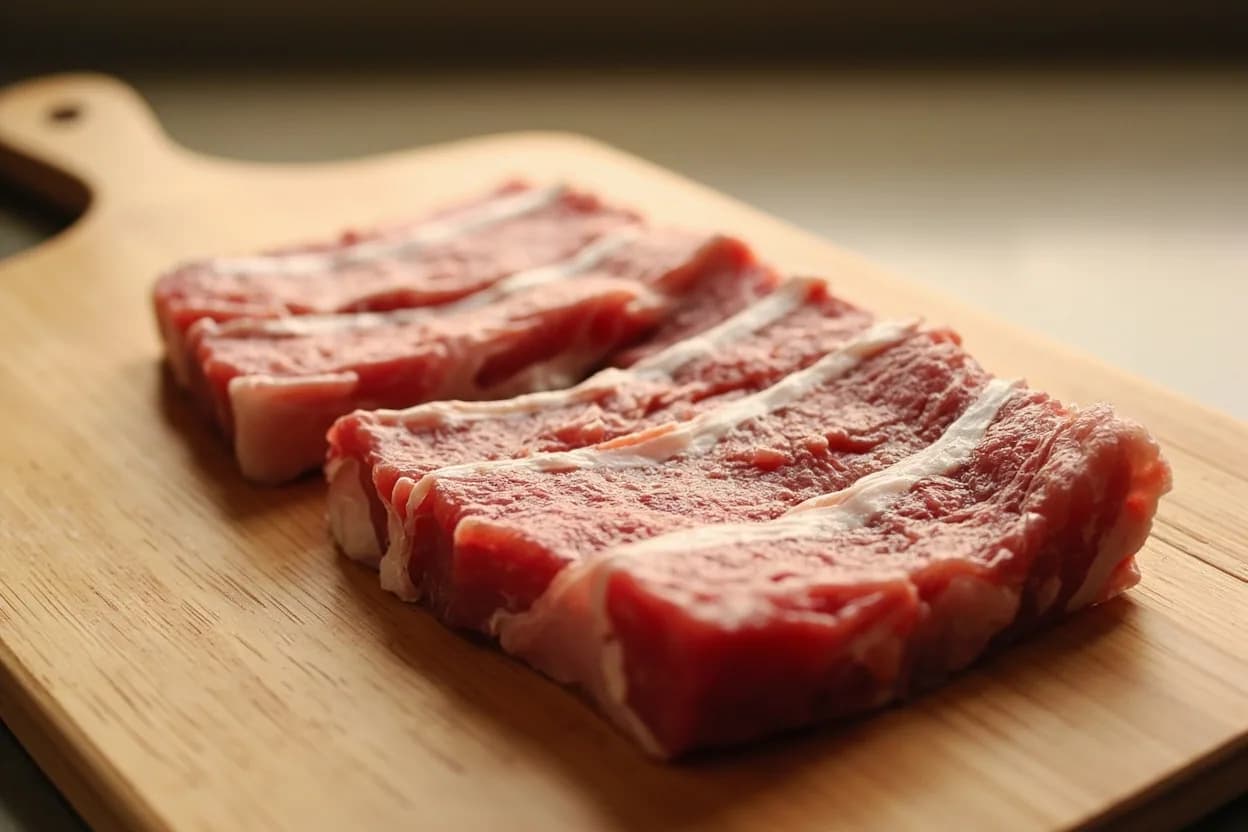
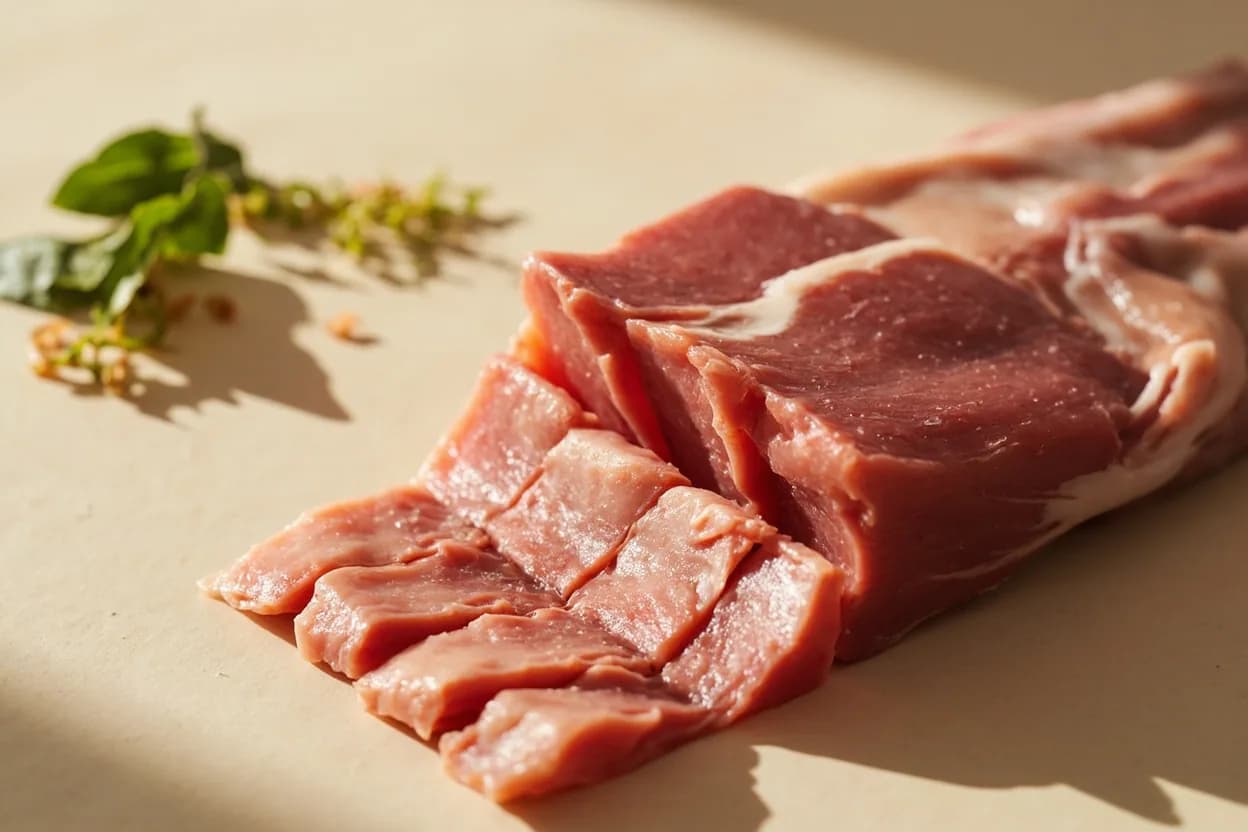
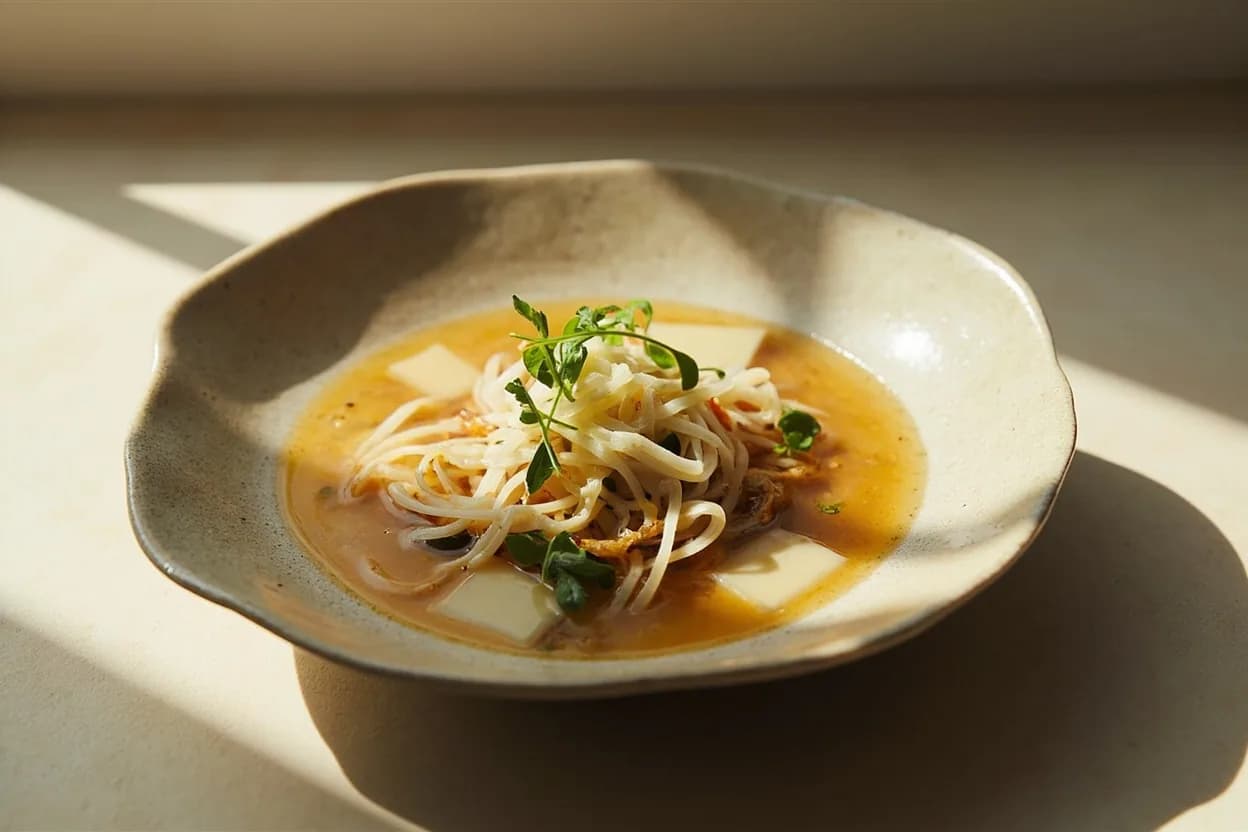
Where it comes from
Technique applied to firm-fleshed root vegetables (daikon, carrot, burdock), starchy tubers (satoimo), and certain leafy stems; no animal anatomy involved.
Best for
How to cook it
- 1Square up the vegetable by trimming a thin plank from each side to create a stable rectangular block.
- 2Slice the block into planks approximately 1 mm thick along the length — maintain even pressure and a smooth draw rather than a push cut.
- 3Stack 3–4 planks and cut crosswise at 4 cm intervals to produce uniform rectangles.
- 4For daikon or carrot in suimono, drop directly into simmering dashi and cook 2–3 minutes until just tender.
- 5For nimono, par-boil briefly in salted water to remove harshness, then finish in seasoned dashi with mirin and soy.
Prep & butchery
- Use a sharp usuba (single-bevel vegetable knife) or a well-honed nakiri for cleanest cuts with minimum cell damage.
- Chill hard root vegetables briefly to firm the flesh and reduce bruising on thin cuts.
- Trim all surfaces square before slicing to ensure rectangles are true and uniform.
- Rinse cut daikon in cold water to remove starch and bitterness before cooking.
Substitutes
- Hyoshigi-giri (rectangular batons)
Thicker and wider — use when a more robust texture is required in longer-simmered dishes.
- Sengiri (julienne)
Narrower and more hair-like; suitable when visual delicacy matters more than structural presence.
Related cuts
- Ichi-moji-giri
Straight cross-slice producing coin rounds — a simpler related form.
- Hyoshigi-giri
The larger, thicker rectangular baton from which tanzaku-giri can be considered a refined, thinner variant.
- Sengiri
Fine julienne — the next step thinner when further reduction in thickness is desired.
- Katsura-muki
The rotary-sheet technique that can produce the thin planks from which tanzaku strips are cut.
Appears in
References
- 1.Japanese Cooking: A Simple Art — Shizuo Tsuji
- 2.The Japanese Kitchen — Hiroko Shimbo
- 3.Washoku: Recipes from the Japanese Home Kitchen — Elizabeth Andoh
Confidence: high
Notes
Etymology and cultural resonance
Tanzaku (短冊) literally means 'short strip of paper.' During Tanabata, wishes are written on coloured tanzaku and hung from bamboo branches. The knife cut borrows the same proportions — long, narrow, and thin — and reflects the Japanese culinary tradition of naming techniques after familiar cultural objects to communicate their geometry at a glance.
Thickness discipline
The 1 mm thickness is critical: thicker pieces cook unevenly in delicate dashi and disrupt the visual lightness that washoku demands; thinner pieces risk disintegration in simmer liquids. A properly sharpened usuba or nakiri drawn with consistent pressure achieves this without tearing cell walls.