Regional Meat Cuts
Korean Galbi — Flanken-Cut & LA Galbi
Also: 갈비, LA갈비, LA kalbi, short ribs flanken, cross-cut short ribs, galbi gui
Korean short ribs in two distinct cuts — traditional flanken (parallel to bone through 3 ribs) and LA galbi (thin perpendicular cross-cut) — each optimised for tabletop charcoal grilling and maximum marinade surface area.
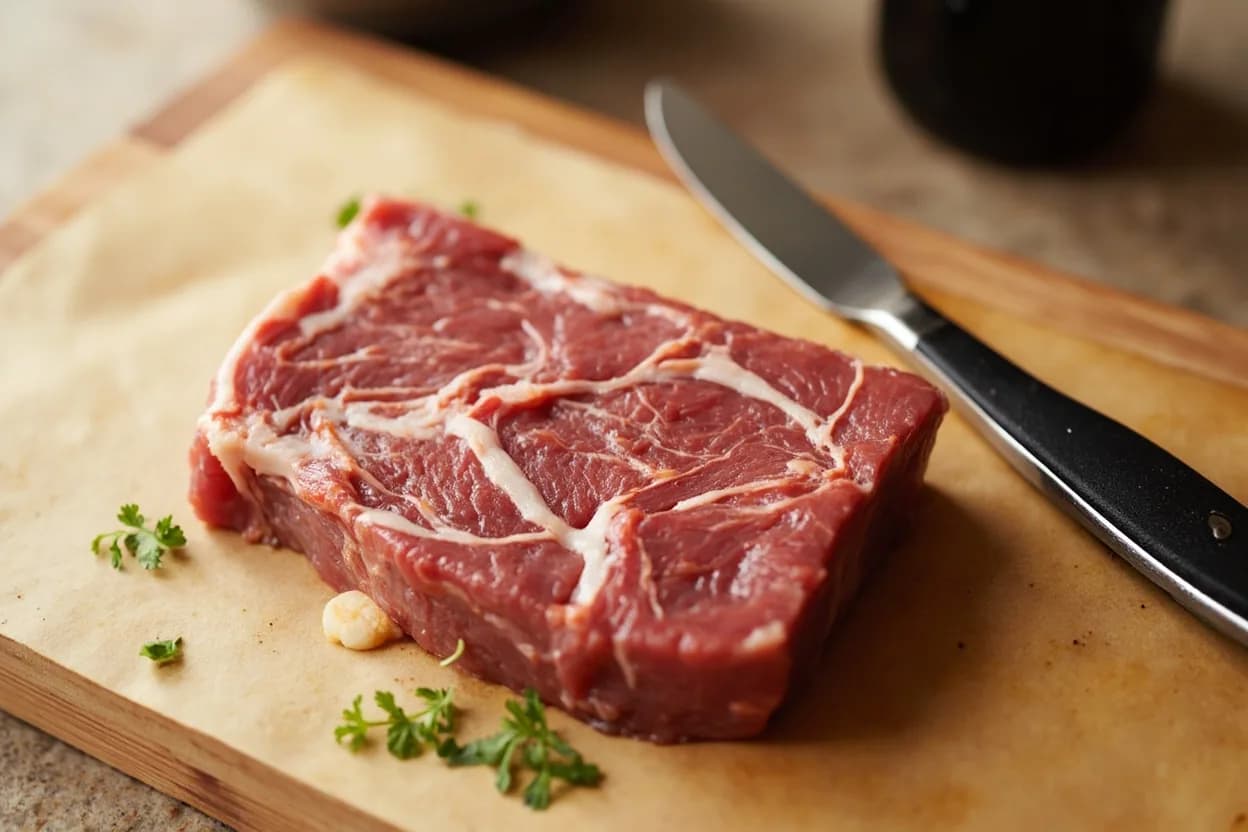
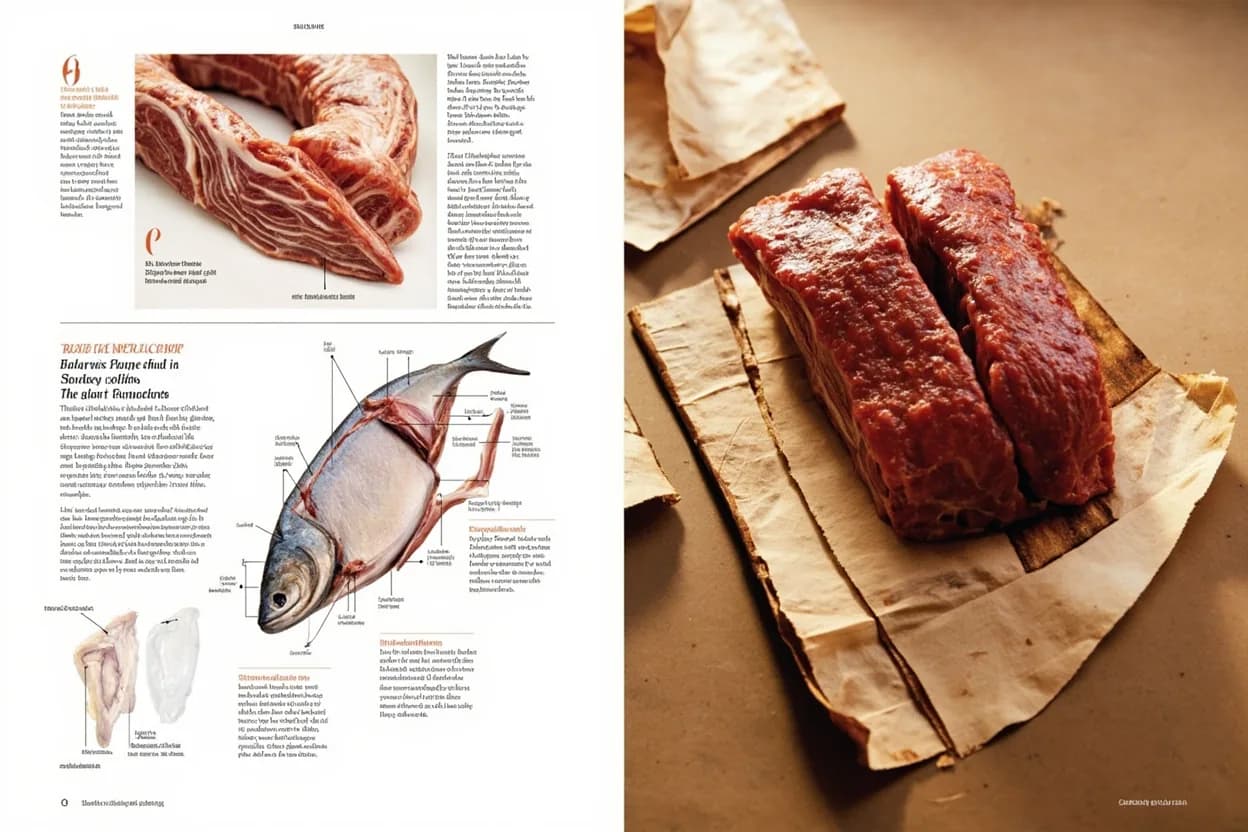
Galbi (갈비) means 'rib' in Korean and refers to both the cut and the dish. Two cutting geometries are used: Traditional flanken galbi saws parallel to the bone surface through three adjacent ribs, producing a long strip with three circular bone cross-sections embedded in a band of inter-rib meat. LA galbi (named for the Korean-American community in Los Angeles) cuts perpendicular to the ribs in very thin cross-sections (3–5 mm), yielding small pieces each containing a partial cross-section of one rib bone. The distinction profoundly affects marinade penetration, grill time, and texture.
In photos

Where it comes from
Beef short ribs: the plate short ribs (ribs 6–8, lower chest) or chuck short ribs (ribs 1–5, upper chest). Korean butchers prefer the plate short ribs for their more uniform meat-to-bone ratio. The meat is the intercostal muscle, serratus ventralis, and overlying subcutaneous fat layer between and above the rib bones.
Best for
How to cook it
- 1For LA galbi: request your butcher cut cross-grain (perpendicular to the ribs) in 3–5 mm slices — most Korean grocery butchers will do this on request or it is available pre-cut. Each slice contains one partial rib bone cross-section.
- 2For traditional flanken: ask for cuts 1.5–2 cm thick, parallel to the rib surface through 3 ribs — the resulting strip is roughly 20–25 cm long with three bone circles.
- 3Soak cut ribs in cold water 30–60 minutes to remove excess blood, changing water once; pat thoroughly dry.
- 4Prepare marinade: blend Asian pear or kiwi (enzyme tenderiser), soy sauce, sesame oil, brown sugar, minced garlic, grated ginger, and gochujang or black pepper to taste. The fruit protease (bromelin or actinidin) breaks down myosin fibres, genuinely tenderising the meat beyond what salt or acid can achieve.
- 5Marinate LA galbi 2–4 hours maximum (thin cut over-tenderises); traditional flanken 6–12 hours.
- 6Grill over charcoal or high heat; LA galbi 60–90 seconds per side until caramelised; traditional flanken 2–3 minutes per side.
- 7Cut at the table using kitchen scissors (가위, gawi) — standard Korean BBQ practice — into 3–4 cm pieces; eat wrapped in perilla or lettuce with ssamjang paste, sliced garlic, and kimchi.
Prep & butchery
- The Asian pear in the marinade is not optional for Korean galbi flavour — it contributes a distinctive fragrant sweetness and the enzyme that tenderises; canned pear purée works if fresh is unavailable.
- Score the meat surface lightly in a diamond crosshatch before marinating to help the marinade penetrate the fat cap.
- Bring marinated galbi to room temperature 20 minutes before grilling — cold meat on a hot grill causes the marinade to steam rather than caramelise.
- Grill in batches — crowding causes steaming. Rest each batch on a wire rack while the next batch grills.
Substitutes
- Bone-in short rib (English cut)
Thicker, needs longer braising or butterflying before marinating; grill only if very thinly sliced
- Boneless short rib (flanken-style)
Loses the bone-imparted flavour but accepts the marinade and grill method; cuts more uniformly
- Beef back ribs (thinly cross-cut)
Less meat-to-bone but works for LA galbi style if cross-cut thin
Related cuts
- Flanken-Cut Short Ribs (General)
The parent cut geometry from which LA galbi derives; used across Latin American and American BBQ
- Kalbi Jjim Cut (Thick Flanken)
Same flanken geometry but cut 4–5 cm thick for the braised galbi-jjim preparation
- Beef Short Ribs (English Cut)
Bone-in, parallel to bone — the American BBQ equivalent cut through a single rib
Appears in
References
- 1.The Food of Korea — Injoo Chun, Jaewoon Lee, Youngran Baek (2008)
- 2.Korean BBQ: Master Your Grill in Seven Sauces — Bill Kim (2019)
- 3.The Korean Table — Taekyung Chung & Young Soon Kim (2008)
- 4.My Korea: Traditional Flavors, Modern Recipes — Hooni Kim (2020)
Confidence: high
Notes
The LA Galbi Origin
LA galbi was developed by the Korean-American community in Los Angeles in the 1970s–80s. Korean butchers serving immigrants adapted the flanken cut to a much thinner cross-section to stretch expensive short ribs further and to cook more quickly on home gas grills. The name 'LA galbi' is now used even in South Korea, where it was imported back and is served as a distinct style from traditional flanken galbi.
The Fruit Tenderiser
Asian pear (배, bae) is the traditional tenderiser in galbi marinade — it contains the protease enzyme actinidin. Korean home cooks sometimes substitute ripe kiwifruit (stronger enzyme action), grated apple (milder), or a small amount of cola (phosphoric acid tenderiser). The enzyme is time-sensitive: under 2 hours, it opens the muscle fibres; over 6 hours for thin LA galbi, it begins to over-tenderise and the texture turns mealy. Traditional thick-cut flanken can tolerate up to 24 hours because the enzyme must penetrate further.
Scissors at the Table
Using kitchen scissors to cut galbi at the table is not a workaround for a missing knife — it is the deliberate, traditional method. Scissors allow precise cutting through bone-containing strips without displacing pieces or requiring a cutting board, and they are faster for the communal cutting-and-sharing rhythm of Korean BBQ service.