Offal & Variety Meats
Offal Butchery — Heart, Liver, Kidney & Sweetbreads
Also: variety meats preparation, abats, despojos, vísceras
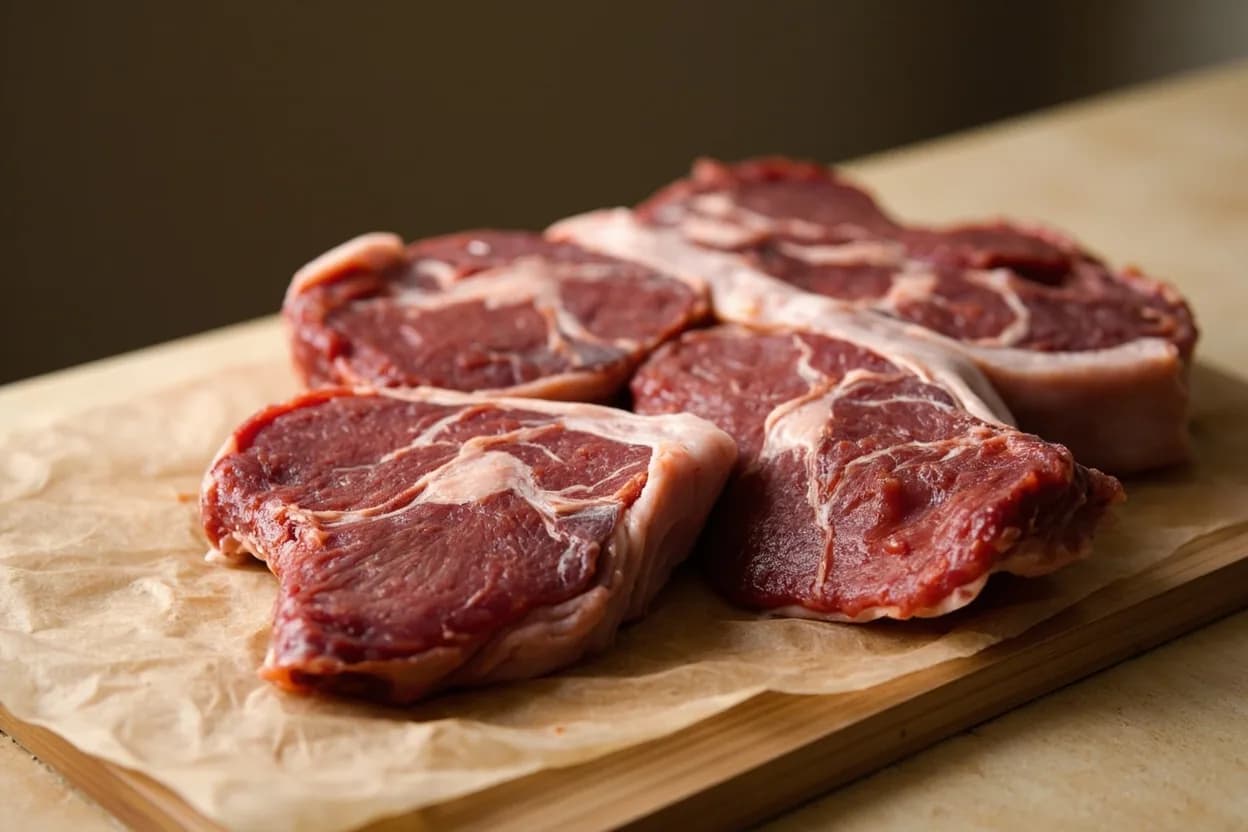
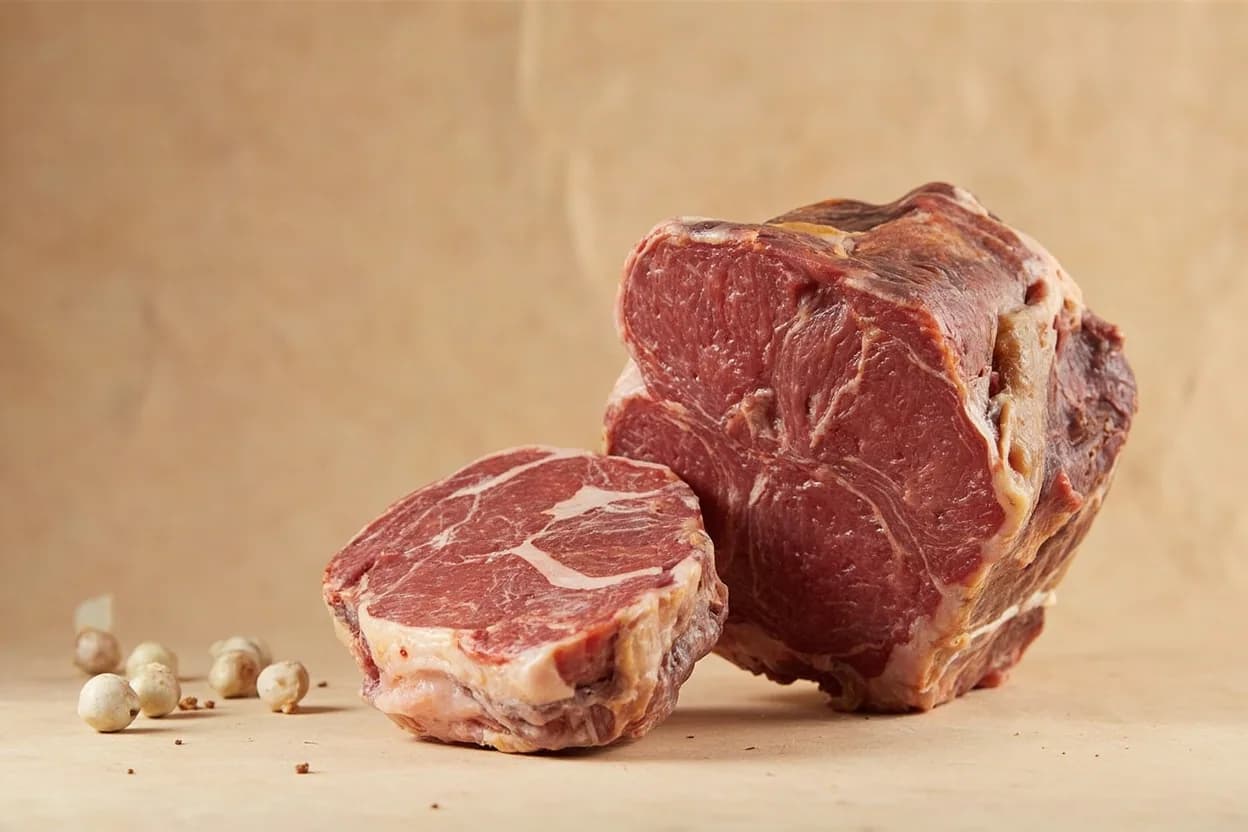
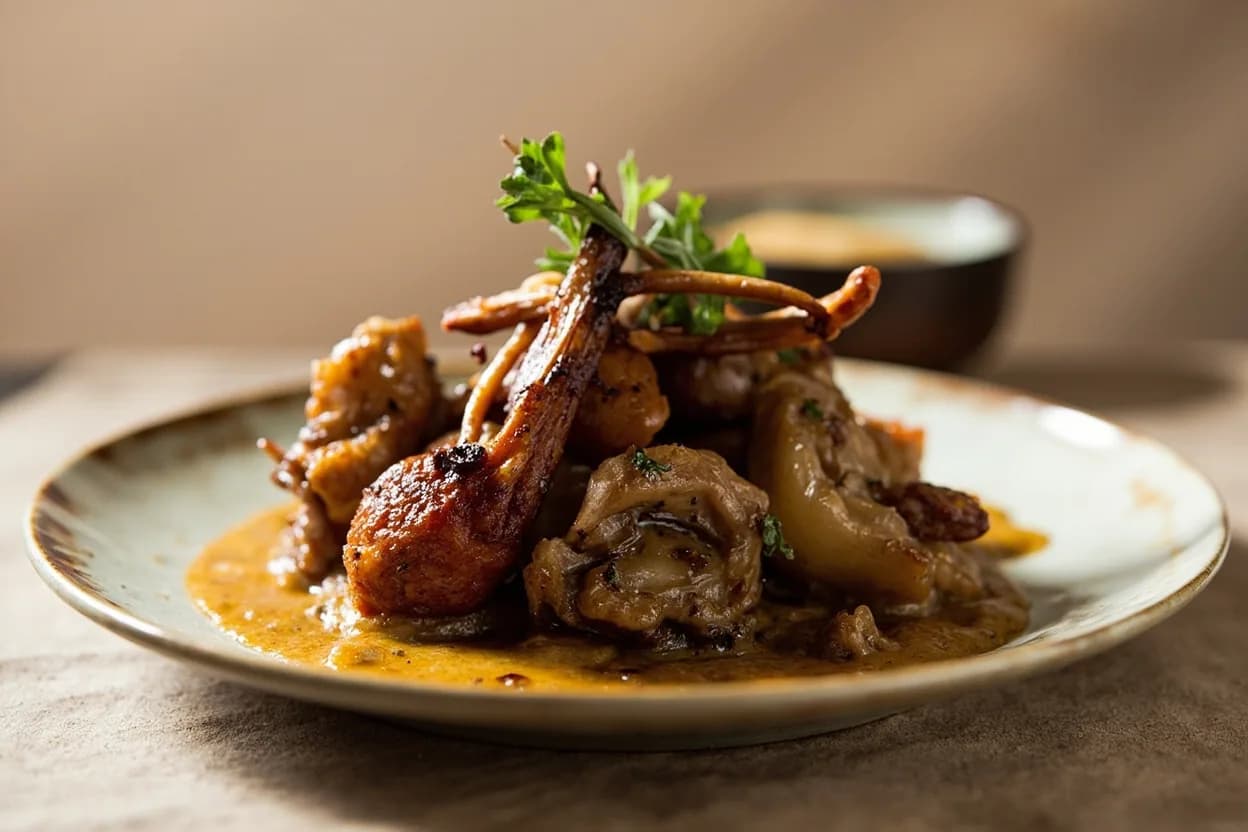
Trimming sinew from heart, bile duct from liver, fat and membrane from kidney, and blanching sweetbreads — four essential preparations that transform raw offal into clean, cooking-ready cuts.
Offal butchery refers to the cleaning, trimming, and portioning of secondary organs before cooking. The four most commonly prepared in professional kitchens are: beef or lamb heart (trimmed of sinew and fat for anticuchos or sauté); veal, beef, or chicken liver (bile duct and connective tissue removed); lamb, veal, or pork kidney (suet fat cap, outer membrane, and white core trimmed); and veal or lamb sweetbreads (the thymus or pancreas — blanched, pressed, and peeled before final cooking).
In photos
Where it comes from
Heart: the cardiac muscle of the animal — a dense, dark red muscle. Liver: the largest solid organ, a filter organ high in glycogen and blood. Kidney: the paired bean-shaped organs, surrounded by a thick suet fat cap (especially in beef) and encasing a fatty white core. Sweetbreads: thymus gland (throat sweetbread / ris de gorge) or pancreatic gland (heart sweetbread / ris de coeur) — in veal these are prized for delicacy; in lamb they are smaller but equally flavored.
Best for
How to cook it
- 1HEART: Trim away the fat cap and any exterior connective tissue. Open the heart by cutting it in half from apex to base. Remove the valves, tough sinew fibers, and any visible fat inside the chambers. For anticuchos, slice against the grain into 2 cm slabs. Marinate in ají panca, cumin, garlic, and vinegar before grilling on skewers.
- 2LIVER: Remove the outer membrane (thin, peelable skin) by sliding a finger under it at one edge and pulling it off. Locate and excise the bile duct — a green-tinged, dense rubbery tube — by tracing it with the tip of a knife and cutting it free with surrounding tissue. Cut the liver into 1 cm slices across the grain. Season immediately before cooking (salting too early draws moisture).
- 3KIDNEY: Peel away the suet fat cap by pulling it free with your hands — it comes off in sections. Remove the thin outer membrane. Halve the kidney lengthwise. Cut out the entire white fat core (pelvis/calyx system) — a V-shaped excision following the white fat inside. Soak halved kidneys in cold salted water or milk for 30–60 minutes to mellow the ammoniac note. Pat dry before cooking.
- 4SWEETBREADS: Soak in cold salted water for 2–4 hours, changing water once, to draw blood and firm the tissue. Blanch in simmering salted water for 3–5 minutes. Transfer to ice bath. Peel away the outer membrane and any connective cartilage while still warm — it comes free easily at this stage. Wrap the peeled sweetbreads tightly in cheesecloth or a clean towel and press under a weighted cutting board for 30–60 minutes in the refrigerator. This firms them for even slicing and browning.
- 5SWEETBREADS (final cook): Slice pressed sweetbreads into 1.5 cm medallions. Season and dust lightly with flour. Sear in clarified butter until deeply golden on both sides. Finish with whole butter, capers, and lemon (meunière), or deglaze with veal stock and cream.
Prep & butchery
- Freshness is paramount: offal spoils faster than muscle meat. Cook within 24–48 hours of purchase. Fresh offal smells clean and iron-forward, never ammonia-heavy (kidneys excepted — some funk is normal before soaking).
- Soaking reduces gaminess: submerge liver or kidney in cold milk or salted water 30 minutes to 4 hours before cooking. Longer for beef; shorter for lamb or veal.
- Cold temperature handling: keep all offal refrigerated until the moment of cooking. Warmth accelerates spoilage and enzymatic breakdown.
- Sweetbread types: the ris de gorge (throat sweetbread, elongated) is less prized than ris de coeur (heart/chest sweetbread, round and larger). Both use identical preparation — the rounder piece is more elegant for plating.
- Bile duct warning: even a small fragment of bile duct left in liver will make the entire dish intolerably bitter. Check carefully, especially with chicken livers where the duct is smaller.
Substitutes
- Chicken livers (for beef/veal liver)
Milder and more accessible; suitable for pâté, mousse, and sautés. Same preparation technique.
- Pork heart (for beef heart)
Smaller and more tender; same trimming technique. Often sold whole at Latin American butchers.
- Pork kidneys (for lamb/veal kidneys)
Stronger flavor than lamb; require longer soaking but same core-excision technique.
- Chicken thigh meat (for sweetbreads)
Not equivalent in flavor or texture, but in braises where the creamy texture is secondary, it substitutes acceptably.
Related cuts
- Beef Heart (Anticucho Cut)
Slicing the trimmed heart across the grain into skewer-ready slabs is a specific application of heart butchery.
- Bone Marrow Preparation
Fellow offal preparation — marrow bones are split lengthwise or cross-cut; all require sourcing from fresh, well-handled product.
- Pig's Trotters (Pieds de cochon)
Another nose-to-tail preparation requiring initial blanching and cleaning before final cooking.
Appears in
References
- 1.Nose to Tail Eating — Fergus Henderson (1999)
- 2.The River Cottage Meat Book — Hugh Fearnley-Whittingstall (2004)
- 3.Larousse Gastronomique (2009 edition)
- 4.Jacques Pépin: New Complete Techniques (2012)
- 5.Fish & Shellfish — James Peterson (1996)
Confidence: high
Notes
Sweetbread Blanch-and-Press: Non-Negotiable
Skipping the blanch-and-press step on sweetbreads produces a product that falls apart when sliced, browns unevenly (loose lobes), and tastes slightly sour from uncoagulated blood proteins. The press step is what transforms a soft organ into a firm, sliceable, restaurant-quality product. Even 30 minutes under a moderate weight makes a significant difference.
Liver Cooking Window
Beef and veal liver have the narrowest cooking window of any offal. At medium-rare (internal 55–58°C), the interior is pink, silky, and mineral. At well-done, it turns grey, grainy, and chalky — an entirely different and inferior product. The outside should brown hard in high heat while the inside remains rosy. Never cook liver through.
Kidney Funk Management
The ammonia-adjacent note in kidneys is urea — the same compound that gives well-aged meat its funkiness. In lamb kidneys it is considered part of the character; in beef kidneys it needs managing through soaking. Rinsing alone is insufficient. Milk soaking for 2–4 hours is the most effective method; the lactic acid and protein in milk bind to and remove a portion of the urea compounds.