Knife Cuts — Regional & Global
Onion — Thin Half-Moon Rings
Also: half-rings, half-moon slices, onion crescents, nim-halqa
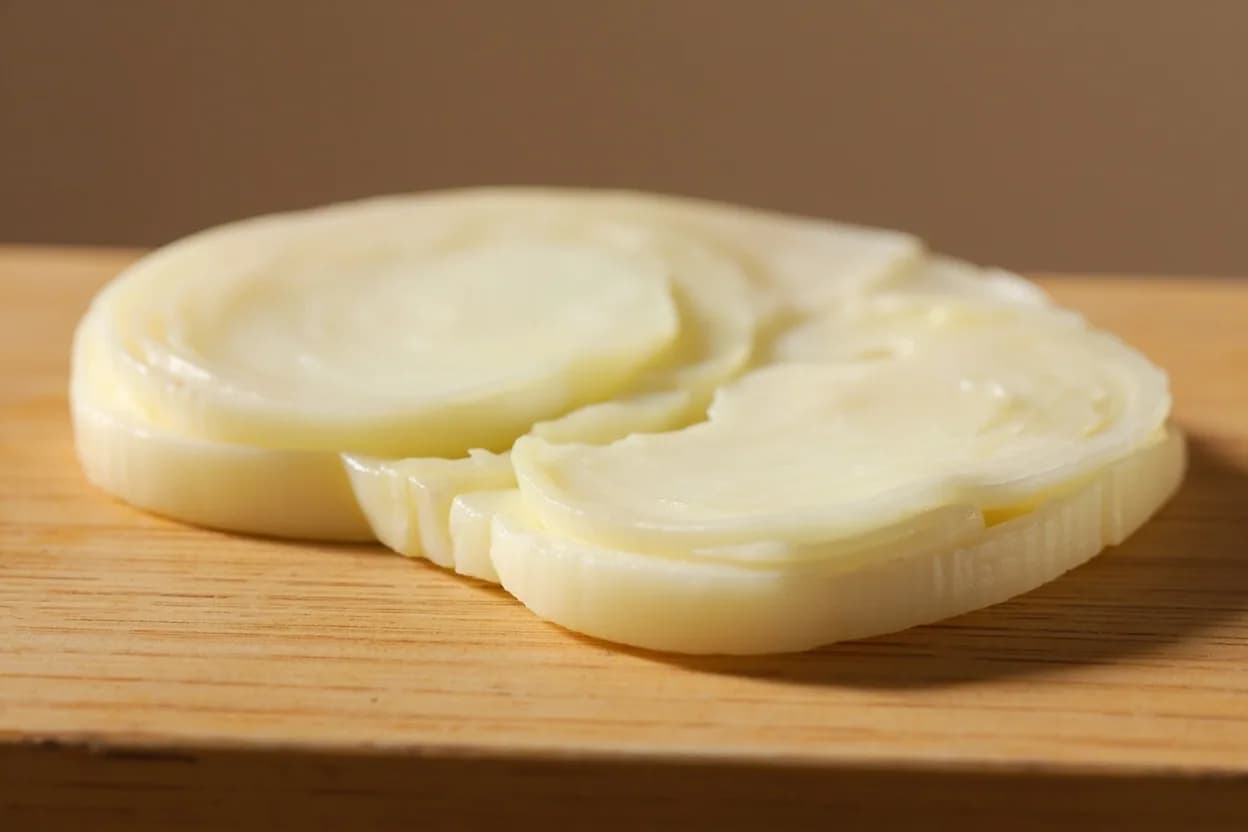
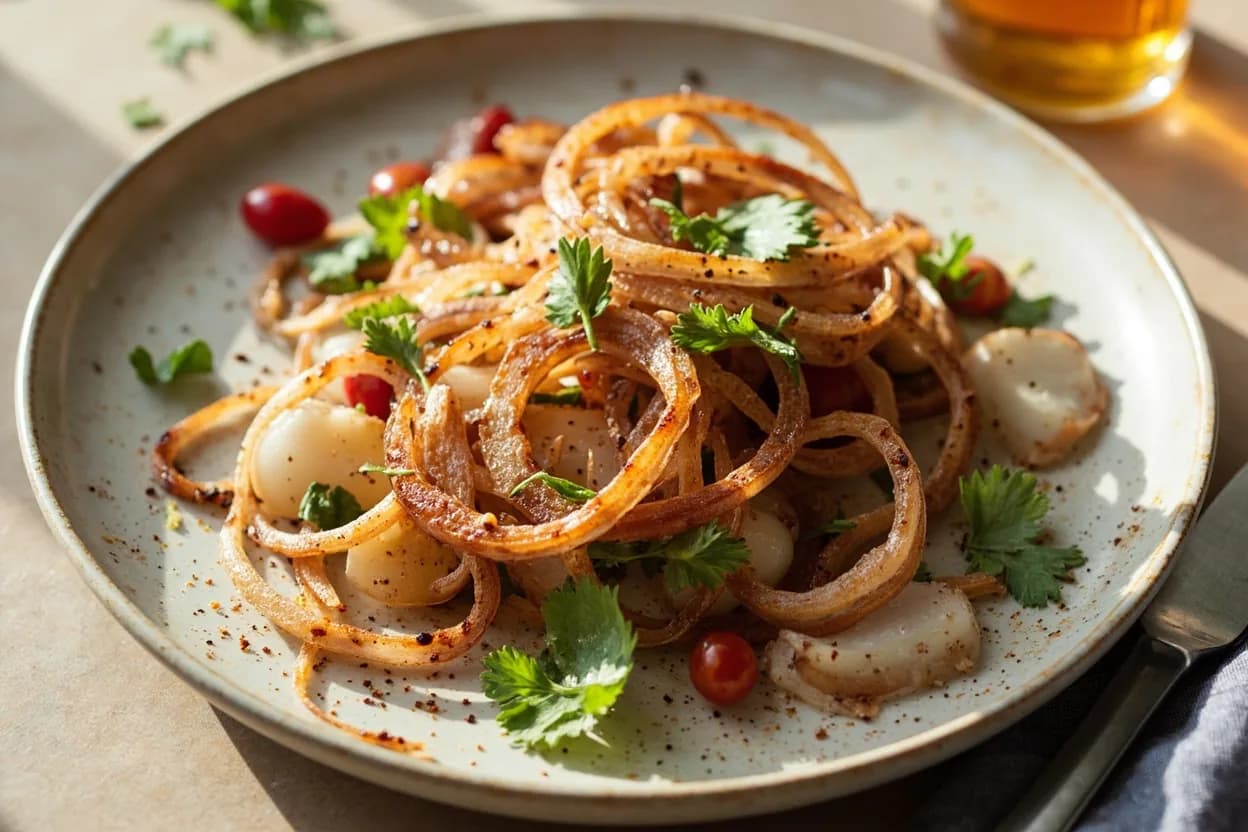
An onion halved root-to-tip then sliced crosswise into thin crescents — the workhorse cut for sumac salads, Persian stews, and garnish work.
The onion is split longitudinally through the root and stem poles, then each half is laid flat and sliced perpendicular to the cut face, yielding a series of thin crescent-shaped rings rather than full rings. Slices follow the onion's natural cell alignment, which reduces rupture and results in a more delicate texture and milder flavor than cross-grain full rings.
In photos
Where it comes from
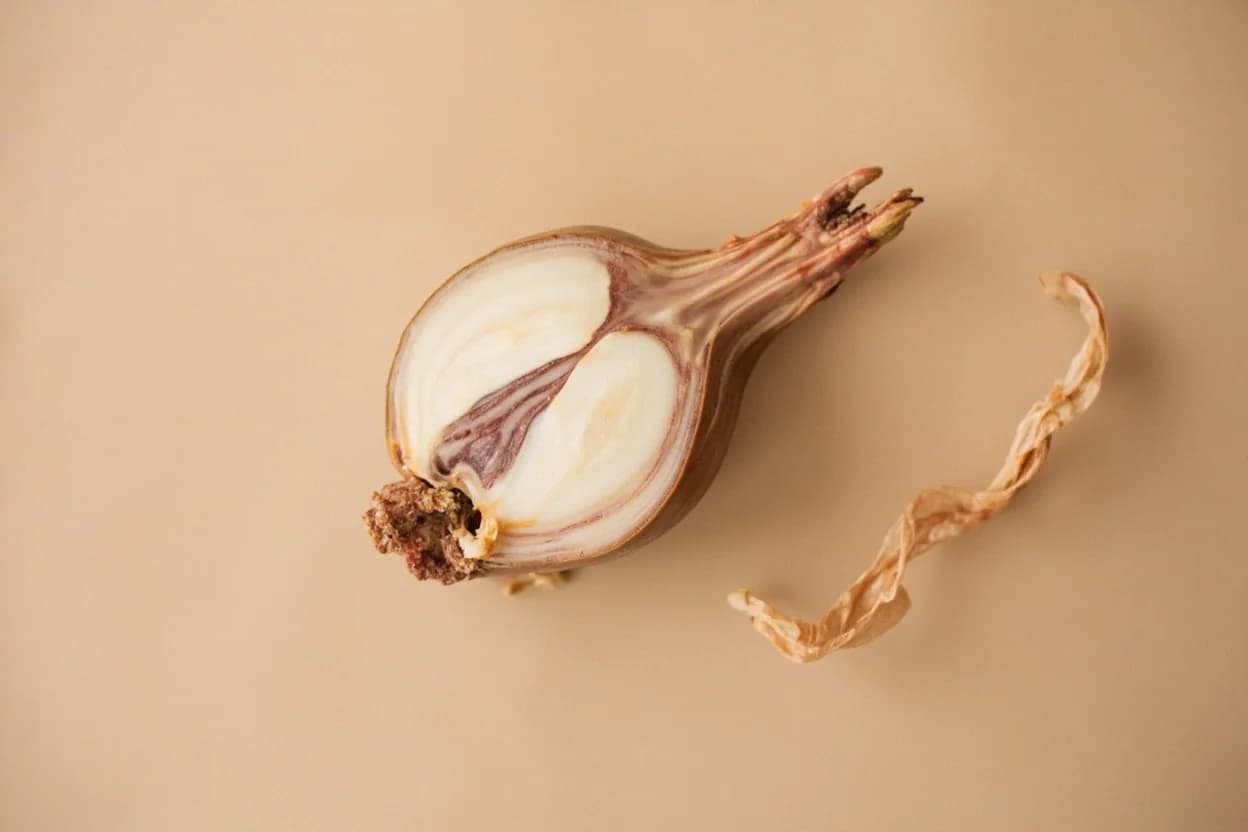
Whole onion — any variety. Halving root-to-tip keeps the root node intact on each half during slicing, allowing the layers to stay together until cut; removing the root before slicing causes premature separation of individual onion layers.
Best for
How to cook it
- 1Trim the stem end flat; leave the root node fully intact.
- 2Halve the onion from stem end straight through the root, dividing it into two equal halves.
- 3Peel away the papery outer layers from each half.
- 4Lay each half cut-side down on the board; the root acts as a handle.
- 5Slice perpendicular to the length of the half — each pass produces a thin crescent. Aim for 1–2 mm for salad and garnish, 3–4 mm for stew.
- 6For sumac salad: toss immediately with sumac and salt, squeeze gently to release juices and draw out bitterness; rest 10 minutes before serving.
- 7For stew base: sweat in oil over medium-low heat until deeply golden, 25–35 minutes, stirring frequently.
- 8To reduce raw sharpness quickly: soak sliced rings in cold water for 10 minutes, drain, and pat dry.
Prep & butchery
- Keep the root node intact throughout slicing — it holds all the layers together.
- A sharp knife is essential: a dull blade crushes cells and maximizes lachrymatory factor release.
- Refrigerating the onion for 30 minutes before cutting reduces eye irritation.
- For Persian-style use, slices are often salted and squeezed to remove bitterness before the spice paste is added.
Substitutes
- Shallot thin half-rings
Sweeter and more delicate; use 1:1 by volume in salads and garnish
- Red onion full rings
More visual impact but across-grain cut gives sharper flavor; soak before use raw
- Spring onion bias-cuts
Milder; works for garnish but lacks the body for stew bases
Related cuts
- Full rings
Cross-halved and sliced crosswise; across-grain, sharper flavor, better for frying
- Onion dice
Root-intact parallel + perpendicular cuts; for mirepoix and sofrito bases
- Onion julienne
Root-to-tip thin strips; similar grain alignment, used where length matters (fajitas)
Appears in
References
- 1.The Food Lab — J. Kenji López-Alt (W. W. Norton, 2015)
- 2.Plenty — Yotam Ottolenghi (Chronicle Books, 2011)
- 3.Maman et la boite de cresson — various Persian cookbook tradition (Najmieh Batmanglij, Food of Life, Mage Publishers)
- 4.On Food and Cooking — Harold McGee (Scribner, 2004)
Confidence: high
Notes
Root-intact vs. root-removed
The choice to keep the root intact is purely functional: the root node holds each layer anchored during slicing. Remove it and the layers fan open and slide, making it impossible to keep consistent thickness across the crescent. Only remove the root after the last slice is cut.
Levantine sumac technique
In Turkish and Levantine kitchens the half-rings are massaged aggressively with coarse salt and sumac until they release liquid and soften to a near-marinated state. This draws out the sulfurous compounds that make raw onion harsh and replaces them with the bright tartaric acid of the sumac. The squeezed liquid is discarded, not saved.