Beef — Primal & Subprimal
Oxtail — Cross-Cut vs. Segment
Also: rabo de toro, queue de boeuf, cow tail, bull tail
The bovine tail sectioned either by sawing across the vertebrae (cross-cut) or by separating at the natural joints (segment) — each method yielding different textures and best uses.
Oxtail is the whole tail of a steer or heifer, comprising 8–12 coccygeal vertebrae tapering from a thick proximal end (4–5 cm diameter) to a narrow distal tip. The tail is heavily worked by the animal and contains multiple overlapping layers of muscle, thick periosteal fat, and significant marrow within each vertebra. Two distinct butchery approaches yield very different results: cross-cutting (sawing perpendicularly through bone) creates rings 3–5 cm thick with exposed marrow; separating at the intervertebral joints produces intact anatomical segments with natural cartilaginous caps that contribute structured gelatin.
In photos
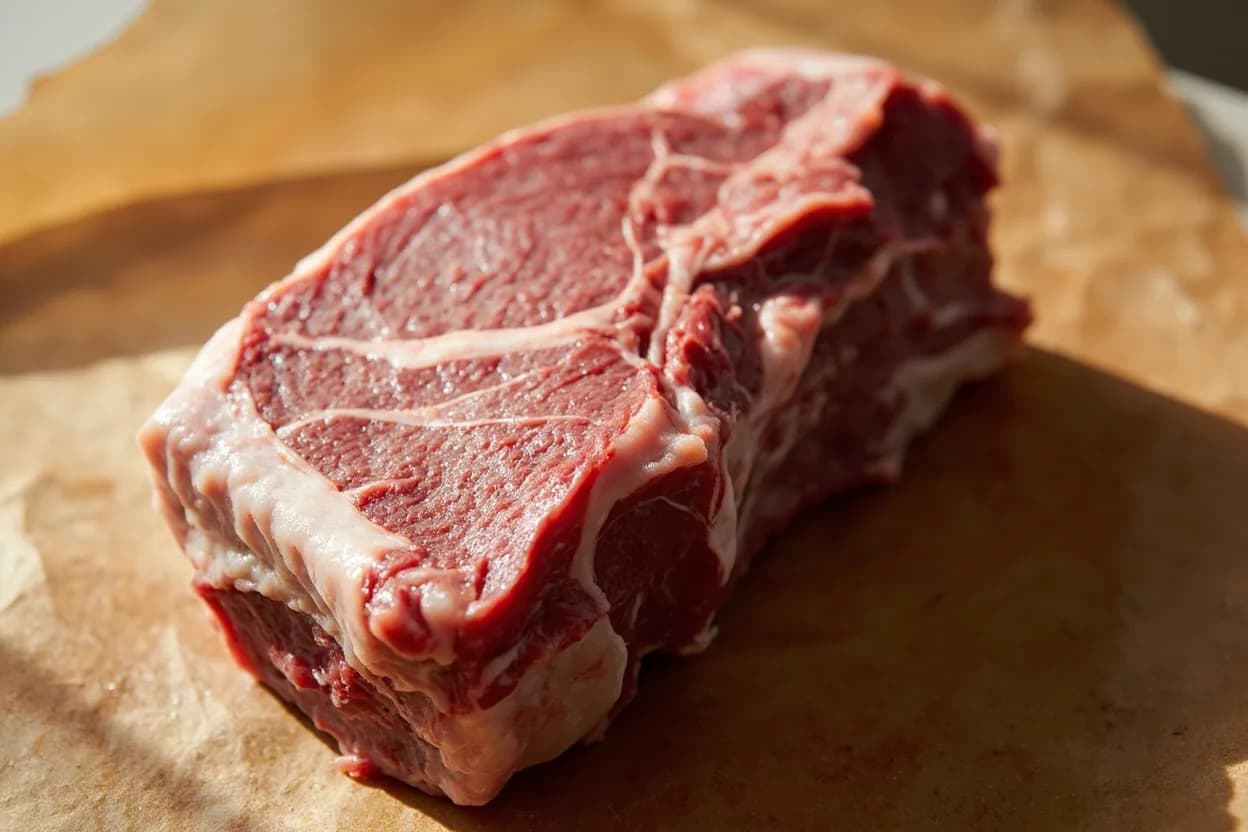
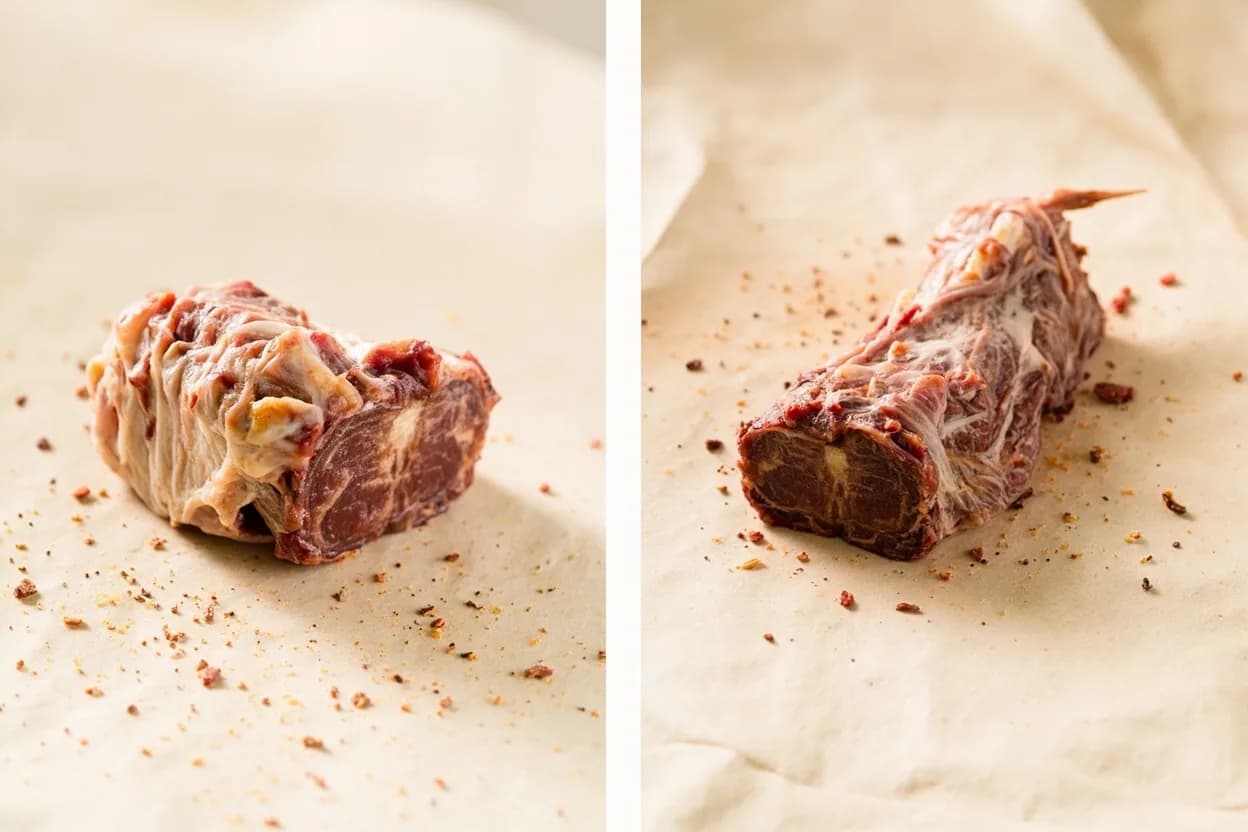
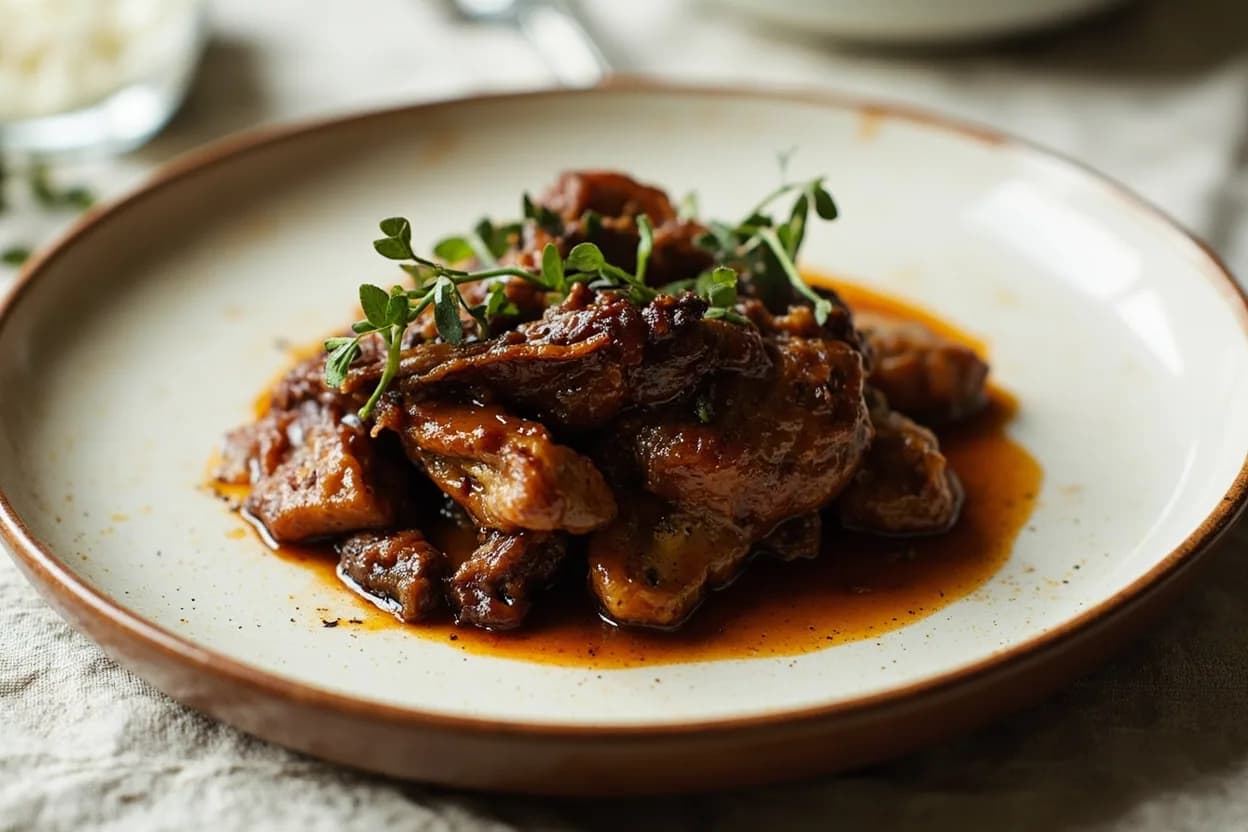
Where it comes from
The entire coccygeal (tail) section of the bovine skeleton, from the sacrum to the tip. Each tail weighs 1.2–2.2 kg. The proximal (thick) sections near the base contain the most meat and marrow; the distal (thin) tip sections contribute gelatin and flavor to stocks but little eating meat.
Best for
How to cook it
- 1Season oxtail pieces liberally with salt at least an hour ahead (or overnight) to season through to the bone.
- 2Pat dry and sear in batches in a heavy pot over high heat until deeply browned on all flat faces — this is critical for flavor in a braise that will cook for hours.
- 3Build aromatics base (onion, carrot, celery, garlic, tomato paste) and deglaze with red wine or beer, scraping up the fond.
- 4Add stock to cover, bring to a simmer, then braise covered at 150–160 °C (300–325 °F) for 3–5 hours, or until the meat freely releases from the bone with gentle pressure.
- 5For maximum clarity of final sauce: let the braise cool, lift out the oxtail pieces, strain and degrease the liquid (skim carefully or refrigerate and lift the set fat layer), then reduce to sauce consistency before reheating the oxtail in it.
- 6Serve bone-in (traditional) or pick the meat from the bones for a boneless presentation (ragù, filling, or pressed terrine).
Prep & butchery
- CROSS-CUT (bandsaw through vertebrae): Produces uniform ring sections with flat cut surfaces exposing marrow. Better for even portioning and plate presentation. Requires a bandsaw or butcher service — a home cleaver can shatter the bone into dangerous splinters. Each ring braises evenly. Standard restaurant approach.
- SEGMENT (joint separation): Locate the intervertebral disc with a boning knife and push the point into the cartilaginous gap — it will slip through cleanly. No saw required. Produces asymmetrical pieces with one rounded cartilaginous end and one flat cut end. The cartilage dissolves into the braise; some argue this method yields more structured gelatin. Home-butcher friendly.
- Sort thick base pieces from thin tip pieces; add base pieces to the braise 30–45 minutes before the tip pieces, or cook separately and combine for finishing.
- Oxtail sold pre-cut may be cross-cut or joint-separated depending on supplier; look for uniform pieces with visible marrow cross-sections (cross-cut) vs. intact rounded ends (segment).
Substitutes
- Beef Short Ribs (Cross-Cut, Flanken Style)
Similar bone-in braise; less gelatin but richer marbling; cooks somewhat faster
- Beef Neck Bones
Very similar collagen and gelatin yield; cheaper; excellent for stock and soups; less uniform for plate presentation
- Lamb Neck (Bone-In)
Higher ratio of gelatin to meat; stronger flavor; similar technique
Related cuts
- Beef Short Ribs
The other canonical bone-in braise; similar technique but a different anatomical region (rib cage)
- Beef Neck
Another high-collagen working cut with significant bone; ideal for stock
Boneless high-collagen braise cut from the same head region; no marrow but denser muscle
Appears in
References
- 1.The Complete Meat Cookbook — Bruce Aidells & Denis Kelly (Houghton Mifflin, 1998)
- 2.Nose to Tail Eating — Fergus Henderson (Bloomsbury, 1999)
- 3.On Food and Cooking: The Science and Lore of the Kitchen — Harold McGee (Scribner, 2004)
- 4.Hog & Hominy: Soul Food from Africa to America — Frederick Douglass Opie (Columbia University Press, 2008)
Confidence: high
Notes
Cross-Cut vs. Segment: Practical Differences
Cross-cutting with a bandsaw produces the flat, uniform rounds sold in most supermarkets. The exposed marrow face adds richness directly to the braise but can also make the liquid cloudier if boiled aggressively. Joint-segmented pieces — each a natural anatomical unit — have one convex cartilage end and one flat meat face. The cartilage cap dissolves more slowly and contributes structured gelatin over a longer braise. For home cooks, joint separation with a boning knife is safer than attempting cross-cuts with a cleaver. For restaurants, cross-cut is preferred for visual uniformity on the plate.
The Fat Problem
Oxtail releases a significant quantity of rendered fat during braising — far more than short ribs. This fat must be managed or the final dish will be greasy. The cleanest approach: braise a day ahead, refrigerate overnight, and lift the solidified fat cap before reheating. Alternatively, skim throughout cooking with a ladle, tilting the pot to pool fat on one side. Never rush this step; the fat has no body and undermines the silky gelatin quality that makes oxtail exceptional.