Regional Meat Cuts
Pork Collar — Thai Larb Slice (Moo Yang)
Also: kor moo yang, pork neck slice, collar neck grilled pork, cổ lợn nướng
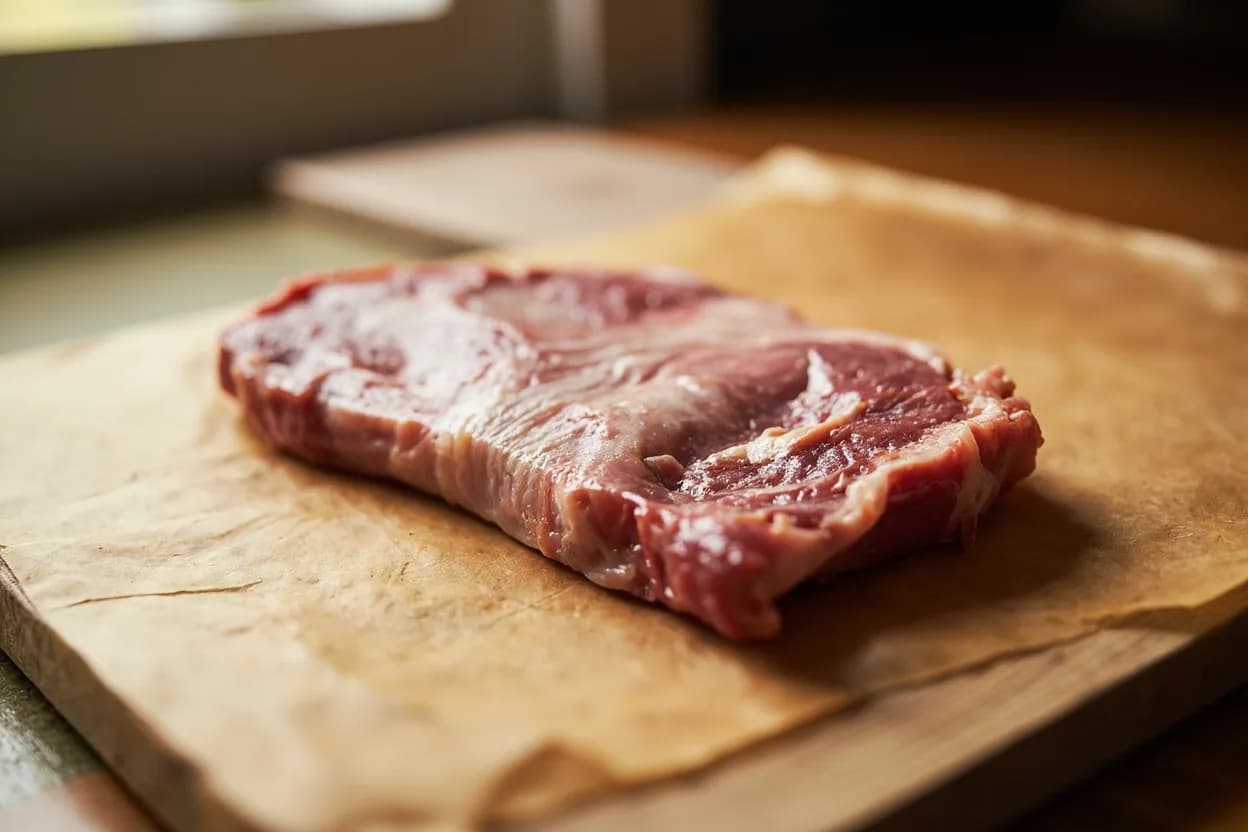
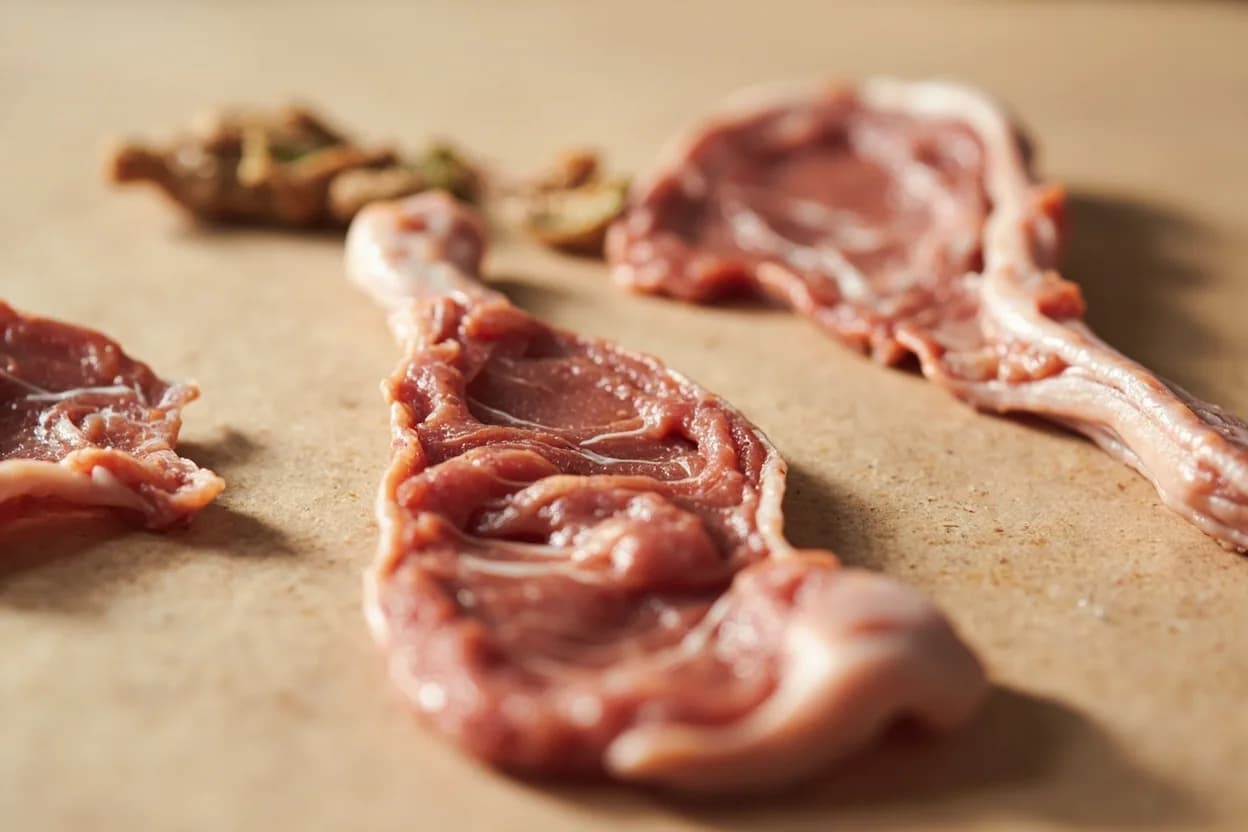
The pork collar (neck/blade end) sliced 5–8 mm against the grain — Thailand's preferred cut for kor moo yang (grilled pork neck) and the rich-fat foundation of northern-style larb moo.
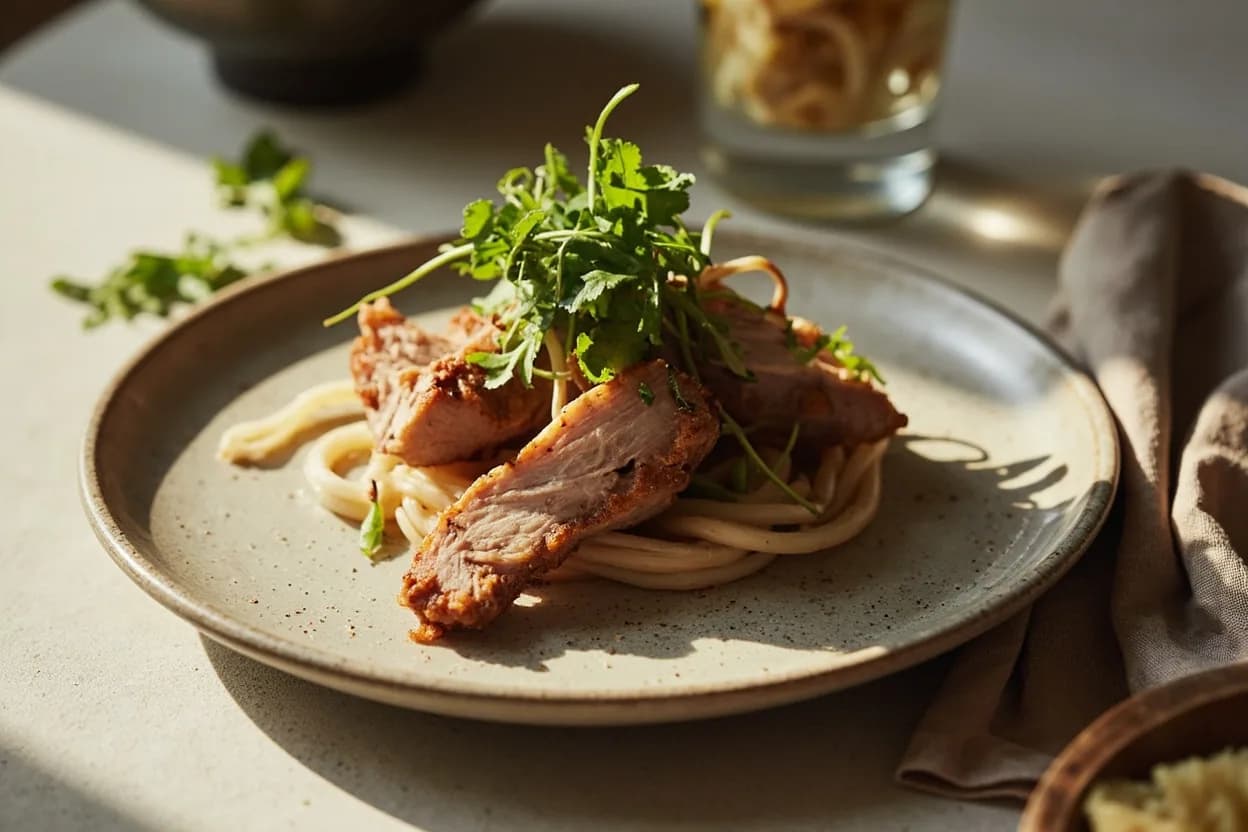
Pork collar, called 'kor moo' (คอหมู) in Thai, is the muscle complex at the neck and upper shoulder, encompassing the cervical vertebrae muscles and blade-end neck muscles. It is among the most marbled cuts on the pig — a dense web of intramuscular fat runs through the close-grained meat, keeping slices moist under the direct, dry heat of a charcoal grill. For kor moo yang (grilled pork neck skewers), it is sliced 5–8 mm against or slightly across the grain and marinated. For larb moo in northern Thai cooking, it may be used raw (minced) or lightly cooked, where its fat content gives the salad richness without added oil.
In photos
Where it comes from
The collar primal spans the last two to three cervical vertebrae through the first two thoracic vertebrae — anatomically, it is the neck muscles dorsal to the spine (complexus, splenius, serratus) and the blade-shoulder transition. In a Western pork carcass breakdown it overlaps with the Boston butt's upper blade portion, though the pure collar is a narrower cylinder of meat sold bone-free in Thai and Vietnamese butchery.
Best for
How to cook it
- 1For kor moo yang: slice the collar 5–8 mm against the grain. Marinate for at least 2 hours in a mixture of oyster sauce, fish sauce, palm sugar, coriander root, white pepper, and garlic.
- 2Thread onto flat metal skewers or lay directly on a wire grill rack set 10–12 cm above white charcoal.
- 3Grill 4–5 minutes per side, basting once with the residual marinade. The fat will drip, causing flares — move slices as needed to prevent carbonisation.
- 4Rest 2 minutes; the fat reabsorbs into the flesh. Serve with sticky rice, fresh sliced vegetables, and nam jim jaew (roasted chili dipping sauce).
- 5For larb moo: mince the collar coarsely (4–5 mm dice, not a paste), cook in a dry wok until just cooked through, then toss immediately with toasted ground rice, fish sauce, lime juice, shallots, mint, and dried chili.
Prep & butchery
- Remove any residual cartilage or cervical bone fragments if butchered in-house — Thai market collar is usually sold fully bone-free
- Chill the collar to near-freezing before slicing for clean, even 5–8 mm cuts with a sharp slicing knife
- Score the fat seams with three or four light crosshatch cuts to prevent curling on the grill without compromising the slice
- For larb: pulse in a food processor with a few quick bursts rather than grinding, to keep texture coarse
Substitutes
- Boston Butt (blade end)
The nearest Western equivalent; slightly larger primal but equivalent marbling in the blade-end slice — cut away bone before slicing
- Pork Shoulder Thin-Sliced
Acceptable substitute; slightly less marbled than true collar, may dry slightly faster on the grill
- Pork Belly
Much fattier and layered rather than marbled; will work for flavour but produces a different texture — render longer over lower heat
Related cuts
- Boston Butt
Western primal encompassing collar and shoulder; collar is the upper, more marbled portion
- Pork Coppa
Italian cured product made from the same collar primal — demonstrates the cut's fat profile in charcuterie form
- Neck End Chops
Bone-in cross-sections through the same primal; same fat distribution, different format
Appears in
References
- 1.Thailand: The Cookbook — Jean-Pierre Gabriel (2014)
- 2.Night + Market — Kris Yenbamroong (2017)
- 3.The Food of Northern Thailand — Austin Bush (2018)
- 4.Pork: A Guide to Buying, Cooking, and Carving — Heston Blumenthal / Waitrose Cookery School (2013)
Confidence: high
Notes
Why collar and not loin
Thai grill culture learned early what Italian salumieri also know: the pork collar's intramuscular fat distribution is unique. Loin is lean and dries out in 3 minutes on charcoal. Belly has so much fat it steams in its own grease rather than charring. The collar hits the middle — enough fat to stay moist through 8–10 minutes of high direct heat, but compact enough to char at the surface while the interior finishes to safe temperature. It is also the most affordable premium cut at Thai wet markets, which has cemented kor moo yang as a street-food staple across the country.
Raw vs. cooked larb
Northern Thai larb tradition (larb dip) uses raw or very lightly cooked minced meat — traditionally also including raw bile for bitterness. Modern restaurant larb moo almost always uses fully cooked meat for safety, but the collar's fat content means even fully cooked larb moo has a rich, almost custardy mouthfeel that leaner minced pork cannot replicate. If substituting pork loin for larb, add a tablespoon of rendered lard to approximate the collar's natural fat.