Pork — Primal & Subprimal
Pork Hock vs. Trotter (Paya)
Also: pork knuckle, Schweinshaxe, pork foot, paya, pig's trotter, pig's foot, ham hock, pork shin
The hock is the knuckle joint above the foot; the trotter is the foot itself — both are collagen-dense extremities prized for their gelatin yield and deeply savory braising qualities across dozens of cuisines.
The pork hock (also called the knuckle or shin) is the portion of the leg between the knee joint and the ankle, roughly 3–4 inches of dense muscle, skin, and connective tissue surrounding the tibia and fibula. The trotter (paya in South Asian, Middle Eastern, and Filipino cooking) is the foot below the ankle, composed almost entirely of skin, tendons, small bones, and cartilage with very little actual muscle. Both cuts are collagen-rich, require long, moist cooking, and produce intensely gelatinous braising liquids.
In photos
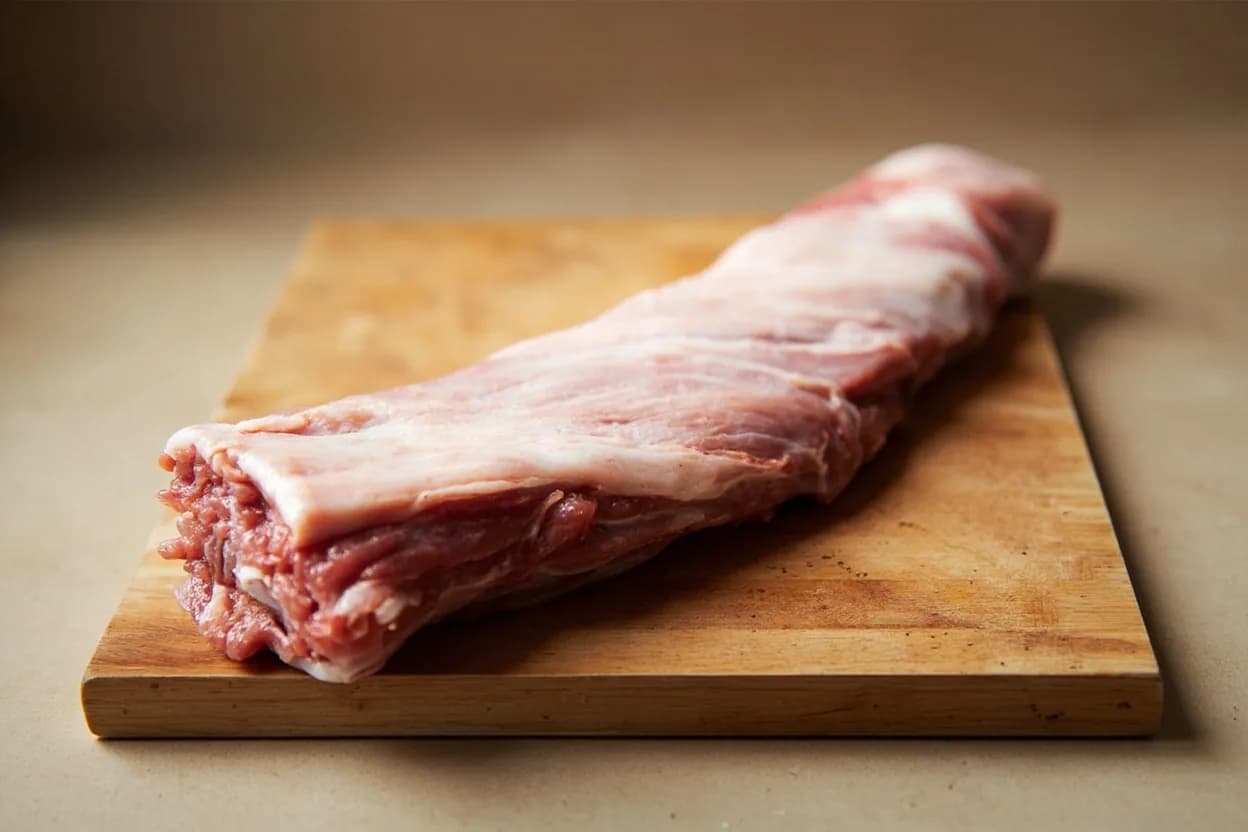
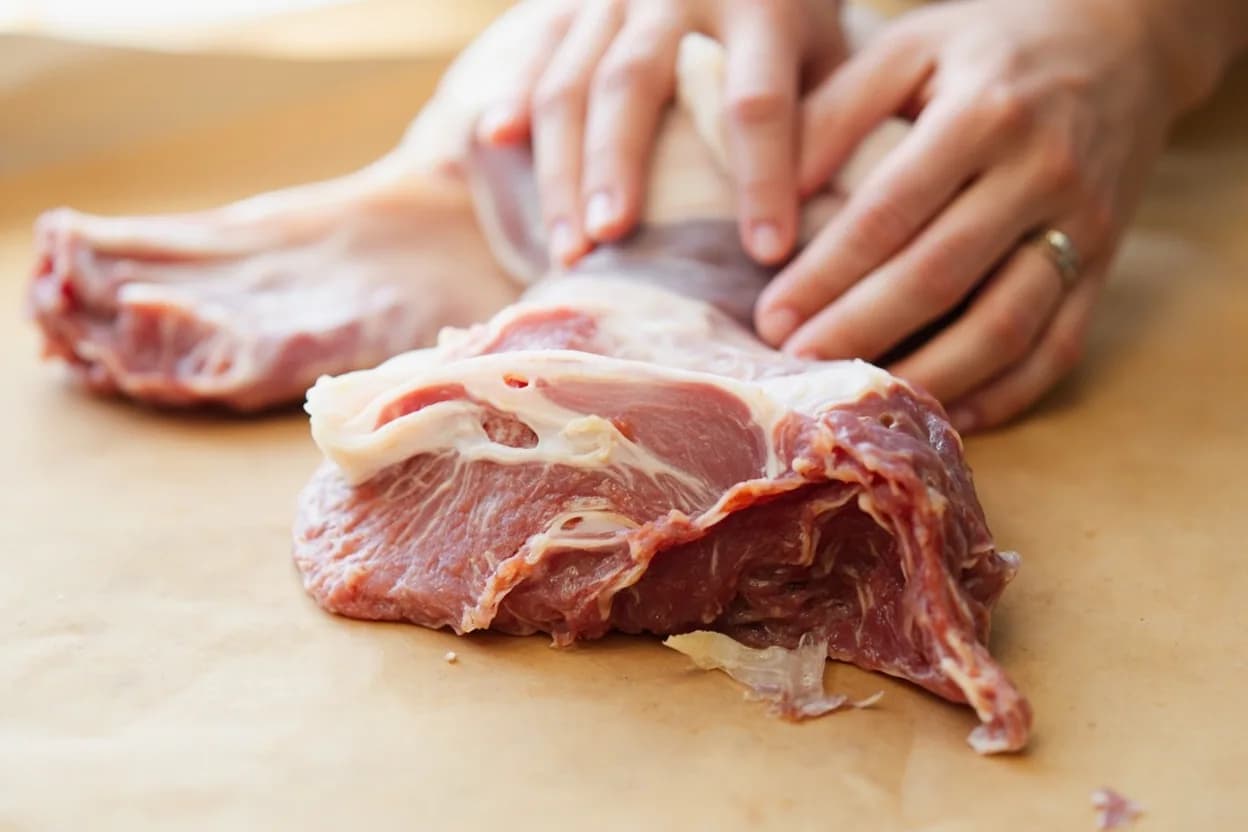
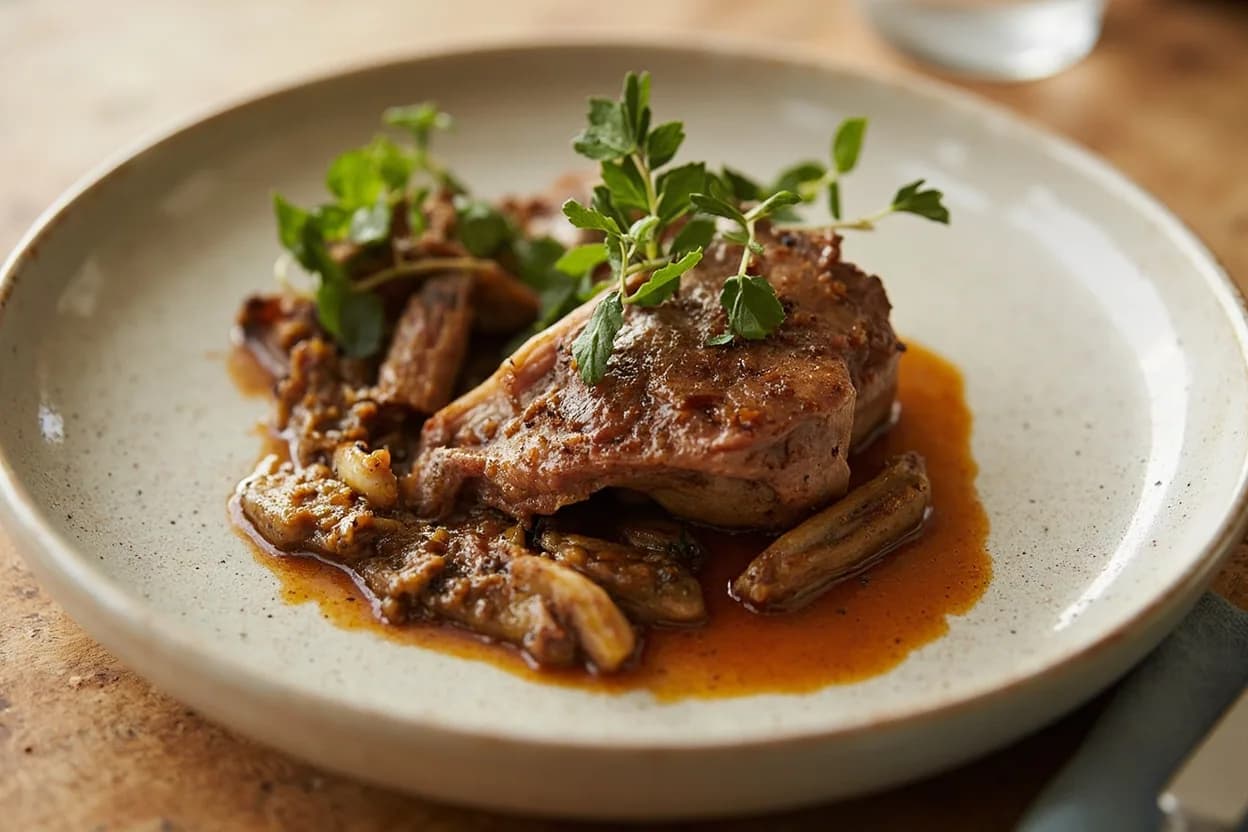
Where it comes from
Hocks come from the lower portion of either the front leg (fore hock) or rear leg (hind hock/ham hock). The rear hock is meatier and is the cut most often sold as 'ham hock' when smoked. Trotters are the feet below the pastern joint — all four feet are usable, with the rear trotters slightly larger and meatier than the front.
Best for
How to cook it
- 1Blanch both hocks and trotters before braising: place in cold water, bring to a boil, drain, rinse — this removes blood, impurities, and off-aromas, producing a cleaner braising liquid and clearer finished stock.
- 2For Schweinshaxe (German crispy pork knuckle): braise the hock in beer, onion, and caraway until tender (2.5–3 hours). Remove, score the skin in a crosshatch, and roast at high heat (450°F/230°C) 20–30 minutes, basting with the braising liquid, until the skin blisters and crisps.
- 3For Persian/South Asian paya: split trotters lengthwise. Sauté onion and whole spices (cardamom, cinnamon, cloves, black pepper) in oil. Add trotters, cover with water, and simmer 3–4 hours until the cartilage collapses. Finish with ginger, garlic paste, and toasted coriander. Serve with naan.
- 4For smoked ham hock applications: no pre-cooking needed. Add directly to a pot of dried beans or braised greens, cover with water, and simmer 2–3 hours. The smoke permeates the liquid and the meat falls from the bone.
- 5For stock: simmer hocks or trotters with aromatics (carrot, onion, celery, bay, peppercorns) in cold water for 4–6 hours. Strain. Refrigerate overnight — the resulting jelly is a concentrated gelatin base for consommé, aspic, and ramen broth.
- 6To check a trotter or hock for doneness: the skin should be completely tender (a chopstick pierces without resistance) and the collagen should feel silky and starting to loosen from the bone.
Prep & butchery
- Score the skin of hocks in a crosshatch pattern (without cutting into the meat) to help fat render and allow seasoning to penetrate
- Split trotters lengthwise with a heavy cleaver or ask the butcher to do it — the exposed interior gives direct access to collagen and small marrow pockets
- Blanch in cold water before any braise for a cleaner result
- For smoked hocks: soak in cold water 30 minutes before use if very salty, then proceed without blanching
- Remove any remaining bristle hairs from trotters over an open flame (blowtorch or gas burner) or with a razor — a food-safe and standard practice in markets that sell whole feet
Substitutes
- Lamb trotters
Near-identical collagen content and cooking behavior; stronger, gamier flavor register
- Beef shank (osso buco cut)
Higher meat yield, less skin and cartilage; requires similar braising time but produces less gelatin
- Chicken feet
Same collagen-dominant, skin-and-cartilage structure; much smaller and faster-cooking; used in Chinese dim sum and stock
Related cuts
- Pork Shoulder
The primal above the hock; higher meat yield, similar collagen-rich braising character
- Pork Belly
High-fat skin-on cut with similar unctuous texture when braised; less collagen, more fat layers
- Ham (Cured Hind Leg)
The full hind leg primal; the hock is the lower portion of this leg
- Beef Trotters
Analogous foot cut in beef; less common, much larger, used in Filipino kare-kare and Pakistani paya
Appears in
References
- 1.The River Cottage Meat Book — Hugh Fearnley-Whittingstall
- 2.Fergus Henderson: Nose to Tail Eating — Fergus Henderson
- 3.On Food and Cooking: The Science and Lore of the Kitchen — Harold McGee
- 4.The Complete Meat Cookbook — Bruce Aidells & Denis Kelly
Confidence: high
Notes
Anatomy: Hock vs. Trotter at a Glance
The hock (knuckle) sits between the knee/stifle joint and the ankle. It contains the tibia, fibula, and significant muscle tissue — enough to shred and serve as a main protein. The trotter is below the ankle, comprising the pastern bones, dewclaw, and foot pad — almost entirely structural with very little muscle. A useful analogy: the hock corresponds to the human shin and ankle; the trotter corresponds to the foot. Both are sold fresh, cured, or smoked, and both are available as fore (front leg) or hind (rear leg) versions, with the hind versions being meatier.
Paya Across Cultures
The word 'paya' (or 'paaya') refers to the trotter in Urdu, Hindi, and Persian, and the dish named for it — a slow-braised spiced trotter stew — is eaten from Pakistan across the Middle East to parts of South Asia as a restorative breakfast dish, traditionally served with roti or naan. In the Philippines, the same foot is sold as 'pata' and appears in both the crispy deep-fried 'crispy pata' and the sour soup 'sinigang na pata.' In China, trotters braised in soy sauce, Shaoxing wine, and rock sugar are offered as gifts symbolizing good fortune. The universality of this cut across cuisines that rarely otherwise overlap is a testament to the pig's versatility as a food animal.