Pork — Primal & Subprimal
Pork Jowl (BBQ Context)
Also: hog jowl BBQ, cheek meat smoked, pork cheek barbecue
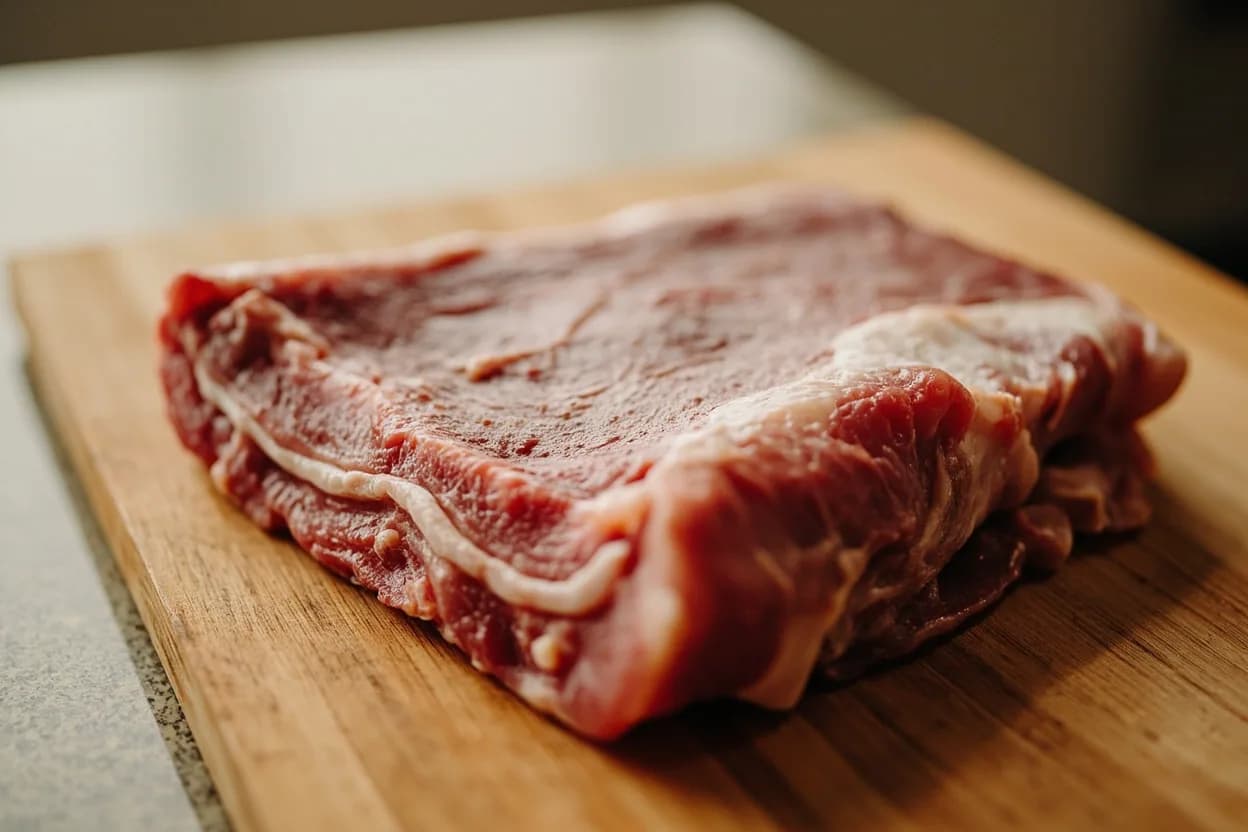
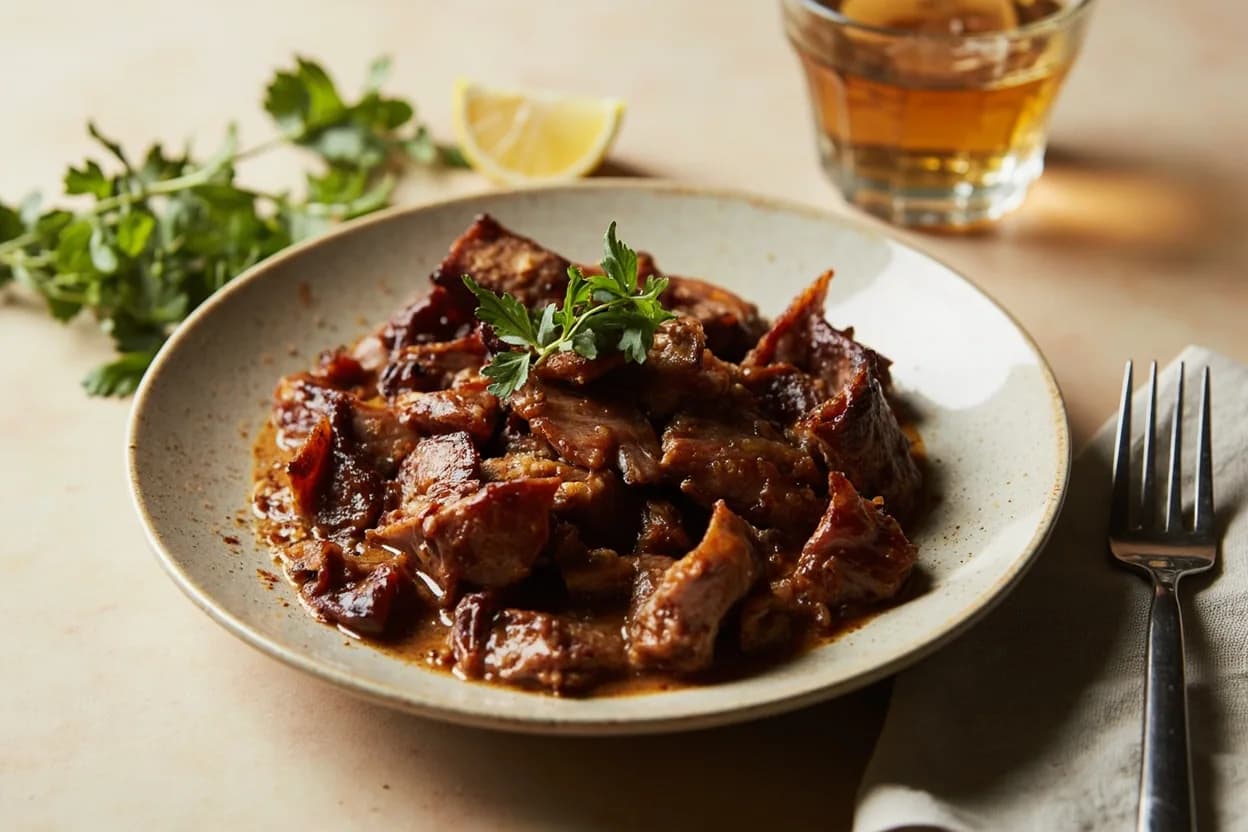
The pig's cheek smoked low and slow renders into a lusciously fatty slab with a crackling bark — entirely distinct from its Italian guanciale incarnation.
Pork jowl in a BBQ context refers to the uncured, unsmoked raw cheek of the pig cooked via low-and-slow indirect smoking, typically to an internal temperature of 195–205°F (90–96°C) until the abundant intramuscular fat renders and the collagen converts to gelatin, yielding a tender, bark-crusted slab suitable for slicing or pulling.
In photos
Where it comes from
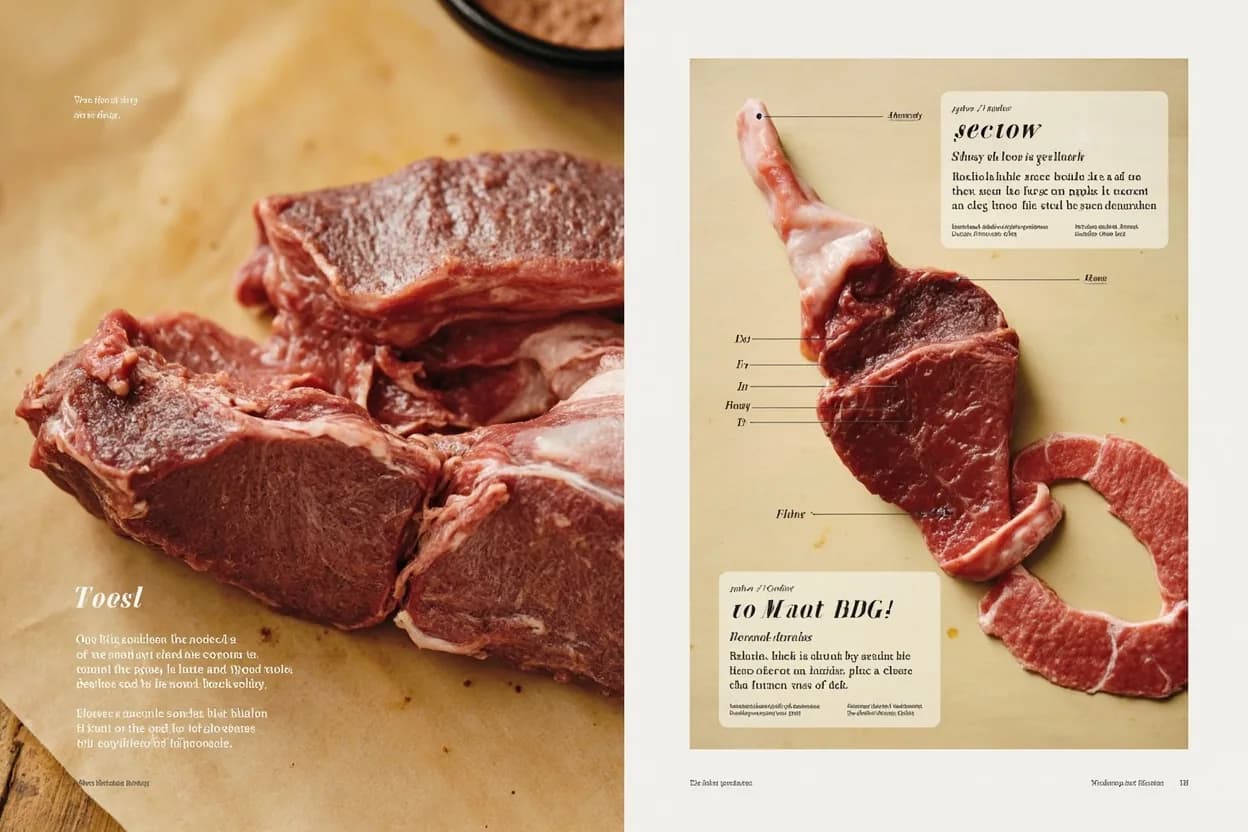
The jowl is the cheek and lower jaw muscle of the pig, anatomically the masseter and adjacent facial muscles. Each side of the head yields one jowl, typically weighing 0.9–1.5 kg (2–3.5 lb) with skin attached on one face. The muscle is heavily worked — the pig chews constantly — resulting in dense, tightly grained meat threaded with significant fat deposits.
Best for
How to cook it
- 1Remove any remaining glands if present (small firm nodules near the jawline); trim excess fat cap to about 0.5 cm — do not strip entirely.
- 2Apply a dry rub: brown sugar, black pepper, paprika, garlic powder, and salt. Let dry-brine uncovered in the refrigerator 8–24 hours for bark development.
- 3Smoke at 107–121°C (225–250°F) over hickory, oak, or pecan for 4–6 hours, fat-side up. Spritz with apple juice or cider vinegar every 90 minutes after the first 2 hours.
- 4Wrap tightly in butcher paper (not foil — foil softens the bark) when internal temp reaches 77°C (170°F). Return to smoker until probe-tender at 93–96°C (200–205°F).
- 5Rest wrapped for at least 45 minutes before slicing across the grain into 1 cm planks. Serve skin-on if preferred, or strip the skin for a less chewy texture.
Prep & butchery
- Source skin-on jowls from a butcher or Asian market — supermarket pork jowl is often skinless and pre-cured (avoid the cured product for BBQ)
- Score the fat cap in a crosshatch pattern to encourage rendering and bark penetration
- Remove any stray bristle with a kitchen torch or razor before seasoning
- Cold jowl holds its shape better during the first few hours of smoking — do not bring to room temperature
Substitutes
- Pork Belly
Similar fat content; lacks the dense muscle grain of jowl but behaves identically in smoking
- Pork Cheek (trimmed, no skin)
Smaller individual portions; cooks faster; common in European braise contexts adapted for smoke
- Lamb Breast (bone-in)
Very different flavor; analogous fat-to-lean ratio and benefits from same low-and-slow approach
Related cuts
- Pork Belly
Similar fat distribution; belly is leaner on average and lacks jowl's facial muscle density
The same anatomical cut cured with salt and pepper in Italian tradition — the cured counterpart to BBQ jowl
- Pork Shoulder (Butt)
More common BBQ cut; lower fat content and more forgiving but less richly flavored than jowl
Appears in
References
- 1.Aaron Franklin & Jordan Mackay — Franklin Barbecue: A Meat-Smoking Manifesto
- 2.Meathead Goldwyn — Meathead: The Science of Great Barbecue and Grilling
- 3.Michael Ruhlman & Brian Polcyn — Charcuterie: The Craft of Salting, Smoking, and Curing
Confidence: high
Notes
BBQ vs. charcuterie context
Pork jowl occupies two entirely separate culinary universes. In Italian charcuterie it is cured as guanciale — dry-salted, pepper-coated, and air-dried — and used in thin shavings to fat-finish pasta (carbonara, amatriciana). In American Southern BBQ, the same raw cut is smoked as a full slab. The two traditions never intersect: do not attempt to BBQ guanciale or cure BBQ jowl. The fat structure behaves differently once cured.
Southern New Year tradition
In the American South, hog jowl is traditionally eaten on New Year's Day alongside black-eyed peas and collard greens — jowl representing 'good luck' (pig root forward = forward progress). Historically this was smoked or salt-cured jowl simmered in the pot liquor, not served as a BBQ slab. Both uses are authentic regional expressions of the same anatomical cut.