Pork — Primal & Subprimal
Pork Loin — Sirloin End, Rib End & Center Cut
Also: pork loin roast, loin chops, rib chops, sirloin chops, center-cut pork chops
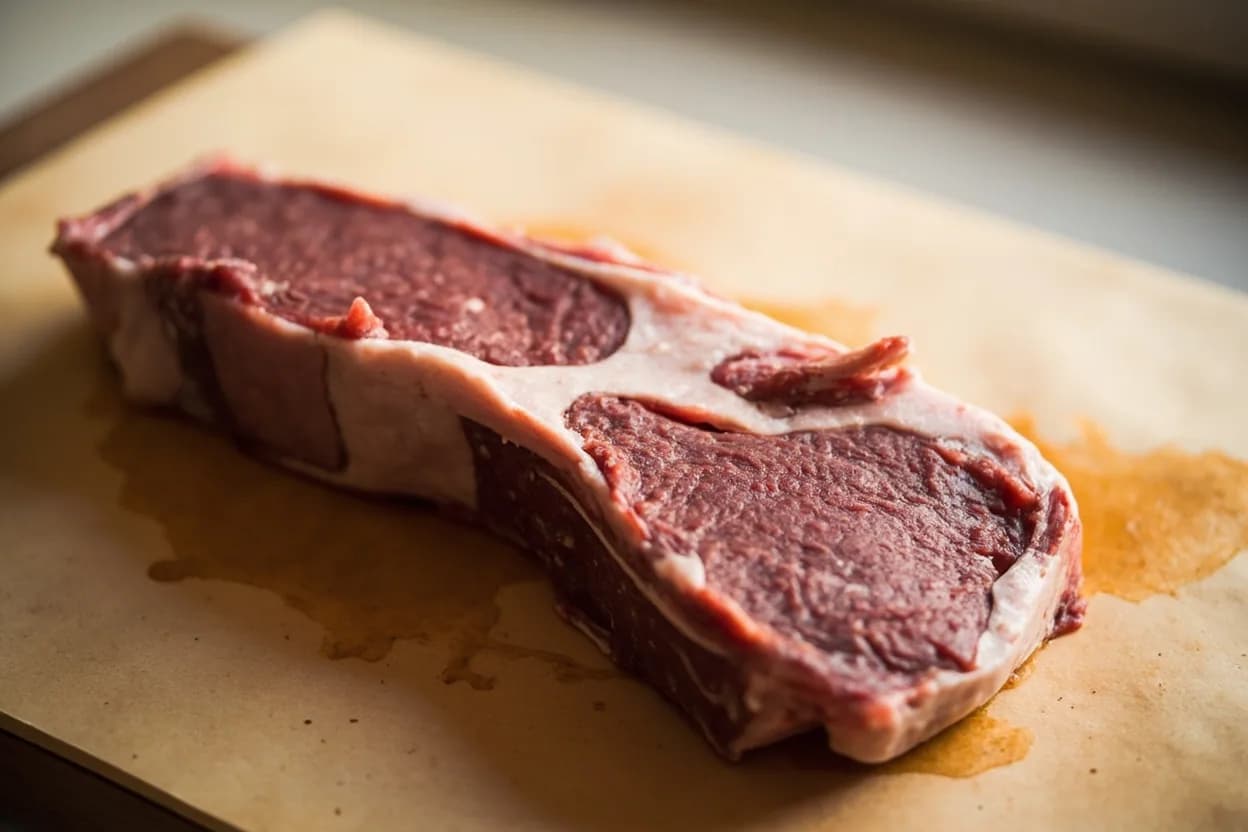
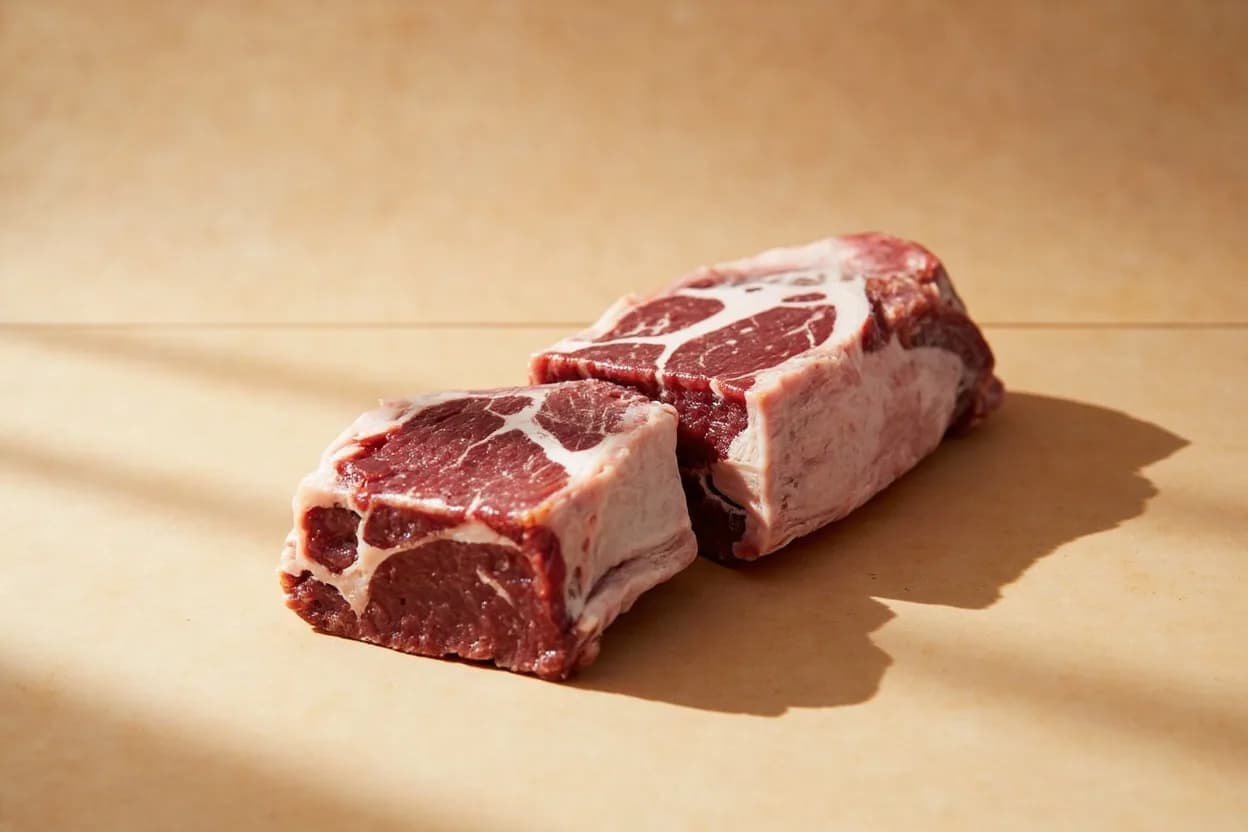
The full pork loin breaks into three distinct sections — rib end, center cut, and sirloin end — each with its own fat distribution, bone structure, and cooking temperament.
The pork loin primal spans the back of the pig from the shoulder blade to the hip, running alongside the spine. Butchers subdivide it into three subprimals: the rib end (closest to the shoulder), the center cut (mid-loin), and the sirloin end (closest to the leg). Each section yields distinct chops or roasts with different muscle composition, fat caps, and bone-in configurations.
In photos
Where it comes from
The longissimus dorsi muscle runs the full length of the loin, flanked by smaller muscles. The rib end includes portions of the blade and contains more intramuscular fat and connective tissue. The center cut is the purest expression of the longissimus — lean, uniform, and prized for chops. The sirloin end includes multiple muscle groups (gluteus medius, biceps femoris) that converge near the hip, producing irregular chops and complex bone structure.
Best for
How to cook it
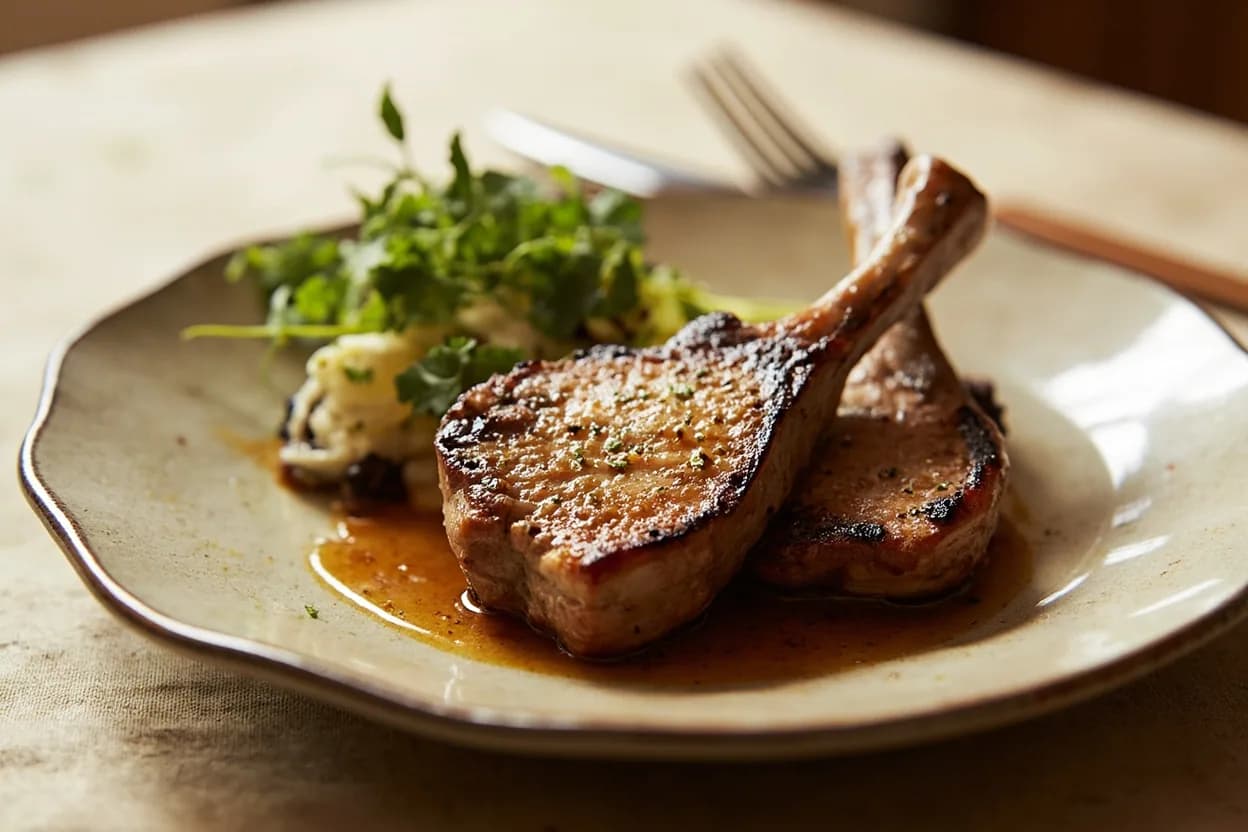
- 1For center-cut chops (1–1.5 in thick): pat dry, season generously, sear in cast iron at high heat 3–4 min per side, rest before slicing. Internal temp 140–145°F (60–63°C) for a blush of pink.
- 2For rib-end chops: render the fat cap first by standing the chop upright on the fat edge for 2 min, then sear flat — fat bastes the meat as it melts.
- 3For sirloin-end chops: braise or cook low-and-slow to accommodate the multiple muscle groups; high-heat grilling risks uneven doneness.
- 4Remove silverskin from any boneless loin before cooking — it contracts under heat, curling and toughening the meat.
- 5For roasts, tie boneless loins into a cylinder every 1.5 inches with butcher's twine to maintain shape and ensure even cooking.
- 6Rest all loin cuts at least 5 minutes per inch of thickness before slicing; the longissimus muscle seizes dramatically under heat and needs time to relax.
Prep & butchery
- Pat chops completely dry before searing — any surface moisture steams rather than browns
- Trim silverskin from boneless sections with the blade angled flat against the membrane, pulling it taut with the other hand
- Score the fat cap in a crosshatch (do not cut into the meat) to render faster without curling
- For thick-cut chops, dry-brine uncovered in the refrigerator 12–24 hours for better crust and moisture retention
- Identify sirloin-end chops by the irregular, wedge-shaped bone and multiple muscle sections — treat them as a braise candidate, not a quick-cook chop
Substitutes
- Veal loin chop
Similar lean muscle structure and cooking behavior; more delicate flavor
- Lamb loin chop
Comparable anatomy with the rib and sirloin distinction; stronger flavor
- Pork tenderloin
Even leaner and more tender; cooks much faster and requires no chop-style searing
Related cuts
- Pork Tenderloin
Runs beneath the loin inside the same primal; much smaller, no fat cap, more tender
- Pork Baby Back Ribs
The rib bones that frame the rib-end loin; removed when the loin is deboned
- Pork Blade Shoulder
Adjacent primal to the rib-end loin; fattier and tougher, requiring longer cooking
- Pork Spare Ribs
Belly-side ribs, distinct from baby backs; larger bones, more fat
Appears in
References
- 1.The River Cottage Meat Book — Hugh Fearnley-Whittingstall
- 2.The Professional Chef, 9th ed. — The Culinary Institute of America
- 3.Charcuterie: The Craft of Salting, Smoking, and Curing — Ruhlman & Polcyn
- 4.USDA Institutional Meat Purchase Specifications (IMPS) — Fresh Pork Series 400
Confidence: high
Notes
Bone-in vs. Boneless
Bone-in pork chops consistently outperform boneless in blind tastings: the bone conducts heat more slowly, creating a thermal buffer that protects adjacent meat from overcooking and leaching juices. The marrow and periosteum also contribute flavor compounds during roasting. For a weeknight pan-sear, the difference is modest; for a thick-cut 'double chop' roast, bone-in is non-negotiable.
The Three-Section Rule
When buying a whole bone-in pork loin (typically 14–18 lbs), ask the butcher to identify and separate the three sections. The rib end (first 4–5 ribs) is best for a rack roast or thick rib chops. The center cut (next 5–6 ribs) yields the most uniform chops and is the section most grocery stores sell as 'center-cut pork chops.' The sirloin end (last 2–3 ribs plus the hipbone) is best butterflied, stuffed, and roasted, or cut into smaller pieces for braising.