Pork — Primal & Subprimal
Pork Primal Cuts (Western)
Also: pork primals, Western pork breakdown, pork primal map, pork carcass sections
The five primary carcass divisions of the Western market hog — shoulder, loin, belly/side, leg, and trotter/hock — from which every retail pork cut derives.
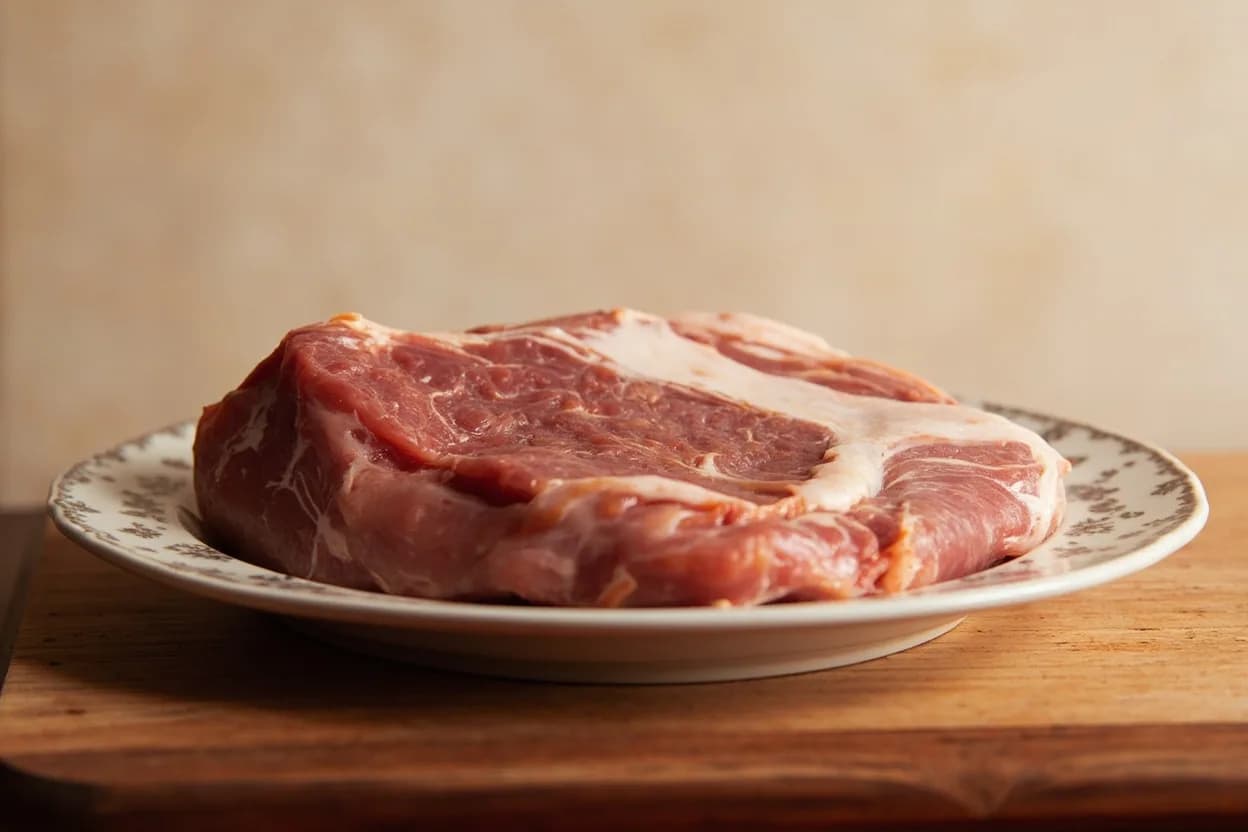
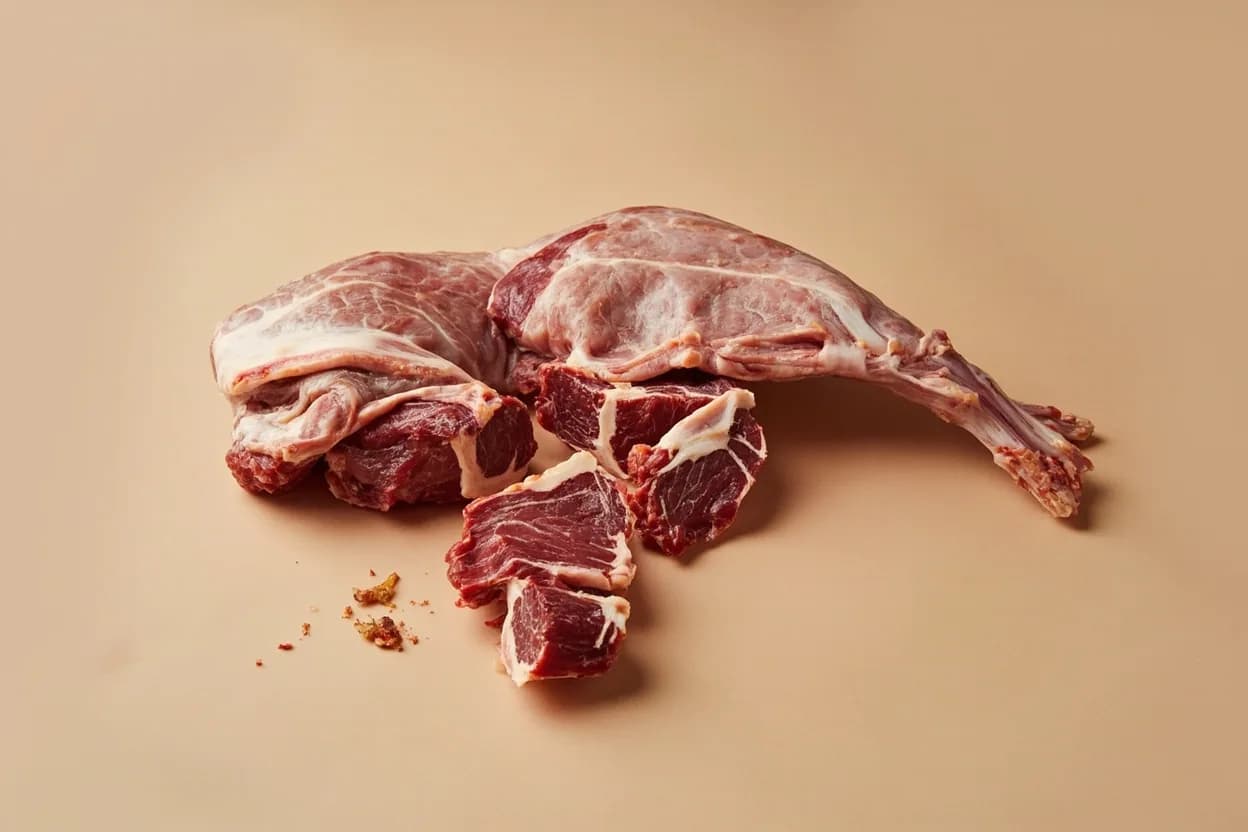
Western pork butchery divides a dressed hog carcass (typically 150–200 lb hanging weight) into five primal regions using straight crosscuts and seam separations. These primals — shoulder, loin, belly/side, leg (ham), and trotter/hock — each represent a distinct anatomical section with characteristic muscle type, fat distribution, and culinary application. All retail cuts, charcuterie products, and foodservice specifications trace back to one of these five primal zones.
In photos
Where it comes from
The full pork carcass runs from the snout to the tail. The two halves (sides) produced by splitting the backbone along the spine each contain one complete set of five primals running anterior to posterior: shoulder at the front, loin along the top/back, belly below the loin, leg at the rear, and trotters/hocks at the extremities.
Best for
How to cook it
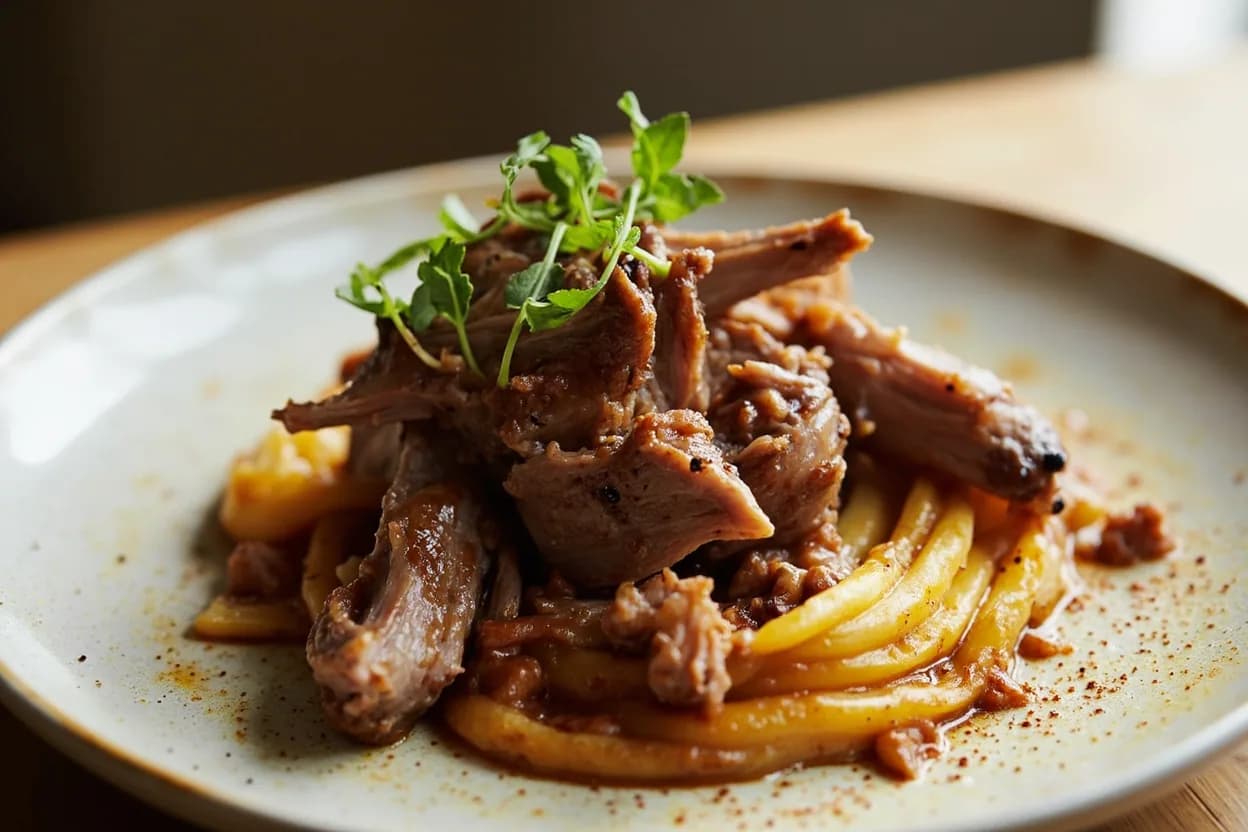
- 1Shoulder (Boston butt + picnic): smoke at 225–250 °F (107–121 °C) for 12–16 hours to 203 °F (95 °C) internal, or braise 3–4 hours at 325 °F (163 °C); the collagen fully converts to gelatin above 195 °F (91 °C).
- 2Loin chops and roasts: roast at 375–400 °F (190–204 °C) to 145 °F (63 °C) internal (USDA revised 2011 guidance); avoid overcooking — the lean meat dries rapidly above 155 °F (68 °C).
- 3Belly (skin-on): score the skin deeply, salt generously, roast at high heat (425 °F / 218 °C) for crackling, or cure for 7 days for pancetta/bacon.
- 4Leg/ham: fresh ham roasts at 325 °F (163 °C) to 160 °F (71 °C) internal; curing for prosciutto requires 12–18 months salt-aging at controlled humidity.
- 5Trotters/hocks: simmer in aromatic stock 3–4 hours until meat pulls from bone; collagen renders to gelatin that fortifies braises and sauces.
Prep & butchery
- A whole side of pork is split from the carcass by removing the head, cutting between the 4th and 5th rib for the shoulder/loin boundary, and separating the leg at the hip joint (aitch bone).
- The belly is detached from the loin by a straight horizontal cut through the ribs — the cut line determines how many spare rib bones remain on the belly vs. the loin.
- Back ribs (baby backs) remain with the loin when the belly is separated; spare ribs are part of the belly primal.
- Trotters are removed at the hock joint; hocks are separated from the leg at the knee (stifle) joint.
- Skin-on or skinless is a processing decision made at the belly and shoulder level — most Western retail pork is skinless except fresh ham and whole shoulder picnic.
Substitutes
- Asian pork breakdown
Chinese and Korean butchery cut the carcass differently — more focus on thin belly slices, neck/collar, and offal; retail cuts may not map 1:1 to Western primal names.
Analogous five-primal structure (shoulder, rack/loin, flank/breast, leg, shank) — useful cross-reference for understanding muscle groups and cooking method logic.
Related cuts
- Boston Butt
Upper shoulder subprimal — the most commonly barbecued pork cut in the US.
- Pork Tenderloin
The psoas minor muscle running inside the loin primal — the most tender cut on the hog.
- Pork Belly
Ventral section of the belly/side primal; yields bacon, pancetta, and fresh belly slabs.
- Fresh Ham (Leg)
The uncured leg primal; when cured, becomes prosciutto, jamón, or country ham.
- Spare Ribs
Rib bones of the belly primal; St. Louis cut removes the brisket flap for a rectangular rack.
Appears in
References
- 1.The River Cottage Meat Book — Hugh Fearnley-Whittingstall (Hodder & Stoughton, 2004)
- 2.NAMP Meat Buyer's Guide, 8th ed. — North American Meat Processors Association (2010)
- 3.Charcuterie: The Craft of Salting, Smoking, and Curing — Michael Ruhlman & Brian Polcyn (W. W. Norton, 2005)
- 4.The Professional Chef, 9th ed. — The Culinary Institute of America (Wiley, 2011)
Confidence: high
Notes
Western vs. Asian breakdown
Western butchery maximises loin length (the highest-value primal) by making a clean crosscut between the 4th and 5th ribs. Chinese butchery typically takes a shorter shoulder section and a proportionally larger belly, reflecting culinary traditions that prize braised pork belly over pork chops. Korean butchers emphasise the collar (moksal) and jowl, separating them as distinct retail cuts rarely seen in Western meat cases. Neither system is more correct — each reflects the dishes its tradition built.
Yield benchmarks
A 200 lb (91 kg) live-weight market hog dresses to roughly 145 lb (66 kg) hanging weight and yields approximately: 25–30 lb shoulder, 30–35 lb loin (including bone), 12–15 lb belly, 25–30 lb leg per side, and 4–6 lb of trotters/hocks. Trim, fat, and bone account for the remainder. These ratios shift with breed and finish — heritage Berkshire hogs carry significantly more intramuscular fat throughout.