Pork — Primal & Subprimal
Pork Shoulder — Boston Butt vs. Picnic
Also: pork shoulder, Boston butt, pork butt, picnic shoulder, arm shoulder, picnic roast, pork shoulder primal
The pork shoulder primal splits into two distinct subprimals — the upper Boston butt and the lower picnic — each with different muscle groups, fat distribution, and ideal cooking applications.
The pork shoulder primal is the entire front leg assembly, roughly 12–18 lb in a whole packer configuration. It divides into two subprimals at the elbow joint: the Boston butt (upper shoulder, blade area, NAMP 406) covering the blade bone and coppa muscles, and the picnic shoulder (lower shoulder, arm and shank, NAMP 405) comprising the arm bone, shank, and surrounding muscles. Both are high-collagen, high-connective-tissue cuts suited to long, low-heat cooking, but they differ meaningfully in muscle composition, fat distribution, and culinary performance.
In photos

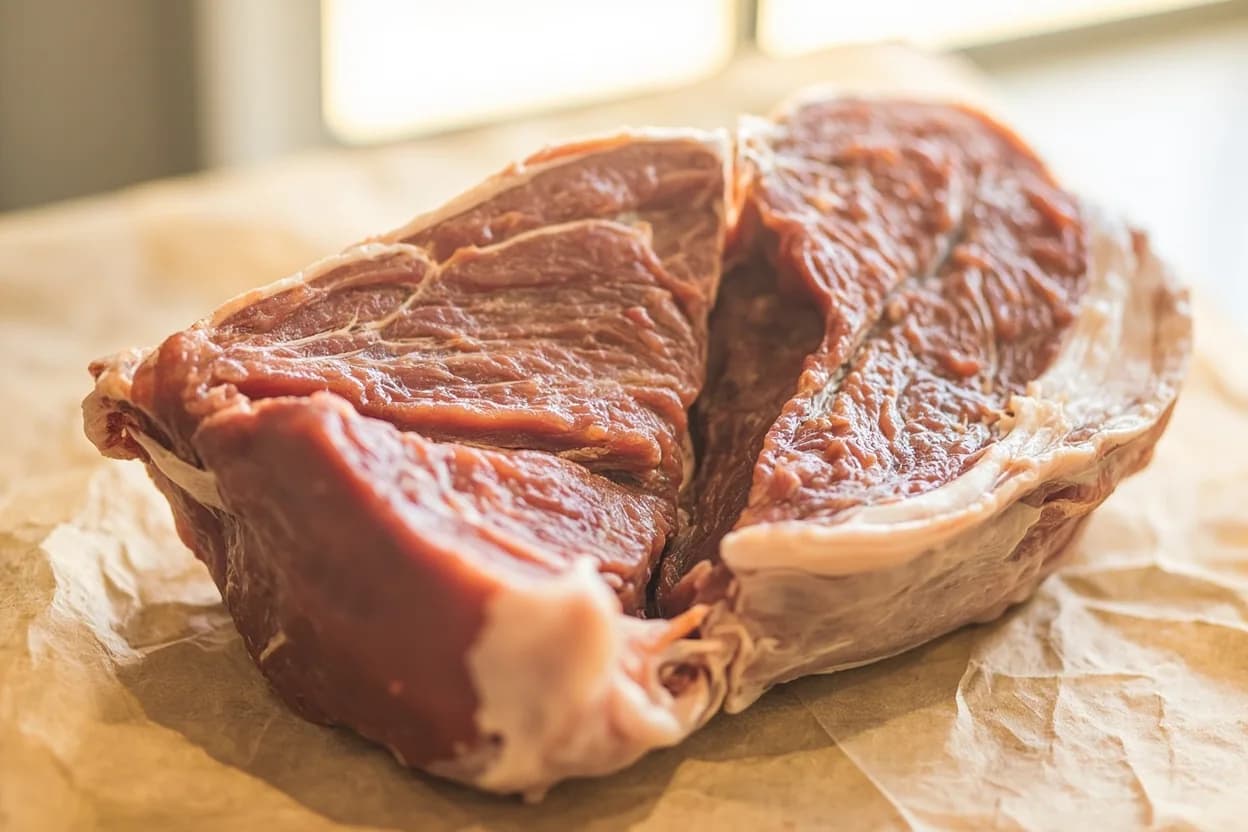
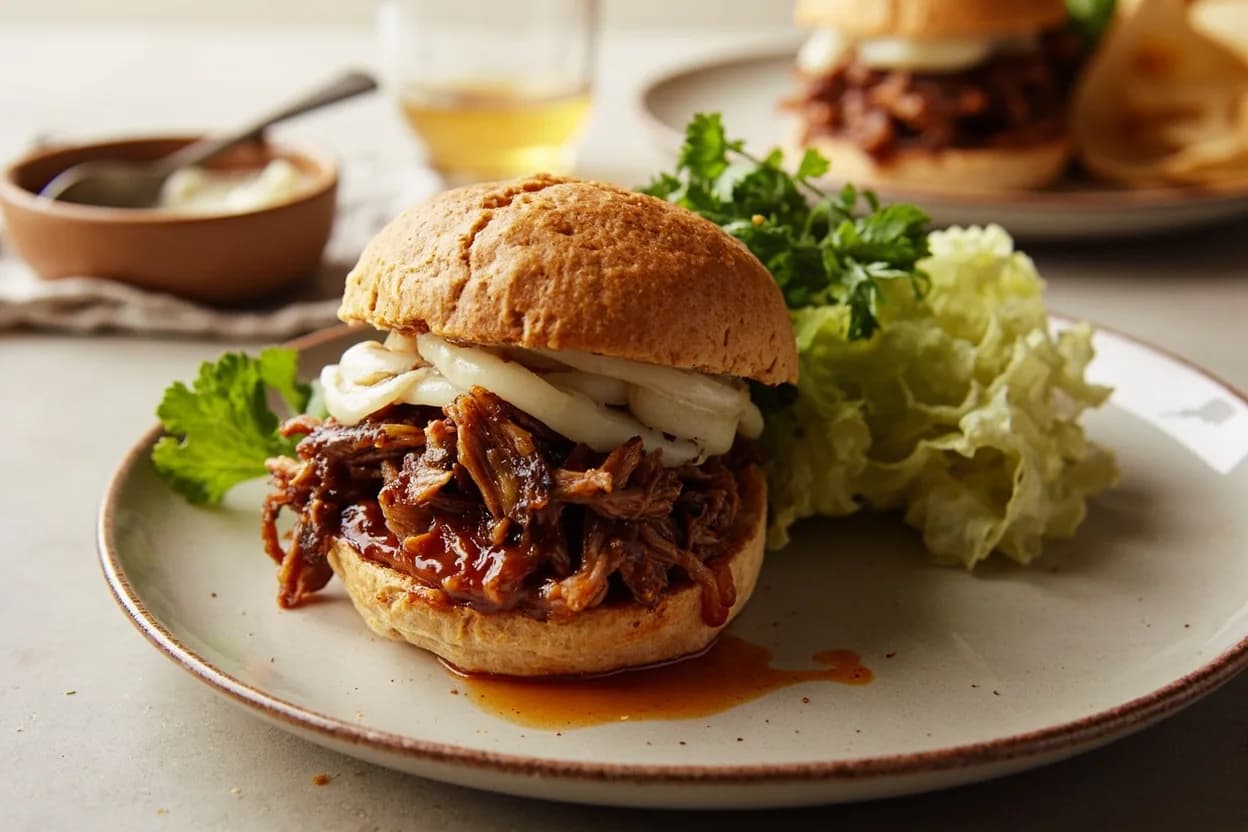
Where it comes from
The Boston butt sits above the humerus (upper arm bone) and contains the trapezius, rhomboideus, serratus, and spinalis muscles of the blade/neck area — the same muscles that form the coppa in Italian butchery. The picnic encompasses the arm (triceps brachii group), the lower leg (shank), skin-on exterior, and the radius/ulna bones. In North American butchery, 'pork butt' counterintuitively refers to the upper shoulder, not the rear of the animal — the name derives from the wooden barrels ('butts') in colonial New England used to pack this cut for shipping.
Best for
How to cook it
- 1Pulled pork (Boston butt): rub generously with salt, brown sugar, paprika, black pepper; smoke at 225 °F (107 °C) over hickory or apple wood 10–14 hours to 203 °F (95 °C) internal; rest 1 hour wrapped before pulling.
- 2Pernil (picnic, skin-on): marinate overnight in sofrito, garlic, oregano, achiote; roast at 325 °F (163 °C) for 4–5 hours uncovered until internal temp reaches 180–185 °F (82–85 °C), then blast at 425 °F (218 °C) for 30 minutes to crackle the skin.
- 3Carnitas (Boston butt): cut into 3-inch chunks; cook submerged in lard with orange juice, bay leaf, and milk at 375 °F (190 °C) for 1.5–2 hours until tender; remove, reduce cooking liquid to glaze, toss pork in glaze, and roast at 450 °F (232 °C) for 15 minutes to crisp.
- 4Braised picnic roast: sear bone-in picnic in Dutch oven; add aromatics and stock; braise at 325 °F (163 °C) for 3.5–4 hours until probe-tender.
- 5For either cut, the money muscle (near the front of the butt end) will finish 15–20 °F sooner than the rest of the shoulder — monitor it separately or slice it off early.
Prep & butchery
- Boston butt: sold bone-in (blade bone intact) or boneless (bone removed, typically rolled and tied); bone-in smokes more evenly due to bone's thermal mass.
- Picnic: almost always sold bone-in and skin-on; the arm bone runs through the centre and is difficult to remove without seam-butchering the cut.
- Score the picnic skin in a crosshatch before marinating to allow penetration and promote even crackling.
- Trim excess exterior fat on the butt to ¼ inch — more than that insulates the surface and prevents bark formation.
- The coppa/collar muscle within the butt can be seam-separated from the blade muscles for Italian charcuterie; it runs as a cylindrical muscle log through the centre of the butt.
Substitutes
- Boneless pork shoulder (generic)
Many retailers sell undifferentiated boneless shoulder from either subprimal — suitable for pulled pork or braising but may lack the fat marbling of a true butt.
- Pork leg (fresh ham)
Leaner substitute; works for braising and roasting but produces less gelatinous, less richly flavoured results due to lower collagen and fat content.
- Lamb shoulder
Similar muscle structure and collagen content; substitutes 1:1 in braise-heavy preparations; adjust seasoning to lamb's flavour profile.
Related cuts
- Coppa / Pork Collar
The coppa muscle is seam-separated from the Boston butt; it is the same anatomical structure sold as a distinct cut for charcuterie.
- Pork Hock
The shank portion of the picnic, often separated and sold independently for braising and stock.
- Pork Ribs (Spare)
Originate from the belly primal just below the shoulder boundary; not from the shoulder itself but often sold alongside picnic in retail.
- Country-Style Ribs
Cut from the blade end of the loin or from the butt shoulder; blade-end country ribs are shoulder cuts, not rib cuts.
Appears in
References
- 1.Charcuterie: The Craft of Salting, Smoking, and Curing — Michael Ruhlman & Brian Polcyn (W. W. Norton, 2005)
- 2.Franklin Barbecue: A Meat-Smoking Manifesto — Aaron Franklin & Jordan Mackay (Ten Speed Press, 2015)
- 3.NAMP Meat Buyer's Guide, 8th ed. — North American Meat Processors Association (2010)
- 4.The River Cottage Meat Book — Hugh Fearnley-Whittingstall (Hodder & Stoughton, 2004)
- 5.Meathead: The Science of Great Barbecue and Grilling — Meathead Goldwyn (Rux Martin/Houghton Mifflin Harcourt, 2016)
Confidence: high
Notes
The Boston butt name
The term 'Boston butt' has nothing to do with the pig's rear. In colonial New England, butchers packed less-desirable cuts into barrels called 'butts' (from the Latin buttis, a cask). The upper shoulder cut was the one packed in these barrels and exported from Boston ports — hence the name. The lower shoulder, the 'picnic,' was so called because its lower price made it the cut families would take to casual outdoor meals.
Money muscle
The money muscle is a pork BBQ competition term for the pectoralis minor, a cylindrical muscle that sits on the outer face of the Boston butt near the blade end. Because it is loosely structured (not tightly bundled like the surrounding muscles), it remains juicier and more tender than the rest of the shoulder and finishes cooking earlier. Competition pitmasters slice it into medallions for the judging box. In a skin-on picnic configuration, the equivalent loosely-structured external muscles provide similar premium texture.