Pork — Primal & Subprimal
Pork Spare Rib Membrane Removal
Also: pulling the pleura, removing the silverskin from ribs, rib membrane removal
Peeling the tough pleural membrane from the bone side of spare ribs so smoke, rub, and bark can develop on the exposed surface.
The pleura is a thin but dense sheet of connective tissue — primarily elastin and collagen — that lines the inner rib cage on the thoracic (bone-facing) side of a rack of spare ribs. Unlike intramuscular collagen, which dissolves into gelatin during low-and-slow cooking, elastin does not soften with heat. Left in place, the pleura forms an impermeable barrier that blocks smoke penetration, prevents seasoning adhesion on the bottom of the rack, and can tighten into a chewy, papery layer that resists slicing and biting through finished ribs. Removal before cooking is standard practice in competition barbecue and in most serious home and restaurant rib preparation.
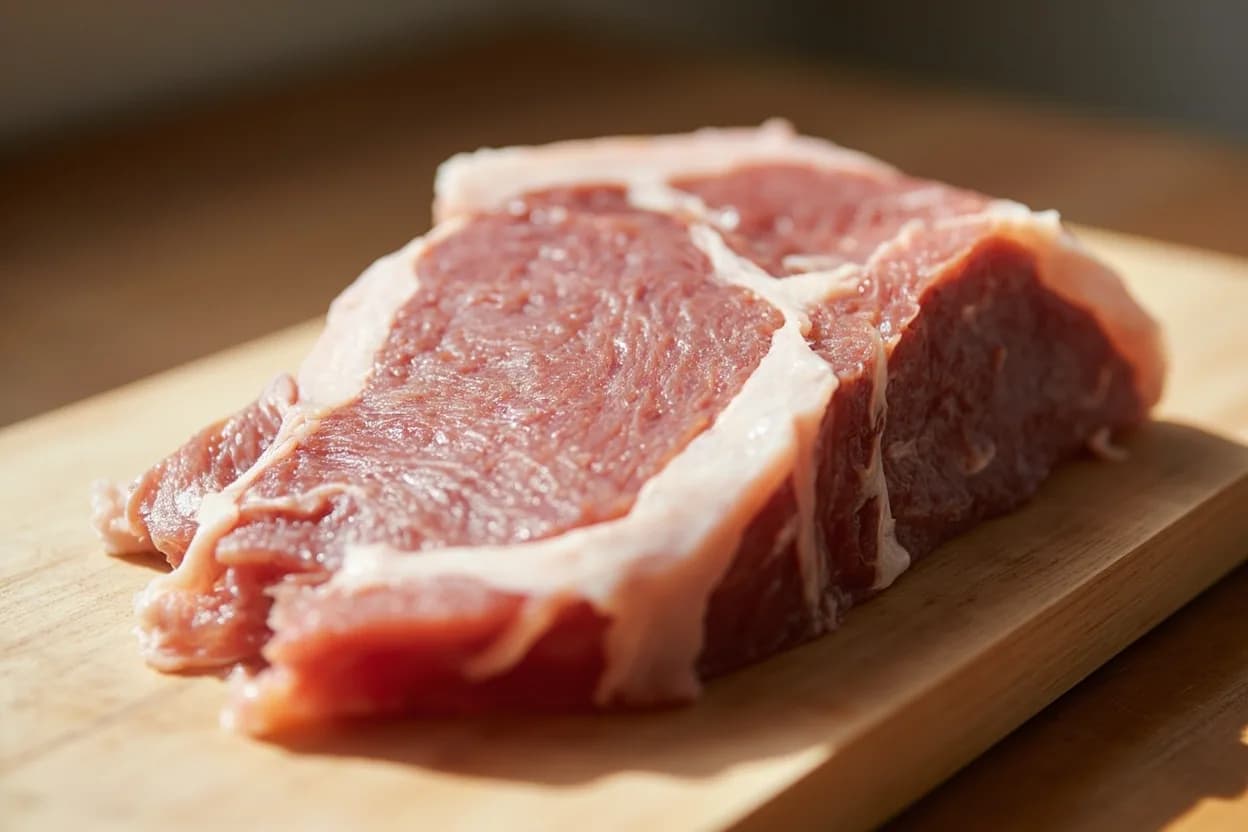
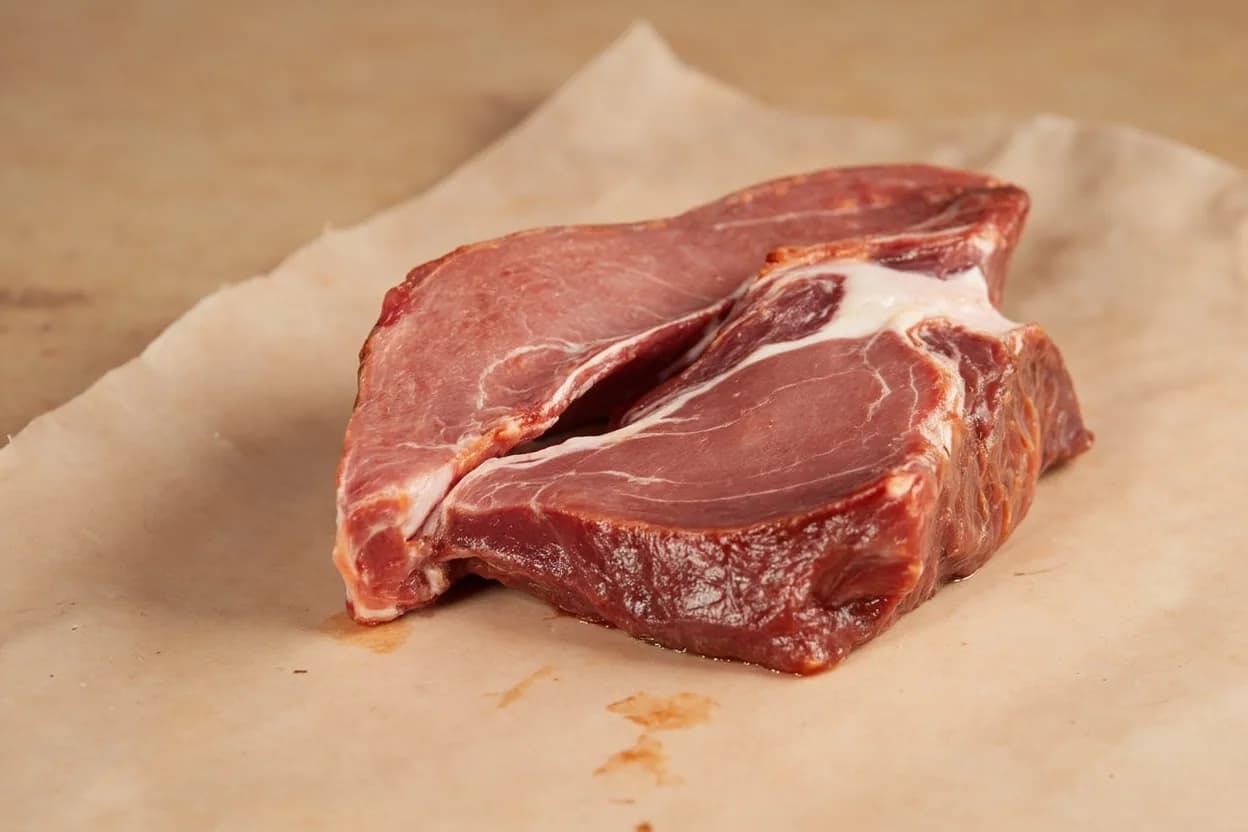
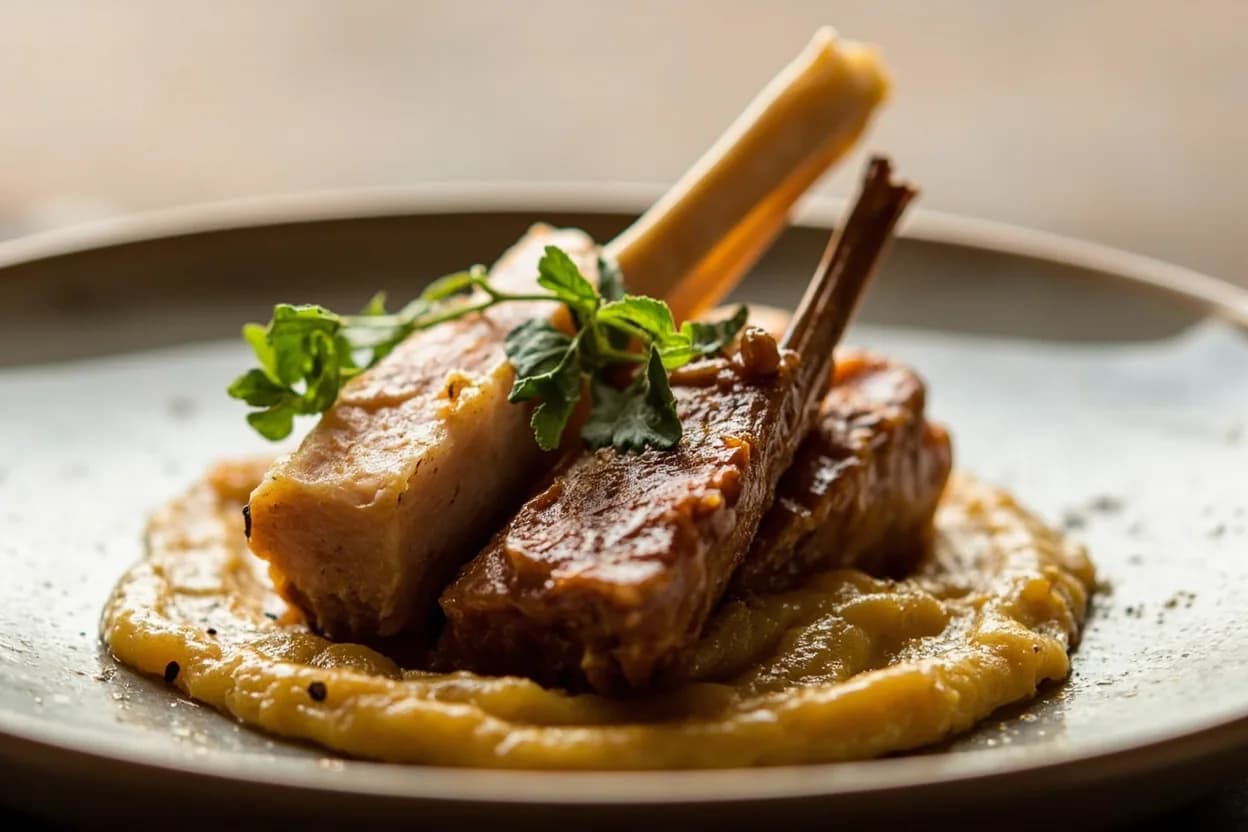
In photos
Where it comes from
The pleura is the parietal pleural membrane — the anatomical lining of the thoracic cavity. In a full spare rib rack it runs the entire length of the bone side as a single continuous sheet, slightly translucent and white-to-gray in color. Baby back ribs have the same membrane; St. Louis-cut ribs (trimmed spare ribs) retain it unless specifically removed at the processor.
Best for
How to cook it
- 1Lay the rack bone-side up on a cutting board. Identify the membrane: it is the semi-translucent, tight-fitting sheet covering the exposed bone ends and the concave side of the rack.
- 2Insert a butter knife, the tip of a boning knife, or the back of a spoon under the membrane at the thinner end of the rack (the end with the smallest bones). Work the blade along the top edge of one rib bone to create a flap of loose membrane approximately 2–3 cm wide.
- 3Grip the loosened flap with a paper towel — the membrane is slippery, and dry paper towel provides friction that bare fingers cannot. Pull steadily and firmly parallel to the rack surface rather than pulling upward. The goal is to peel, not tear.
- 4If the membrane tears, re-insert the knife under the remaining section and create a new grip point. Most racks require two or three grip-and-pull cycles to remove the membrane in its entirety.
- 5Inspect the rack under oblique light: any remaining sections appear as a slight sheen against the duller surface of exposed meat and bone. Remove any residual fragments.
- 6Season the now-exposed bone side with rub immediately — the adhesion on a clean, slightly moist surface is markedly better than on the membrane.
Prep & butchery
- Paper towels are the essential tool — a dry paper towel grips the slick pleura far more reliably than bare hands or a cloth
- Cold ribs (straight from refrigeration) have a firmer membrane that initiates more cleanly; room-temperature ribs have a softer membrane that tears more readily
- Some processors pre-remove the membrane — check before beginning; the bone side will look matte and slightly textured rather than smooth and slightly shiny
- The membrane from St. Louis-cut ribs is continuous over a smaller, rectangular rack and typically peels cleanly in one pass; full spare rib racks have a wider, sometimes irregular membrane that may require multiple grips
Substitutes
- Scoring the membrane (instead of removing)
Cross-hatching the membrane with a sharp knife at 1 cm intervals allows some smoke and seasoning penetration; not equivalent to removal but viable if the membrane is unusually adherent
Related cuts
- Pork Spare Ribs
The full rack from which the membrane is removed — includes the rib tips and skirt
- St. Louis-Style Ribs
Trimmed spare ribs with tips and cartilage removed; membrane still present, slightly easier to peel on the uniform rectangular rack
Loin-side ribs with the same pleural membrane; thinner rack, membrane peels by identical technique
Appears in
References
- 1.Franklin Barbecue: A Meat-Smoking Manifesto — Aaron Franklin & Jordan Mackay
- 2.Meathead: The Science of Great Barbecue and Grilling — Meathead Goldwyn
- 3.The Complete Meat Cookbook — Bruce Aidells & Denis Kelly
- 4.Peace, Love, and Barbecue — Mike Mills & Amy Mills Tunnicliffe
Confidence: high
Notes
Bark formation and the barrier problem
Bark — the dark, lacquered outer crust that forms on smoked ribs through the Maillard reaction, fat rendering, and smoke-compound polymerization — requires a dry, protein-rich surface exposed to moving hot air and smoke. The pleura creates a hydrophobic, low-protein barrier that reflects vapor and prevents the rub from setting into a cohesive crust. On the bone side of an unpeeled rack, the surface beneath the cooked membrane is typically pale, moist, and barely seasoned — the same rack with membrane removed will show uniform bark development on both sides. In competition judging, the bone side is visually inspected: a pleura-covered rack immediately signals to experienced judges that preparation was incomplete.
When to leave it on
In some slow-braised applications — particularly Asian-style ribs braised in soy, shaoxing, and sugar — the membrane is sometimes left intentionally. The barrier slows the penetration of the braising liquid into the bone-side meat, causing the rack to cook more uniformly across its cross-section rather than becoming oversaturated on the bone side. This is a minority approach; the more common guidance even in braised preparations is to remove the membrane and reduce braising time slightly to prevent the bone-side meat from becoming overly soft.