Pork — Primal & Subprimal
Pork Spare Ribs — St. Louis Cut vs. Full Rack
Also: spare ribs, St. Louis ribs, side ribs, rib tips, Kansas City cut ribs
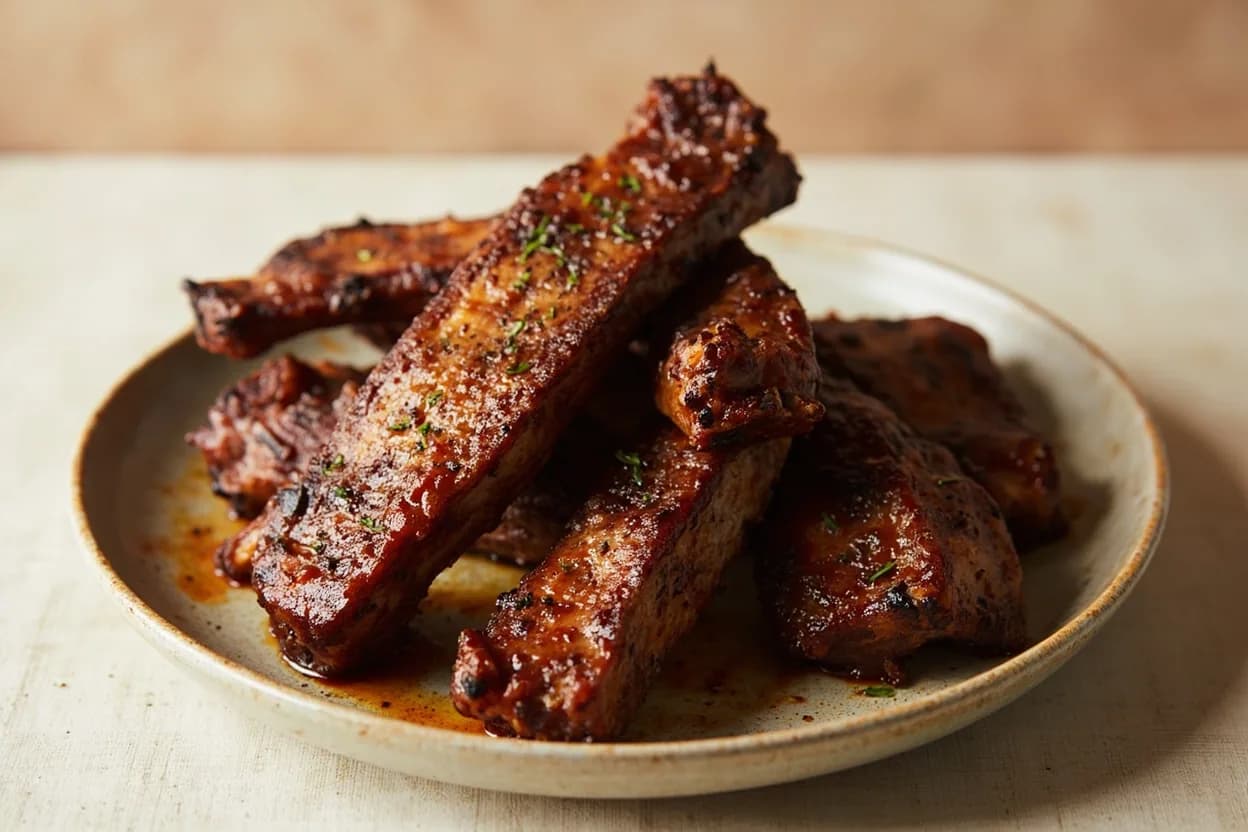
Spare ribs are the long, flat belly-side ribs of the pig — trimmed to the St. Louis cut for competitive-BBQ uniformity or left full for maximum yield and the cartilage-rich rib tips.
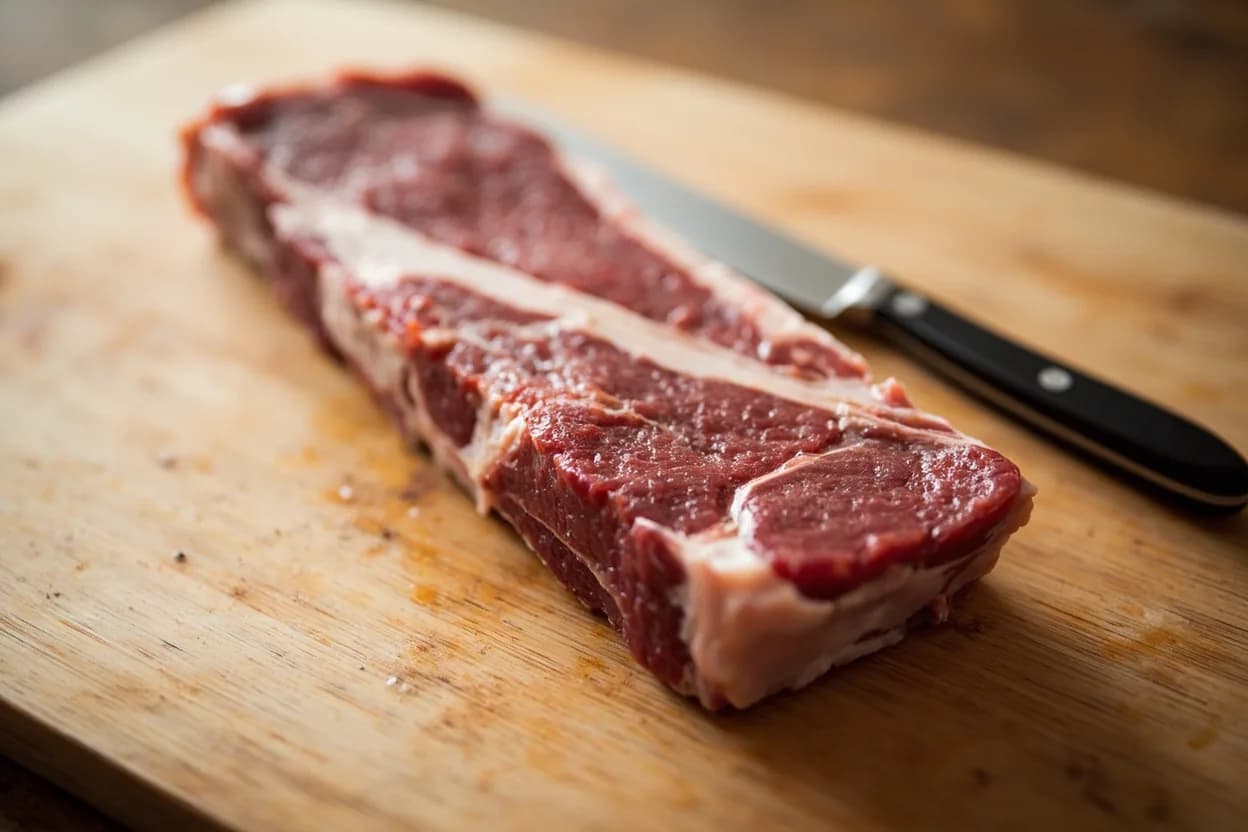
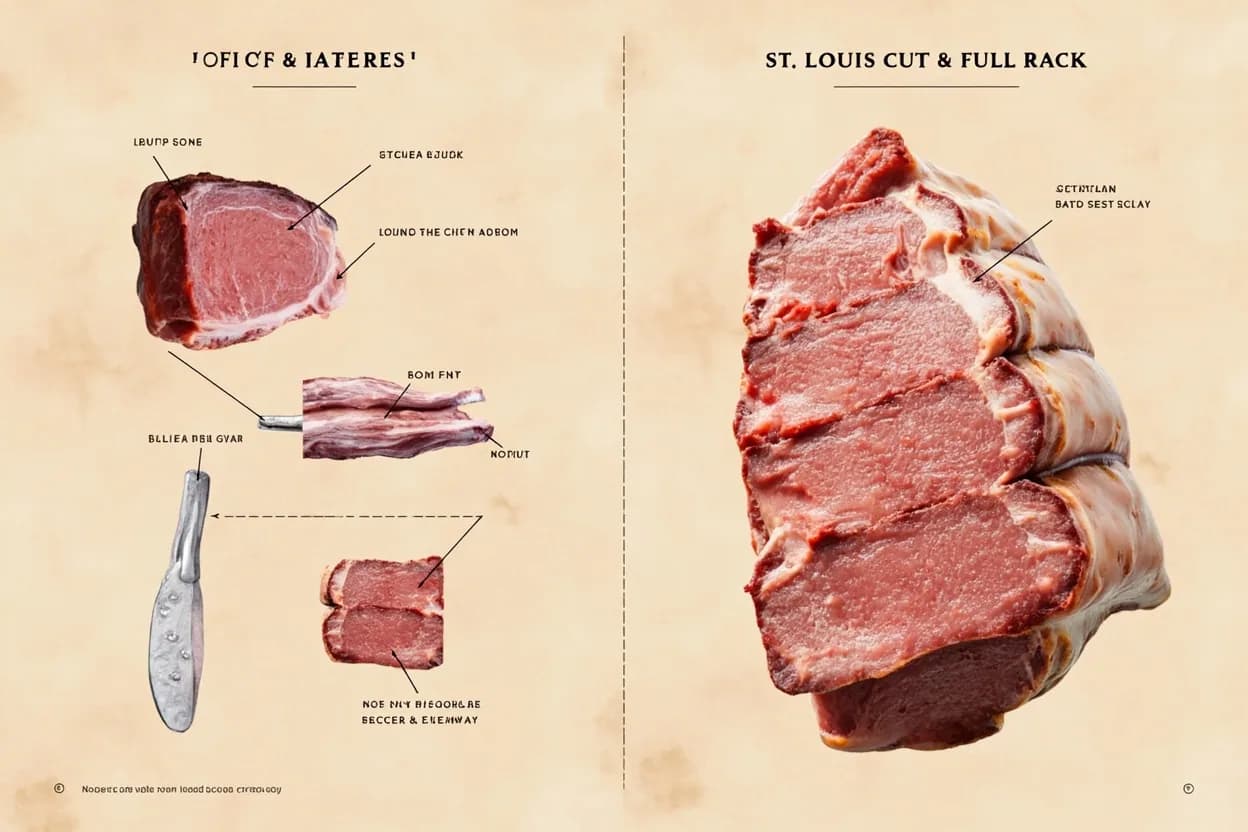
Pork spare ribs are the lower rib bones that extend from the belly (side) of the pig. A full rack includes 11–13 bones plus the sternum (breastbone) cartilage, the rib tips (the soft cartilaginous extension at the bone ends), and a flap of intercostal meat called the 'skirt' on the bone-side. The St. Louis cut is the same rack trimmed square: sternum cartilage, rib tips, and skirt removed, leaving a flat, rectangular rack of pure bone and meat that cooks evenly and presents cleanly.
In photos
Where it comes from
Spare ribs come from the belly primal — the same section that yields pork belly and bacon. They sit below the baby back ribs (which are attached to the loin) and above the actual belly. The bones are longer, flatter, and wider than baby backs, running roughly 6–8 inches in length. Because the belly muscles work harder than the back, spare ribs have more intramuscular fat, more collagen, and a deeper, fattier flavor.
Best for
How to cook it
- 1St. Louis trim: lay the full rack bone-side up. Find where the sternum cartilage (yielding, white) meets the last rib bone. Cut along this line from the short end to the long end, keeping the knife parallel to the bone rack. Remove the skirt flap from the bone-side. The removed section is the rib tips — cook separately.
- 2Membrane removal: flip the rack bone-side up. At one end, use a butter knife or finger to loosen the thin white membrane (pleura) from a rib. Grip it with a paper towel and pull the full length in one motion. This membrane does not render and blocks smoke/rub penetration.
- 3Smoke low-and-slow at 225–250°F (107–121°C) for 3–4 hours unwrapped, then 1–2 hours in foil with a splash of apple juice (the '3-2-1 method' for full spares; '2-2-1' for St. Louis). Unwrap and glaze with sauce in the final 30 minutes.
- 4The bend test: pick up the rack from one end with tongs; it should bend deeply, with cracks appearing in the bark on the outside of the curve. The probe test: a metal skewer should slide between ribs with zero resistance.
- 5For oven cooking without a smoker: season and wrap in foil, roast at 275°F (135°C) for 2.5–3 hours, unwrap and broil 5 min with sauce to caramelize.
- 6Rib tips: cook separately by braising at 300°F (150°C) for 1.5–2 hours in soy, vinegar, sugar, and aromatics, or chop and grill direct until charred.
Prep & butchery
- Membrane removal is the single most important prep step — non-negotiable for smoked ribs
- Apply dry rub at minimum 1 hour before cooking; overnight uncovered in the refrigerator develops a better bark
- Trim any thick fat deposits on the meat-side down to about 1/4 inch — thick fat pads do not fully render in a 4-hour smoke
- For the St. Louis trim, save the rib tips — they make excellent snacks, sandwiches, or a separate rib-tip braise
- Score the bone side lightly between each rib if adding a sweet glaze to allow deeper penetration
Substitutes
Leaner and more tender; shorter cook time (2–3 hours); less fat depth
- Beef Short Ribs
Far meatier; longer braise time; entirely different flavor register
- Lamb Spare Ribs
Same rib anatomy in lamb; much fattier, strongly flavored; common in Middle Eastern cooking
Related cuts
The rib bones from the loin side — shorter, leaner, less fat; above the spare ribs on the pig
- Pork Belly
The same belly primal, layered fat-and-muscle below the rib bones
- Rib Tips
The cartilaginous section removed during the St. Louis trim; a cut in their own right
Appears in
References
- 1.Franklin Barbecue: A Meat-Smoking Manifesto — Aaron Franklin & Jordan Mackay
- 2.The Barbecue! Bible — Steven Raichlen
- 3.Peace, Love, and Barbecue — Mike Mills & Amy Mills Tunnicliffe
- 4.USDA Institutional Meat Purchase Specifications (IMPS) — Fresh Pork Series 400
Confidence: high
Notes
St. Louis vs. Full Rack: The Practical Choice
The St. Louis cut is a trimming convention that creates a uniform rectangle for competition judging and consistent cooking — all bones are roughly the same length so no end ribs overcook while center ribs are still underdone. For home cooking, the full rack is often a better value: you get the rib tips as a bonus, and the irregular shape is manageable. The cartilage in rib tips turns silky when braised low and slow, making them a prized secondary yield.
The 3-2-1 Method Explained
The numbers refer to hours: 3 hours unwrapped in the smoker (building bark and smoke flavor), 2 hours wrapped in foil with a small splash of liquid (steaming and tenderizing the collagen), 1 hour unwrapped (setting the glaze and firming the bark). This method produces fall-off-the-bone texture. Competition pitmasters sometimes use a lighter wrap time (or skip wrapping) to preserve the 'bite-through' texture that judges prefer over pure tenderness.