Knife Cuts — Japanese
Sogigiri (Diagonal Bias Slice)
Also: sogigiri, sogi giri, bias cut, diagonal slice, oblique slice
A low-angle diagonal slicing technique that dramatically increases the exposed surface area of fish fillets and vegetables for faster cooking and better seasoning uptake.
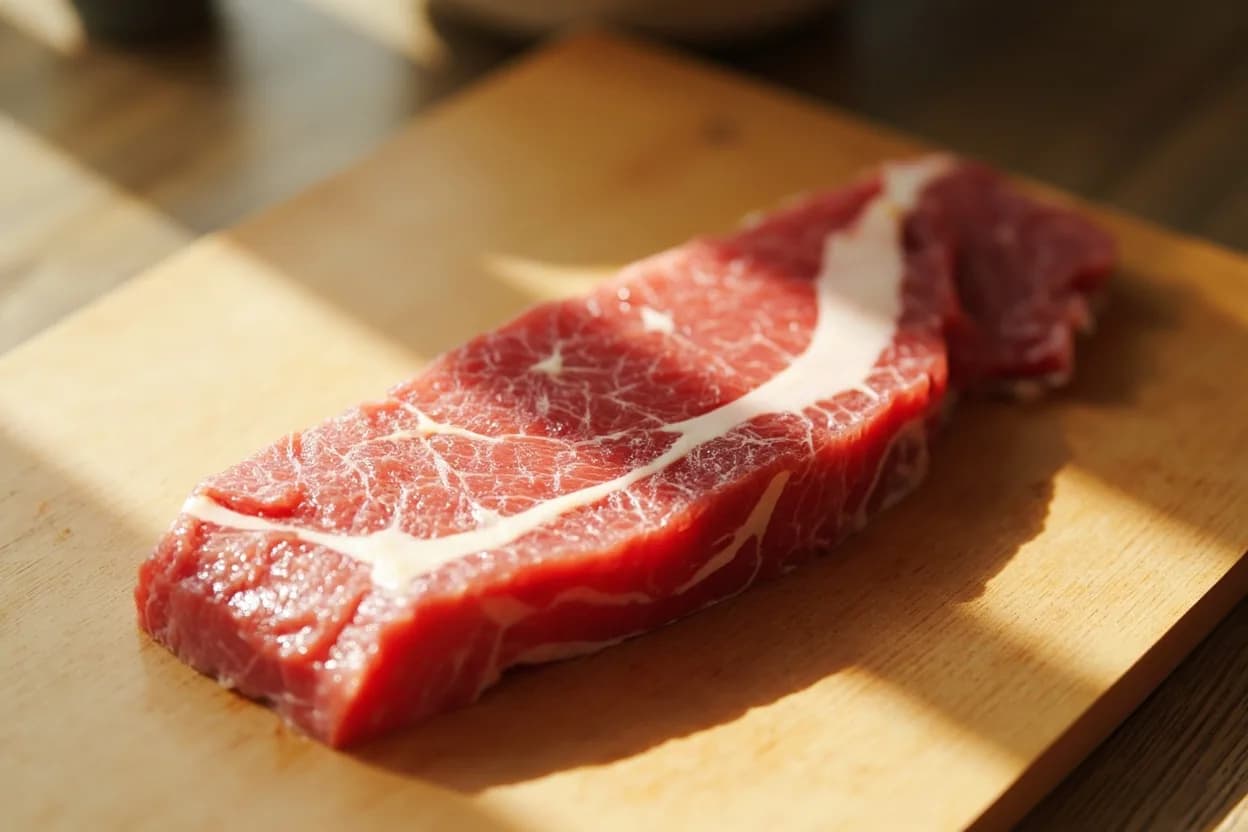
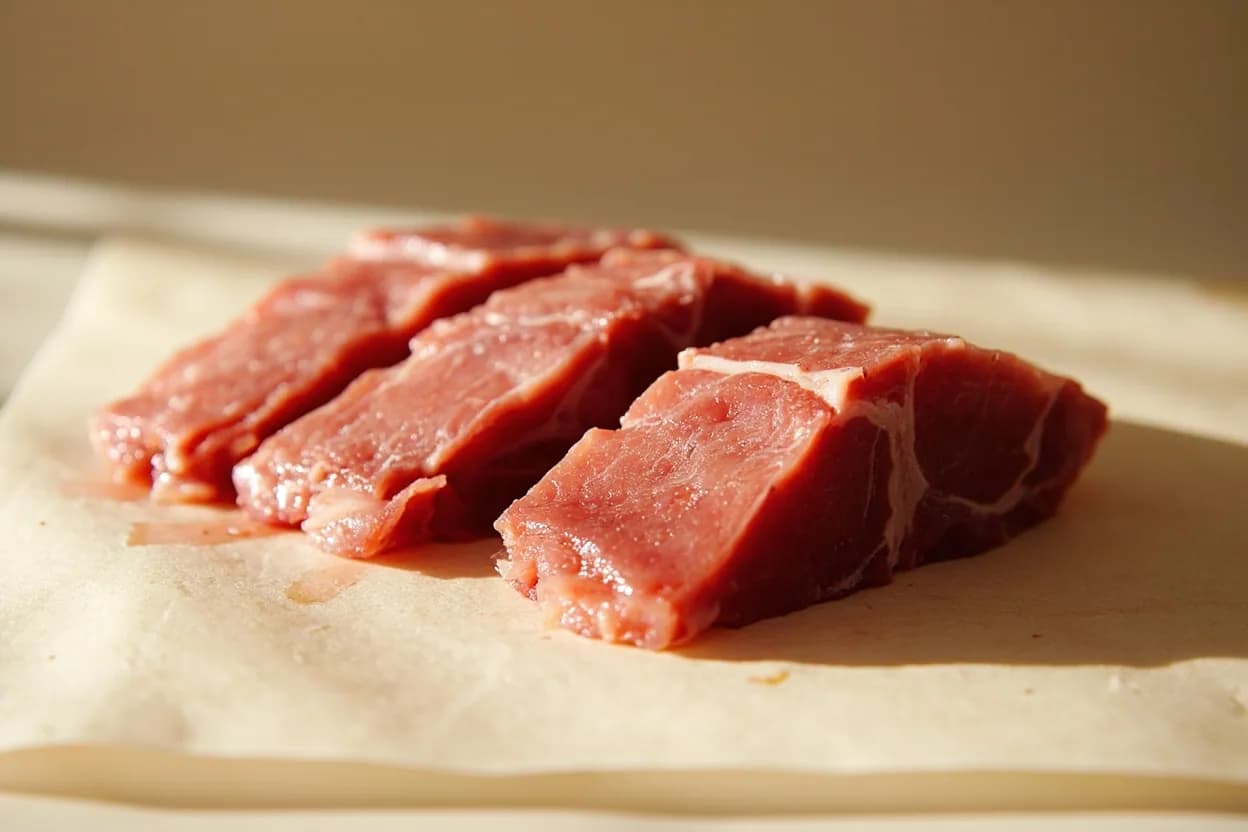
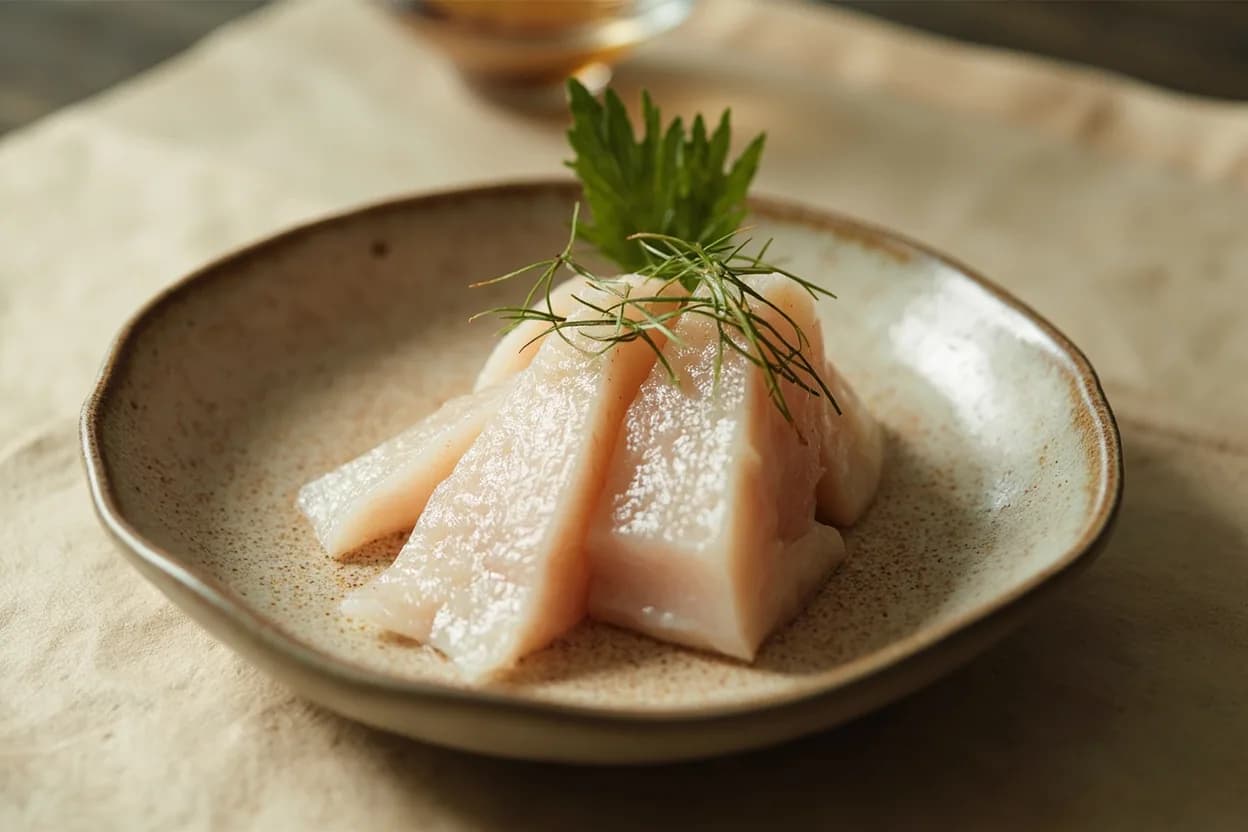
Sogigiri (削ぎ切り) is a Japanese knife technique in which the blade is held at a low angle — typically 30–45° to the cutting board rather than the near-vertical angle used for most straight cuts — and drawn through fish, poultry, or firm vegetables with a single smooth pulling stroke. The resulting slices are broad, flat ovals or elongated lozenges with a significantly larger face than a perpendicular cut of the same thickness would produce. Sogi means 'to shave off' or 'to pare away,' describing the scraping, near-horizontal motion of the blade.
In photos
Where it comes from
Applied to fish fillets (particularly white-fleshed fish such as tai, hirame, and buri), boneless poultry breast, pork tenderloin, and firm vegetables (naga-imo, lotus root, gobō, carrot, cucumber). The cut works with the grain of muscle or fibre rather than across it at steep angles.
Best for
How to cook it
- 1For fish sashimi (hirazukuri): chill the fillet until firm. Place skin-side down, angled slightly away from you. Lay the yanagiba nearly flat against the fillet surface at 30–45° and draw the full length of the blade smoothly toward you in one stroke — never push or saw.
- 2Slice 5–8 mm thick for standard sashimi; thinner (3–4 mm) for delicate hirame.
- 3Transfer each slice to the plate with the blade-face upward — the shining, polished cut surface should be visible.
- 4For vegetables (e.g. naga-imo, cucumber): angle the nakiri or gyuto at 45° and make smooth drawing cuts, rotating the vegetable slightly between each slice to maintain consistent oval shapes.
- 5For boneless chicken: partially freeze the breast (15–20 minutes) to firm it, then sogigiri at a low angle for uniform thin ovals suitable for quick stir-frying.
Prep & butchery
- A yanagiba (right-handed single-bevel) is the canonical tool for fish sogigiri — its geometry is designed specifically for long, low-angle pulling strokes.
- For vegetables, a gyuto or nakiri works well; ensure the blade is sharp enough to slice cleanly without compressing the cells.
- Chill fish fillets and firm proteins before cutting — warmth softens the flesh and causes the blade to drag rather than glide.
- Wipe the blade with a damp cloth between slices when cutting sticky fish like buri (yellowtail) to maintain a clean, unsmeared face on each slice.
Substitutes
- Hirazukuri (straight vertical sashimi slice)
The classic vertical sashimi cut produces a narrower rectangular slice; use hirazukuri for tuna (maguro) and other meaty fish where the broad oval of sogigiri is less needed.
- Usuzukuri (paper-thin transparency cut)
An extreme sogigiri variant at an even shallower angle, producing translucent slices for fugu (pufferfish) and hirame; more demanding technically.
- Rangiri (roll cut)
For vegetables requiring a rustic, angular cut with similar surface-area benefits but in a three-dimensional form.
Related cuts
- Hirazukuri
Straight-down sashimi slice — sogigiri can be seen as hirazukuri inclined to a low angle for broader, more oval slices.
- Usuzukuri
Ultra-thin diagonal sashimi slice taken to an extreme shallowness; the most demanding form of the sogigiri family.
- Rangiri
Diagonal roll-cut for vegetables sharing the surface-area objective but producing 3D irregular chunks.
- Tanzaku-giri
Flat rectangular strips that can be produced from the sogigiri sheet by secondary crosscut.
Appears in
References
- 1.Japanese Cooking: A Simple Art — Shizuo Tsuji
- 2.The Japanese Kitchen — Hiroko Shimbo
- 3.Knife Skills Illustrated — Peter Hertzmann
- 4.Sushi Jiro Dreams — Jiro Ono (as documented in culinary literature on Jiro's technique)
Confidence: high
Notes
The physics of the diagonal
When a blade is inclined at 45° to the perpendicular, the cross-sectional face of the resulting slice is √2 times (approximately 1.41×) larger than a straight-cut slice of identical thickness. In practice the angle is often shallower still — sometimes 30° — which widens the face further. For sashimi-grade fish, this larger face is not merely aesthetic: it means more surface contact with soy sauce and wasabi per bite, and a cleaner visual display of the flesh's marbling and texture.
Sogigiri vs. usuzukuri
Sogigiri is a general low-angle bias cut applicable to a range of fish, poultry, and vegetables. Usuzukuri is a specific, extreme variant — sliced at the shallowest possible angle to produce near-translucent sheets that are arranged in overlapping rose patterns (chrysanthemum presentation) on the plate. Usuzukuri is reserved for delicate white fish like hirame and the legally regulated fugu, where translucency and visual delicacy are the central design objective.