Japanese Fish & Sashimi Cuts
Usu-zukuri (Paper-Thin Slice — Fugu)
Also: usu-zukuri, usuzukuri, paper-thin cut, fugu slice
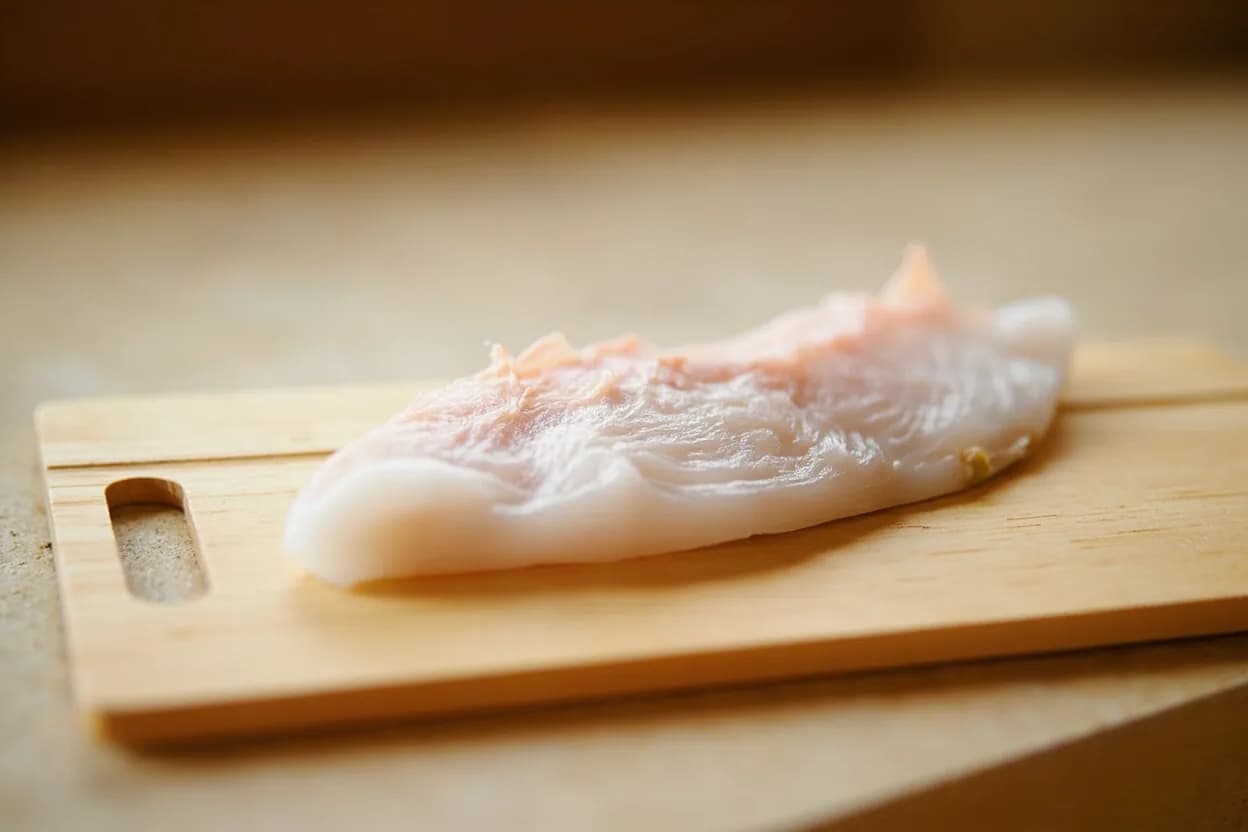
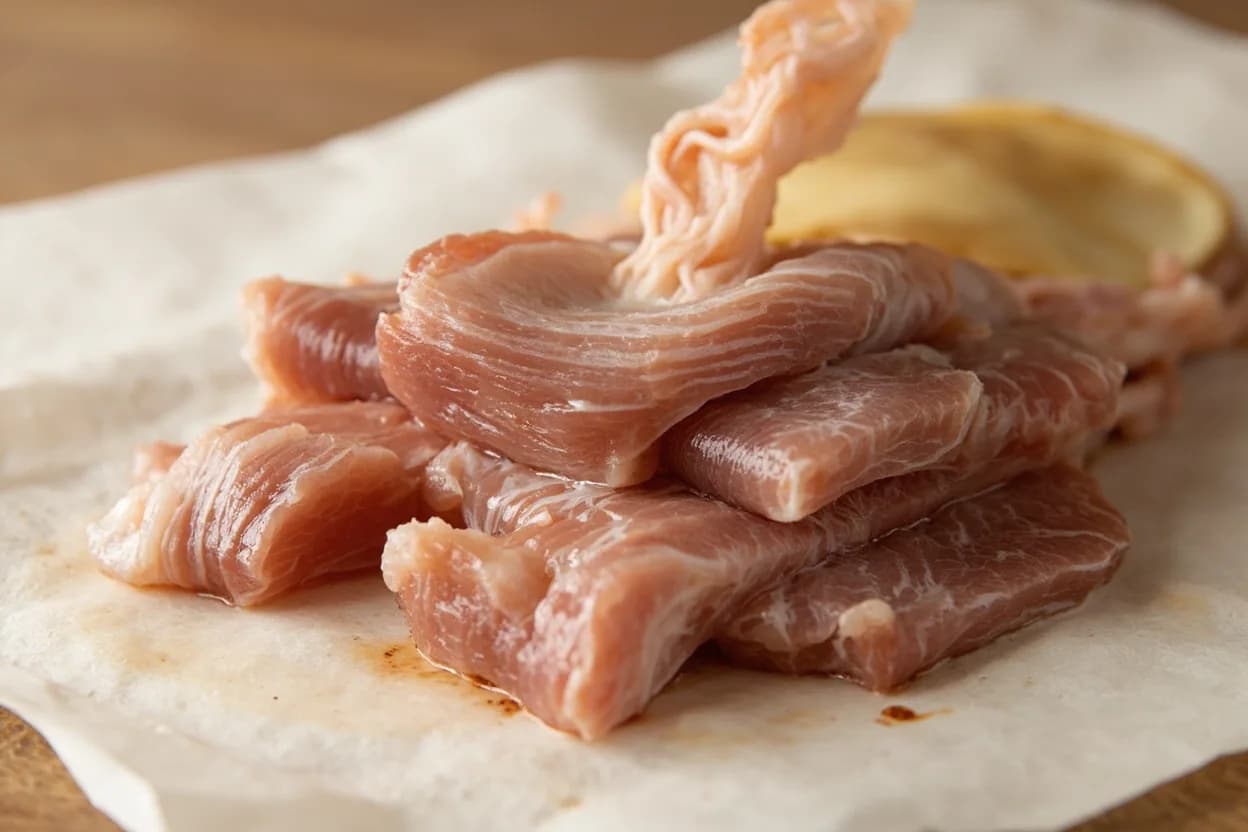
Translucent slices so thin the blue-and-white porcelain plate beneath shows through — the defining cut for fugu and the technical apex of Japanese fish butchery.
Usu-zukuri (薄造り, 'thin presentation') produces near-translucent slices of fish by combining a blade angled almost flat to the cutting board (15–20°) with a full wrist-draw stroke. The finished slice is 1–2 mm at most, broad and wide, revealing the fish's internal color gradations and, in the case of fugu, allowing the chrysanthemum plate beneath to show through the flesh — a visual performance integral to the dish. No other cut so directly links technical mastery to aesthetic effect.
In photos

Where it comes from
Classically performed on torafugu (tiger puffer, Takifugu rubripes) fillet — the firmest, whitest, most tonically neutral sashimi fish — and on hirame (Japanese flounder/halibut). Engawa (flounder fin muscle), karei (righteye flounder), and occasionally kampachi are also cut this way when their texture warrants it.
Best for
How to cook it
- 1Work on a very cold, dry board — ideally marble or damp cedar; the board must not move
- 2Hold the fillet down with flat fingertips; angle the yanagiba blade at 15–20° from horizontal, nearly parallel to the board surface
- 3Begin the stroke at the heel and draw the full blade length across the fillet in one smooth, continuous wrist-pull — no forward pressure, pure lateral draw
- 4The emerging slice should be nearly transparent; if not, flatten the blade angle further on the next stroke
- 5Transfer each slice immediately onto the plate using the flat of the blade — never lift with fingers or tongs
- 6Arrange concentrically in a chrysanthemum pattern; work from the outer ring inward, overlapping each slice by one-third
- 7The finished plate should reveal the porcelain pattern clearly through the assembled slices
Prep & butchery
- Fugu must be prepared only by a licensed fugu chef (fugu-shi) in Japan — mishandling the tetrodotoxin-bearing organs is lethal
- The fillet must be skinned and all membrane removed; any connective tissue catches the blade and causes tearing
- The yanagiba must be ground to maximum sharpness — this cut is impossible with a blade that has any visible wire edge
- Chill the fillet to 2–4°C before cutting; warmer flesh compresses and tears rather than shearing cleanly
Substitutes
- Hiki-zukuri
Standard pulling slice — appropriate for the same fish if the aesthetic of translucency is not required
- Sogi-zukuri
Angled slice of moderate thickness — provides delicacy without the extreme thinness of usu-zukuri
Related cuts
- Hiki-zukuri
The standard thick-pull cut — usu-zukuri is the extreme thin version of the same lateral drawing motion
- Sogi-zukuri
Angled diagonal slice — shares the blade-angle logic but stops well short of usu-zukuri's translucency
- Ito-zukuri
Thread cut — equal thinness but produces narrow filaments rather than wide sheets
Appears in
References
- 1.Sushi and the Art of the Japanese Knife — Hiromitsu Nozaki
- 2.The Japanese Kitchen — Hiroko Shimbo
- 3.Fugu: The World's Most Dangerous Delicacy — T.R. Reid (National Geographic)
- 4.Japanese Cooking: A Simple Art — Shizuo Tsuji
Confidence: high
Notes
The chrysanthemum plate
In traditional fugu presentation, the itamae uses a round blue-and-white Arita or Imari porcelain plate painted with chrysanthemums. The finished kiku (chrysanthemum) arrangement of overlapping fugu slices completes the visual pun — the cut fish echoing the plate's painted flower. Seeing the painted flowers through the translucent slices confirms the technique was executed correctly. Restaurants that specialize in fugu (fugu-ryori-ten) often invest in expensive antique plates precisely for this transparency test.
Blade angle is everything
The governing variable in usu-zukuri is blade angle relative to the board surface. At 45° (the sogi-zukuri position), slices are moderately thin but not translucent. As the angle flattens toward 15°, slices lengthen and thin dramatically. Most itamae work at 15–18° for fugu. Any angle below 12° risks the blade scraping the board surface and gouging the platter. The wrist must rotate progressively through the stroke to maintain constant geometry as the blade exits the fillet.