Veal — Primal & Subprimal
Veal Primal Cuts
Also: veau primals, vitello primals, ternera primals, veal carcass breakdown
The six major anatomical divisions of the veal carcass — shoulder, rack, loin, leg, breast, and shank — each offering distinctive tenderness and cooking applications unique to young beef.
Veal primals are the primary wholesale divisions of a calf carcass, defined by the same anatomical boundaries as beef primals but yielding substantially different cuts due to the animal's age (typically 16–22 weeks for special-fed white veal, up to 36 weeks for rose/pink veal), smaller size, underdeveloped connective tissue, and pale, fine-grained muscle. A veal carcass typically weighs 60–100 kg hanging weight — roughly one-fifth to one-third of a mature beef carcass — which makes even large primals like the leg manageable for a single cook. The defining characteristic across all veal primals is extreme tenderness: because the calf has not engaged in sustained muscle activity, even the shoulder and shank muscles are more tender than comparable beef subprimals, though the leg and loin remain the most prized.
In photos
Where it comes from
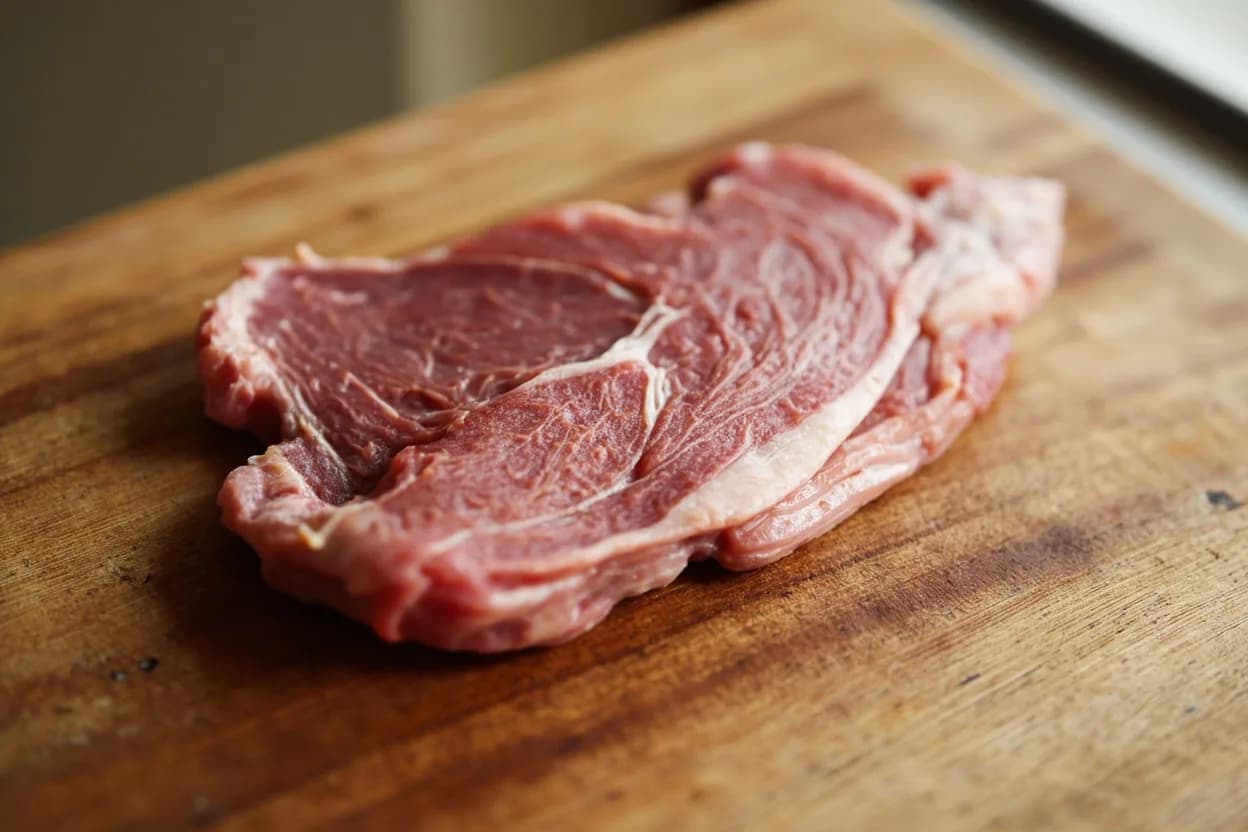
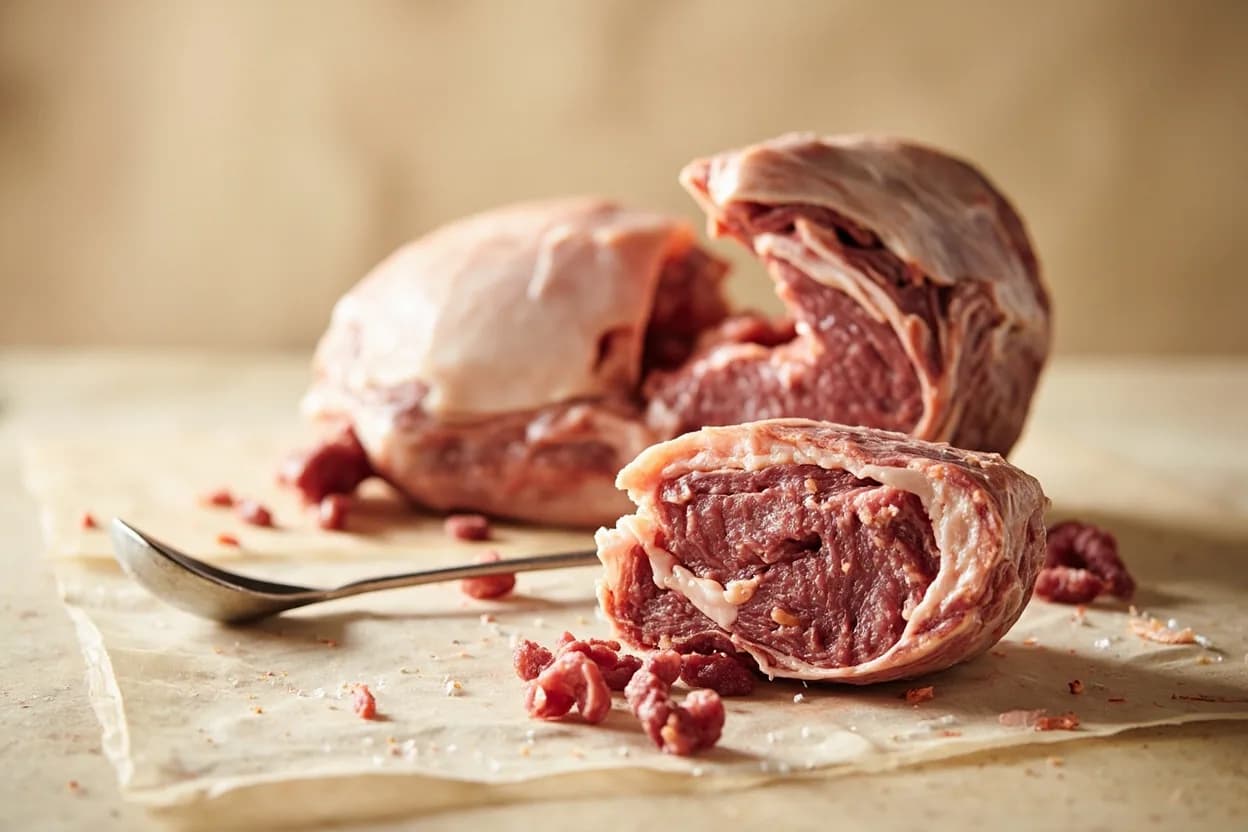
The veal carcass is divided into six primals: (1) Shoulder (chuck equivalent): includes the neck, blade, and arm; well-worked muscles but far more tender than beef chuck. (2) Rack (rib equivalent): ribs 6–12, the classic French rack, source of the côte de veau and rack of veal. (3) Loin: ribs 13 plus lumbar vertebrae; source of veal chops and the tenderloin. (4) Leg (round equivalent): hind quarter with femur and tibia; source of top round, inside round, eye round, and knuckle — the scallopine primals. (5) Breast: the underside of the rib cage; cartilage-rich with long, flat rib bones. (6) Shank (fore and hind): osso buco source, very high in collagen.
Best for
How to cook it
- 1Rack and loin: roast at 200–220°C to an internal temperature of 60–63°C (medium); the lack of fat means the rack dries quickly past this point. French the bones for presentation and use a thermometer.
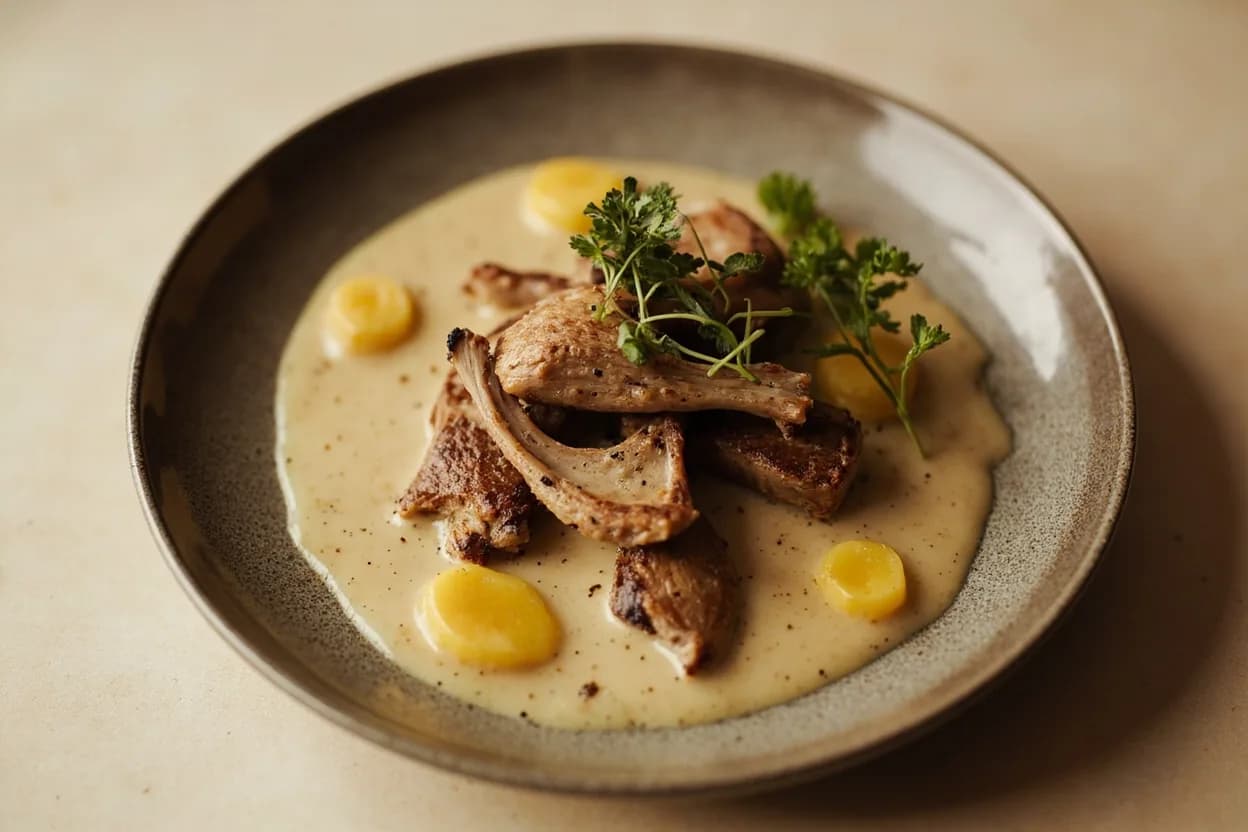
- 2Leg (top round, inside round): slice into scallopine 5–8 mm thick, pound to 3 mm, and sauté in clarified butter over very high heat for 60–90 seconds per side. The lean muscle seizes and toughens if overcooked.
- 3Shoulder: braise covered at 160°C for 2–2.5 hours in white wine, veal stock, mirepoix, and aromatics. Shoulder is lean enough that it must remain submerged or basted frequently.
- 4Breast: stuff (with bread, herbs, egg) and braise, or cut into riblets for grilling. The cartilage between the rib bones softens completely after 2.5–3 hours of moist heat.
- 5Shank: cross-cut into osso buco medallions and braise in white wine and tomato at a gentle simmer 1.5–2 hours until the meat pulls slightly from the bone and the marrow is soft.
Prep & butchery
- Remove the fell (the thin outer membrane on roasting primals) only if it is particularly thick — on veal it is usually minimal and can be left to hold the roast's shape
- Because of low fat content, lard or bard lean primals (shoulder, leg roasts) before roasting — lay strips of back fat or caul fat over the surface
- Veal bones are the gold standard for classical French fond blanc (white veal stock) — roast them only lightly or not at all depending on whether you want a white or brown fond
- Trim silver connective tissue from the loin thoroughly before slicing into chops — unlike the generous marbling of beef loin that lubricates this tissue, veal loin has no self-basting fat
Substitutes
- Milk-fed lamb
Comparable tenderness and mild flavor; slightly fattier and with a more distinctive aroma
- Pork loin
Similar leanness and delicacy for quick-cook preparations; different flavor profile
- Young beef (grass-finished under 18 months)
More developed flavor and fat; requires longer cooking for comparable tenderness in braised applications
Related cuts
Derived from the hind shank primal; the most iconic veal braise
- Veal Scallopine
Derived from the leg primal top round; the most commonly ordered restaurant veal cut
- Côte de Veau
Individual bone-in rib chop from the rack primal
- Veal Tenderloin
The psoas muscle within the loin primal; extremely tender, often roasted whole
Appears in
References
- 1.The River Cottage Meat Book — Hugh Fearnley-Whittingstall
- 2.The Complete Meat Cookbook — Bruce Aidells & Denis Kelly
- 3.Mastering the Art of French Cooking — Julia Child, Louisette Bertholle & Simone Beck
- 4.USDA Institutional Meat Purchase Specifications — USDA Agricultural Marketing Service
Confidence: high
Notes
White veal vs. rose veal and implications for cooking
White (formula-fed, stall-raised) veal has the palest flesh and most neutral flavor because the calf's diet is controlled to minimize iron and myoglobin development. Rose veal comes from calves raised with more movement and pasture access — the flesh is pinker, the flavor more developed, and the fat cap slightly more present. For culinary purposes, the critical differences are cooking temperature tolerance (rose veal is slightly more forgiving of medium-plus cooking) and sauce affinity (white veal's neutral flavor accepts light, cream-based sauces without being overwhelmed; rose veal pairs well with more assertive aromatics and red wine).
Size implications: veal vs. beef primal geometry
A veal rack is typically 6–8 individual rib chops compared to the beef standing rib's 7–9, but at 1–1.5 kg rather than 4–6 kg. This means a whole veal rack is a viable dinner-party roast for 4–5 people — a preparation that in beef would require only 2–3 ribs. The leg, while anatomically identical to the beef round, weighs 5–8 kg bone-in versus 18–25 kg for beef, making it possible to roast a veal leg whole in a domestic oven.