Regional Meat Cuts
Velvet-Thin Beef Slice (Chinese)
Also: 薄切牛肉, bao qie niurou, paper-thin beef, hot pot beef slice
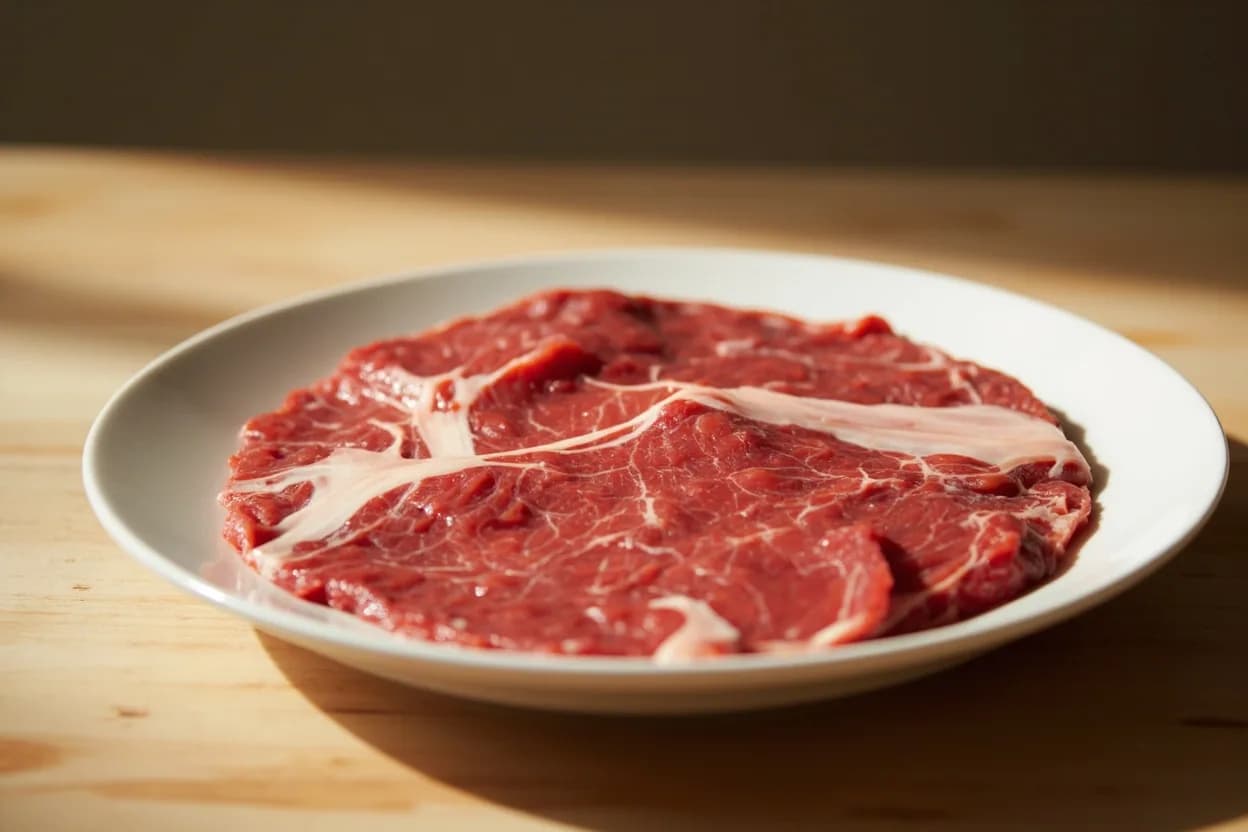
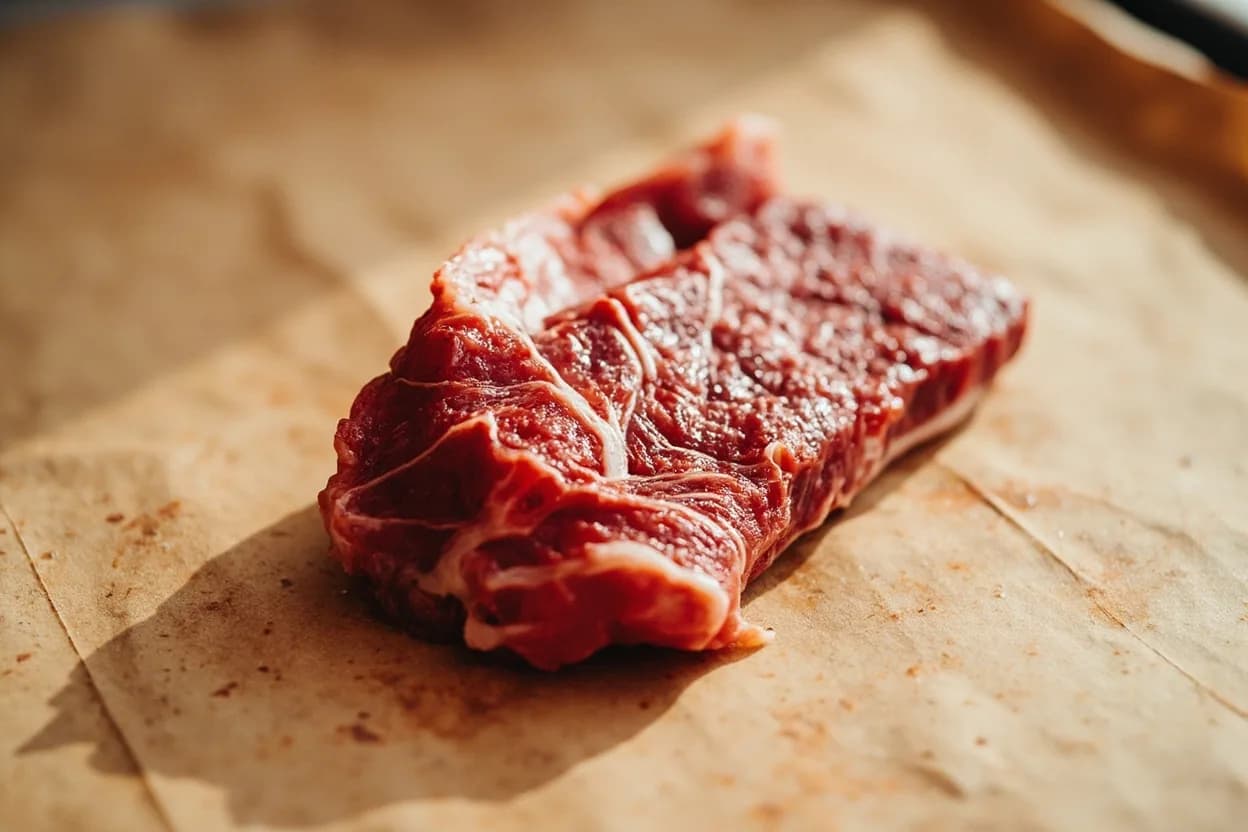
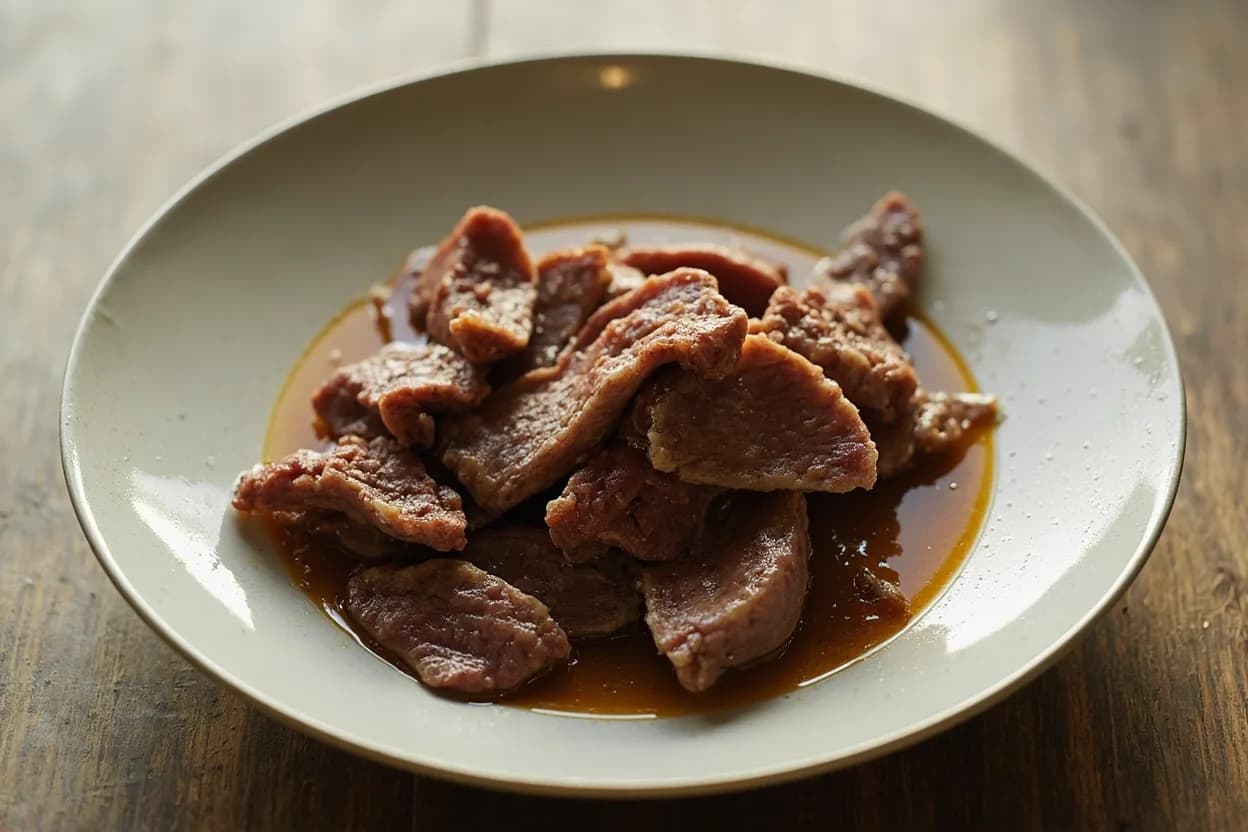
Beef sliced to 2 mm against the grain after partial freezing — the foundation of Chinese stir-fry and hot pot.
Velvet-thin beef slicing is a Chinese butchery and prep technique in which a lean or moderately marbled cut is chilled to a semi-frozen state (around -2 °C to -4 °C), then sliced by hand or on a commercial meat slicer to sheets of approximately 2 mm thickness, always cutting perpendicular to the muscle fibres. The result cooks in seconds, remains tender, and absorbs sauces or broth instantly.
In photos
Where it comes from
Any lean to moderate-fat cut is suitable: eye of round (后腿肉圆, hòutuǐ ròu yuán), sirloin tip, flank, or rib-eye roll. Premium hot pot versions use wagyu rib-eye or shortrib (肥牛, féi niú) for visible fat ribbons. The cut determines flavour; the slicing technique determines texture.
Best for
How to cook it
- 1Freeze beef until firm but not solid (about 45–60 minutes in a home freezer); the interior should yield slightly under thumb pressure.
- 2Slice with a sharp chef's knife or meat slicer at 2 mm, strictly perpendicular to visible muscle grain; irregular angle increases toughness.
- 3For stir-fry: velvet with 1 tsp baking soda per 250 g (rinse after 15 min) or cornstarch-egg-white slurry; marinate 10–30 minutes in soy, Shaoxing wine, sesame oil.
- 4Use a blazing-hot wok with high-smoke-point oil; add beef in a single layer, leave undisturbed 20 seconds before tossing — crowding steams rather than sears.
- 5For hot pot: arrange raw slices on a plate; let guests swirl individual slices 10–20 seconds in a rolling simmer; remove as soon as pink disappears.
- 6Do not overcook — residual heat in the slice continues cooking for several seconds after removal.
Prep & butchery
- Source blocks rather than pre-sliced packs when possible — freshness and custom thickness matter.
- Remove silver skin and excess sinew before freezing to prevent chewy strands in the finished slice.
- Commercial Chinese butchers use semi-automatic slicers at 1.5–2 mm; home cooks achieve similar results with a very sharp knife and 45–60 min partial freeze.
- Stack finished slices loosely on parchment; do not press or they will fuse together.
Substitutes
- Shabu-shabu beef (Japanese)
Identical thickness and technique; slight flavour difference from wagyu genetics; fully interchangeable in hot pot
- Flank steak hand-sliced thin
Acceptable substitute if semi-frozen slicing is used; slightly chewier than round
- Sirloin tip, thinly sliced
Lean, mild; works well when velveted; less flavour than rib-eye versions
Related cuts
- Shabu-shabu slice
Japanese parallel technique, typically wagyu rib-eye at 1.5 mm
- Bulgogi slice
Korean version; slightly thicker (2–3 mm), often from rib-eye or sirloin, typically marinated longer
- Flank steak
Common base cut for thin-sliced stir-fry preparations
- Rib-eye roll
Premium base for 肥牛 (féi niú) hot pot slices with fat ribbons
Appears in
References
- 1.The Food Lab — J. Kenji López-Alt (W. W. Norton, 2015)
- 2.Every Grain of Rice — Fuchsia Dunlop (Bloomsbury, 2012)
- 3.Land of Fish and Rice — Fuchsia Dunlop (W. W. Norton, 2016)
- 4.Chinese Cooking Demystified (culinary YouTube channel / recipe corpus)
Confidence: high
Notes
The velveting distinction
Chinese restaurant kitchens almost always velvet thin beef before stir-frying — a brief marinade in baking soda or cornstarch-egg white that raises pH and forms a protective gel. This step is what makes takeaway beef silkier than home attempts and is independent of the slicing technique itself.
Féi Niú (肥牛) in hot pot culture
Féi niú — 'fat cow' — refers specifically to rib-eye or short rib sliced to hot pot thickness and rolled or layered on a plate. Premium versions in Chongqing and Beijing hot pot restaurants use wagyu imported from Japan or domestic Yanbian beef, with visible marbling that creates a characteristic richness when swished in numbing-spicy broth.