Beef — Primal & Subprimal
Wagyu / Japanese Beef Subprimal Breakdown
Also: wagyū cuts, Japanese beef primals, zabuton, karubi, ichibo, shintama, misuji
Japanese beef butchery divides the wagyū carcass into 13 primary sections with dozens of named subprimal muscles, each selected for its specific marbling grade and cut for yakiniku, shabu-shabu, or sukiyaki.
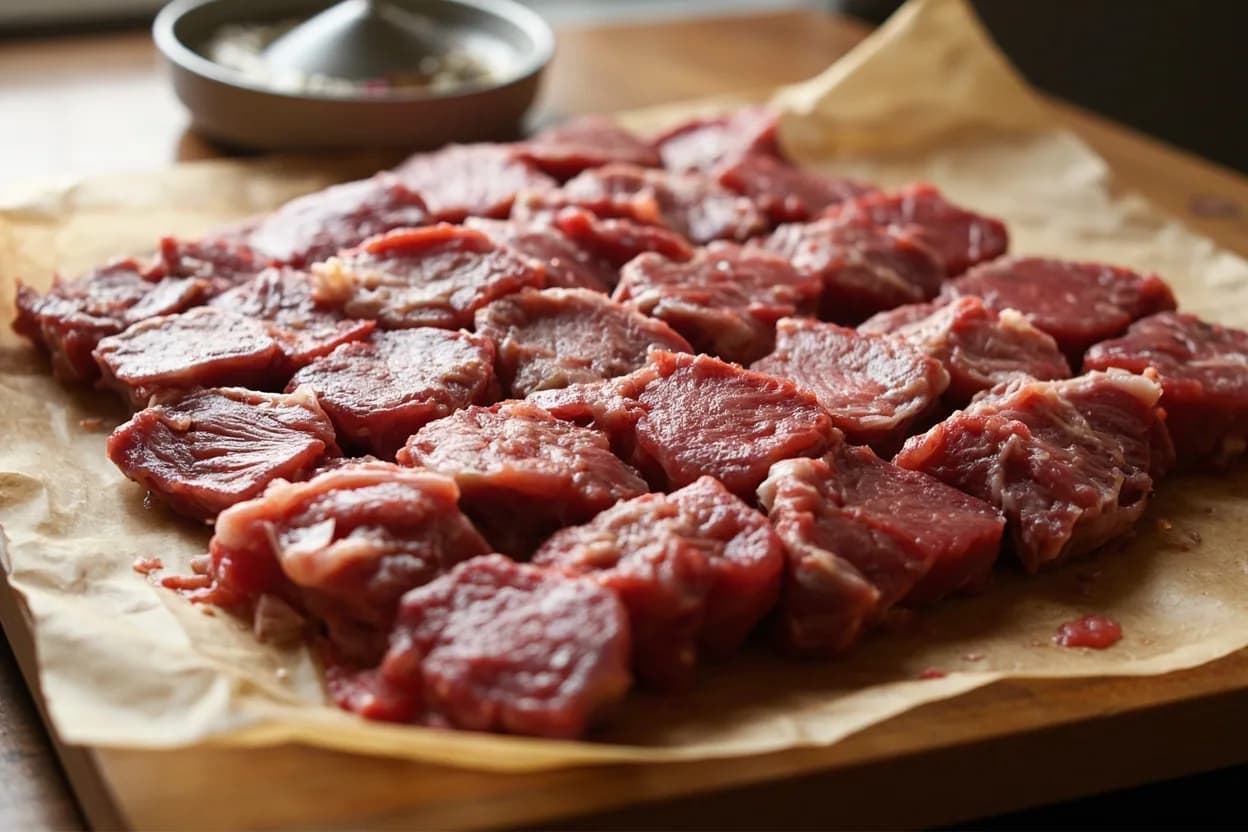
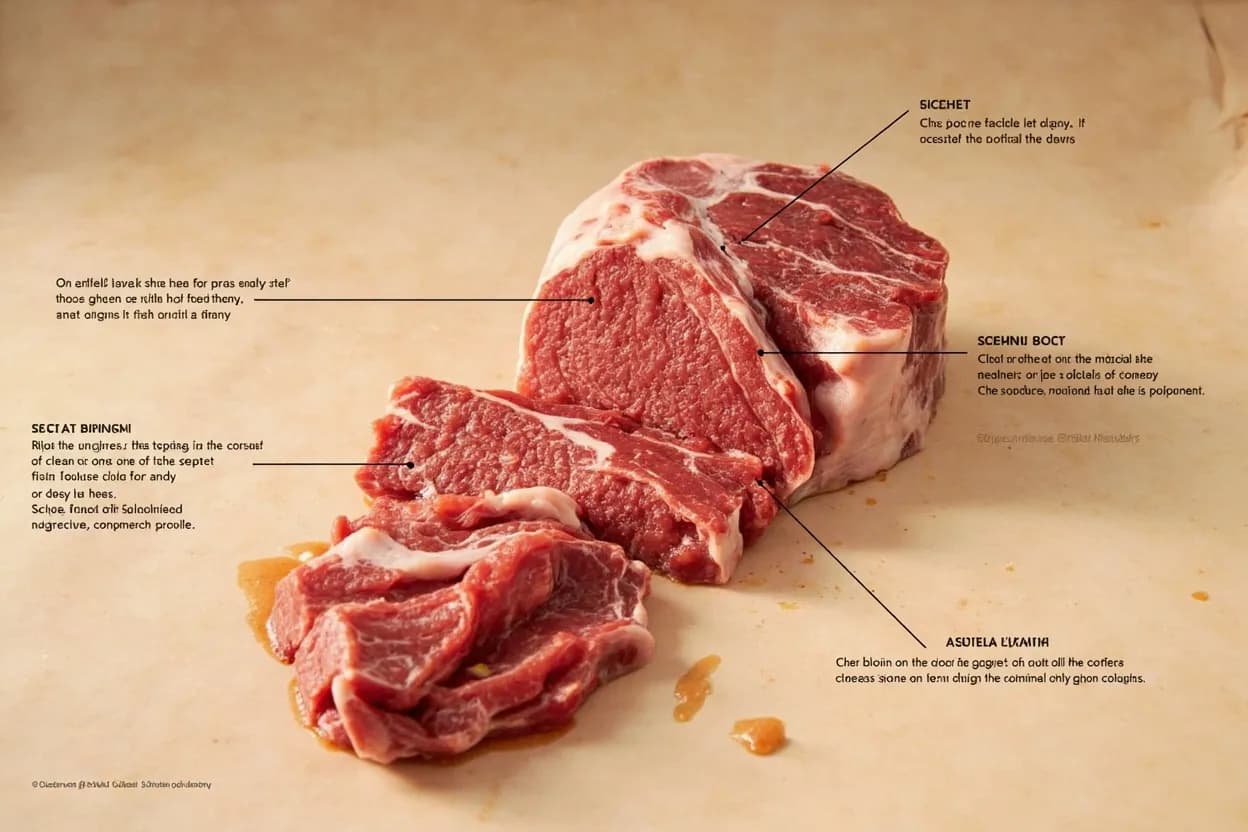
Japanese beef butchery ('kaitai') follows its own system distinct from USDA or French nomenclature, developed around the unique fat architecture of wagyū cattle (Kuroge Wagyu — Japanese Black, the breed behind A5 Kobe, Matsusaka, and Ōmi beef). Because intramuscular fat (BMS — Beef Marble Score — graded 1–12 under the JMGA system, analogous to USDA marbling but far more granular) is the primary value driver, Japanese butchers are trained to locate, isolate, and name individual muscles by their characteristic fat distribution. The result is a vocabulary of 25–40+ named cuts, many without direct Western equivalents, sold primarily for hot-pot (shabu-shabu, sukiyaki) and tabletop grilling (yakiniku). Key named cuts: zabuton (chuck flap/Denver steak area), misuji (top-blade/flat-iron), karubi (short rib/flanken area), tokujokarubi (premium rib cap), ichibo (rump cap/picanha), shintama (round/knuckle complex), marushine (bottom round eye), koune (chuck roll top), ramu (sirloin flap), and sankaku bare (triangle of the chuck flap zone).
In photos
Where it comes from
The entire Wagyu carcass, graded at slaughter by the JMGA (Japan Meat Grading Association) for yield (A/B/C) and quality (1–5, with A5 being peak). The most prized cuts come from the forequarter chuck and rib zone (zabuton, misuji, koune) and the hindquarter sirloin/rump area (ichibo, ramu). The short rib/karubi area and its subsets (joshinuki, tokujokarubi, sankaku) are the centerpiece of yakiniku restaurants.
Best for
How to cook it
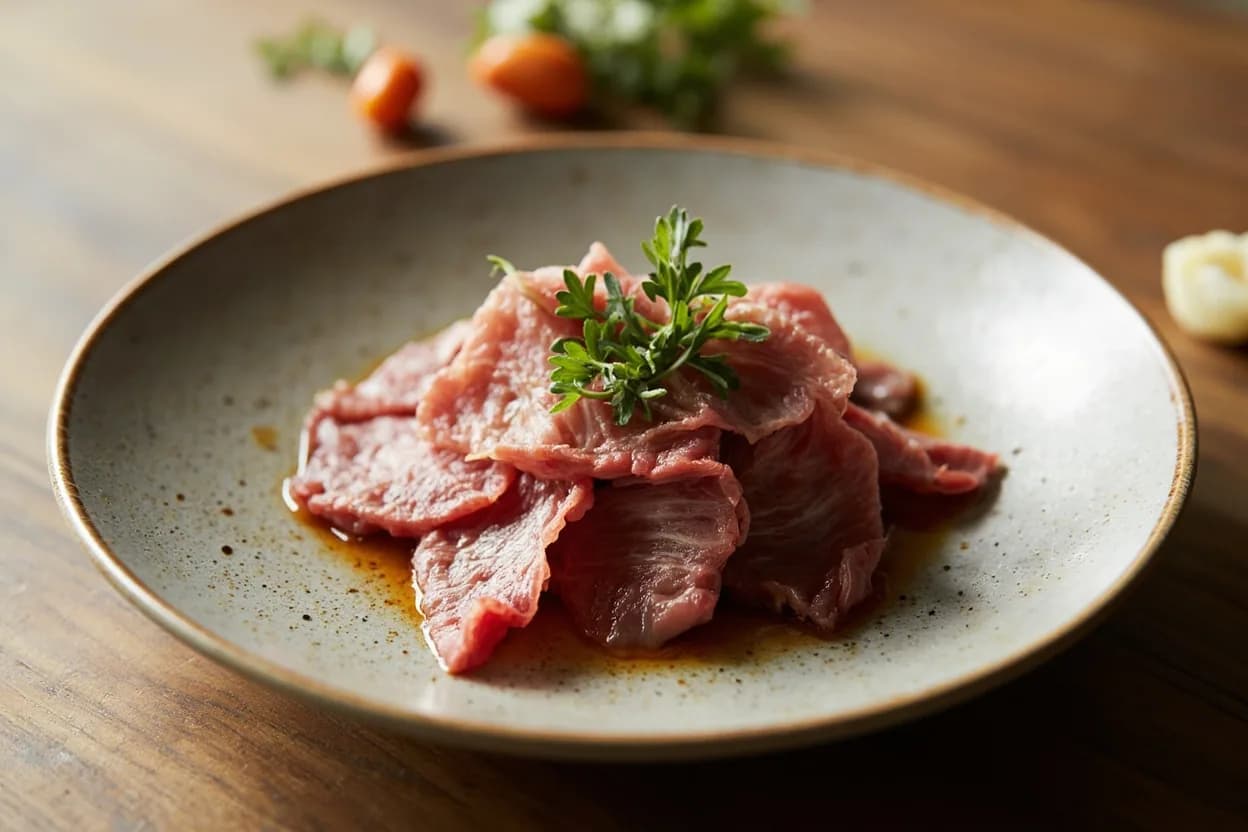
- 1SHABU-SHABU: slice zabuton or koune at 1.5–2 mm (a deli slicer set fine); hold at room temperature 10 min; swirl 5–8 seconds in kombu dashi at a gentle simmer — no longer or fat renders out; dip in ponzu or sesame tare.
- 2YAKINIKU (karubi/short rib): slice 4–5 mm; season lightly with salt or yakiniku tare; grill on iron grate over binchotan charcoal 30–45 seconds per side — the fat should sizzle and caramelise at the edges without fully rendering.
- 3ICHIBO (rump cap) AS STEAK: leave as a whole muscle cap; sear fat-side first on a cast-iron pan, render 2 min, then finish flesh sides 1–2 min each to 52 °C core; rest 5 min; slice 8–10 mm against grain.
- 4MISUJI (flat-iron): remove the central sinew carefully with a boning knife; slice 5–8 mm for yakiniku or leave whole for teppanyaki; the extreme marbling makes it forgiving over a range of temperatures.
- 5Never cook A4–A5 wagyu past medium (58–60 °C) — the fat matrix destabilises and the cut becomes greasy rather than silky.
- 6Salt only; avoid acidic marinades on high-BMS cuts — they can interfere with the delicate fat-forward flavour.
Prep & butchery
- Semi-freeze whole muscles before slicing — wagyu fat is so soft that room-temperature slicing compresses and smears the fat channels
- A commercial deli slicer is necessary for 1–2 mm shabu-shabu sheets; knife-slicing at home should aim for 3–4 mm minimum
- For misuji, use a sharp boning knife to trace and remove the central connective tissue strip before slicing — it will not soften even in wagyu
- Portion in small amounts per serving (60–100 g per person for yakiniku) — the richness is very high and over-ordering is common
Substitutes
- Domestic wagyu or wagyu-cross (American, Australian)
BMS typically 6–9 vs Japanese 10–12; technique is identical but flavour is less intense; significantly cheaper
- Prime USDA ribeye (for zabuton/koune preparations)
Far less marbling; compensate with thicker cuts (8–10 mm) and shorter cook times
- Domestic chuck flap / Denver steak (for zabuton)
Same muscle, far less fat; works for yakiniku if sourced well but lacks the signature melt
Related cuts
- Zabuton (Chuck Flap)
One of the most prized yakiniku cuts — named after a Japanese cushion for its square, padded shape
- Misuji (Top Blade / Flat Iron)
Three strips per side of the chuck blade; consistently high BMS
- Ichibo (Rump Cap)
Japanese equivalent of Brazilian picanha; cap of the rump with thick fat layer
Appears in
References
- 1.The Japanese Grill — Tadashi Ono & Harris Salat (Ten Speed Press, 2011)
- 2.Japan Meat Grading Association (JMGA) Beef Carcass Grading Standard, rev. 2008
- 3.Modernist Cuisine: The Art and Science of Cooking — Myhrvold et al. (The Cooking Lab, 2011)
- 4.The Oxford Companion to Food — Alan Davidson (Oxford University Press, 3rd ed., 2014)
Confidence: high
Notes
The BMS system vs. USDA marbling grades
The JMGA BMS scale runs 1–12 (some sources cite 1–12 with sub-grades). USDA marbling grades top out at 'Abundant' (roughly BMS 7–8 equivalent). Japanese A5 at BMS 10–12 represents a level of intramuscular fat unknown in Western commercial beef systems. The fat distribution is also geometrically different: shimofuri ('frost-fall') describes an even, ultra-fine dispersion throughout the muscle versus the coarser pockets common in high-grade USDA prime.
Why thin slicing is culturally and technically optimal
Thin slicing for shabu-shabu and sukiyaki developed specifically because high-BMS wagyu cooked as thick steaks can become cloying — the fat load is too intense for a Western-sized portion. The thin-slice-and-dip method portions the fat experience into mouthful-sized bursts and uses the dipping sauce (ponzu's acidity, sesame's richness) to balance the fat, creating a harmonious rather than overwhelming eating experience.