Regional Meat Cuts
Water Spinach Stem Snap-Cut
Also: 空心菜掰断, morning glory snap, kangkung hand-snap, kang kong stem break
The deliberate hand-snapping — never knife-cutting — of hollow water spinach (kangkung) stems to expose their fibrous fracture face, which grips wok sauce where a clean knife edge would not.
Water spinach (空心菜, kōngxīncài; also known as kangkung, morning glory, ong choy) has hollow, tubular stems with a distinct fibrous grain. A hand snap severs the stem by bending it past its tensile limit, producing a ragged fracture that leaves fibrous strands projecting from both ends of the break. These micro-fissures and frayed fibres dramatically increase surface area compared with a knife's clean cross-section, allowing wok sauces — particularly the fermented tofu and shrimp paste sauces common in Southeast Asian and Chinese preparations — to penetrate and adhere. Knife cuts produce a smooth circular cross-section that sauce slides off. The snap also allows the cook to intuit and follow the stem's natural node points, naturally separating at the weakest structural junctions.
In photos
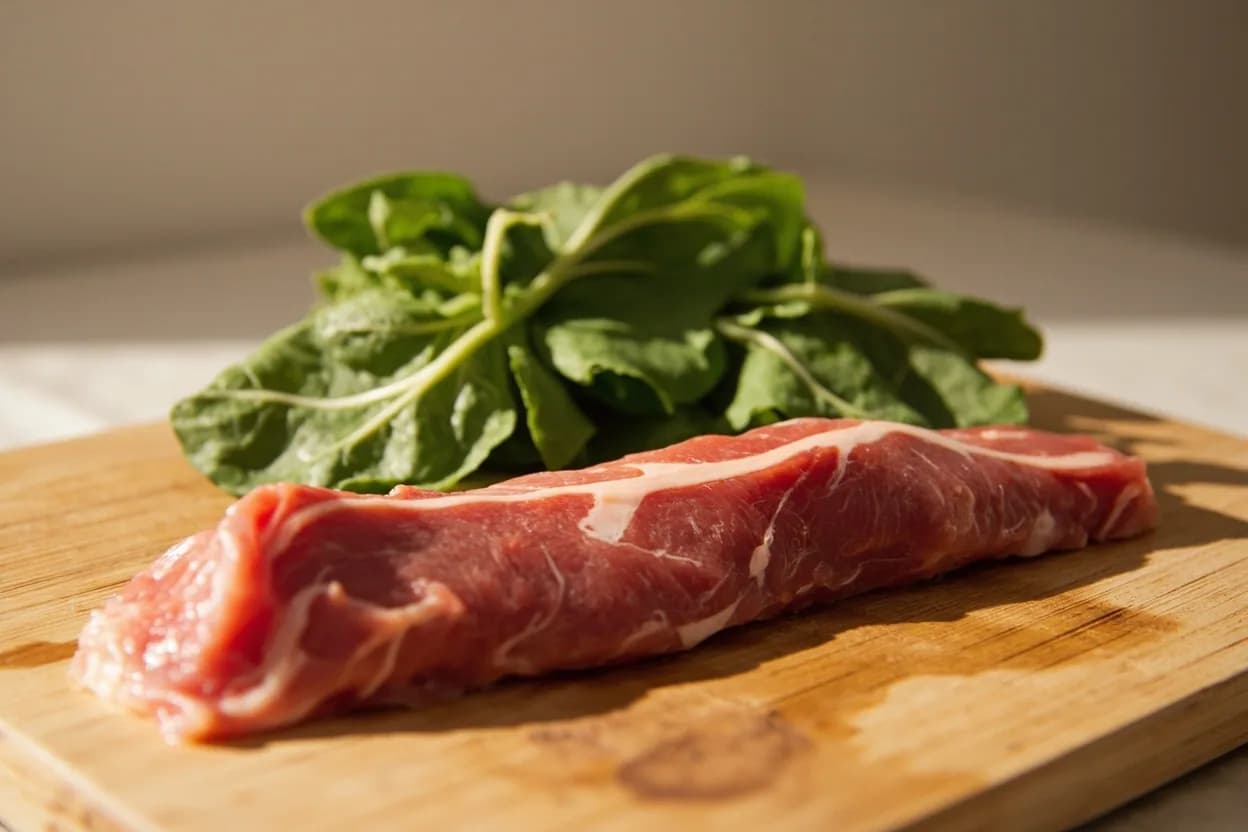
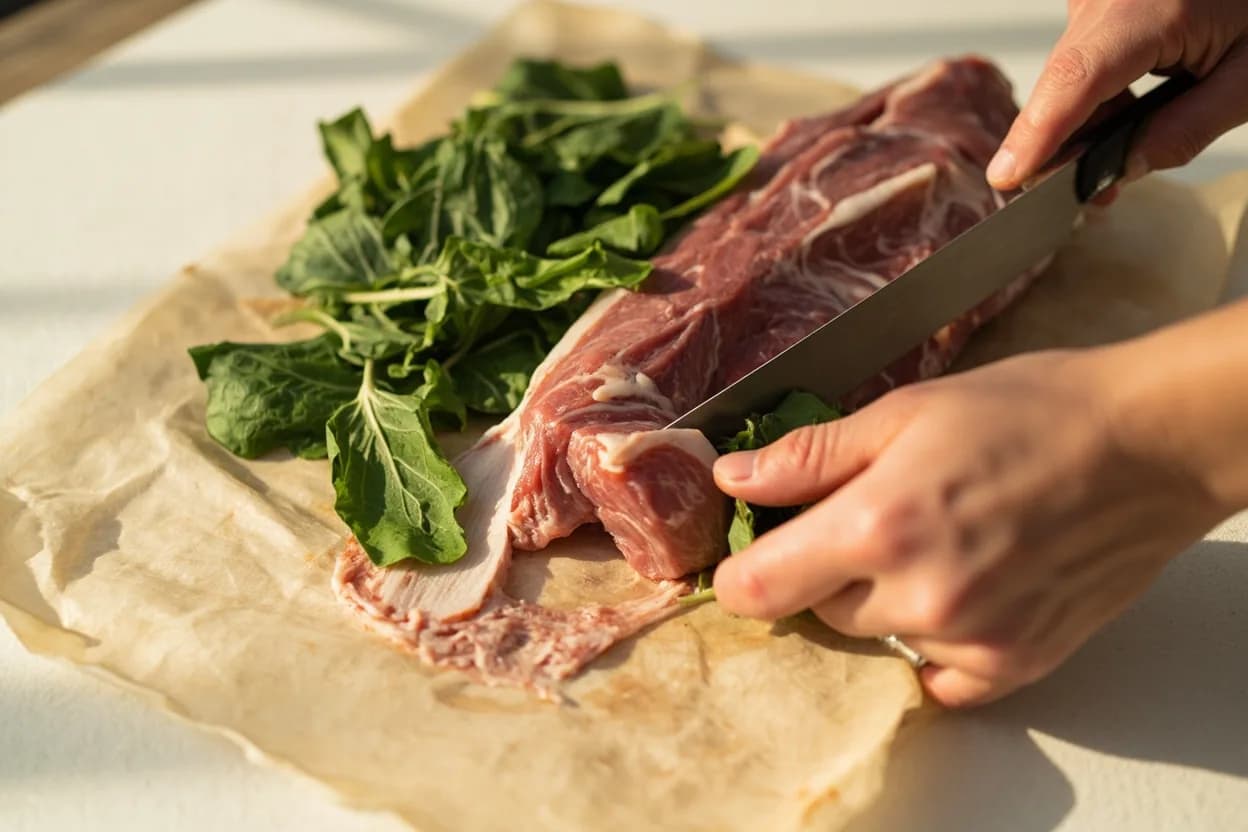
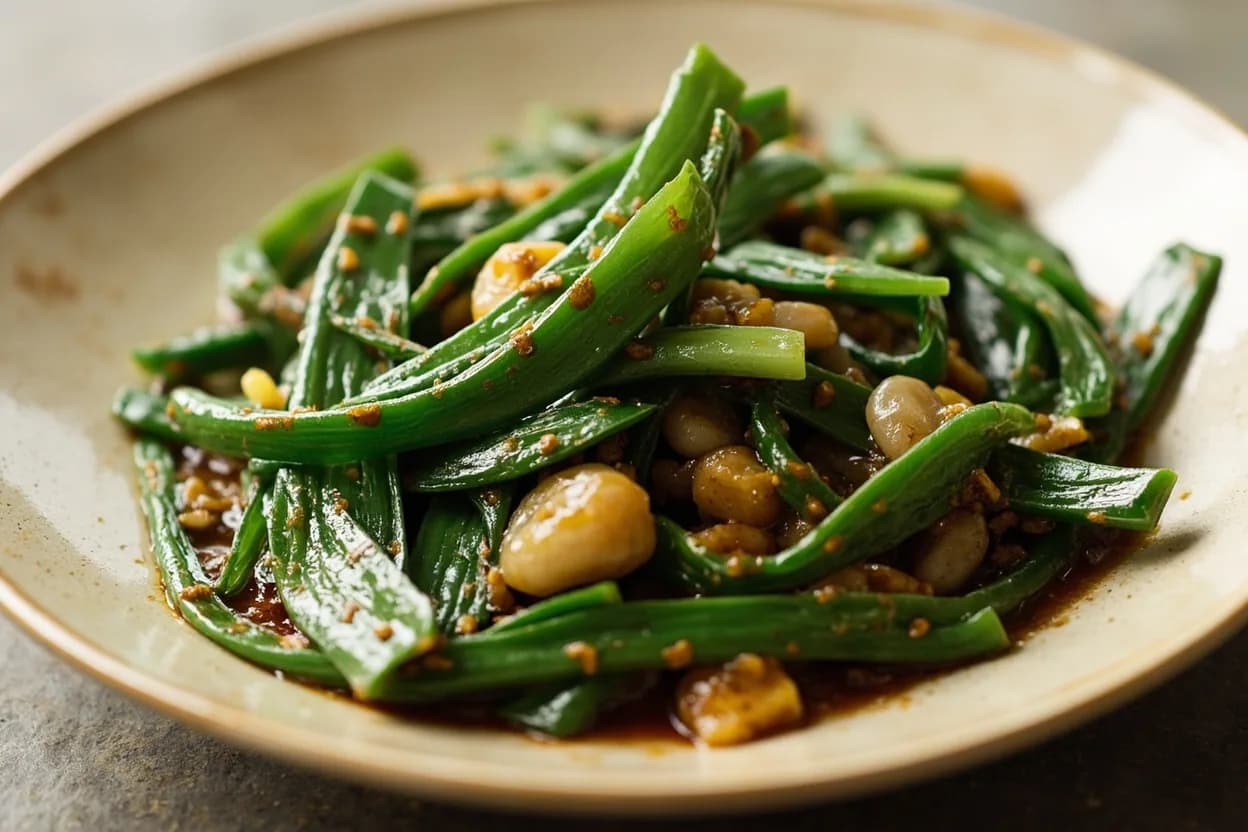
Where it comes from
Water spinach (Ipomoea aquatica) stems: hollow, cylindrical, 4–8 mm in diameter, typically dark green to light green, with prominent internodal sections 8–15 cm long and slightly swollen nodes. Leaves are attached at the nodes and left on or removed depending on the dish.
Best for
How to cook it
- 1Separate leaves from stems by snapping at each node — the leaf and its short petiole detach cleanly from the hollow stem. Set leaves aside; they will go into the wok last.
- 2Snap stems into 5–8 cm lengths by gripping 4–5 cm either side of the intended break point and bending sharply away from you. A clean snap is audible. Do not use a back-and-forth sawing motion — bend once, decisively.
- 3If stems are thicker than 8 mm (older growth), they may need a knife to initiate a nick before snapping, or they can be split lengthwise with a thumbnail before snapping crosswise.
- 4Cook stems in screaming-hot wok oil (or lard for richer versions) with aromatics for 60–90 seconds before adding leaves. The stems need the head start because the hollow cylinder walls cook faster than solid stems but the structural crunch should be preserved.
- 5Add leaves in the final 20–30 seconds. Total wok time is typically under 3 minutes from first ingredient to plate.
- 6Do not cover the wok — trapped steam kills the high-heat wok breath (wok hei) and turns the stems limp.
Prep & butchery
- Wash stems before snapping, not after — snapped ends absorb water and become soggy if soaked post-cut
- Discard the bottom 3–5 cm of each bunch where stems turn woody and the hollow closes; these don't snap cleanly
- Keep snapped pieces in a dry bowl; wet snapped ends stick together and clump in the wok
- If preparing ahead, snap and store dry in the refrigerator for up to 4 hours — longer and cut ends oxidise
- Thicker, older stems benefit from a light thumbnail score along the length before snapping to split the hollow and increase surface area further
Substitutes
- Knife-cut water spinach
Acceptable for speed; noticeably less sauce adhesion and marginally less satisfying crunch — the smooth cross-section lets sauce pool on the plate instead
- Baby bok choy stems, snap-cut
Similar hollow-adjacent geometry; denser cell walls mean longer cooking time but the snap technique transfers
- Snap peas, snapped
Same snapping philosophy for a different vegetable; removes the string from the seam as a bonus
Related cuts
- Asparagus snap
Same logic — bend until the stem finds its natural tender/tough junction; the snap tells you where to cut
- Snap pea string removal
Related hand-break technique where bending the tip peels the fibrous string from the seam
- Chinese celery stem break
Hollow-stemmed celery (芹菜) benefits from the same snap technique for similar surface-area reasons
Appears in
References
- 1.Complete Asian Cookbook — Charmaine Solomon (1976, multiple editions)
- 2.Hot Wok — Ken Hom (1996)
- 3.The Hakka Cookbook — Linda Lau Anusasananan (2012)
- 4.On Food and Cooking — Harold McGee (2004), plant cell structure and cooking
Confidence: high
Notes
Wok hei and the snap
The ragged snap face is not an aesthetic preference — it is a functional one. When snapped water spinach hits an oil-coated wok at 250–300 °C, the frayed fibres char slightly at their tips before the bulk of the stem heats through. This micro-charring is a component of wok hei, the smoky complexity that distinguishes a restaurant-quality stir-fry from a home version. A knife's clean cross-section chars far less because the Maillard reaction requires surface irregularity and exposed fibre to produce the volatile aromatics responsible for the characteristic smell.
Southeast Asian vs. Chinese approach
In Malaysian, Singaporean, and Thai kitchens, kangkung is almost universally snap-prepared as a matter of ingrained practice. In southern Chinese home kitchens, particularly Guangdong and Fujian, knife cuts are more common because Chinese cleaver work is fast and the fermented-tofu sauce is thick enough to cling to smooth cuts. Both traditions produce excellent results; the snap method shows its advantage most clearly when the sauce is thinner and oil-based.