Knife Cuts — Regional & Global
Yam — Peel-and-Cube vs. Cylinder Cuts
Also: West African yam cube, pounded yam prep cut, yam cylinder garnish cut
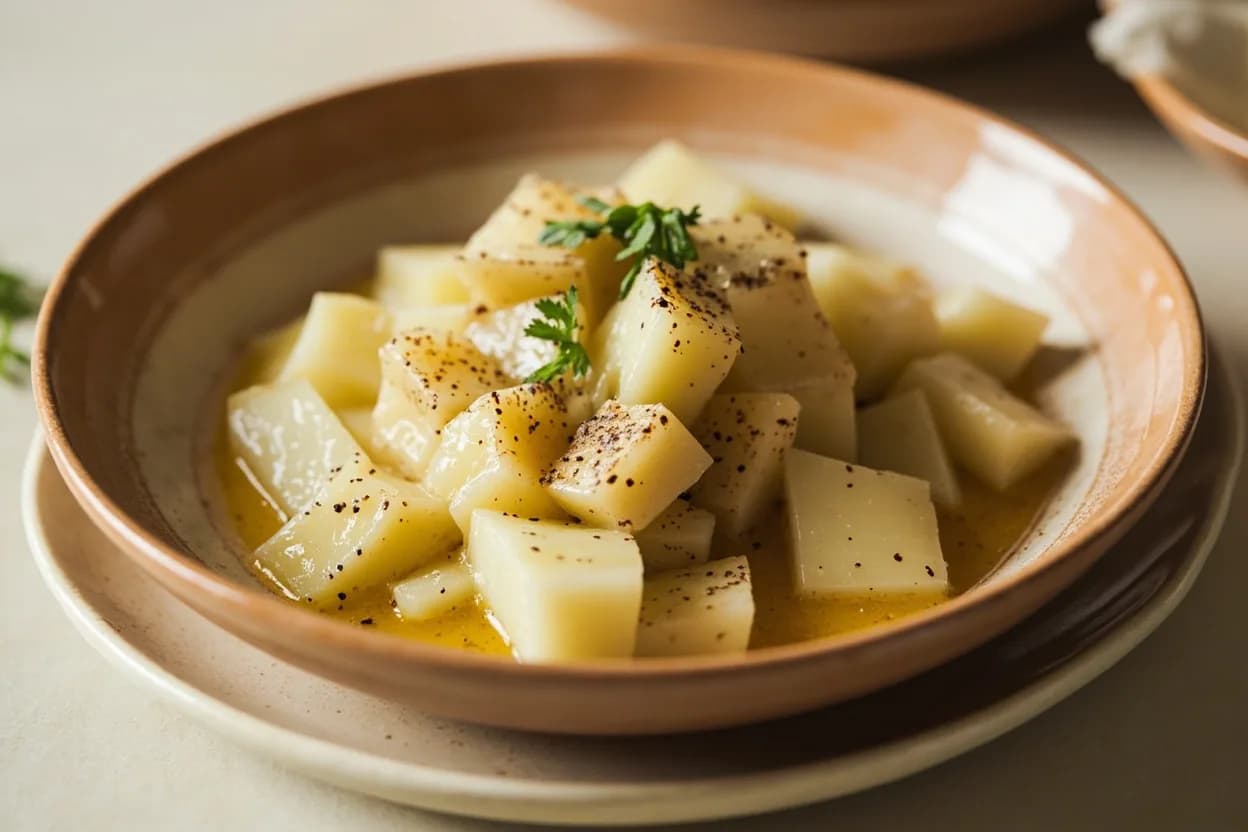
Rough cubes maximize starchy surface area for boiling and pounding; smooth cylinders produce uniform, visually refined rounds for soups and decorative presentations.
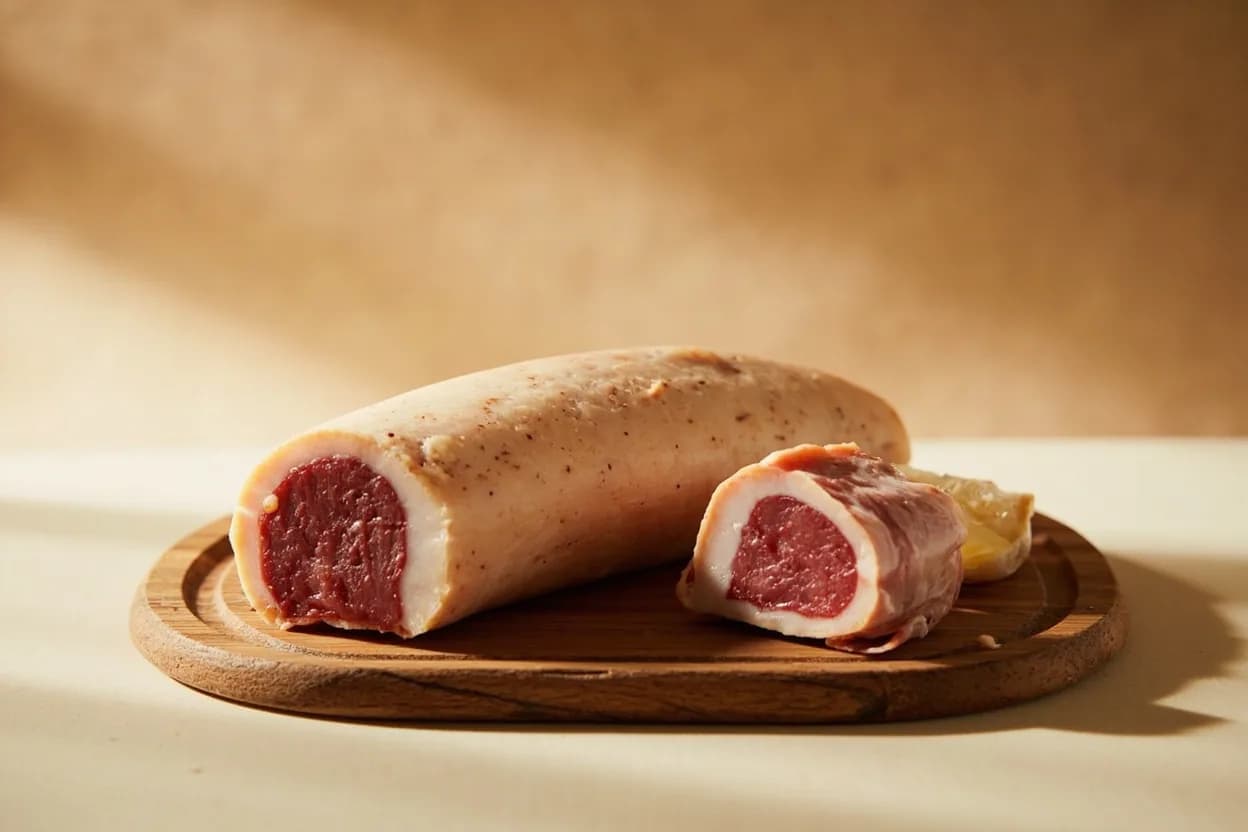
Two foundational preparations for true yam (Dioscorea rotundata — white yam; or D. cayenensis — yellow yam) in West African cooking, each serving a distinct culinary purpose. Peel-and-cube means using a heavy knife or cleaver to remove the bark-like skin from a large tuber section, then reducing it to irregular 4–6 cm chunks — sized for efficient boiling with rapid starch hydration. The cylinder cut (also called barrel cut or round cut) involves first slicing the peeled tuber into cross-sectional discs or turning it against the blade to produce smooth, even cylinders 3–4 cm thick, which hold their shape during long cooking, look elegant in pepper soup or porridge presentations, and can be carved into presentation garnishes.
In photos
Where it comes from
True yam (Dioscorea spp.) — a large, starchy tropical tuber with rough brown-to-black bark skin and white, yellow, or purple flesh. Distinct from sweet potato (Ipomoea batatas), which is called 'yam' colloquially in North America. Nigerian white yam (Dioscorea rotundata) is the primary species for pounded yam; yellow yam for boiled and fried preparations.
Best for
How to cook it
- 1Wear gloves or coat hands lightly with oil before handling raw yam to prevent irritation from dioscorin.
- 2For cubes: use a heavy chef's knife or cleaver to cut the yam into 8–10 cm segments first, then stand each segment upright to pare off the thick skin top-to-bottom in strips. Cube the peeled flesh into 4–6 cm irregular pieces. Transfer immediately to cold water.
- 3For cylinders: peel as above, then lay the yam on its side and slice into 3–4 cm cross-sectional discs. For true cylinders, use a round cutter or trim the edges of each disc. Transfer to acidulated water (1 tbsp lemon juice per liter).
- 4Boil cubes in well-salted water from cold, bringing to a boil and cooking 20–30 minutes until a skewer meets no resistance. For pounded yam, drain immediately and pound while hot.
- 5For pepper soup cylinders, add to the simmering broth in the last 15–20 minutes so they absorb flavor without disintegrating.
- 6Frying: blanch cylinders or planks first (10 min), drain and dry, then shallow-fry in groundnut oil at 175 °C until golden and crisp on the cut faces.
Prep & butchery
- Yam skin is thick and bark-like — do not attempt to peel with a vegetable peeler; use a heavy chef's knife.
- A 1 kg section of yam feeds approximately 3–4 people for pounded yam; buy in segments if the full tuber (which can reach 10 kg+) is unavailable.
- Oxidative browning begins within minutes — always have a bowl of cold water ready before cutting.
- For cylinder presentation, a consistent thickness (± 2 mm) is important for even cooking; use a mandoline guide mark or ruler.
Substitutes
- Cocoyam (taro)
Comparable starch behavior; slimier when cut and slightly more irritating raw; cubes well for soups.
- Cassava
Lower starch elasticity; cannot be pounded to the same smooth paste; requires cyanide-precursor removal via longer soaking and cooking.
- Purple yam (ube)
Philippine relative; similar prep logic but used in sweeter applications; not interchangeable for savory West African dishes.
Related cuts
- Cassava — peel-and-chunk
Nearly identical prep workflow for a related starchy tropical tuber; shared bark-skin removal challenge.
- Taro — peel-and-dice
Similar irritant sap issue and cube prep logic for soups and stews.
Appears in
References
- 1.The Complete African Cookbook — Fetty Nzekwu and Michael Obiora
- 2.Zoe's Ghana Kitchen — Zoe Adjonyoh
- 3.The Africa Cookbook — Jessica Harris
- 4.CRC Handbook of Tropical Food Crops — Franklin Martin (Dioscorea rotundata botany and starch properties)
Confidence: high
Notes
The pounding imperative
Pounded yam is achieved only from freshly boiled, still-hot cubes pounded in a traditional wooden mortar (odo) with a heavy pestle. The starch must gelatinize fully during boiling (hence small cubes with maximum surface area), then the gluten-like network that forms on pounding produces the signature elastic, stretchy texture. Cooled yam produces a grainy, inferior paste. No food processor adequately replicates the mortar — they aerate and cool the mass too quickly.
Starch handling and browning
White yam flesh oxidizes to an unappetizing grayish-brown within 5–10 minutes of cutting. This is enzymatic browning (polyphenol oxidase acting on tyrosine), not spoilage. Immediate submersion in cold water halts the reaction and leaches some surface starch — a welcome side effect that reduces the gummy coating on finished cubes.