Pork — Primal & Subprimal
Whole-Hog / Whole Packer Fabrication
Also: whole pig breakdown, whole hog butchery, full pork carcass fabrication, whole packer pork
The complete step-by-step breakdown of a whole pig carcass into its major primals — head, shoulder, loin, belly, leg, and trotters — with yield and waste management for every piece.
Whole-hog (or whole-packer) fabrication refers to the process of breaking down a complete pork carcass — typically delivered split or halved — into its major primal sections, and then sub-primals and retail or kitchen cuts. A 'whole packer' is industry terminology for an unsplit whole carcass (as opposed to a half or saddle). The breakdown follows a logical anatomical sequence that minimises saw cuts in favour of seam butchery, maximising yield and keeping muscle groups intact for their highest-value use.
In photos
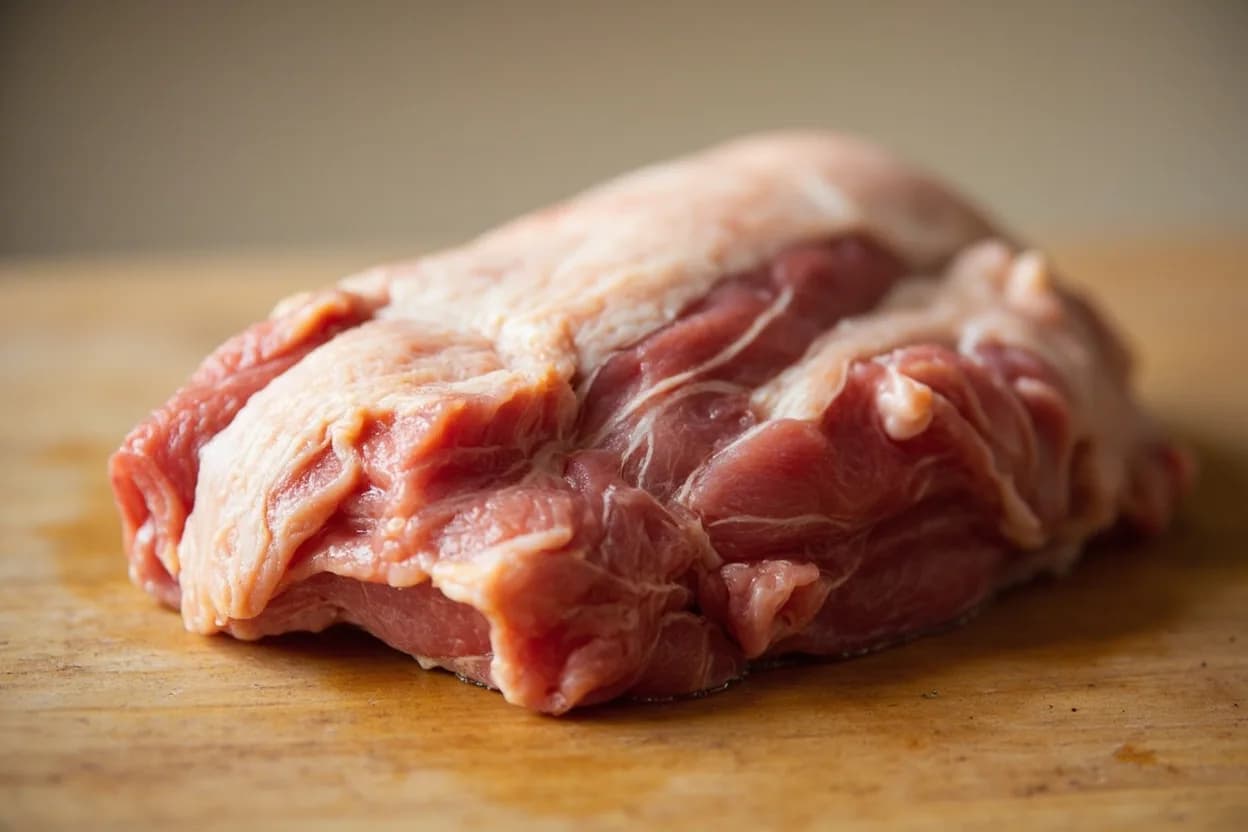
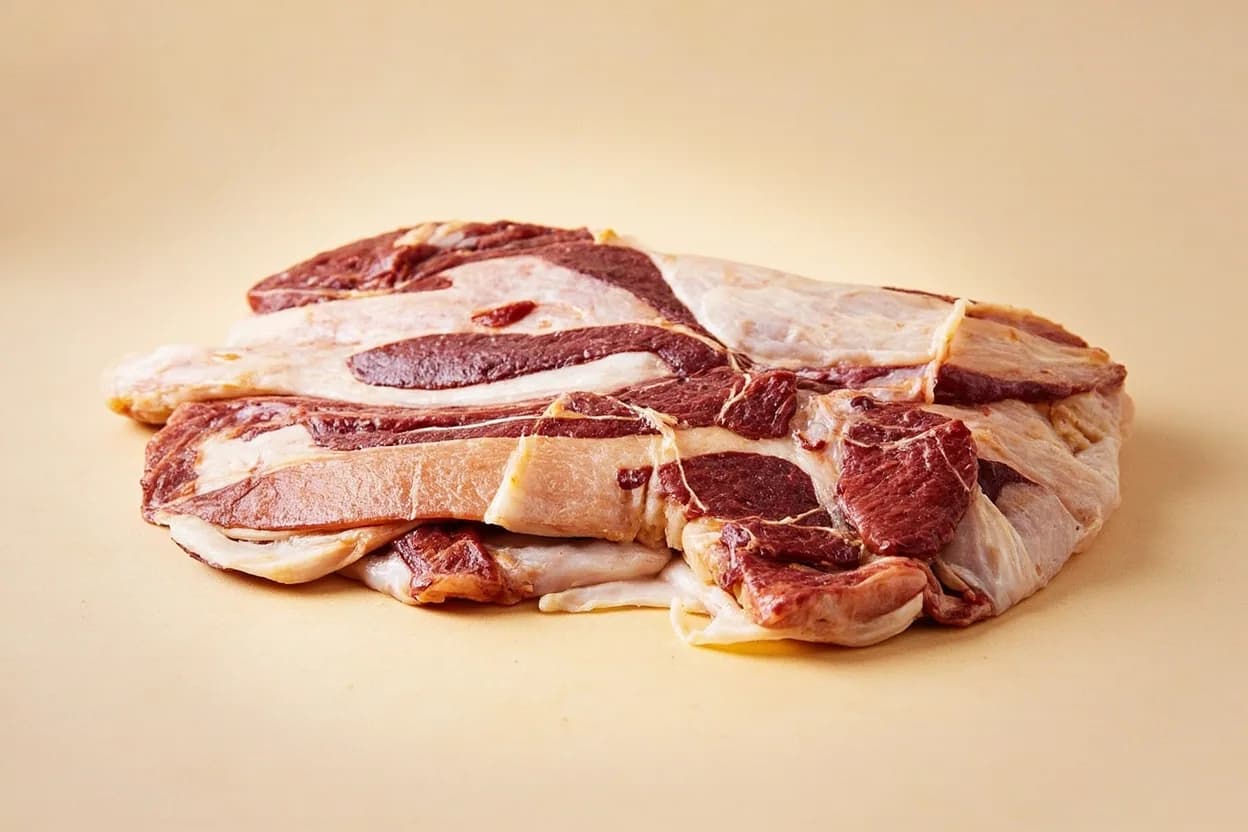
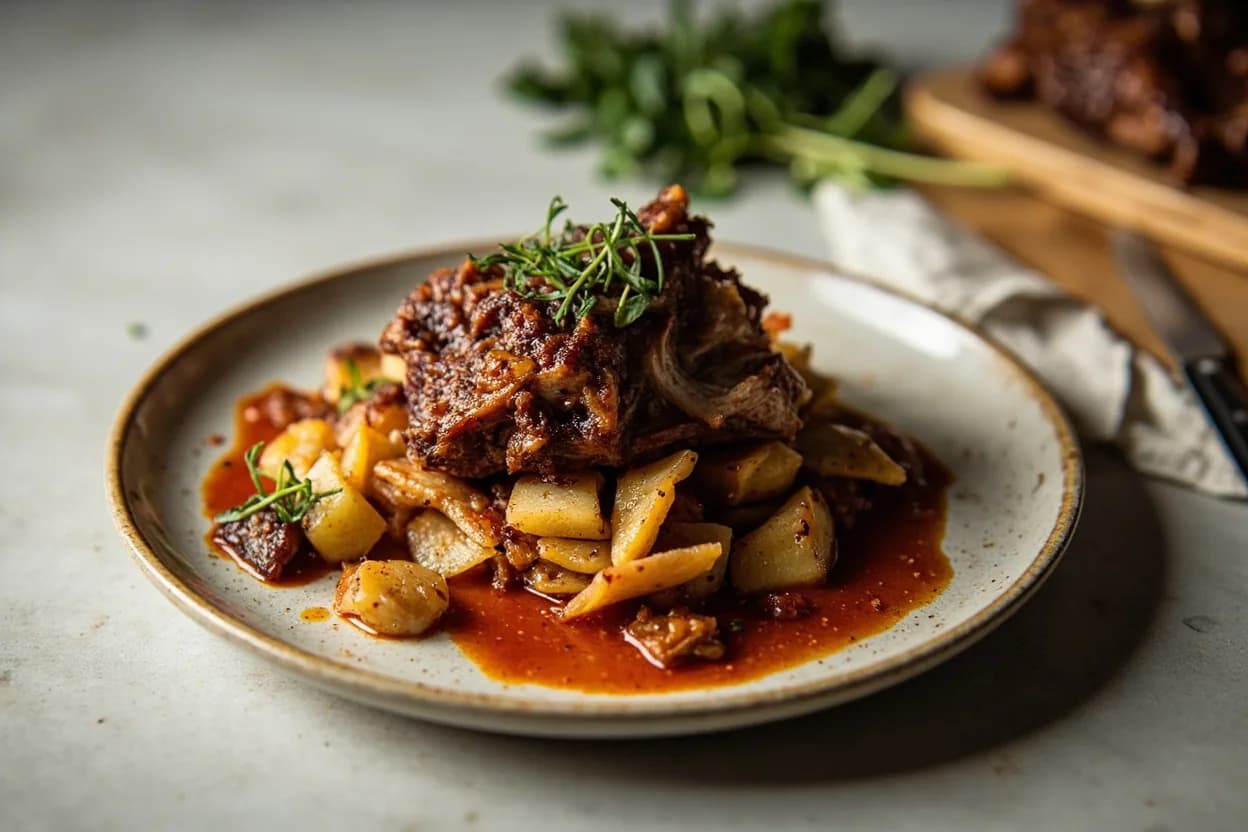
Where it comes from
Complete Sus scrofa domesticus carcass, delivered skin-on (or skin-off in some markets), typically 60–120 kg hanging weight. Commercial pigs are slaughtered at 5–7 months; heritage breeds at 9–18 months. The carcass is chilled to 2–4 °C before fabrication.
Best for
How to cook it
- 1STEP 1 — RECEIVE AND INSPECT: Confirm the carcass is at 2–4 °C; check for bruising, broken bones, or skin damage. Weigh for yield calculation.
- 2STEP 2 — SPLIT (if not pre-split): Saw the carcass along the spine from the inside (chine side) to produce two half-carcasses (sides). Place skin-side down on a stainless work surface.
- 3STEP 3 — HEAD AND JOWL: Sever the head at the atlas joint with a heavy knife; separate the cheeks (guanciale/jowl) by tracing around the mandible. Reserve ears, snout, tongue, and brain if using.
- 4STEP 4 — FRONT LEG / SHOULDER: Lift the front leg away from the ribcage — it attaches only by muscle and fat, not by a ball-and-socket joint. Slide a boning knife under the shoulder blade (scapula) and separate the Boston butt (upper shoulder/blade) from the picnic (lower shoulder/arm). The neck collar (coppa) is separated from the blade along the 4th cervical vertebra.
- 5STEP 5 — LOIN AND BELLY: Saw through the rib tips to separate the loin rack from the belly. The loin (longissimus dorsi) runs from the neck end to the hip; the tenderloin (psoas major) lies tucked under the spine inside the loin. Remove the back fat sheet as one piece for lardo or ground fat. Separate the spareribs from the belly; the belly plate can be left whole (pancetta) or portioned into strips.
- 6STEP 6 — HIND LEG / HAM: Separate the hind leg at the hip socket using a boning knife. The leg can be left bone-in (for ham/prosciutto) or deboned into its component muscles (top round/cushion, bottom round/outside flat, eye of round, sirloin tip, shank).
- 7STEP 7 — TROTTERS AND HOCKS: Remove front and rear trotters at the hock (ankle) joint with a heavy cleaver; separate the hocks from both shoulders and hams at the knee joint.
- 8STEP 8 — TRIM, WEIGH, AND ALLOCATE: Collect all trim (lean scraps for sausage, fat for lard or salame filling, skin for cracklings or cotechino), weigh each primal, and assign to fresh-use or curing destinations.
Prep & butchery
- Keep workspace and tools at refrigerator temperature; a warm room causes fat smearing and bacterial risk.
- Essential tools: 25 cm breaking knife, 15 cm boning knife (flexible and stiff), bone saw or reciprocating saw, meat cleaver, hook scale, and clean bus tubs for each primal.
- Label every primal with weight and date immediately after separation for yield tracking and FIFO rotation.
- Bone out only what will be used fresh within 3 days; leave bone-in primals intact for longer cold storage (bone protects moisture).
- Calculate yield percentage: (saleable meat weight ÷ carcass hanging weight) × 100. A well-fabricated side should yield 72–78% usable product.
Substitutes
- Half Carcass (Side)
Industry standard for smaller operations; same sequence applies, starting at Step 3.
- Bone-In Pork Primal Packs
Purchasing pre-separated primals from a packer eliminates in-house breakdown but sacrifices yield control and traceability.
Related cuts
- Boston Butt
Upper shoulder primal; blade-heavy, suited to pulled pork and coppa
- Picnic Shoulder
Lower shoulder; more sinew, best braised or cured for spalla
- Pork Loin
Centre-cut primal; chops, roasts, and lonza curing
- Pork Belly
Fatty belly plate; pancetta, bacon, braised pork belly
- Fresh Ham / Hind Leg
Rear leg primal; prosciutto, fresh roast, or deboned ham steaks
- Spareribs
Rib section from the belly side; lower count than baby-back ribs
Rib section from the loin side; shorter, meatier than spareribs
Appears in
References
- 1.The Meat Hook Meat Book — Tom Mylan (2014)
- 2.Butchering Chickens, Lamb, Goat, Beef, Pork — Adam Danforth (2019)
- 3.The River Cottage Meat Book — Hugh Fearnley-Whittingstall (2004)
- 4.USDA Institutional Meat Purchase Specifications (IMPS) — Pork Series 400
- 5.Charcuterie: The Craft of Salting, Smoking, and Curing — Michael Ruhlman & Brian Polcyn (2005)
Confidence: high
Notes
Hanging Weight vs. Yield
When buying a whole pig from a farm, the 'hanging weight' (eviscerated, head-on or -off, skin-on) is what you pay per kilogram for. After fabrication, you will lose 20–30% to bone, skin (if removed), trim fat, and blood. Understanding this conversion is essential for pricing a nose-to-tail menu or a whole-animal purchase.
Heritage vs. Commercial Breakdown Differences
Heritage breeds (Berkshire, Duroc, Mangalitsa) typically have a larger jowl, a thicker back-fat cap (sometimes 4–6 cm versus 1–2 cm on commercial pigs), and proportionally smaller loins. The breakdown sequence is identical, but the yield by primal shifts — more fat for lardo and sausage fat, less lean loin. This changes the economic calculus of a whole-hog program.
Seam Butchery vs. Saw Butchery
Traditional European butchery (and most charcuterie-forward whole-hog work) favours seam butchery — separating muscles along their natural fascia planes with a knife. American commercial butchery often uses a band saw to cut through bones cleanly for retail portioning. The saw is faster but produces bone-dust contamination and destroys muscle integrity; seam work preserves muscles intact for curing and dry-aging.