Charcuterie & Terrines
Aspic & Headcheese Gel Set Point
Also: aspic setting temperature, gelatin set point, headcheese gel
Aspic and headcheese gel solidly below 15°C (59°F); gelatin concentration determines whether the set is soft and quivering or firm enough to slice cleanly.
Aspic is a chilled, clarified gel made from collagen-rich stock (often pork, veal, or fish) that has been cooked long enough to convert connective tissue collagen into gelatin. Headcheese (fromage de tête) is a coarser variant in which pieces of braised pork head and offal are suspended in their own naturally gelatinous cooking liquid and chilled until solid. Both rely on the gel-forming property of gelatin: upon cooling, gelatin chains form a three-dimensional network that traps water and any suspended solids. The gel set point is the temperature below which this network locks — broadly below 15°C for gelatin-based preparations, though the exact firmness depends on gelatin concentration.
In photos

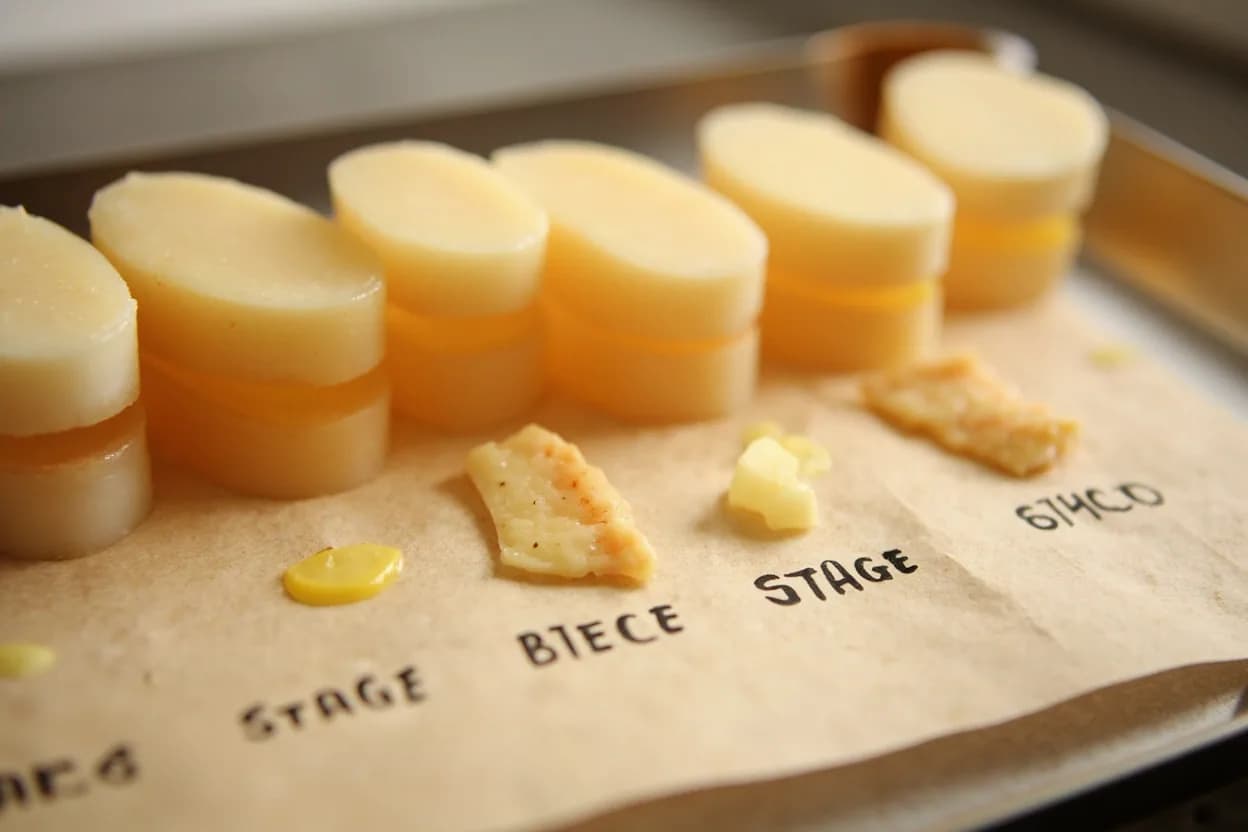
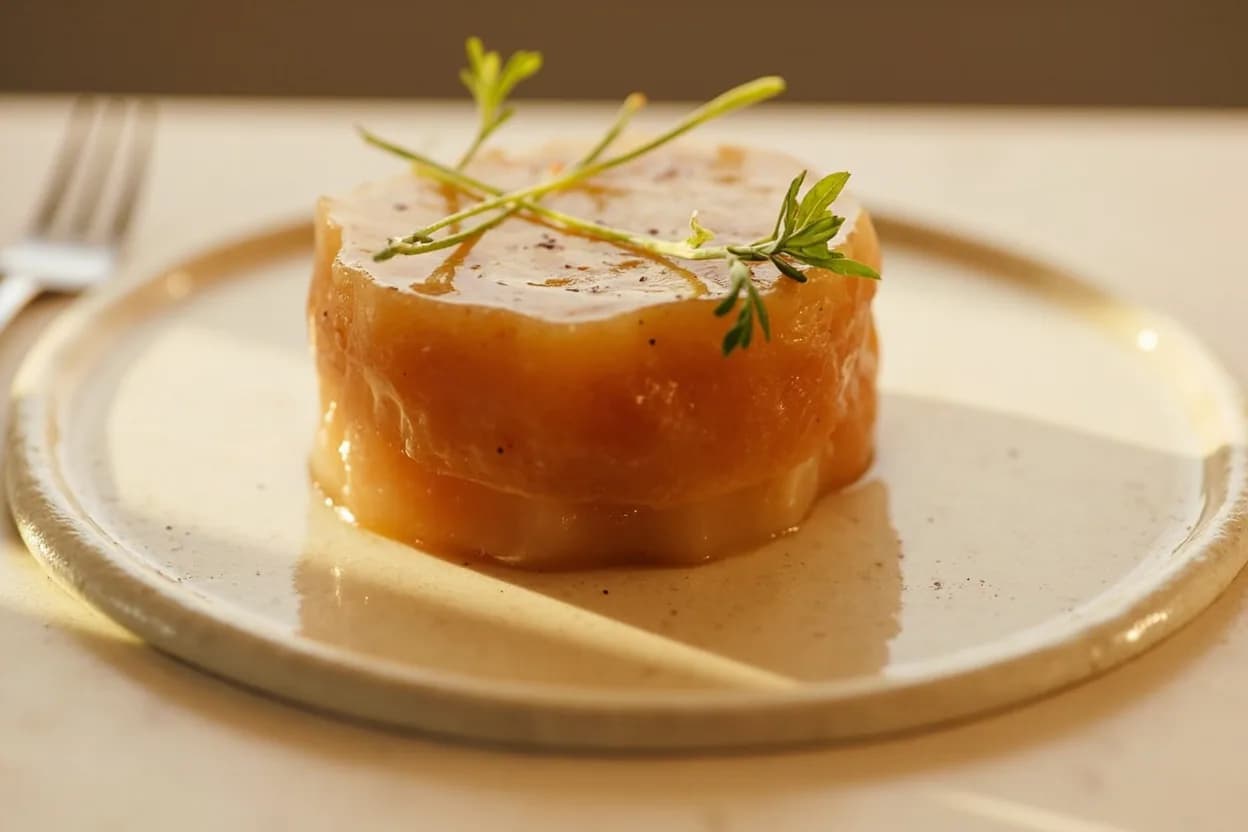
What happens
Gelatin is a mixture of collagen-derived proteins. In hot liquid above ~35°C, gelatin molecules are disordered and mobile — the stock is liquid. As temperature drops toward 25–30°C, individual helical regions begin to reform between gelatin strands (coil-to-helix transition). Below 15°C, enough cross-links have formed to create a continuous gel network. At refrigerator temperature (4°C), the network is fully locked and the aspic holds its shape. Higher gelatin concentration (more collagen-rich bones, trotters, or skin in the stock; or added sheet gelatin) yields a firmer, more rigid gel; lower concentration produces a soft, quivering panna-cotta texture. A very weak gel (under ~0.5% gelatin) will only barely set and cannot be sliced.
What to look for
- Chilled spoonful of cooled stock trembles like firm jelly and peels from a spoon when tipped — gel has set
- Surface of headcheese mould is matte and opaque, not shiny and liquid, after 4+ hours refrigeration
- Sliced aspic holds a clean edge and does not weep or puddle at room temperature for at least 5–10 minutes
- Finger pressed onto the gel surface leaves an indent that springs back slowly — indicates medium-firm gel
- Very loose gel wobbles like soft panna cotta and cannot stand alone when unmoulded
How to check
- Spoon test: chill a teaspoon of stock on a cold plate in the freezer for 3–4 minutes; it should set to a clear gel — if still liquid, reduce stock further
- Finger-press test on chilled mould: a firm indent with slow spring-back confirms gel is set
- Check with a thermometer that the mould core has reached ≤8°C before unmoulding — surface may be set while centre is still soft
- Tilt the mould gently: set aspic should not slosh or move as liquid
Food safety
The science behind it
Extended simmering of bones and skin converts insoluble collagen to soluble gelatin — the raw material for aspic
- Gel concentration
0.5–1% gelatin gives a soft set; 1.5–2% gives a firm sliceable gel; headcheese typically falls at 1–2% natural gelatin
- Clarification (raft method)
Egg-white raft clarifies cloudy stock into crystal-clear chaud-froid or aspic glaze
- Chaud-froid sauce
A béchamel or velouté combined with gelatin, chilled to a coating consistency — a decorative relative of aspic
- Bloom strength
Commercial sheet or powder gelatin is rated by Bloom value (150–280); higher Bloom = firmer gel per gram
Appears in
References
- 1.McGee, Harold — On Food and Cooking: The Science and Lore of the Kitchen (revised ed., 2004)
- 2.Ruhlman, Michael & Polcyn, Brian — Charcuterie: The Craft of Salting, Smoking, and Curing (2005)
- 3.This, Hervé — Molecular Gastronomy: Exploring the Science of Flavor (2006)
- 4.Peterson, James — Sauces: Classical and Contemporary Sauce Making (3rd ed., 2008)
Confidence: high
Notes
Natural vs. added gelatin
A well-made pork or veal stock from trotters, knuckles, and skin will contain enough natural gelatin to set firmly without supplementing — the stock turns to jelly in the refrigerator overnight. A light chicken or fish stock may need added sheet gelatin to achieve a sliceable aspic. The rule of thumb: if the cooled stock does not gel on a cold plate within a few minutes, reduce it further or supplement with 2–3 sheets of gelatin per 500 ml.
Jambon persillé — a traditional benchmark
The Burgundian classic jambon persillé, made from chunks of poached ham suspended in a parsley-flecked white-wine gelatin and unmoulded for slicing, is a perfect illustration of the set point in practice. The stock must gel firmly enough to hold square slices at cool room temperature without puddling — a concentration that only comes from reducing a rich pork and veal stock to high gelatin density before cooling.