Smoking & Curing
Bark Set Point (BBQ Crust)
Also: bark formation, BBQ bark, smoke bark, bark set
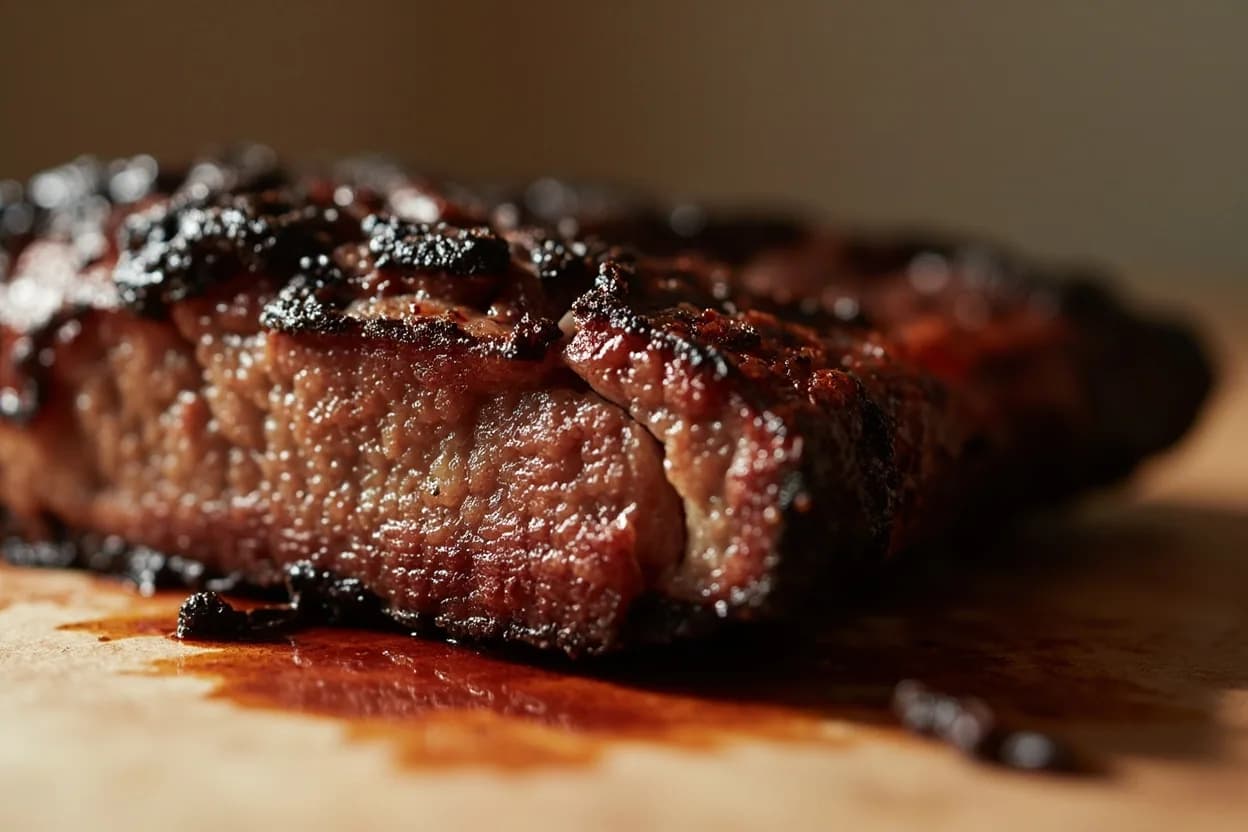
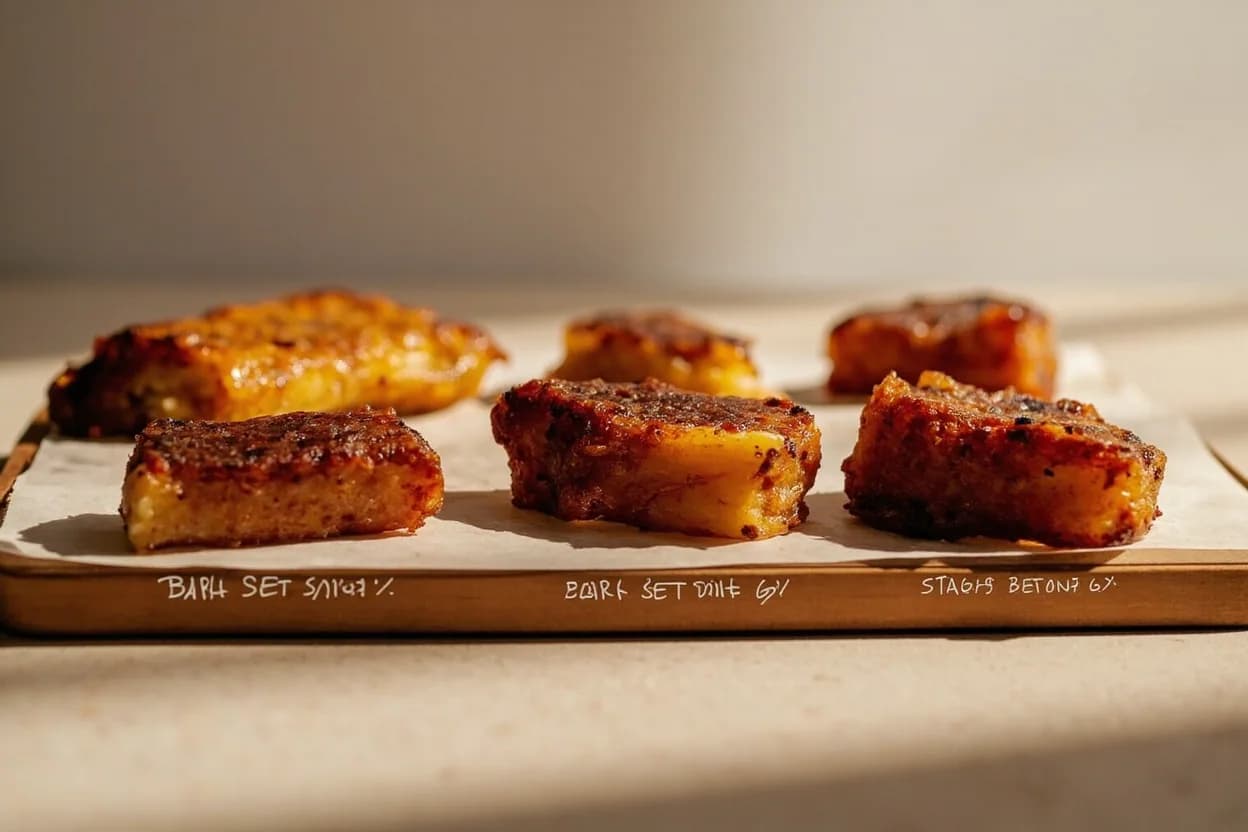
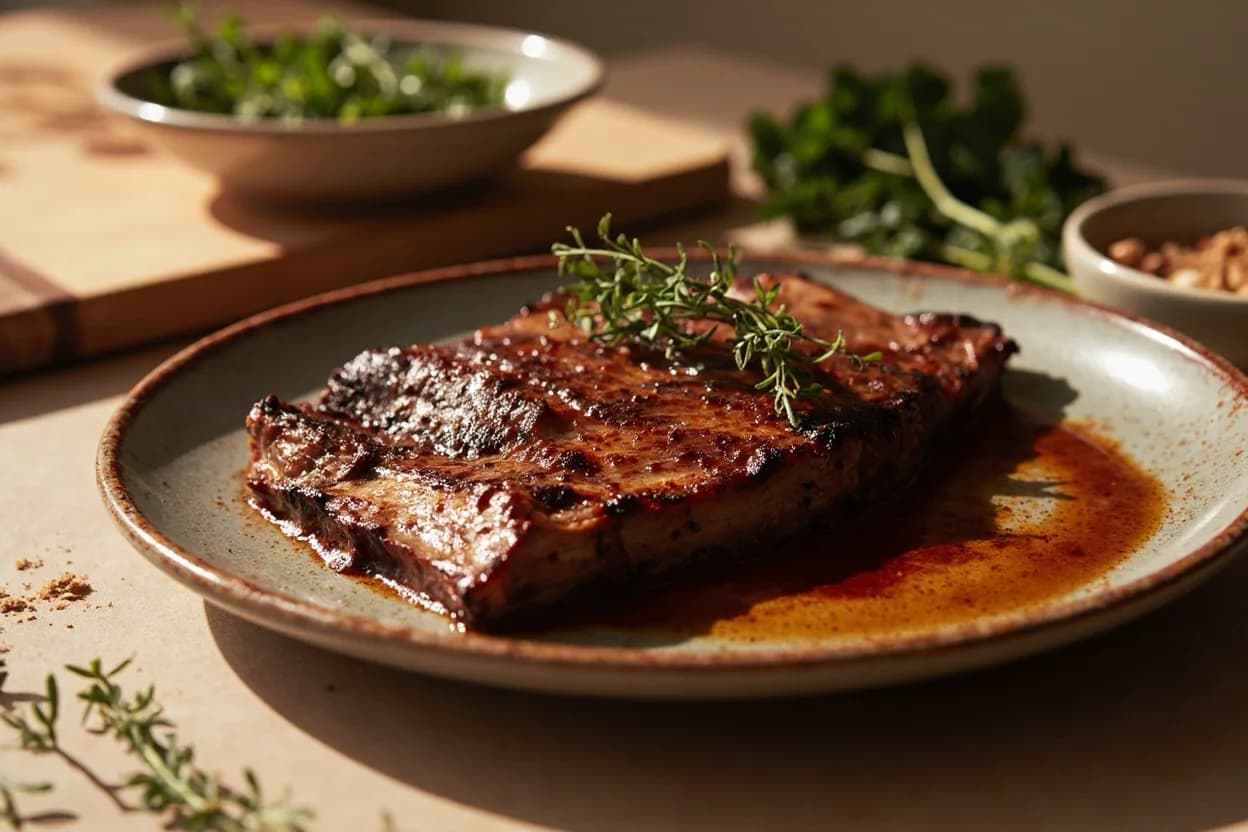
BBQ bark sets when the surface reaches 70–80°C with enough evaporative drying that smoke compounds, Maillard products, and spice rub bind into a firm, mahogany crust.
Bark is the complex, mahogany-to-near-black crust that forms on the surface of smoked meats during low-and-slow cooking. It is the product of three simultaneous processes: Maillard browning and caramelization of sugars in the rub; dehydration of the meat surface (water evaporation concentrating proteins and spices); and deposition and bonding of smoke phenols and carbonyl compounds. Bark is considered 'set' when it has transitioned from wet, sticky, and pliable to firm, dry, and slightly hard — a transformation that typically occurs between 70–80°C (158–176°F) surface temperature and after 3–5 hours of smoke exposure. Wrapping the meat before bark sets produces a steamed, soft exterior; wrapping after allows bark to be preserved.
In photos
What happens
In the first hours of smoking, the meat surface is wet and smoke dissolves into the moisture film, depositing flavor compounds. As surface temperature rises and evaporation outpaces moisture migration from the interior, the surface begins to dry. Maillard reactions between amino acids and reducing sugars (from rub ingredients) produce brown color and hundreds of flavor compounds. Smoke phenols cross-link with surface proteins, creating the characteristic bite-through texture. Sugar-based rubs contribute caramelization at 160°C on the surface (brief hot spots near the fire); the majority of bark color comes from Maillard, not caramelization. Fat rendering from beneath the surface helps bind rub particles into a cohesive crust.
What to look for
- Wet bark looks shiny, almost lacquered; set bark appears dull, matte, and slightly chalky-dry in color
- Set bark feels firm when pressed — springs back minimally; wet bark dents and stays dented
- The surface color shifts from reddish-brown to deep mahogany or near-black in the darkest sections
- A set bark makes a hollow sound when tapped, like rapping on a drum
- Smoke ring (pink layer beneath the crust) becomes clearly visible when slicing — confirms adequate smoke penetration before bark locked the surface
- Peeling or lifting of bark sections indicates it was wrapped too early or fat cap moisture wasn't managed
How to check
- Press the surface firmly with a finger or tongs — set bark should not indent or feel wet
- Visually inspect for matte, uniform dark color; any shiny patches indicate wet bark still in progress
- Use an instant-read thermometer at the surface (angle it shallow) — above 75°C typically correlates with set bark in optimal smoking conditions
- Run a gloved thumb across the surface: set bark leaves no residue; wet bark deposits dark moisture
- Time + temperature heuristic: at 225°F (107°C) chamber, brisket bark is usually set at 4–5 hours; wrapping before this produces 'pot roast,' not BBQ
Carryover & resting
Bark does not soften during rest if the meat is rested unwrapped or very loosely tented. Tight foil wrapping during rest will steam the bark soft — butcher paper resting is the pitmaster solution that allows some steam escape while retaining heat. If bark softens during rest, 10–15 minutes back in the smoker (or under a broiler at very low heat) will re-crisp it.
The science behind it
Primary browning reaction producing bark color and the majority of its complex flavor compounds
- Smoke Deposition
Phenols and carbonyls from wood smoke bind to surface proteins as moisture evaporates, contributing to bark flavor and color
- The Stall (Evaporative Plateau)
Occurs around 65–70°C internal as evaporative cooling balances heat input — bark formation is ongoing during the stall
Wrapping in foil or butcher paper to push through the stall; timing relative to bark set determines final texture
- Fat Rendering
Subcutaneous fat melting and migrating to the surface helps bind rub into cohesive bark
- Wood Selection
Post oak, hickory, and mesquite contribute different phenol profiles that influence bark flavor and color depth
Appears in
References
- 1.Franklin Barbecue: A Meat-Smoking Manifesto — Aaron Franklin & Jordan Mackay
- 2.Meathead: The Science of Great Barbecue and Grilling — Meathead Goldwyn
- 3.On Food and Cooking — Harold McGee
- 4.The Food Lab — J. Kenji López-Alt
Confidence: high
Notes
Rub composition and bark quality
A simple Texas rub (kosher salt + coarse black pepper, equal parts) produces the most transparent bark that showcases smoke and Maillard flavors. Sugar-heavy rubs (common in competition BBQ) build bark faster but risk burning at higher grate temperatures; they also produce a slightly sweeter, more lacquered crust. Paprika adds color without changing structure. The coarser the salt and pepper grind, the more textured the bark exterior — fine rubs can produce a smooth, almost patent-leather finish.
The 'no-wrap' vs. 'crutch' decision
No-wrap (bare) cooking throughout produces the thickest, crunchiest bark at the cost of longer cook times (often 14–18 hours for a full packer brisket at 225°F). Wrapping in butcher paper at bark set (4–5 hours) preserves bark integrity while pushing through the stall in 30–60 fewer minutes. Foil wrapping at bark set speeds cooking fastest but softens bark — acceptable for some styles (Memphis ribs) and anathema in Texas.