Fermentation & Culturing Temperatures
Batter Fermentation Peak (Idli/Dosa)
Also: idli batter ready, dosa batter fermented, urad dal batter peak, idli dosa fermentation endpoint
Idli and dosa batter peaks after 8–14 hours at 28–32°C — volume doubles, fine bubbles appear, and the batter smells pleasantly sour, ready to steam or spread without over-acidifying.
The fermented batter for idli (steamed rice-lentil cakes) and dosa (thin crispy crepes) is a blend of soaked and wet-ground parboiled rice and urad dal (black gram lentils), fermented overnight at warm temperatures to develop leavening, sourness, and digestibility. Peak fermentation occurs when the batter has roughly doubled in volume, fine bubbles are visible throughout, the aroma is mildly sour and yeasty, and the texture is light and slightly foamy. At 28–32°C — ideal South Indian kitchen temperatures — this takes 8–14 hours. Under-fermented batter produces flat, dense idli; over-fermented batter is too acidic and thin, yielding sour, sticky idli and crepes that tear during spreading.
In photos
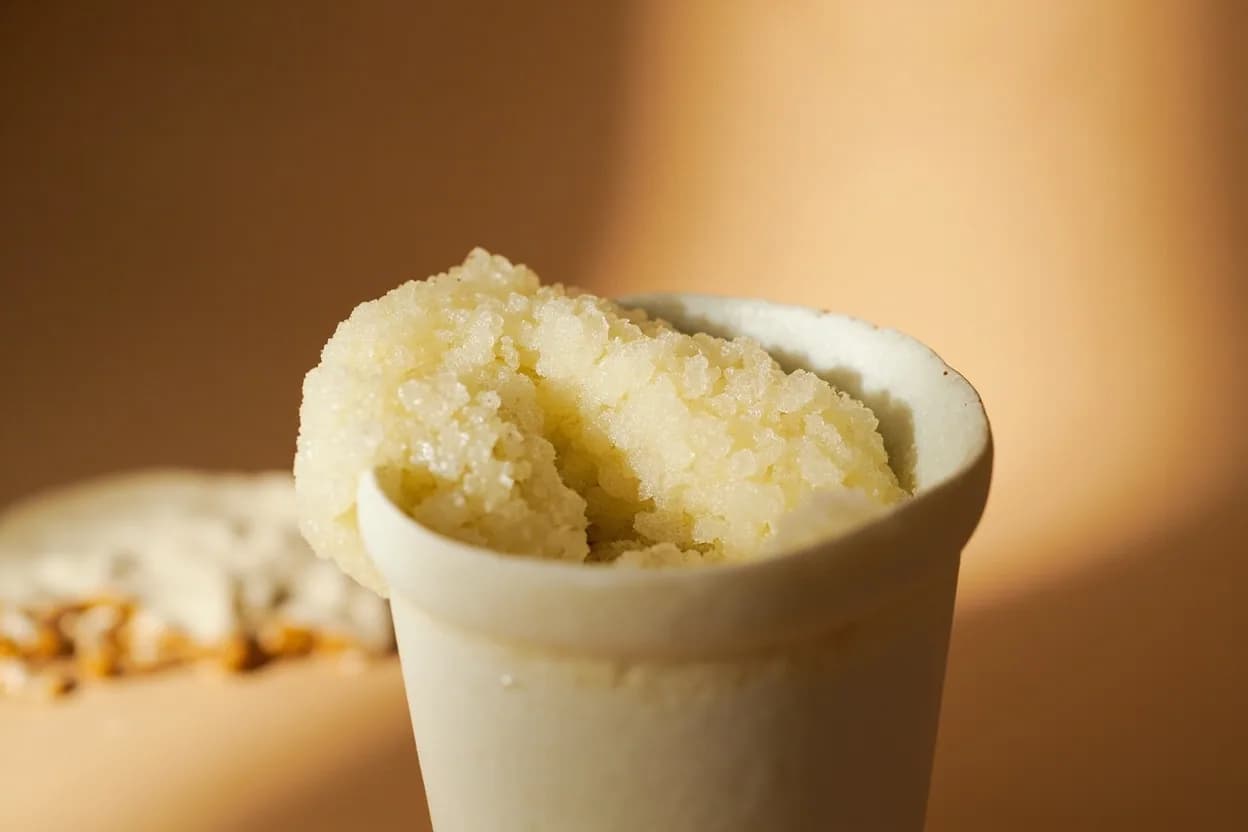

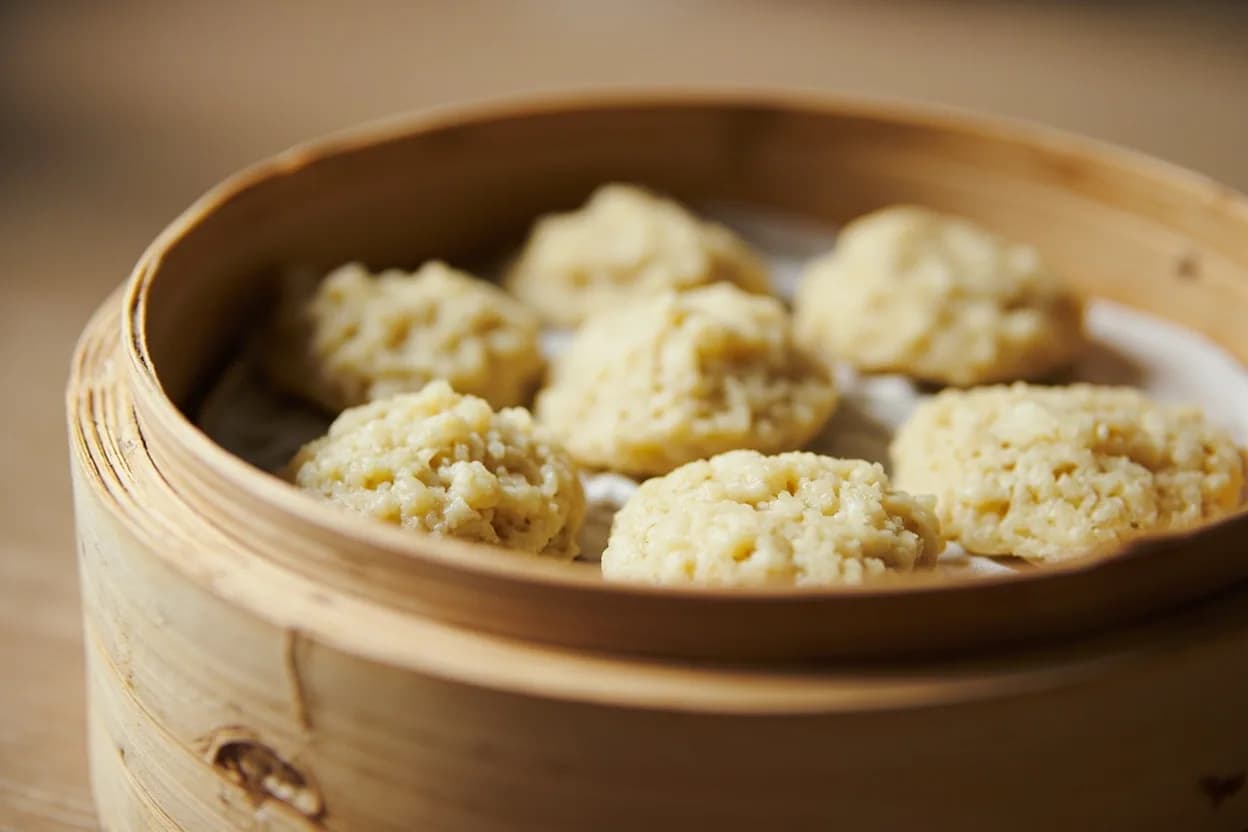
What happens
The urad dal batter is the primary leavening medium: its mucilaginous proteins form a foam that traps CO₂ produced by wild LAB and yeasts on the grain and lentil surfaces. Leuconostoc mesenteroides is the dominant early fermenter — a heterofermentative LAB that produces lactic acid, CO₂, and mannitol, creating volume expansion and mild acidity. As fermentation continues, Lactobacillus and Pediococcus species contribute additional lactic acid. Wild yeasts (often Saccharomyces and Torulaspora species naturally present on rice) generate CO₂ and trace ethanol. Simultaneously, phytic acid in the urad dal is partially broken down by bacterial phytases, improving mineral bioavailability — one reason idli is considered highly nutritious. The rice component contributes fermentable starches and starch granules that gelatinize during steaming.
What to look for
- Batter has risen visibly in the container — roughly doubled from the initial fill level
- Surface shows a fine, uniform froth of small bubbles
- Aroma is mildly sour, slightly yeasty, and clean — not sharp or alcoholic-heavy
- Batter feels airy and lighter when stirred compared to the dense post-grinding texture
- A dropped spoonful shows a soft, pillowy consistency rather than a stiff paste
- No discoloration (pink or yellow tints indicate spoilage, not fermentation)
How to check
- Mark the container at the start of fermentation and verify the batter has risen to 1.5–2× the marked line
- Stir gently and observe the airy, foam-interlaced texture — dense or flat batter needs more time
- Smell: pleasant sourness signals readiness; sharp, cheesy, or ammonia-like odors indicate over-fermentation or spoilage
- Steam a test idli: if it rises and pulls cleanly from the mold, the batter is at peak; if it sticks and collapses, ferment longer
- Taste the batter — mild tanginess with no raw bean flavor is the target
Food safety
The science behind it
- Urad dal ratio
The standard ratio is 3:1 rice to urad dal by volume; higher urad dal proportions create more foam and volume rise during fermentation
- Wet grinding
Stone or wet grinders produce a smoother, more aerated batter than blenders, which can overheat and kill yeast/LAB during grinding
- Parboiled rice (idli rice)
Parboiling partially gelatinizes starch, making it more fermentable and yielding softer, spongier idli than raw rice would
- Leuconostoc mesenteroides
The key early-stage heterofermentative LAB that drives volume expansion in idli batter — the same organism responsible for early sauerkraut fermentation
- Phytic acid reduction
Fermentation degrades 30–50% of phytic acid in lentils, improving iron, zinc, and calcium bioavailability in the cooked idli
Appears in
References
- 1.The Complete Asian Cookbook — Charmaine Solomon (1976)
- 2.Indian Cooking — Madhur Jaffrey (1982)
- 3.Fermentation and Food Safety — Martin Adams & M.J.R. Nout (eds., 2001)
- 4.Leuconostoc mesenteroides and Its Role in Idli Fermentation — Journal of Biosciences, Indian Academy of Sciences
- 5.Fermented Foods of India — P.K. Sarkar & J.P. Tamang (2010)
Confidence: high
Notes
Cold-climate fermentation workarounds
In kitchens below 24°C, batter fails to ferment adequately overnight. Experienced cooks in colder climates use the oven with only the light on (28–32°C), a proofing drawer, or a warm spot above the refrigerator. Some add a small pinch of fenugreek seeds (methi) to the soaking water — they support LAB activity and add a subtle bitterness. A small amount of previously fermented batter (2–3 tablespoons) stirred in before fermentation acts as a starter, similar to a sourdough mother, cutting fermentation time by 30–40%.
Refrigerator retardation
Batter can be refrigerated after peaking and used across 3–4 days. Interestingly, 2-day-old refrigerated batter often produces better dosa than freshly peaked batter — the additional slow acidification in the refrigerator develops flavor complexity without collapsing the foam structure, as LAB activity continues at a reduced rate in the cold. Many South Indian home cooks intentionally plan a 2-day batter cycle for this reason.