Legume Doneness
Bean Cook Doneness (Yield & Mash Test)
Also: bean doneness, pinch test, squeeze test, bean yield point
Beans are done when the interior is uniformly creamy with no chalky resistance and a finger-pinch yields without audible snap.
Bean cook doneness is the point at which dried or soaked legumes have absorbed sufficient water and undergone enough starch gelatinization and protein denaturation to become fully edible — soft throughout, with no raw, starchy core. It is assessed by a combination of the pinch test (squeezing a bean between thumb and forefinger), the mash test (pressing against the roof of the mouth with the tongue), and visual yield (the bean flattens without shattering). Fully cooked beans should be tender but still hold their shape; at this stage the yield is typically 2.0–2.5× the dry weight.
In photos

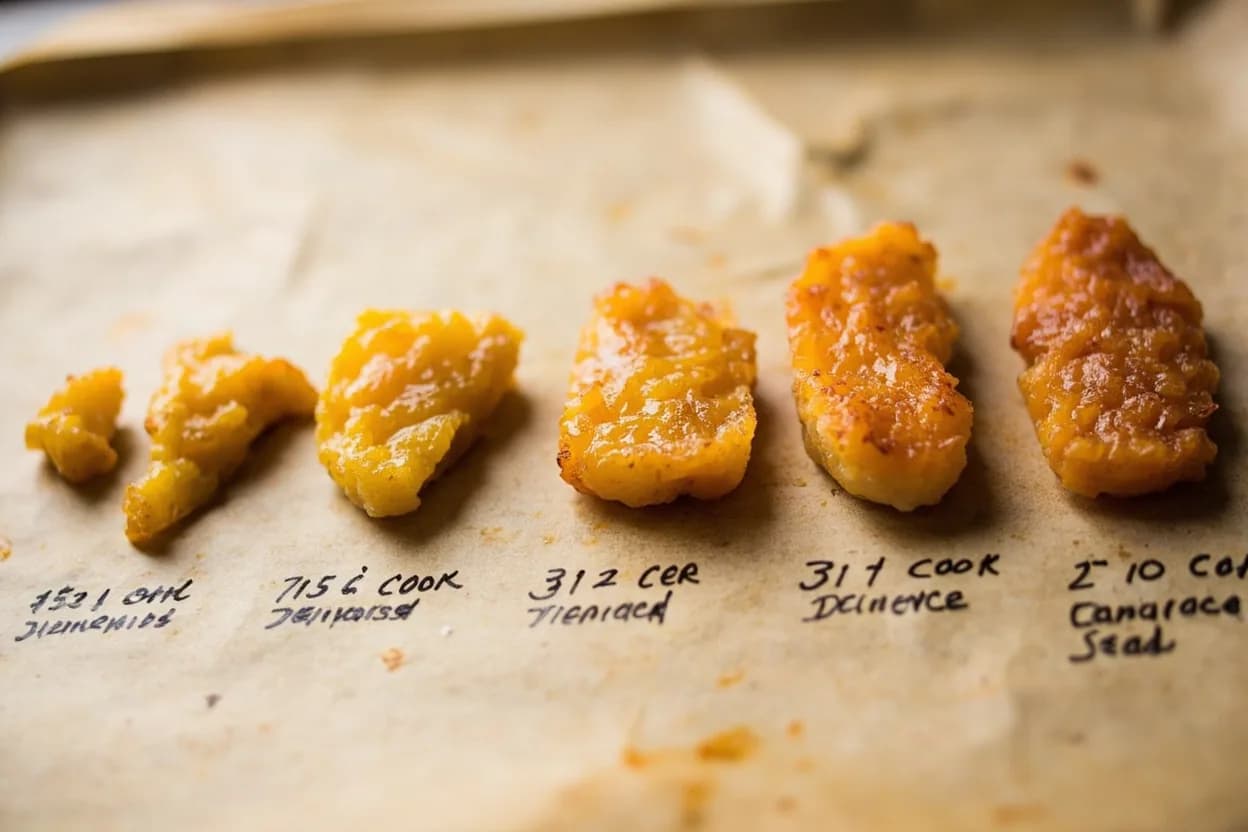
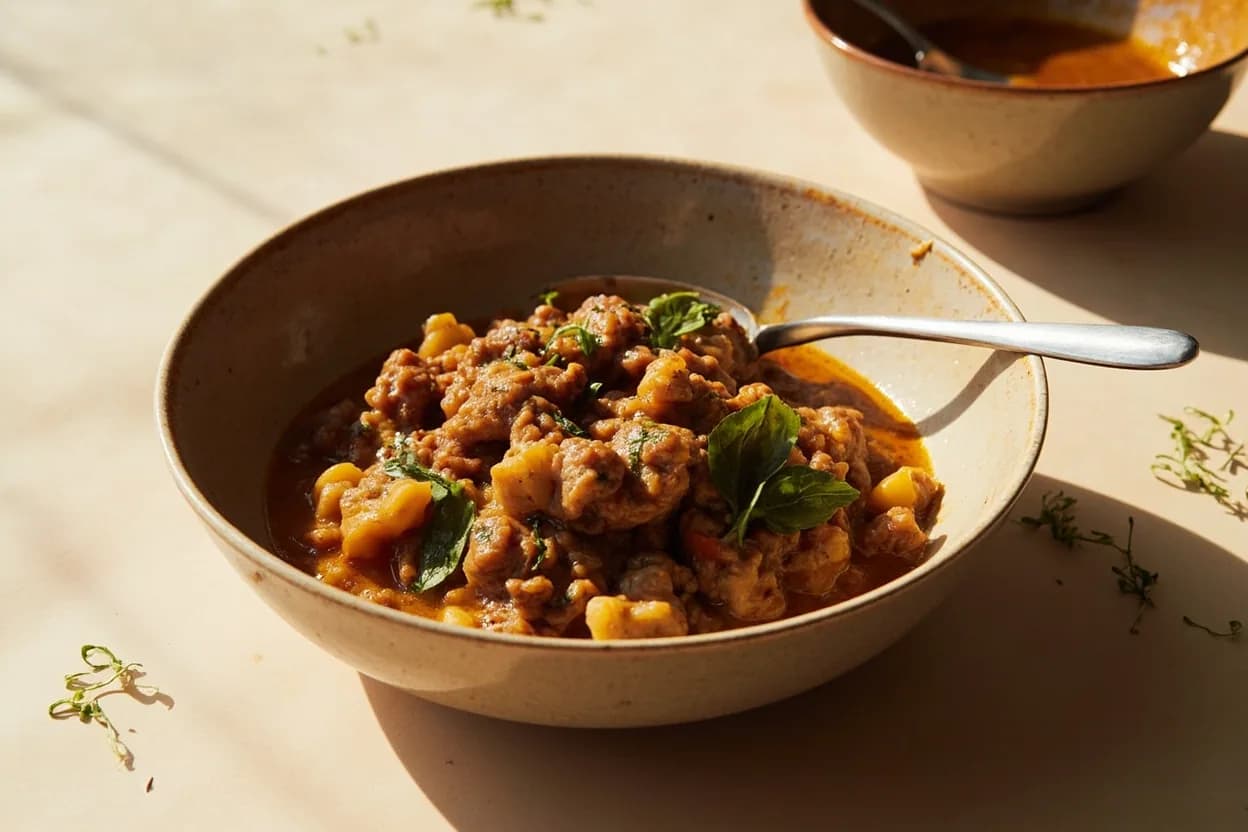
What happens
As beans hydrate during soaking and cooking, cell walls swell and pectin bridges begin to dissolve. Sustained heat above 90°C (194°F) gelatinizes the cotyledon starch and denatures seed storage proteins, converting the chalky, granular interior into a smooth, creamy texture. Oligosaccharides (raffinose, stachyose) responsible for flatulence leach into cooking water; the longer the cook, the more are lost. The testa (outer seed coat) softens last; if it wrinkles or splits ahead of the interior, the beans were under-soaked or added to boiling water too early.
What to look for
- A pinched bean yields completely with no firm, starchy center — no crunch or chalk feel
- Interior color shifts from stark white to a uniform creamy or opaque tone
- Bean skin lies flat or just barely splits at the seam without disintegrating
- Cooking liquid turns slightly cloudy and develops a mild, nutty legume aroma
- A bean pressed against the tongue-and-palate mashes smoothly with no gritty particles
How to check
- Pinch test: remove a bean, let it cool 10 seconds, press firmly between thumb and forefinger — it should yield completely with uniform softness
- Mash test: place a bean on the tongue and press against the palate; done beans offer no resistance
- Cross-section check: halve a bean with a knife; the interior should show no chalky white core
- Yield weight: weigh a sample — fully hydrated cooked beans are 2.0–2.5× their dry weight
Food safety
Carryover & resting
Beans continue to absorb heat and soften slightly after the burner is cut. If serving immediately, stop cooking just before the ideal texture; for dishes that will continue to cook (soups, stews, baked beans), undercook by 5–10 minutes to prevent mushiness.
The science behind it
- Soaking
Pre-soaking reduces cook time by 25–50% and improves yield uniformity; cold-soak 8 h or hot-soak 1 h
- Salt timing
Adding salt early (during soaking or first half of cooking) firms the seed coat via calcium displacement, extending cook time; adding late has minimal effect on texture
- Acid timing
Tomatoes, lemon juice, or vinegar added before beans are fully cooked prevent pectin breakdown, locking beans in a firm, undercooked state
- Pressure cooking
At 15 psi (121°C/250°F), beans cook 3–4× faster; pinch-test after resting, as residual pressure continues cooking
The core process driving the chalky-to-creamy transformation; requires both heat and sufficient hydration
Appears in
References
- 1.On Food and Cooking — Harold McGee
- 2.The Legume Chef — Dan Barber (symposium lecture notes, MAD)
- 3.USDA Nutrient Data Laboratory — Cooked Legume Yield Factors
- 4.The New Vegetarian Cooking for Everyone — Deborah Madison
Confidence: high
Notes
Salt and the seed coat
The debate over salting bean water is settled by the science: early salting firms the exterior testa by competing with magnesium ions that maintain pectin gel strength. In practice this means older dried beans (with desiccated, toughened seed coats) may benefit from unsalted soaking water, while fresh-crop beans tolerate early salting without meaningful delay.
The chalky-core problem
A chalky core after what seems like adequate cook time usually indicates one of three causes: beans too old (low moisture content even after soaking), water with high calcium/magnesium content (hard water inhibits pectin dissolution), or heat too high (exterior softens and splits before the dense interior has cooked through). The fix is a long, gentle simmer — never a rolling boil.