Beef Doneness
Beef: Blue (Bleu)
Also: bleu, blue rare, Pittsburgh rare, very rare, saignant-bleu
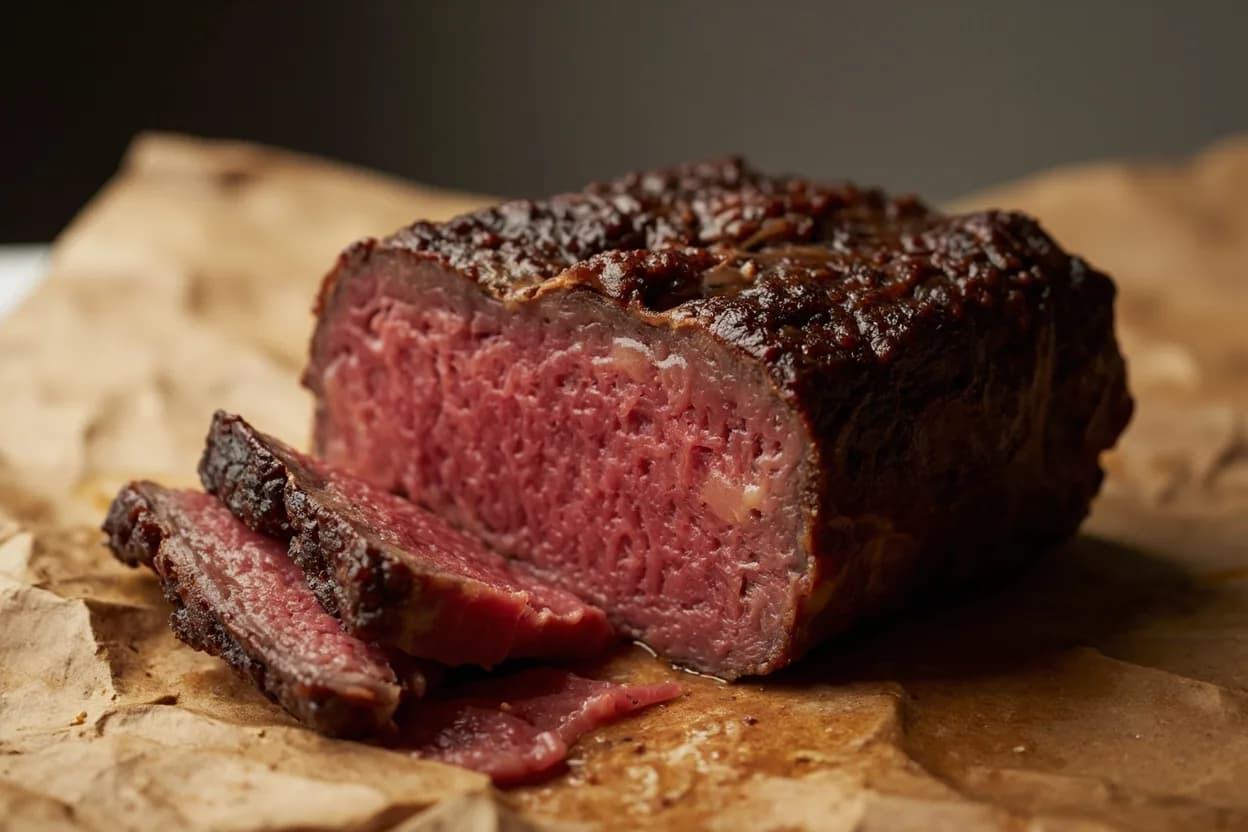
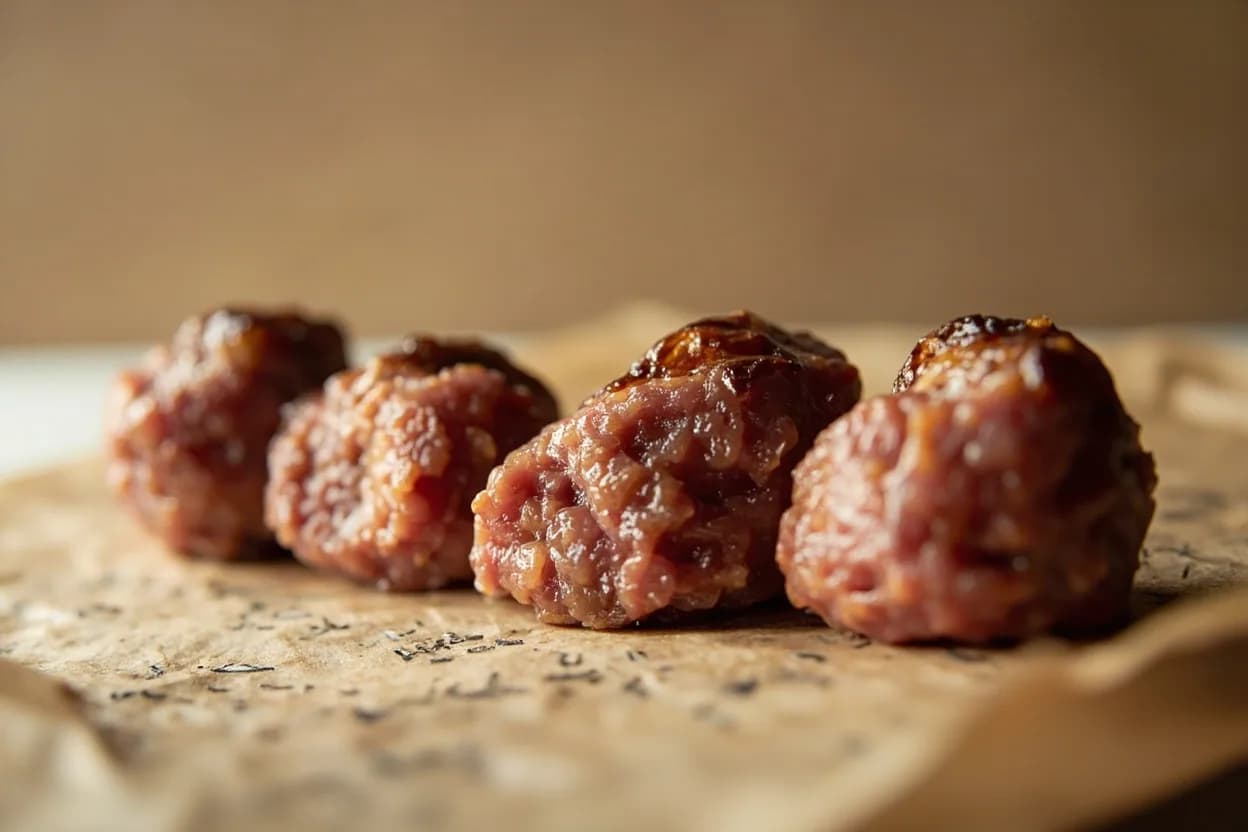
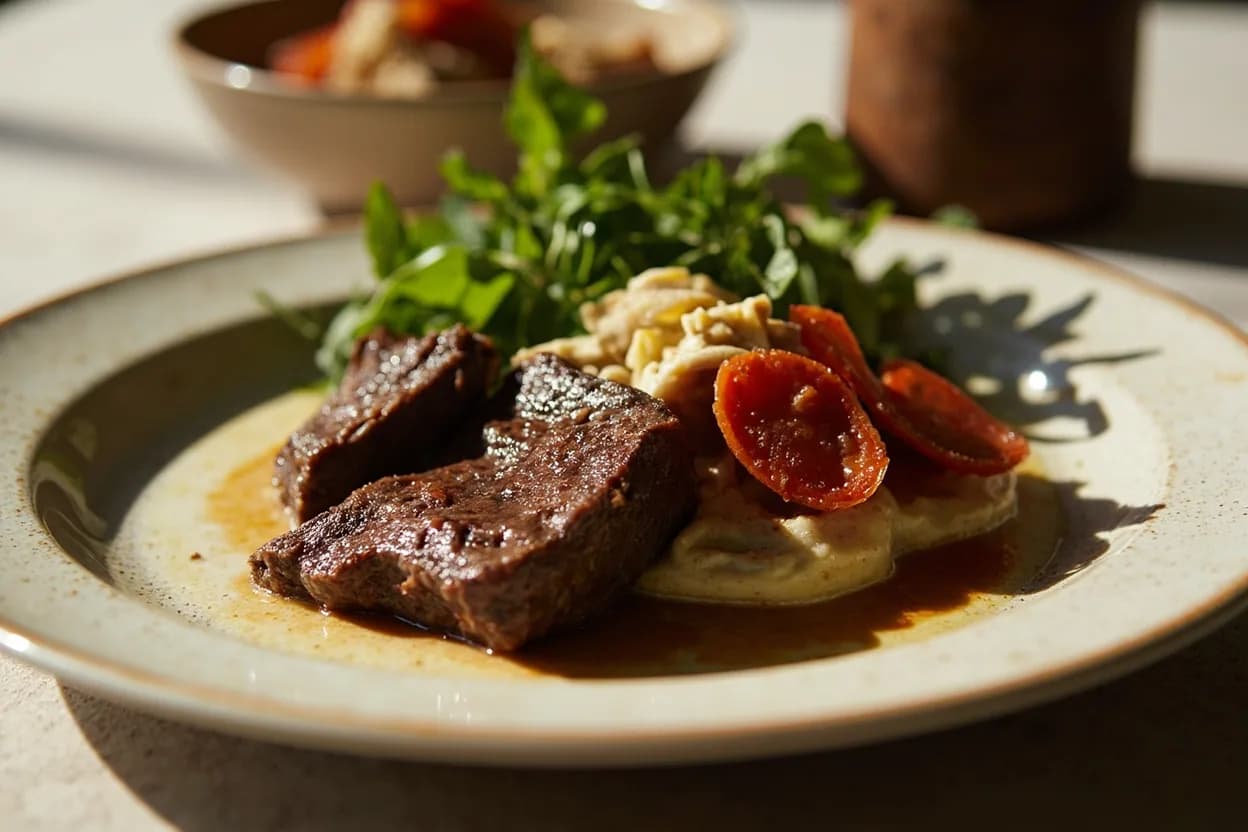
The most minimal intervention: a hot sear produces a dark crust while the center remains cool, nearly raw, and deep purple-red.
Blue, or bleu in French culinary tradition, is the stage below rare. The steak is cooked only long enough for the exterior to develop a seared crust — typically 30 to 60 seconds per side over extreme heat — while the center temperature stays between 46°C and 49°C (115–120°F). The interior is cool to the touch when cut, purple-red in color, and has the yielding, almost raw texture of fresh beef. It is a classical stage in French bistro cooking and remains popular among aficionados who prize unadulterated beef flavor.
In photos
What happens
Below 50°C, myosin begins to denature but actin remains fully intact, so the muscle fibers retain the same soft, slippery structure as raw beef. Collagen is entirely unchanged. The Maillard reaction occurs only at the surface, where contact with a pan or grill above 150°C generates the aromatic crust. Intramuscular fat does not render at this temperature, so the interior retains full fat globule structure. Moisture loss is negligible — well under 5% — giving bleu steaks their characteristically wet, glossy cut surface.
What to look for
- Deep purple-red center, virtually indistinguishable in color from raw beef
- Cool or barely warm core when pressed or cut
- Exterior crust is dark brown and fully seared
- Flesh yields with almost no resistance under thumb pressure
- Glossy, wet interior surface when sliced
- Aroma is dominated by the sear; the interior smells of fresh beef
How to check
- Instant-read thermometer inserted horizontally into the thickest part should read 46–49°C (115–120°F)
- Press test: the steak feels soft and offers no spring, similar to the fleshy base of a relaxed thumb
- Cut test: center is purple-red and cool — not warm pink
- Time guide only for uniform-thickness steaks: 30–45 seconds per side on a very hot cast-iron or grill
Food safety
Carryover & resting
Carryover is minimal at bleu because the core temperature is so far below the sear temperature, but even 1–2°C of carryover can push it toward rare. Rest on a warm plate for no more than 60 seconds; longer resting will elevate the center temperature noticeably.
The science behind it
- Rare
The next doneness stage up; center reaches 52°C and turns bright red-pink
The surface browning that defines the crust even when the interior is barely heated
- Myosin denaturation
Begins around 50°C — at bleu this is barely initiated, preserving raw texture
- Resting
Keep rest time short at bleu to prevent carryover from nudging the steak into rare
Appears in
References
- 1.On Food and Cooking — Harold McGee
- 2.The Fat Duck Cookbook — Heston Blumenthal
- 3.Modernist Cuisine: The Art and Science of Cooking — Myhrvold, Young, Bilet
- 4.Larousse Gastronomique (2009 edition)
Confidence: high
Notes
Pittsburgh Rare
The American 'Pittsburgh rare' or 'Pittsburgh style' is a close cousin: the steak is charred black on the exterior (often on a very high-heat grill or in a screaming-hot cast-iron) while the center remains bleu or just barely rare. The term is said to originate from steelworkers in Pittsburgh who cooked meat on the hot metal of their equipment.
Selecting the right cut
Bleu is best suited to tender, well-marbled cuts with minimal connective tissue — ribeye, sirloin, fillet, and strip steak — where the raw-textured interior is an asset rather than a liability. Tougher cuts (chuck, brisket) that require long cooking for collagen breakdown are wholly unsuitable.