Offal & Specialty Cuts
Beef Heart (Anticucho) Internal Temperature
Also: anticucho doneness, corazón de res temperature, grilled beef heart temperature, heart skewer doneness
60–65°C / 140–149°F internal is the sweet spot for char-grilled beef heart anticuchos — firm, slightly springy, and moist without the rubber-band texture that overcooking produces.
Anticuchos are skewered and char-grilled pieces of beef heart, a street food and traditional preparation originating in Peru with roots in Andean and Afro-Peruvian cooking. Beef heart is cardiac muscle: extraordinarily lean (less than 5% fat), with a dense, tightly-packed fiber structure and very little collagen, making it behave entirely differently from skeletal muscle. At 60–65°C internal, the muscle fibers are cooked through but retain enough moisture and elasticity to be pleasant; above 70°C, the lean, collagen-poor fibers contract sharply and become unpleasantly rubbery. Unlike tougher cuts where long braises convert collagen to gelatin, no amount of additional cooking will rescue overcooked heart.
In photos

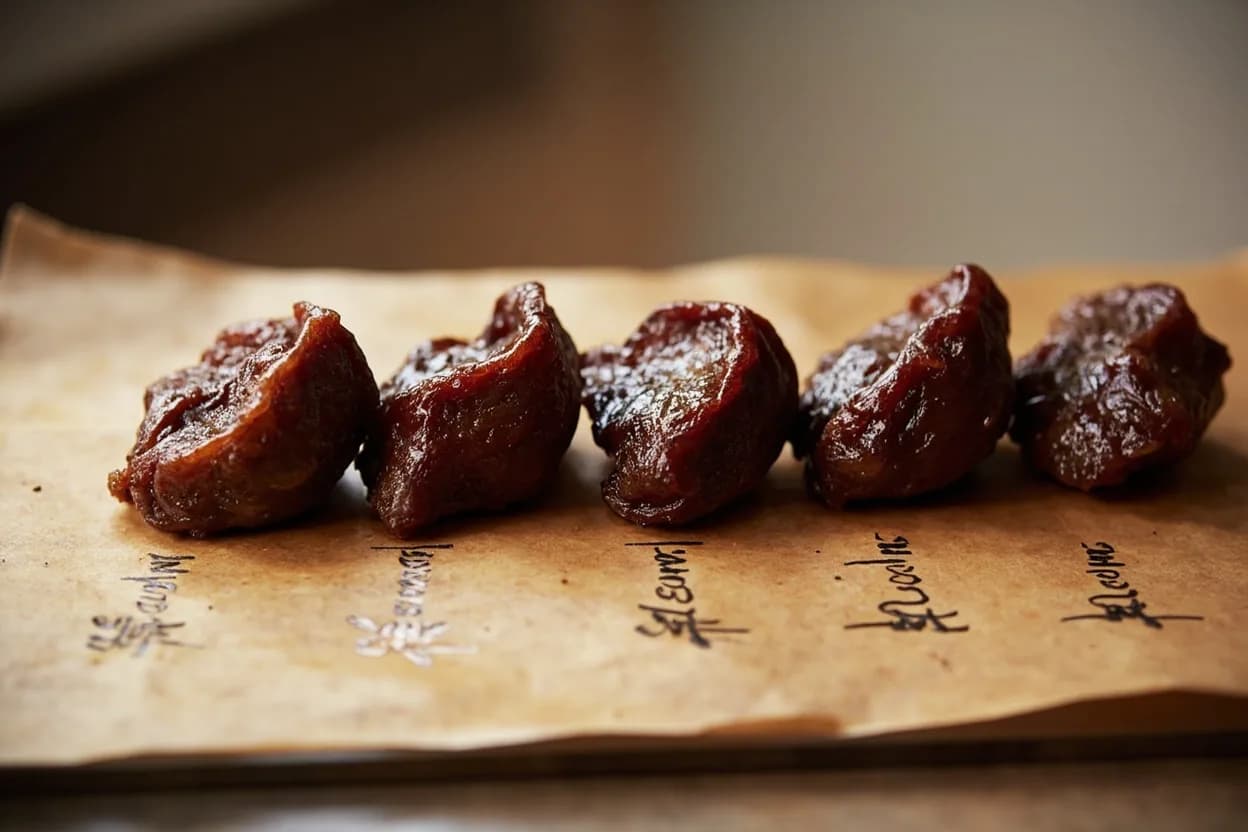
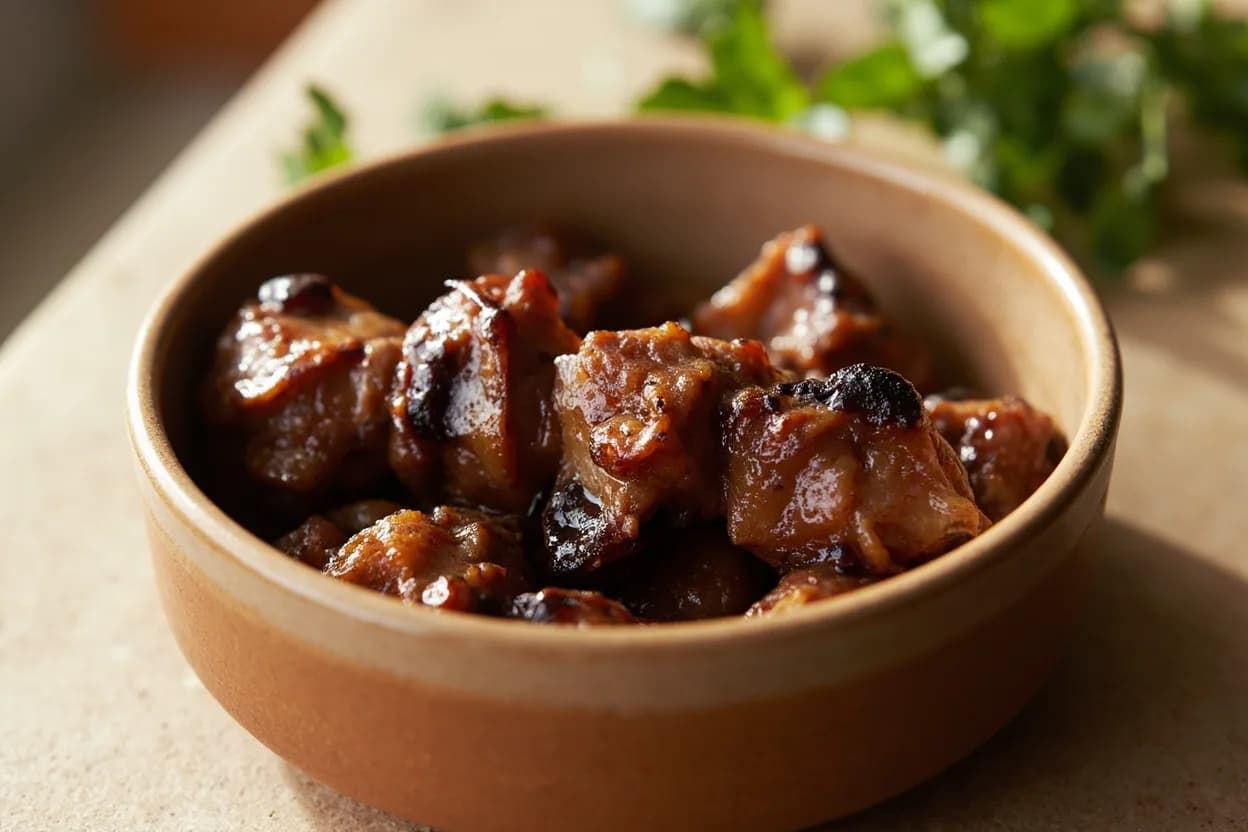
What happens
Cardiac muscle fibers are shorter and more tightly bound than skeletal muscle, with high concentrations of myoglobin (giving heart its deep red-purple color) and minimal intramuscular fat. Collagen content is very low, so there is no tenderizing transformation at high temperatures — only progressive dehydration and fiber toughening. Between 60–65°C, actin and myosin proteins have denatured and the juices run pinkish-clear; the texture is firm but springy under bite, with a clean, mineral-savory flavor intensified by the Maillard-seared exterior. Above 70°C, rapid moisture loss and fiber shrinkage produce a chalky, rubbery chew.
What to look for
- Cut surface shows uniform grey-pink, not raw red-purple; no translucency in the center
- Exterior has deep char marks from high-heat grilling, with slightly caramelized marinade
- Meat springs back firmly under finger pressure without feeling hard or compressed
- Juices run clear to faintly pink when pressed — not bloody red
- Bite resistance is distinct and pleasantly chewy but not rubbery or sponge-like
- Aroma is mineral, savory, and slightly gamey with char notes
How to check
- Insert a thin instant-read thermometer probe into the center of the thickest anticucho piece on the skewer, avoiding the skewer itself
- Check multiple pieces if heart has been cut with variation; larger cubes will lag by 2–3°C
- Use the press test: properly cooked heart resists like a firm handshake — neither soft and yielding (underdone) nor hard and unyielding (overdone)
- Timing guide on high charcoal heat: 2–3 minutes per side for 2.5cm cubes marinated and at room temperature before grilling
Food safety
The science behind it
- Cardiac muscle structure
Heart's tightly-packed, low-fat fibers require a lower temperature ceiling than skeletal muscle
The charred crust from high-heat grilling is critical to anticucho flavor and contrast
- Marinade penetration
Ají panca and vinegar marinade tenderizes and flavors the dense muscle before grilling
- Lean muscle protein denaturation
Without collagen or fat, the only texture driver is protein state at a given temperature
- Yakitori technique
Japanese skewered offal cookery uses similar high-heat, short-cook principles for heart and other offal
Appears in
References
- 1.The Art of Living According to Joe Beef — Frédéric Morin & David McMillan (Ten Speed Press, 2011)
- 2.Modernist Cuisine: The Art and Science of Cooking — Nathan Myhrvold et al.
- 3.Peru: The Cookbook — Gastón Acurio (Phaidon, 2015)
- 4.On Food and Cooking: The Science and Lore of the Kitchen — Harold McGee (Scribner, 2004)
- 5.The Complete Meat Cookbook — Bruce Aidells & Denis Kelly (Houghton Mifflin, 1998)
Confidence: high
Notes
Why anticuchos must be cooked hot and fast
The genius of the anticucho technique is an extremely hot charcoal fire — brazas, not flames — and very brief cooking. Because heart has no fat to self-baste and no collagen to hold moisture, slow cooking is fatal to texture. Peruvian street vendors work with fans constantly stoking their charcoal to sustain maximum heat, cooking each batch in under five minutes. The marinade of ají panca, vinegar, garlic, and cumin forms a quick crust that seals in residual moisture and adds a contrasting acidic brightness to the mineral-rich heart.
Sourcing and preparation
Beef heart should be trimmed of exterior fat, connective tissue, and the tough ventricle septum before cutting into 2–3cm cubes. The interior chambers can hold residual blood — rinse and pat dry thoroughly. Some preparations salt the cut pieces for 30–60 minutes to draw off excess moisture and concentrate flavor before marinating. Freshness matters more for heart than for skeletal muscle: very fresh heart is mild and clean; older heart develops stronger mineral-metallic notes.