Beef Doneness
Beef: Medium-Rare
Also: à point, medium rare, 135°F, pink-red center
The culinary gold standard for steak: a pink-red center, maximum juiciness, and a texture that balances tenderness with structure.
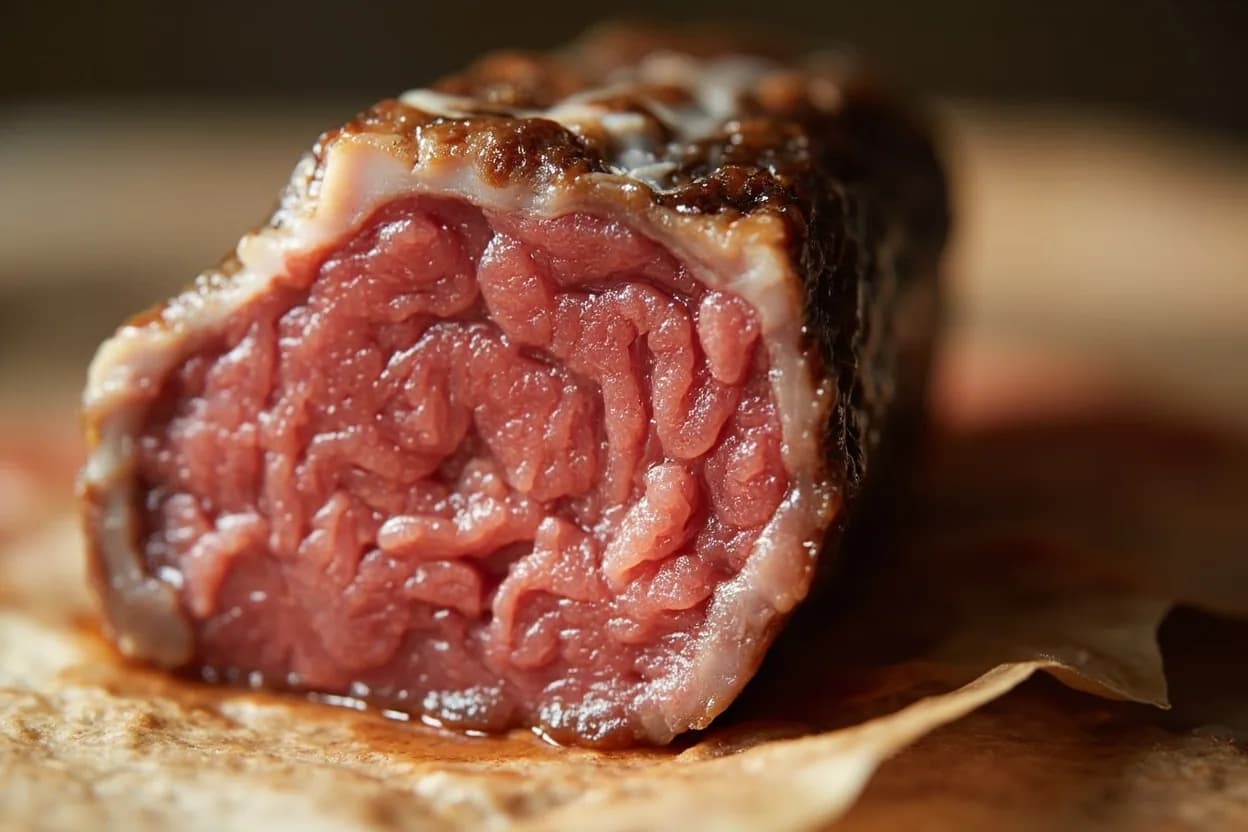
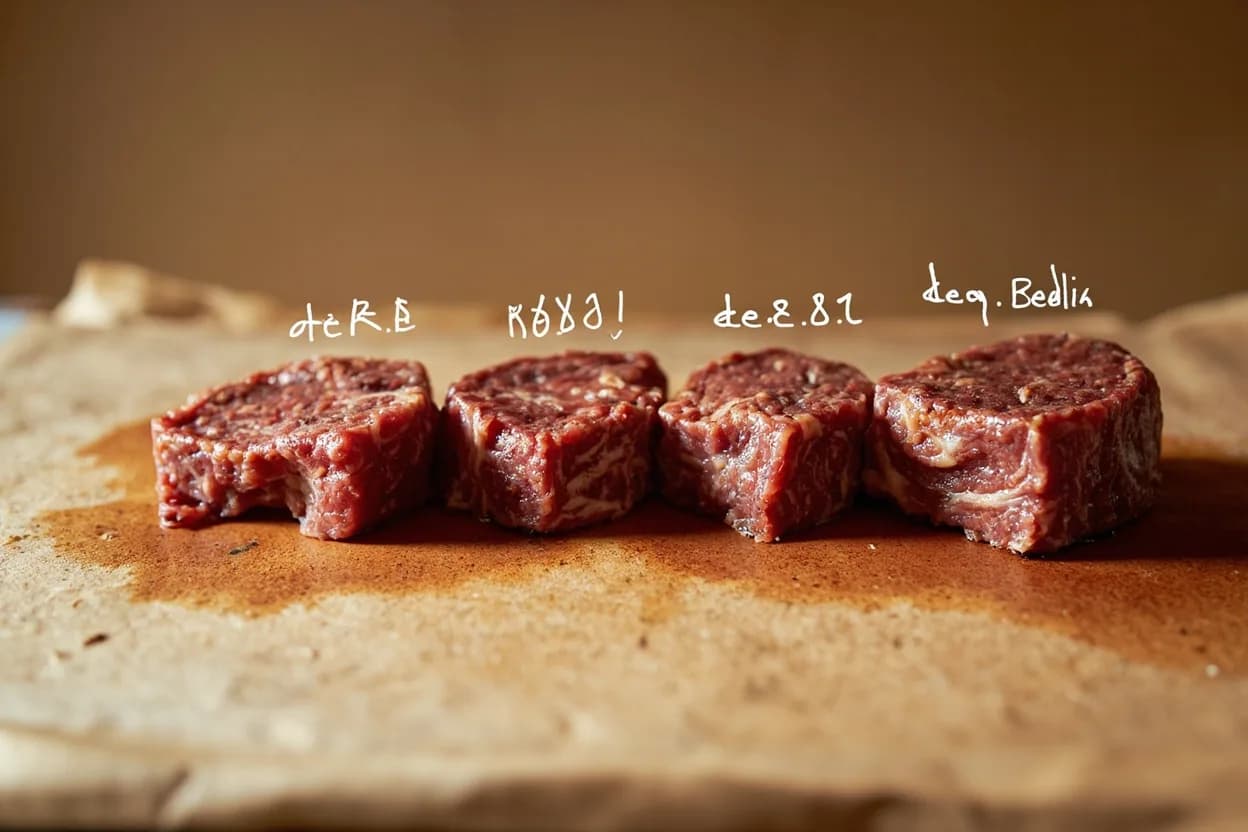
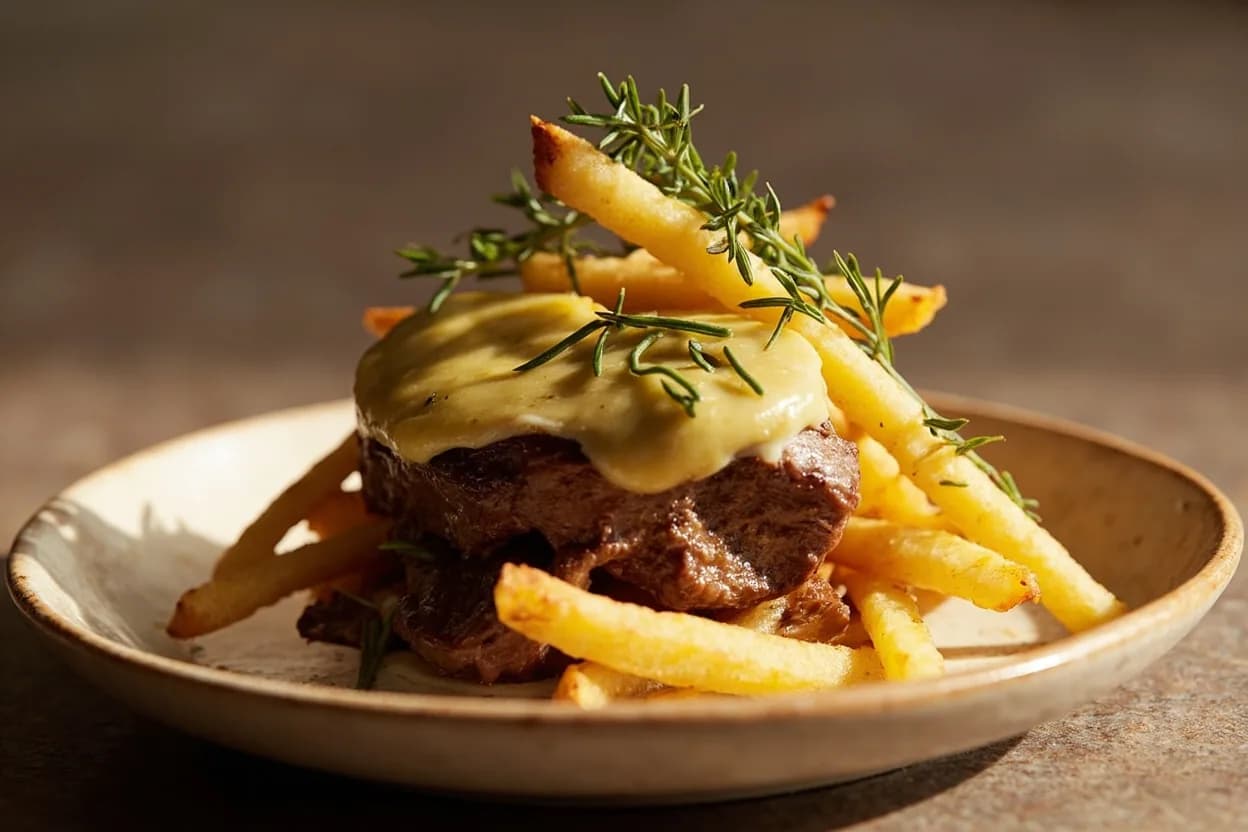
Medium-rare is universally recognized as the preferred doneness for quality beef steaks among professional cooks and most experienced diners. At 57°C (135°F) internal temperature, the center is pink to pink-red, warm throughout, and juicy. The French term 'à point' — literally 'to the point' — conveys the idea of perfect readiness. Myosin is substantially denatured, giving the meat a pleasant, cohesive bite; actin is still largely intact, preserving tenderness. Marbling renders partially, lubricating the muscle fibers and amplifying flavor. Most steakhouses and fine-dining kitchens default to medium-rare unless the guest specifies otherwise.
In photos
What happens
At 57°C, myosin denaturation is complete, giving the meat a firm-yet-yielding structure. Actin begins its denaturation around 65–70°C, so at medium-rare it remains largely intact and the meat is far from tough. Intramuscular fat begins to render meaningfully: lipids liquefy within fat cells, basting the muscle fibers from within and releasing fat-soluble aroma compounds. The myoglobin pigment transitions from bright red toward pink — oxygen-bound oxymyoglobin converts to denatured globin hemochrome at the edges (grey-brown) while the center retains pink-red metmyoglobin. Moisture loss sits around 10–15%, leaving the steak noticeably juicy.
What to look for
- Pink to pink-red center, transitioning to a grey-brown ring at the edges
- Uniformly warm throughout when probed or cut
- Slight but definite resistance under thumb — springs back partially
- Juices run pink-clear when rested and sliced
- Fat cap and marbling visibly glistening, partially rendered
- Aroma of rendered fat and Maillard compounds dominant
How to check
- Instant-read thermometer to geometric center: target 57°C (135°F)
- Press test: firmness of the fleshy base of the hand when thumb and forefinger are lightly touched — a slight spring-back
- Cut and inspect: pink-red center with a clear grey-brown band at the perimeter; no cool purple core
- Rest time: 5–7 minutes for a 2.5 cm steak allows carryover and juice redistribution
Food safety
Carryover & resting
Pull steaks from heat at 54–55°C; residual heat will carry them to 57°C during a 5-minute rest. Larger roasts (prime rib, beef tenderloin) can carry over 5–8°C — pull those at 50–52°C. Resting on a warm, not hot, surface is important to prevent overcooking during carry-over.
The science behind it
- Rare
One stage below; center at 52°C is bright red rather than pink
- Medium
One stage above; center reaches 63°C and turns fully pink with grey edges
- Myosin denaturation
Complete at 57°C, giving medium-rare its characteristic cohesive but tender bite
- Fat rendering
Begins in earnest at medium-rare temperatures, amplifying flavor and lubricity
- Resting
Essential to redistribute juices expelled during cooking; skip it and the steak bleeds on the plate
Appears in
References
- 1.The Food Lab — J. Kenji López-Alt
- 2.On Food and Cooking — Harold McGee
- 3.Modernist Cuisine: The Art and Science of Cooking — Myhrvold, Young, Bilet
- 4.The French Laundry Cookbook — Thomas Keller
- 5.USDA Food Safety and Inspection Service — Safe Minimum Internal Temperatures
Confidence: high
Notes
Why medium-rare is the professional default
The convergence of maximum juiciness, optimal fat rendering, and tender-but-structured texture at 57°C is not arbitrary preference — it reflects the physical properties of beef muscle proteins. Myosin denaturation is complete but actin (which toughens meat when denatured above 65°C) is intact. Intramuscular fat has begun to liquefy. This window is objectively the intersection of the most desirable textural and flavor properties for most beef cuts.
Sous vide advantage
Sous vide cooking at exactly 57°C for 1–4 hours achieves a perfectly even medium-rare from edge to center with no grey band, then a quick high-heat sear adds the crust. This technique is now common in professional kitchens and increasingly in home cooking for achieving consistent results across varying steak thicknesses.