Beef Doneness
Beef: Medium-Well
Also: medium well, 155°F, mostly done, légèrement rosé
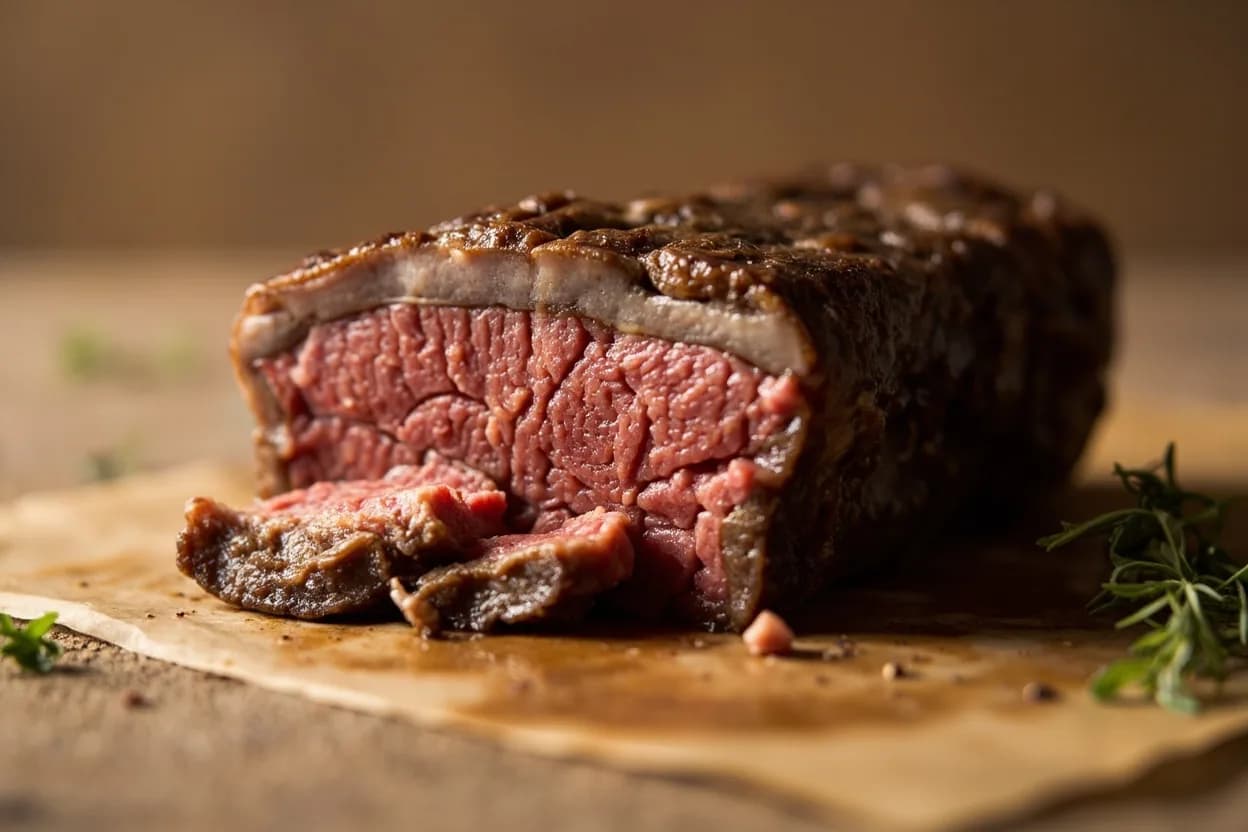
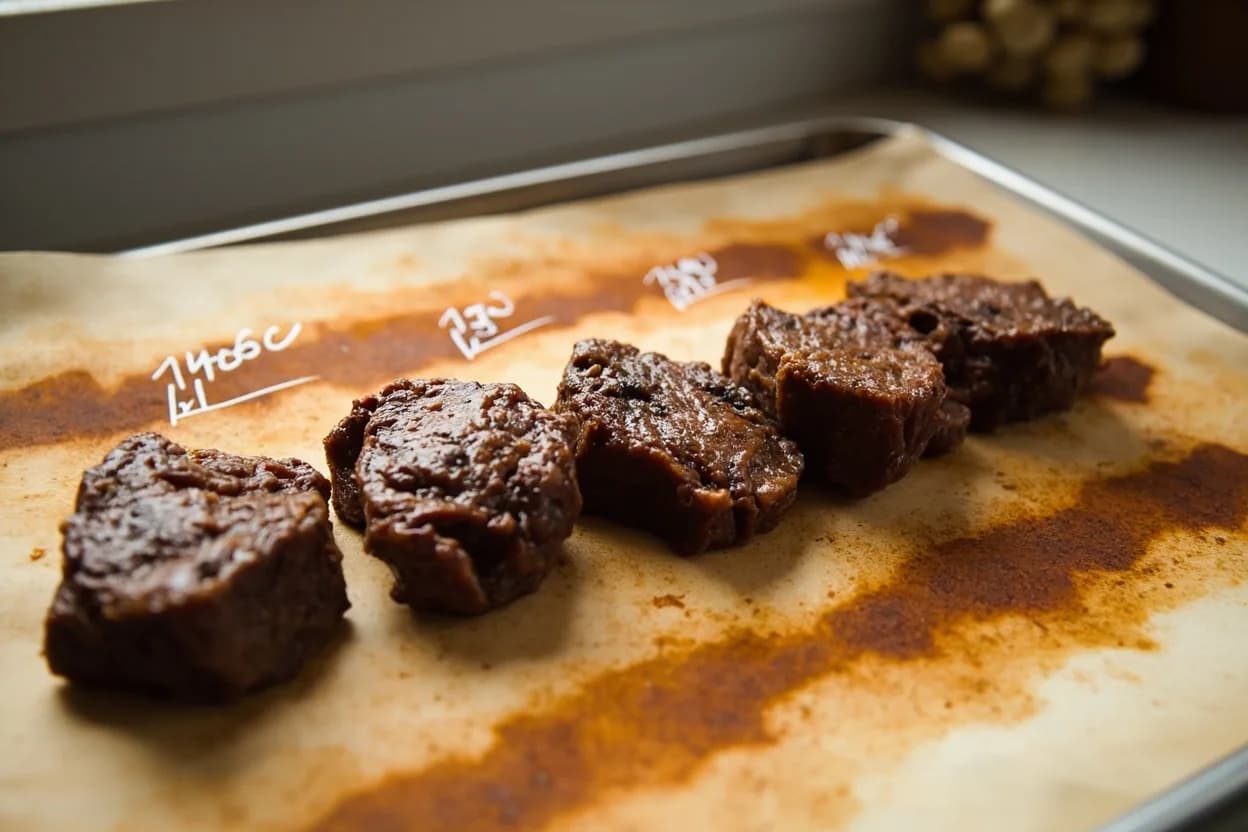
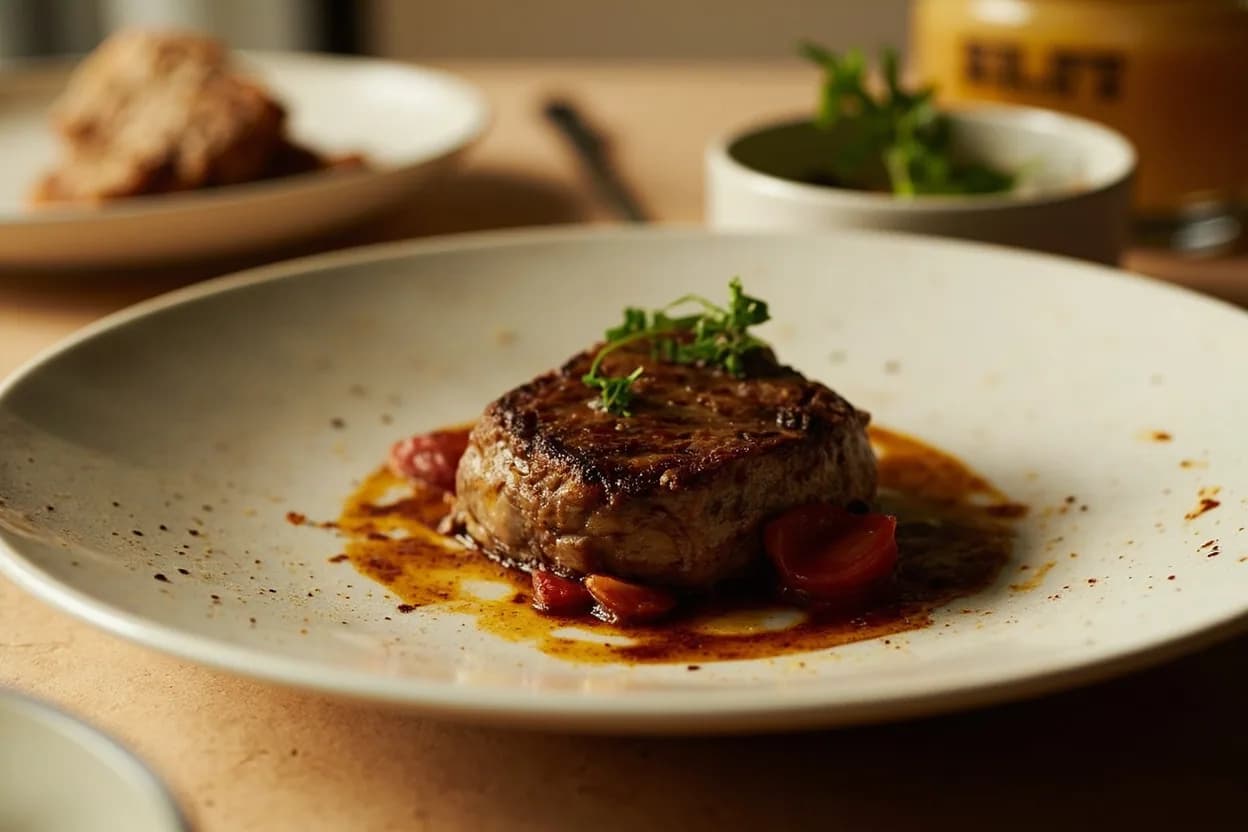
A thin blush of pink at the very center surrounded by fully cooked grey-brown meat — firm, drier than medium, with most juiciness spent.
Medium-well occupies the stage between medium and well-done, with an internal temperature of approximately 68°C (155°F). At this point, only a faint trace of pink remains at the geometric center of the steak; the vast majority of the interior is grey-brown and thoroughly cooked. Actin denaturation is well advanced, making the texture noticeably firmer and less yielding than medium. Moisture loss is significant — typically 20–25% — and the steak is perceptibly drier. Fat that was rendered at medium has largely been expelled from the muscle structure. Medium-well is a common preference among diners who want the reassurance of a fully cooked appearance but stop short of a completely dry well-done steak.
In photos
What happens
At 68°C, both myosin and actin are substantially denatured, causing significant muscle fiber contraction and moisture expulsion. Collagen in connective tissue begins hydrolysis to gelatin above 70°C, but at 68°C this transformation is minimal — meaning tough cuts at medium-well remain both dry and chewy, the worst of both worlds. In tender cuts (ribeye, strip), the loss of juiciness is the dominant change. The pink myoglobin pigment is almost entirely converted to grey-brown denatured globin hemochrome; only residual pink at the very center survives. Fat-soluble flavor compounds have been released but the moisture vehicle for them has been largely driven off.
What to look for
- Grey-brown throughout, with only a faint pink blush at the center or none visible
- Thoroughly hot and uniform in temperature when cut
- Firm and springy under thumb — significantly more resistance than medium
- Juices run clear when rested and sliced
- Noticeably drier mouthfeel; less glossy interior surface
- Meat holds its shape firmly when pressed; little give
How to check
- Instant-read thermometer to center: 68°C (155°F)
- Press test: firmness of a fully flexed thumb muscle — definite, firm resistance
- Cut and inspect: mostly grey-brown with at most a faint central pink trace; if rested properly, interior is dry or just barely moist
- Color reference: the grey-brown band should dominate the cross-section; pink confined to a small central dot, if present at all
Food safety
Carryover & resting
Pull steaks from heat at 65–66°C; 2–3°C of carryover during a 5-minute rest will reach 68°C. Overcooking risk is real at this stage — the window between medium-well and well-done is narrow, so precision matters. Avoid resting too long or on a very hot surface.
The science behind it
- Medium
One stage below at 63°C; has a clearly visible pink center and notably more juiciness
- Well-Done
One stage above at 74°C+; no pink whatsoever, maximum moisture loss, grey-brown throughout
- Actin denaturation
Well advanced at 68°C, the primary driver of the firmer, drier texture
- Moisture loss
Reaches 20–25% at medium-well — a significant jump from medium's 15–20%
- Resting
Still important even at medium-well to allow whatever remaining juices to redistribute before cutting
Appears in
References
- 1.The Food Lab — J. Kenji López-Alt
- 2.On Food and Cooking — Harold McGee
- 3.USDA Food Safety and Inspection Service — Safe Minimum Internal Temperature Chart
- 4.Modernist Cuisine: The Art and Science of Cooking — Myhrvold, Young, Bilet
Confidence: high
Notes
The cook's dilemma
Professional cooks often find medium-well the most difficult doneness to produce well — it requires stopping just shy of the point where all character is gone. The margin between a respectable medium-well with a faint pink trace and a dry, grey well-done is only 5–6°C. A thermometer is non-negotiable at this stage; guessing by feel alone frequently overshoots.
Cut selection matters more here
At medium-well, the premium qualities that distinguish a wagyu ribeye from a commodity chuck steak are largely erased. If a guest consistently prefers medium-well or well-done, leaner, moderately priced cuts (sirloin, top round) are a more economically appropriate recommendation than expensive highly marbled cuts where the fat rendering advantage is lost.