Beef Doneness
Beef: Rare
Also: saignant, 125°F, red center
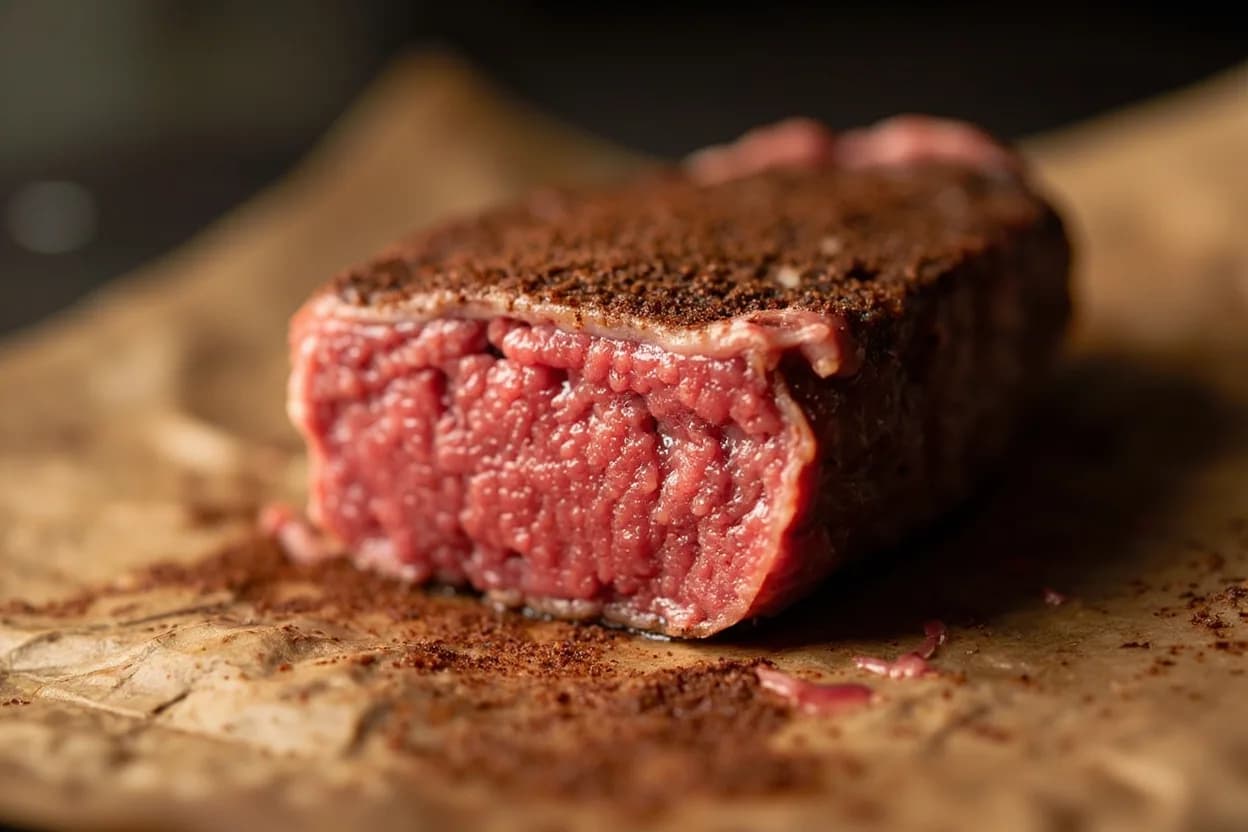
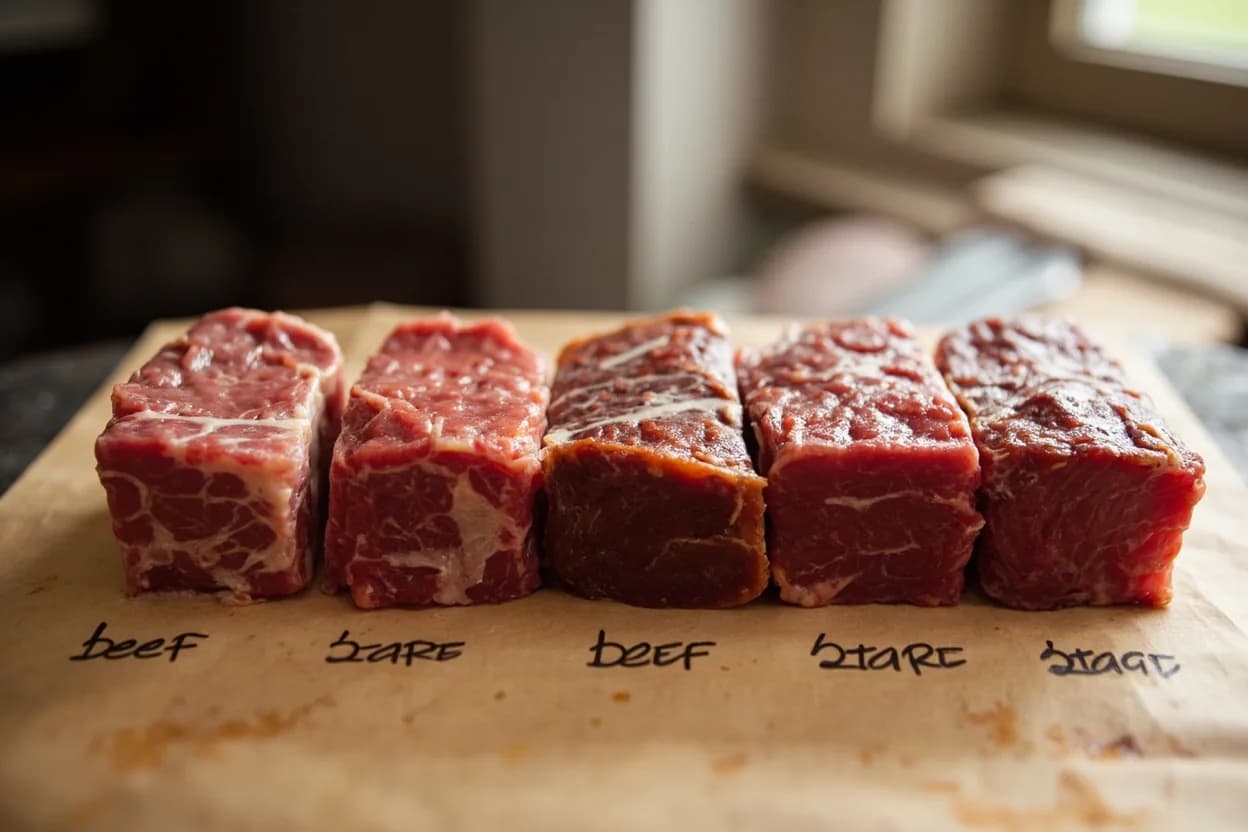
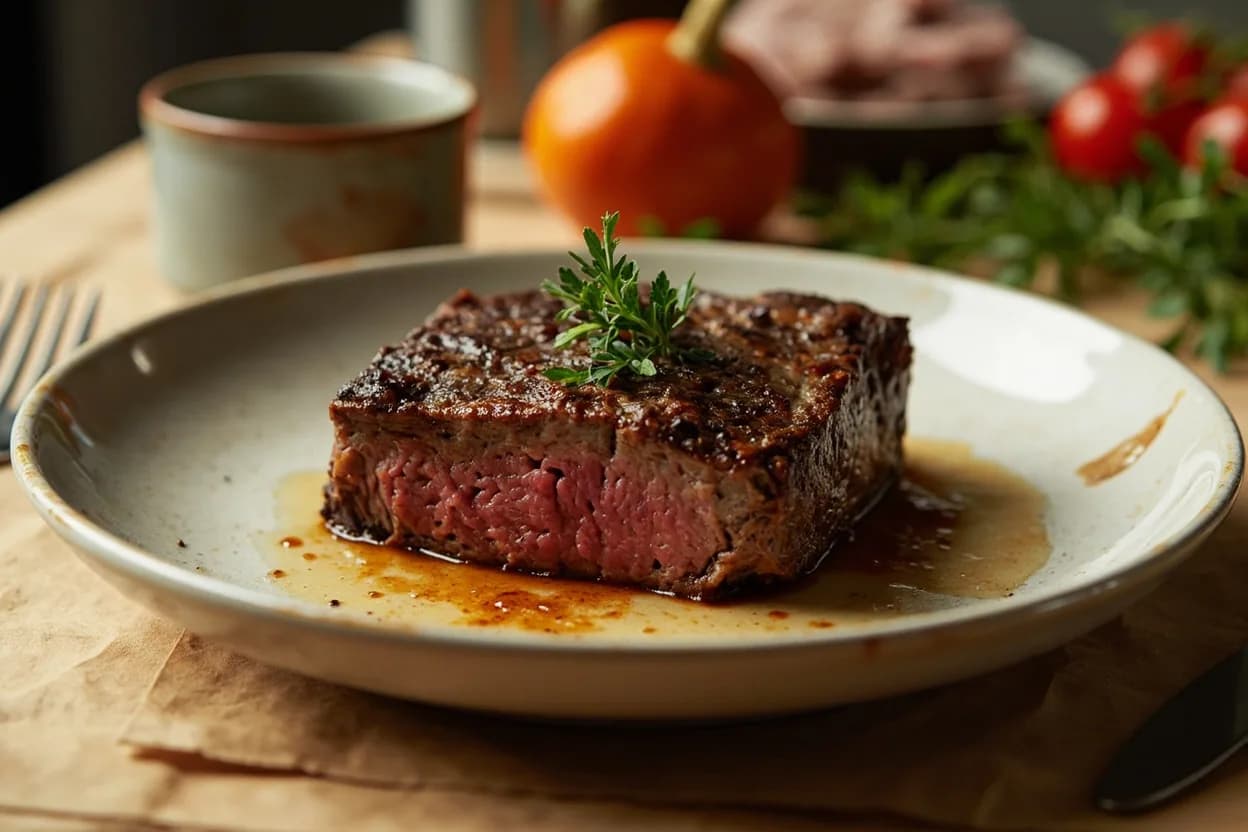
A warm, bright-red center with a fully seared exterior — the lightest doneness that produces a genuinely heated core.
Rare beef has an internal temperature of approximately 52°C (125°F). The center is warm, bright red, and visually uniform in color — distinguishable from bleu by its warmth and slightly more set texture. The French term 'saignant' (literally 'bleeding') captures the stage's characteristic moistness. Myosin has begun to denature meaningfully, slightly firming the texture compared to bleu, but actin remains intact and the meat is still very tender. This is a classic and respected doneness for premium whole-muscle beef cuts in both European and American steakhouse traditions.
In photos
What happens
At 52°C, myosin — the primary muscle protein — denatures substantially, causing the muscle fibers to contract and expel a small amount of myoglobin-rich moisture. Actin (the other major structural protein) is still fully intact, so the meat retains softness and has not toughened. The red color of myoglobin persists because at this temperature oxygen is still bound to the heme group. Intramuscular fat remains largely unrendered, contributing to a rich mouthfeel. Moisture loss is low, around 5–10%, making the steak noticeably juicy.
What to look for
- Bright, clear red center throughout — not purple like bleu
- Center is warm, not just heat-transferred from the crust
- Soft but slightly more resistant than bleu under thumb pressure
- Glossy red juices released when sliced
- Exterior crust is fully browned and aromatic
- No grey band between crust and red center in a properly cooked steak
How to check
- Instant-read thermometer inserted horizontally to the geometric center should read 52°C (125°F)
- Press test: feels like the fleshy base of a gently pinched thumb — soft with a slight give
- Cut and inspect: bright red interior, warm to the fingertip when touched
- Visual: thin grey band at the very edge, transitioning immediately to bright red
Food safety
Carryover & resting
Expect 2–4°C of carryover rise after removing from heat, depending on steak thickness and cooking method. Pull the steak at 48–50°C and rest 3–5 minutes under loose foil to arrive at the 52°C target. Thicker cuts (côte de bœuf, tomahawk) carry over more aggressively.
The science behind it
- Blue (Bleu)
One stage below rare; center is cool and purple-red with less myosin denaturation
- Medium-Rare
One stage above; center rises to 57°C, turns pink-red and firms slightly
- Myosin denaturation
Substantially underway at 52°C, beginning the transition from raw to cooked texture
- Resting
Critical at rare to allow carryover to complete and juices to redistribute
Appears in
References
- 1.On Food and Cooking — Harold McGee
- 2.The Food Lab — J. Kenji López-Alt
- 3.Modernist Cuisine: The Art and Science of Cooking — Myhrvold, Young, Bilet
- 4.USDA Food Safety and Inspection Service — Safe Minimum Internal Temperatures
Confidence: high
Notes
The saignant tradition
In French cuisine, 'saignant' has been the default preference for good-quality beef for centuries. The name acknowledges the reddish juices that flow from the meat — not literally blood (myoglobin is the red pigment, not hemoglobin), but accepted shorthand in culinary culture for a properly rare steak.
Thickness matters
Achieving a rare center without an overcooked grey band requires high heat and a thick cut. A thin steak (under 2 cm) will cook through to medium-rare before the crust fully develops. For rare, work with cuts at least 2.5 cm thick and use the highest practical heat source — cast-iron, charcoal grill, or broiler.